Double-Spending Attack Methods in Blockchain Networks
 Feb, 21 2026
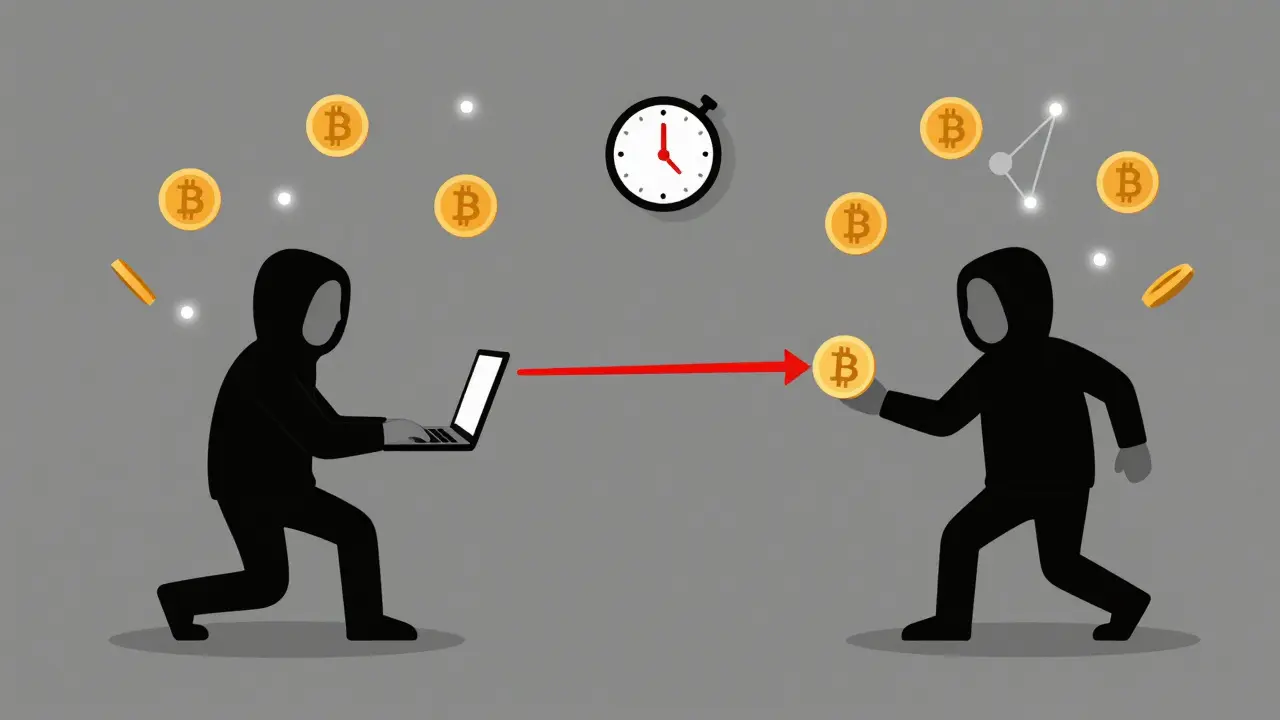
Imagine sending someone $100 in Bitcoin, and right after that, you send the same $100 to someone else - without anyone noticing. That’s a double-spending attack. It’s not science fiction. It’s a real threat that every blockchain network fights every second. And if it works, the whole system loses trust. The whole idea of digital money is that it’s scarce. You can’t copy it like a PDF. But before Bitcoin, no one had figured out how to stop people from doing exactly that. Now, we know the methods attackers use - and how the network fights back.
How Double-Spending Breaks Digital Money
Digital files are meant to be copied. That’s how email, photos, and documents work. But money isn’t supposed to be copyable. If you could duplicate a $100 bill, inflation would explode. The same goes for Bitcoin. If someone could spend the same coins twice, the currency becomes worthless. The blockchain solves this by making every transaction public, permanent, and verified by thousands of computers. But no system is perfect. Attackers keep finding ways to slip through the cracks.
The Race Attack: Speed Over Proof
This is the simplest and most common double-spending trick. An attacker sends two conflicting transactions at the same time - one to a merchant, and another to the wider network. The goal? Get the merchant to accept the transaction before the network confirms it’s invalid.
For example, you buy a $500 laptop from a store. You send them a Bitcoin transaction. But at the same time, you send another transaction - spending the same coins back to your own wallet. You hope the store’s system sees the first transaction before the rest of the network does. If they ship the laptop before six confirmations, you win. The store gets a product. You keep your coins.
This attack works best on small, low-traffic networks. It’s why some online stores accept zero-confirmation transactions - but only for small amounts. A $5 coffee? Maybe. A $5,000 TV? Not without at least three confirmations.
The Finney Attack: Pre-Mining the Trap
The Finney attack is sneakier. It requires the attacker to be a miner. Named after Hal Finney, one of Bitcoin’s earliest contributors, this method uses a pre-mined block to reverse a transaction.
Here’s how it works: First, the attacker mines a block in private. Inside that block, they include a transaction that sends their coins to themselves. Then, they make a public transaction - say, buying something from a merchant. The merchant sees the transaction on the network and ships the goods. Meanwhile, the attacker releases their private block. If their block gets accepted before the merchant’s transaction is confirmed, the public transaction gets erased from the blockchain. The merchant gets nothing. The attacker keeps their coins - and the product.
This attack needs two things: mining power and timing. You can’t just guess. You have to plan. That’s why it’s rare. Most miners don’t risk their reputation or hash power for a $200 scam. But on smaller chains, where mining is cheaper, this has happened.

The 51% Attack: Taking Over the Network
This is the nuclear option. If one person or group controls more than half of a blockchain’s total mining power, they can rewrite history. They can reverse confirmed transactions. They can double-spend. And they can do it over and over.
Here’s the scary part: You don’t need to control every miner. Just over 50%. That’s why Bitcoin is safe. As of 2024, Bitcoin’s hash rate is over 400 exahashes per second. To pull off a 51% attack, you’d need to rent or buy hardware worth billions. The electricity alone would cost millions per day. It’s not worth it.
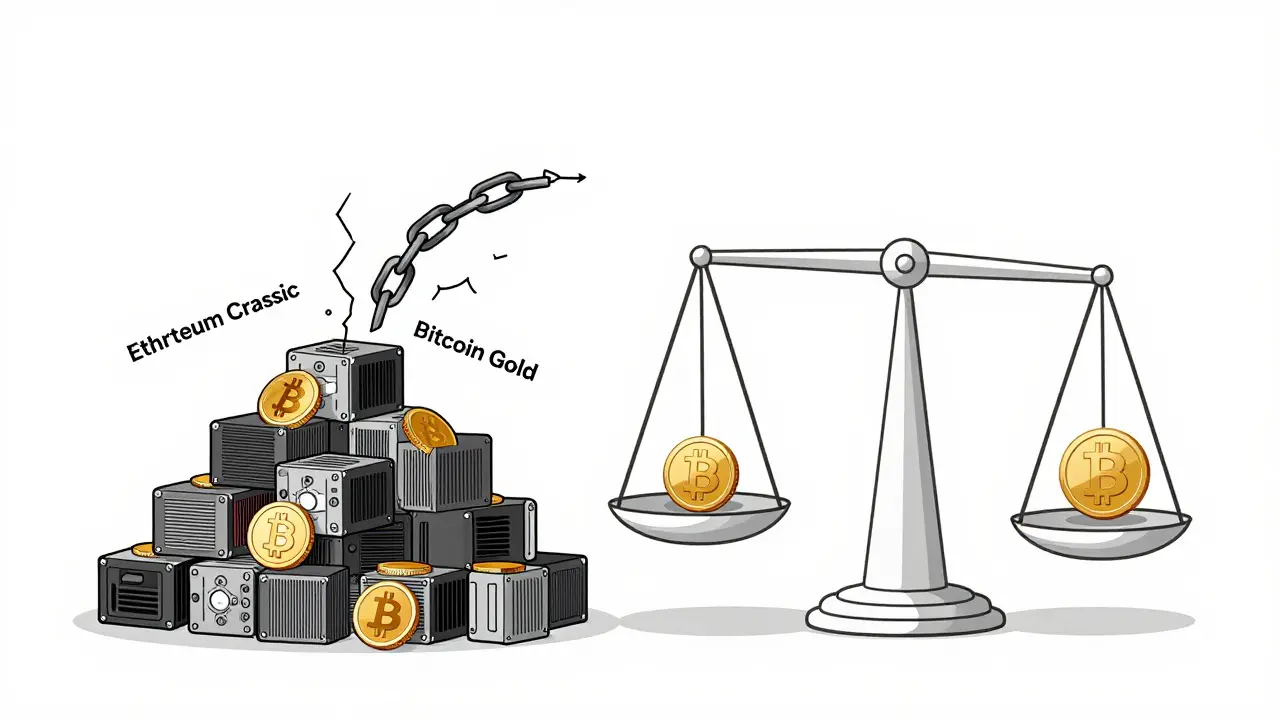
But smaller blockchains? Not so lucky. Ethereum Classic was hit in 2019. Bitcoin Gold got hit twice. Vertcoin, Monacoin - all had their histories rewritten because their hash rates were too low. Attackers rented mining power from services like NiceHash, launched their attack, stole coins, and vanished. The damage? Millions lost. Trust? Shattered.
Why Centralized Systems Fail Too
You might think, “Why not just use banks?” Centralized systems like PayPal or Venmo prevent double-spending by tracking every account balance. If you send $100 to a friend, your balance drops. Simple. But here’s the catch: you have to trust them. What if their system gets hacked? What if they make a mistake? What if they freeze your account? Blockchain removes that middleman. But it also removes the safety net.
Centralized systems prevent double-spending by design - but they create a single point of failure. Blockchain prevents it through math and economics. It’s slower, more complex, but doesn’t rely on trust. That’s why it matters.
How to Protect Yourself
If you’re a merchant selling goods for crypto, here’s what you need to do:
- Wait for at least six confirmations before shipping high-value items. Each confirmation adds another layer of security.
- For small purchases under $100, three confirmations may be enough - but never zero.
- Use payment processors like BitPay or Coinbase Commerce. They monitor for suspicious transactions and flag potential double-spends.
- Don’t trust a transaction just because it shows up on your wallet. Wallets sync with the network - but they don’t confirm.
- Check the blockchain explorer. See how many blocks have been added since the transaction. More blocks = safer.
For users: Never send funds without confirming they’ve been received on the other end. If you’re sending to an exchange or service, wait for their deposit confirmation - not just your own wallet’s balance.
What About Newer Blockchains?
Proof-of-stake chains like Ethereum don’t use mining. Instead, validators lock up coins as collateral. If they try to cheat - like double-spending - they lose their stake. That’s a big deterrent. But it’s not foolproof. Validators can still collude. And if a chain has too few validators, a small group could take over.
Layer-2 solutions like the Lightning Network help speed up Bitcoin transactions, but they introduce new risks. A double-spend on Lightning requires tricking the payment channel’s state. It’s harder than on-chain, but still possible if one side goes offline and tries to broadcast an old transaction.
The Bigger Picture: Trust Is the Real Asset
Double-spending isn’t just a technical problem. It’s a trust problem. Every time an attack succeeds, people lose faith. Prices drop. Exchanges delist coins. Developers abandon projects.
Bitcoin’s strength isn’t just its code. It’s its network. The more people use it, the harder it is to attack. The same goes for Ethereum. But for smaller coins? The math doesn’t add up. The cost to attack is often less than the value of the coins stolen.
That’s why the most important rule isn’t technical - it’s behavioral: Wait for confirmations. No matter how fast the network claims to be, time is your ally. Every new block is another brick in the wall that keeps your money safe.
Can you double-spend Bitcoin?
Technically, yes - but it’s nearly impossible on the Bitcoin network. The hash rate is so massive that no single entity can control 51% of it. The cost of launching a successful attack would run into billions. Most double-spends on Bitcoin are limited to race attacks on unconfirmed transactions - and even those are rare because most exchanges and wallets wait for at least six confirmations.
Which cryptocurrencies are most vulnerable to double-spending?
Smaller blockchains with low hash rates or few validators are most at risk. Ethereum Classic, Bitcoin Gold, Vertcoin, and Monacoin have all suffered confirmed 51% attacks. These networks have less than 1% of Bitcoin’s mining power, making them easy targets for rented hash power. Always check a coin’s hashrate before investing or accepting payments.
How many confirmations are safe?
For Bitcoin, six confirmations (about one hour) is the industry standard for high-value transactions. For small purchases under $100, three confirmations (30 minutes) is often enough. On faster chains like Litecoin or Bitcoin Cash, confirmations happen quicker - but the same rule applies: more blocks = more security. Never accept zero confirmations for anything valuable.
Can you reverse a Bitcoin transaction after it’s confirmed?
No - not without a 51% attack. Once a transaction is buried under six or more blocks, reversing it would require rewriting the entire blockchain from that point forward. That’s computationally impossible for Bitcoin. Even if you controlled a majority of hash power, the community would likely fork the chain to undo the attack, making your stolen coins worthless.
Do wallets protect against double-spending?
Wallets only show you your balance and let you send coins. They don’t verify if a transaction is final. A wallet might show $100 as available, but if you sent it twice - and the second transaction gets confirmed first - the first one will be invalidated. Your wallet won’t warn you. You need to check the blockchain directly or use a trusted service that confirms confirmations.