Future of Web3 Internet: How Decentralization Is Reshaping Online Ownership and Control
 Dec, 9 2025
Web3 Gas Fee Estimator
Estimate Your Transaction Costs
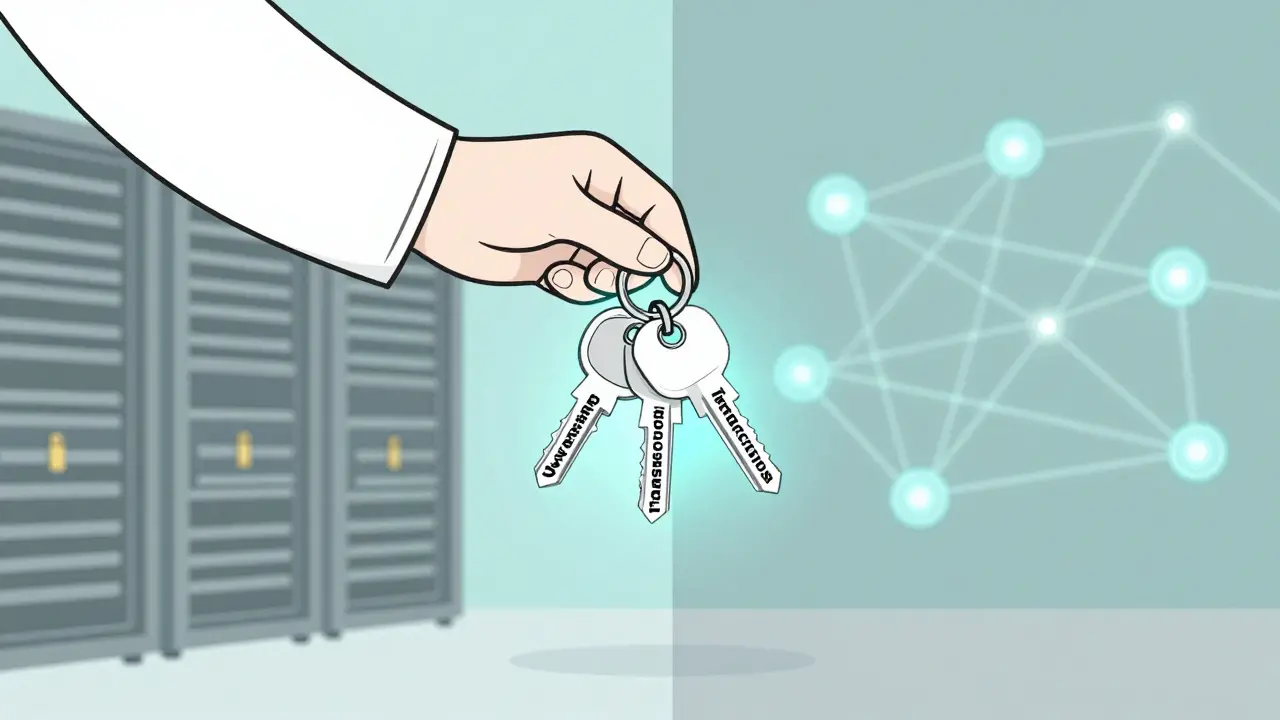
The internet as we know it is changing. Not because of faster speeds or prettier apps, but because of who owns it. For decades, platforms like Facebook, Google, and Amazon controlled your data, your identity, and even your digital purchases. You didn’t own your profile, your photos, or your in-game items-you just rented them. That’s changing. The Web3 internet isn’t just another tech buzzword. It’s the foundation of a new digital world where you hold the keys to your own online life.
What Web3 Actually Means
Web3 isn’t a website or an app. It’s a shift in how the internet works. Instead of relying on big companies to store your data and manage your transactions, Web3 uses blockchain technology to let users control everything directly. Your digital assets-whether it’s a piece of art, a video, or even your username-are stored on decentralized networks, not in a corporate server farm. You own them. You can move them. You can sell them. No permission needed. This isn’t science fiction. By 2025, Walmart uses blockchain to track food safety issues in under 2.2 seconds. JPMorgan processes over $300 billion in transactions through its Onyx platform. Mastercard now tokenizes 30% of global payments. These aren’t experiments. They’re live, working systems. The core idea is simple: replace trust in corporations with trust in code. Smart contracts-self-executing agreements on the blockchain-handle payments, verify identities, and enforce rules without middlemen. That’s why Web3 is called “trustless.” You don’t need to believe a company is honest. You just need to trust the math.The Four Pillars of Web3
Web3 doesn’t work without four key pieces working together. Each one solves a problem Web2 couldn’t fix. First, decentralized storage. Instead of storing your files on Google Drive or Dropbox, Web3 uses networks like IPFS, Filecoin, and Arweave. These systems split your data across thousands of computers worldwide. Even if one server goes down, your files stay safe. No single company can delete or censor them. Second, decentralized identity (DID). Right now, you log into websites with emails and passwords. That’s risky. If one site gets hacked, all your accounts are at risk. Web3 replaces that with blockchain-based digital identities. You control your public key-your online passport. You sign in without giving away your name, birthdate, or phone number. Gen Z and Millennials in cities are leading this shift, using wallets like MetaMask to prove who they are without revealing anything extra. Third, interoperability. Early blockchains were like isolated islands. You couldn’t send Bitcoin to an Ethereum app. Now, protocols like Polkadot’s XCMP and Cosmos’ IBC let blockchains talk to each other. Chainlink’s CCIP lets you move assets and data across networks securely. This matters because no single blockchain can do everything. The future isn’t one chain to rule them all-it’s a connected web of chains. Fourth, AI meets blockchain. AI needs data. Blockchain needs automation. Together, they’re powerful. Chainlink’s AI-powered oracles don’t just feed data into smart contracts-they predict outcomes. For example, a loan contract can adjust interest rates based on real-time credit risk. A supply chain system can automatically release payment when AI confirms a shipment arrived. This turns Web3 from static ledgers into living, responsive systems.Why Web3 Is Winning in Enterprise, Not Just Crypto
You won’t see Web3 replacing Instagram anytime soon. But you will see it replacing legacy systems in finance, logistics, and law. S&P 500 companies and 73 of the Fortune 100 have already deployed blockchain solutions. Why? Because it saves money and reduces risk. JPMorgan’s Onyx cuts settlement times from days to minutes. Walmart’s food traceability system cuts investigation time from weeks to seconds. That’s not about crypto-it’s about efficiency. Stablecoins are the hidden engine behind this. In 2024, they processed $5.7 trillion in transfers. In the first half of 2025 alone, that number hit $5 trillion. PayPal and Stripe now offer stablecoin payouts to merchants. Businesses use them because they’re faster, cheaper, and global-no more waiting three days for a bank transfer. Meanwhile, retail crypto adoption is slowing. Weekly active crypto developers dropped 38.6% between 2024 and 2025. Why? Because building on Web3 is still hard. Writing smart contracts in Solidity or Rust takes years. Debugging a failed transaction can cost hundreds in gas fees. Most consumers don’t want to manage seed phrases. But enterprises? They hire teams to solve those problems. They care about results, not the complexity behind them.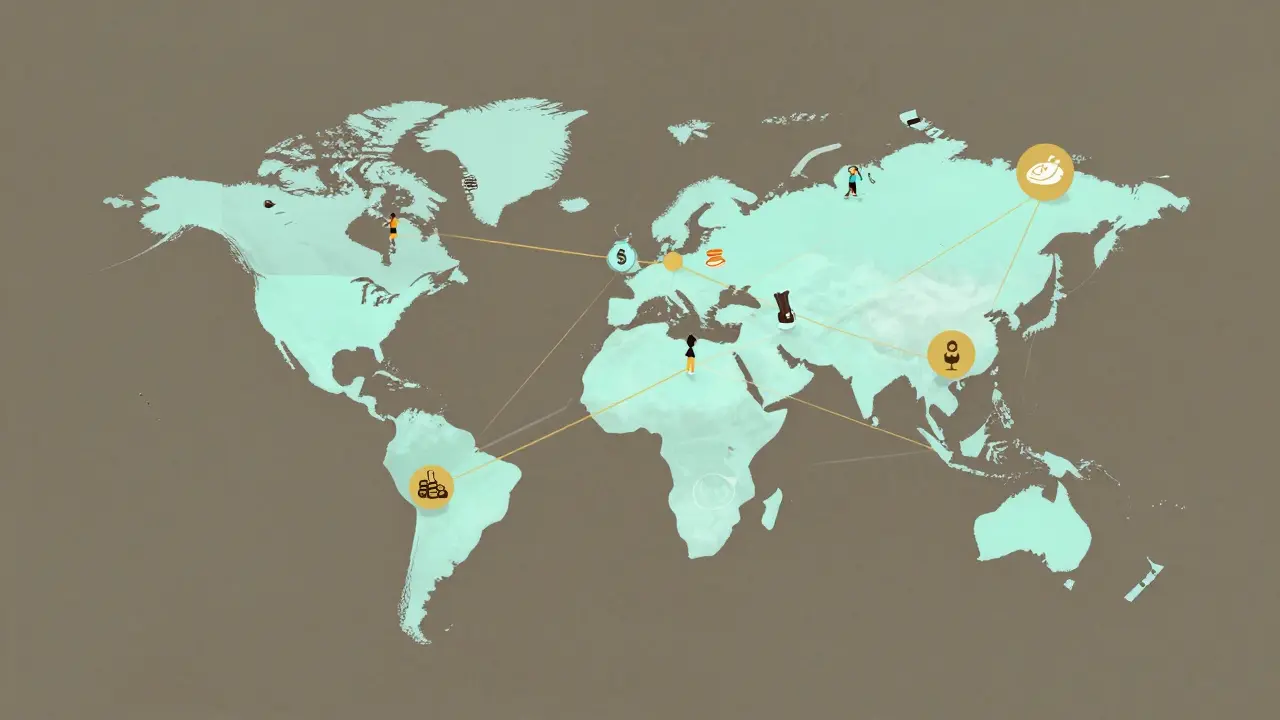
Real Problems, Real Solutions
Web3 isn’t perfect. It has big flaws. But the fixes are already here. Gas fees used to be a nightmare. Now, layer-2 solutions like Arbitrum and Optimism reduce transaction costs by 97%. Cross-chain security was a weakness. Chainlink’s CCIP now uses formal verification-mathematical proof that code works as intended. Developer tools are improving. Stripe’s stablecoin API lets a merchant integrate payments with under 100 lines of code. The biggest issue? Complexity. Right now, Web3 feels like using email in 1995. You had to know SMTP, POP3, and MIME types just to send a message. Today, you just click “send.” Web3 needs that same simplicity. Experts predict by early 2026, we’ll see “SMTP for Web3”-a hidden layer that lets users interact with decentralized apps without knowing they’re on a blockchain. User experience is still rough. Trustpilot ratings for Web3 services average 3.2 out of 5. People love owning their assets-but hate losing $200 because of a gas fee miscalculation. The solution isn’t to make Web3 simpler for users. It’s to make the tech invisible. The goal isn’t to teach everyone how to use a wallet. It’s to make wallets as easy as logging into Netflix.Regulation Is the Missing Piece
For years, regulators ignored Web3. That changed in 2024 and 2025. The EU’s MiCA framework, effective in 2024, created clear rules for crypto assets, exchanges, and stablecoins. In July 2025, the U.S. passed the GENIUS Act, establishing federal licensing for digital asset businesses. Suddenly, PayPal, Stripe, and Coinbase could launch stablecoin payments legally. Banks could integrate blockchain without fear of fines. This isn’t regulation killing innovation. It’s regulation enabling it. Clear rules mean companies can invest billions without guessing if they’ll be shut down next week. That’s why enterprise adoption is accelerating-not because Web3 is cooler, but because it’s now safe to use.
What Web3 Won’t Replace
Web3 won’t kill Facebook or Amazon. Why? Because those platforms are optimized for mass use. They’re fast, free, and familiar. Web3 is better for things that need transparency, ownership, and permanence. Think about it:- You want to prove you own a digital artwork? Use NFTs on Ethereum.
- You want to track where your coffee beans came from? Use blockchain with IoT sensors.
- You want to send money across borders without fees? Use a stablecoin.
- You want to prove you’re over 18 without showing your ID? Use a zero-knowledge proof.
The Road Ahead: 2026 and Beyond
By the end of 2025, Web3 will feel less like a revolution and more like a quiet upgrade. You won’t notice it-until you realize you’re using it. Here’s what’s coming:- By Q1 2026: Hidden abstraction layers will make Web3 apps feel like normal websites.
- By 2026: 150 million users will have decentralized identities.
- By 2027: G20 countries will agree on global stablecoin standards.
- By 2032: The Web3 market is projected to hit $65.78 billion.
Is Web3 just cryptocurrency?
No. Cryptocurrency is one part of Web3, but Web3 is much bigger. It includes decentralized storage, digital identity, smart contracts, and interoperable networks. You can use Web3 without owning any crypto-like using email without owning a server.
Why are developers leaving Web3?
Building on Web3 is still complex. Tools are fragmented, documentation is poor on new chains, and debugging smart contracts is expensive. Developer activity dropped 38.6% in 2025 because many are waiting for better infrastructure. The solution isn’t more blockchains-it’s using proven, off-the-shelf tools like Ethereum and Chainlink instead of reinventing the wheel.
Can I use Web3 without a wallet?
Not yet, but soon. Right now, you need a wallet like MetaMask to interact with most Web3 apps. But by 2026, companies will hide that complexity behind simple logins-like how you log into Spotify with Google. You won’t see the blockchain, but it’ll still be working behind the scenes.
Is Web3 secure?
Yes, but with caveats. The blockchain itself is extremely secure-once data is written, it can’t be changed. But user errors are the biggest risk. Losing your seed phrase means losing access forever. Smart contracts can have bugs. That’s why audits by firms like Certik and OpenZeppelin are critical. Security isn’t automatic-it’s built.
Will Web3 replace banks?
No. But it will change them. Banks like JPMorgan and Citibank are already using blockchain for payments, settlements, and compliance. Web3 doesn’t eliminate banks-it gives them better tools. Decentralized finance (DeFi) offers alternatives for unbanked users, but traditional institutions are adapting, not disappearing.
What’s the biggest barrier to Web3 adoption?
Complexity. Most people don’t care how it works-they just want it to work. Until Web3 apps feel as easy as using Instagram or PayPal, mass adoption will be slow. The solution isn’t more education. It’s better design-making the tech invisible.