How Algerians Access Cryptocurrency Exchanges Under the 2025 Ban
 Jan, 24 2026
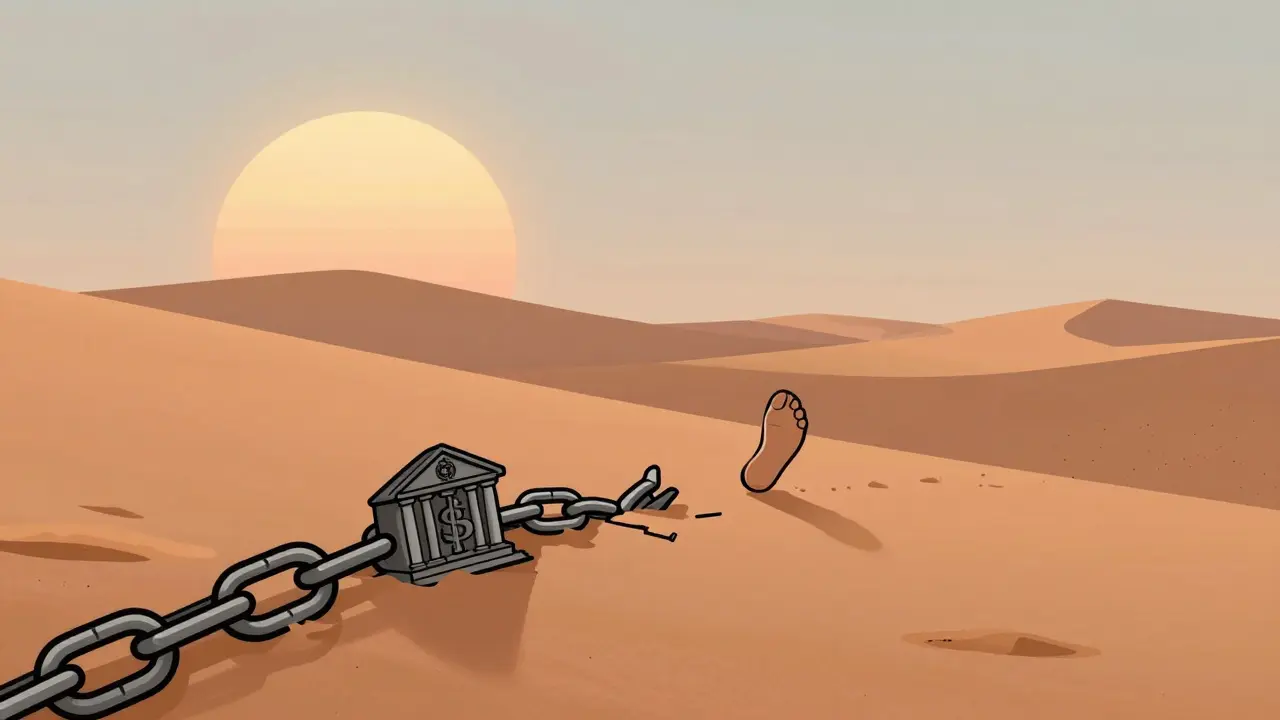
As of July 2025, Algerians cannot legally access cryptocurrency exchanges-not because of technical barriers, but because the government made it a crime. Law No. 25-10, published in the official gazette on July 24, 2025, outlawed every single activity related to digital assets: buying, selling, holding, mining, trading, promoting, or even discussing crypto as an investment. The law didn’t just restrict access-it erased it from the legal map.
What the Law Actually Bans
The legislation defines cryptocurrencies as "virtual instruments used as means of exchange via a computer system, without support from a central bank." That’s it. No gray area. No exceptions. Whether you’re holding Bitcoin in a wallet, trading Ethereum on Binance, or using Tether to send money abroad, you’re breaking the law. Even running a local peer-to-peer trading group over WhatsApp could land you in court. The penalties are harsh and clear: imprisonment from two months to one year, plus fines between 200,000 and 1,000,000 Algerian dinars (roughly $1,500 to $7,700). For repeat offenders or cases tied to organized crime, fines can jump to 2 million dinars ($14,700). And yes-jail time and fines can be handed out together. There’s no warning. No first-time leniency. The law was written to scare people away, not to educate them.How Things Were Before the Ban
Just a year before the ban, Algeria was one of the fastest-growing crypto markets in the Middle East and North Africa. A Chainalysis report from early 2024 ranked it in the top five for peer-to-peer trading volume in the region. People were using crypto not just for speculation, but to bypass currency controls, send remittances, and invest in DeFi protocols that offered better returns than local banks. There was a growing community of developers, traders, and students learning blockchain tech. Some even built local crypto education platforms. That all changed overnight. The government didn’t just tighten rules-it shut the door, welded it shut, and threw away the key. The 2018 restrictions, which were vague and rarely enforced, were replaced with a sweeping criminal code. Overnight, crypto-related jobs vanished. Developers who specialized in smart contracts found themselves unemployable. Online forums discussing Bitcoin were taken down. Educational YouTube videos about crypto were removed from local servers.How Do People Still Access Crypto?
Technically, they don’t. Legally, they can’t. But some still try. The most common method is using a VPN to connect to foreign exchanges like Binance, Kraken, or Bybit. Users create accounts abroad, deposit fiat via third-party payment processors, and trade through encrypted channels. Others use peer-to-peer platforms like Paxful or LocalBitcoins, trading directly with individuals using cash deposits, mobile money, or even gift cards. Some even buy crypto through Telegram groups, where sellers accept bank transfers or cash on delivery. But here’s the catch: every step carries risk. Algerian authorities have upgraded their digital surveillance systems since the ban. They monitor unusual outbound financial flows, track domain registrations tied to crypto exchanges, and scan social media for keywords like "Bitcoin" or "crypto wallet." Internet service providers are required to log user activity, and law enforcement has been trained to identify crypto-related patterns in transaction data. Even using a decentralized exchange (DEX) like Uniswap doesn’t help. If you’re using a local internet connection and your IP is traced back to Algeria, you’re still violating the law. The government doesn’t care if the platform is decentralized-it cares that you’re interacting with a banned asset.
Why Did Algeria Do This?
The government says it’s about financial stability and national security. Officials argue that crypto poses risks of money laundering, terrorism financing, and capital flight. They point to guidance from the Financial Action Task Force (FATF), which recommends strict controls on unregulated digital assets. But Algeria is one of only nine countries in the world with a total crypto ban-alongside China, Egypt, and a few others. Critics say the real goal is control. Algeria’s national currency, the dinar, is heavily managed. The central bank limits how much foreign currency citizens can buy or send abroad. Crypto threatened that control by offering an alternative. By banning it, the state ensures that all financial flows go through its systems-where they can be monitored, taxed, or restricted. There’s also an economic angle. Algeria’s economy is still largely dependent on oil and gas. The government fears that if young people start investing in digital assets, they’ll lose interest in traditional industries. The ban isn’t just about finance-it’s about preserving an old economic model.What Happens If You Get Caught?
If you’re caught trading crypto, you won’t get a slap on the wrist. You’ll likely be summoned by financial police. They’ll ask for your phone records, bank statements, and device history. If they find any trace of crypto activity-wallet addresses, exchange logins, transaction screenshots-you’ll be charged. There’s no appeal process built into the law. Conviction means jail time, fines, or both. Some people have reported being forced to hand over their private keys during interrogations. Others have had their phones seized and digitally forensically examined. Even holding a crypto wallet on your phone, if discovered, can be used as evidence.