Legal Risks for Tunisian Crypto Users and Traders in 2026
 Feb, 7 2026
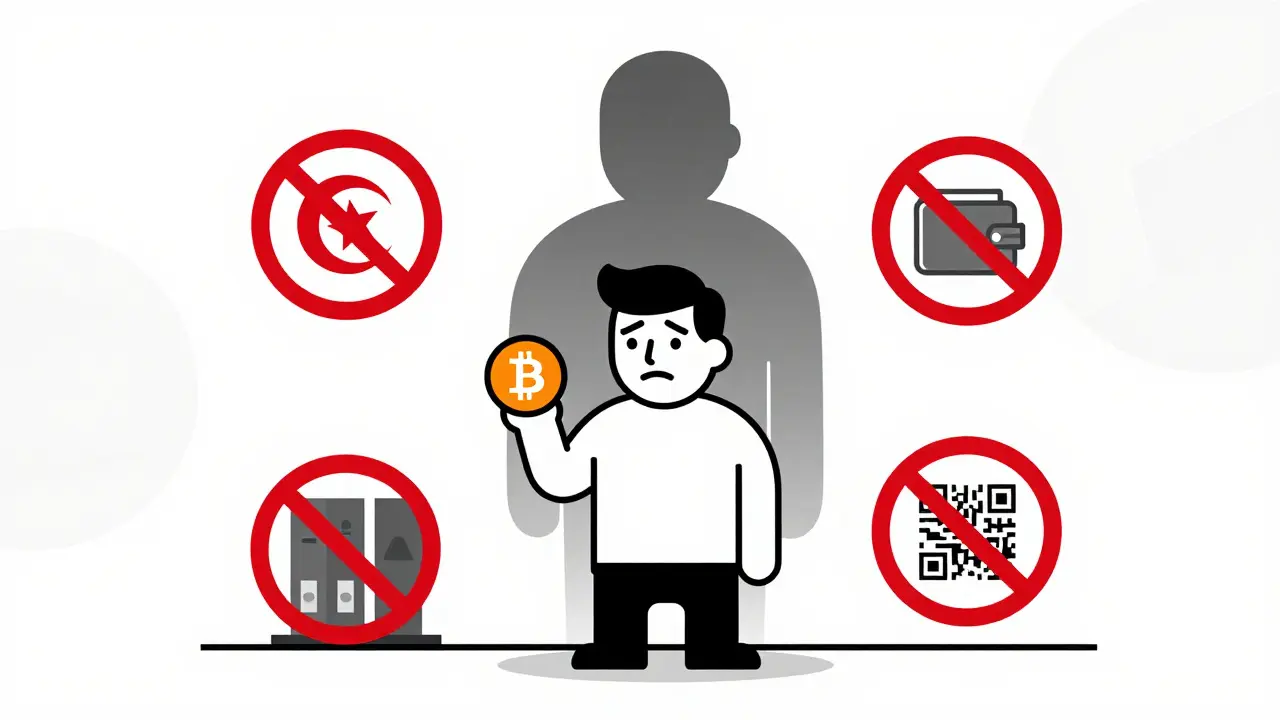
If you're in Tunisia and you own Bitcoin, Ethereum, or any other cryptocurrency, you're breaking the law. Not just a little bit - completely. As of 2026, the Central Bank of Tunisia (BCT) still enforces a total ban on all cryptocurrency activity, and the penalties aren't just fines. You could go to jail for up to five years.
What Exactly Is Illegal?
It's not just buying or selling crypto. Every single part of cryptocurrency use is banned under Tunisia’s 2018 directive. Trading on exchanges? Illegal. Mining with ASIC rigs? Illegal. Accepting Bitcoin as payment for your services? Illegal. Even holding crypto in a wallet is legally risky - because Tunisian law doesn't recognize it as property, currency, or anything else. It’s simply not allowed.The ban covers everything:
- Buying or selling cryptocurrencies on any platform
- Mining crypto - including importing mining hardware
- Using crypto to pay for goods or services
- Operating or using a crypto exchange
- Receiving or sending crypto via bank transfer
- Launching or investing in an ICO or token sale
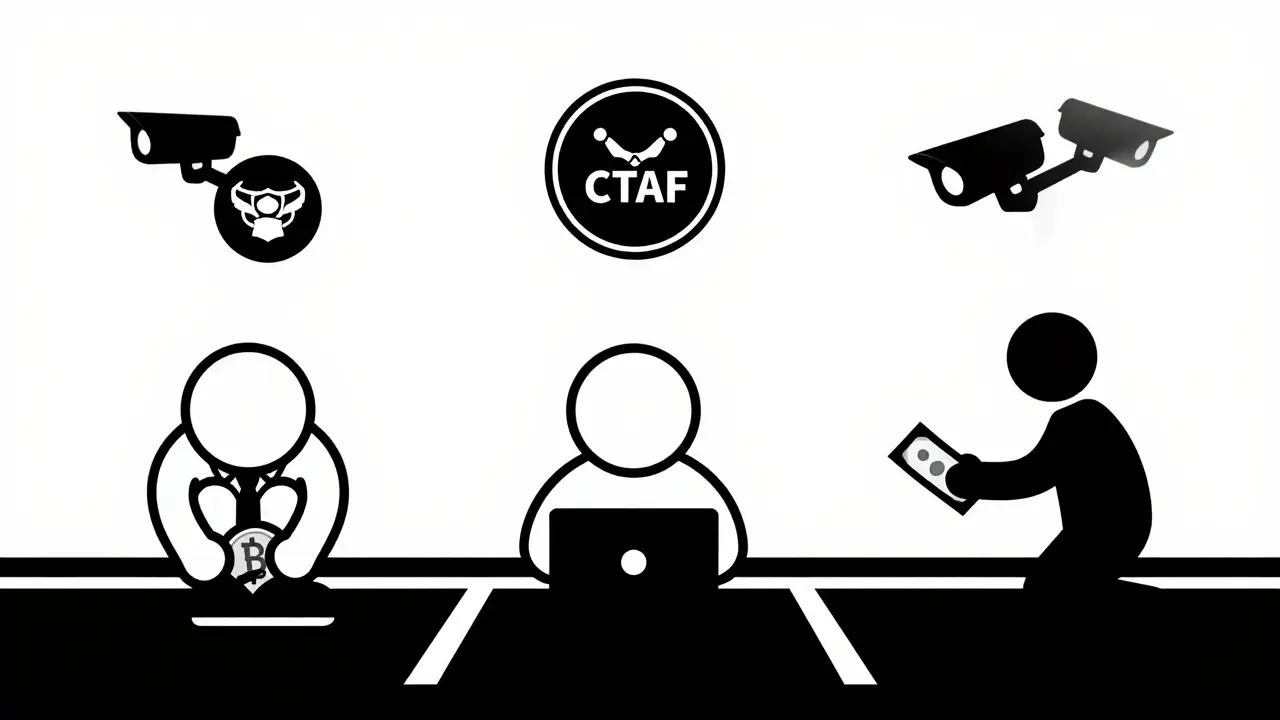
Customs officials have the right to seize mining equipment at airports or borders. Banks are legally required to block any transaction that even looks like it involves crypto. If you try to convert Bitcoin to Tunisian dinars, your bank must report it to the National Anti-Money-Laundering Commission (CTAF). And if they find crypto in your wallet? Authorities can freeze your accounts and seize any profits.
What Happens If You Get Caught?
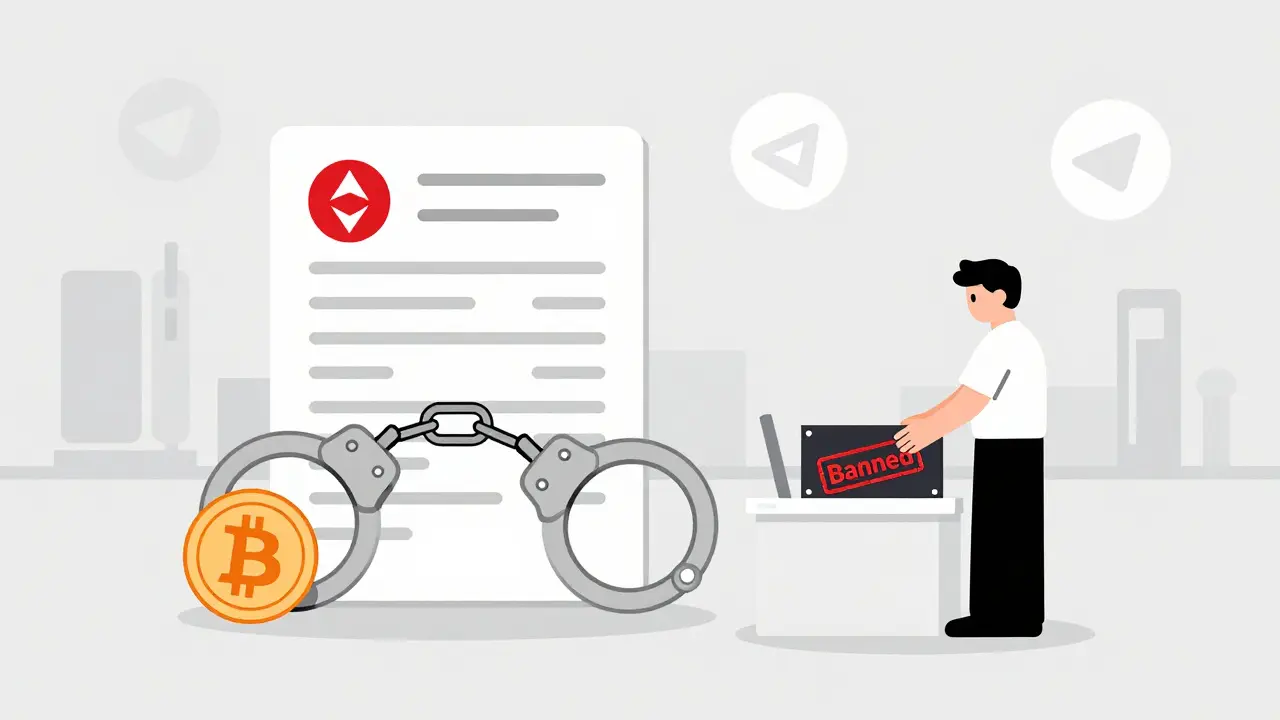
The penalties are serious - and they’re enforced.Under Tunisia’s currency control laws, violating the crypto ban can lead to:
- Fines of up to 50,000 Tunisian dinars (about $16,000 USD)
- Imprisonment for up to five years
- Confiscation of all crypto assets and any profits made
- Account freezes and bank blacklisting
It doesn’t matter if you’re an individual or a business. A company that tries to record crypto on its books is breaking the law. A freelancer who accepts Dogecoin for design work? Same offense. Even if you didn’t know the law, ignorance isn’t a defense. Tunisian courts don’t care if you thought you were just “investing.”
There have been documented cases of people being investigated, having their bank accounts frozen, and facing criminal inquiries after crypto transactions were flagged. Some were never charged - but their financial lives were disrupted for months.
Who Enforces the Ban?
Three government bodies work together to make sure no one slips through the cracks:- Central Bank of Tunisia (BCT) - The main enforcer. They issued the 2018 ban and monitor all monetary activity.
- Financial Market Council (CMF) - Watches for any attempt to launch crypto-based securities or tokens. They’d block any future ICOs.
- National Anti-Money-Laundering Commission (CTAF) - Tracks suspicious transfers. If your bank reports a crypto-related transaction, CTAF gets involved.
These agencies share data. A customs report about imported ASIC miners? That gets passed to the BCT. A bank flags a crypto transfer? CTAF opens a file. There’s no gap in the system. The net is wide and the sensors are active.
What About the Regulatory Sandbox?
You might hear about Tunisia’s “regulatory sandbox” - and think it’s a loophole. It’s not.The BCT allows a handful of local startups to test blockchain tech under strict conditions. But it’s not for crypto. It’s for things like:
- Supply chain tracking (using permissioned ledgers)
- Carbon credit logging
- Government document verification
Companies like VFunder and Hydro E-Blocks are allowed to run these pilots - but only if they host their servers outside Tunisia. The sandbox doesn’t let you trade Bitcoin. It doesn’t let you mine. It doesn’t let you build a crypto app for Tunisians. It’s a tool for government-controlled tech, not decentralized finance.
The BCT even developed its own digital currency prototype - the E-Dinar - but it’s not available to the public. It’s a state-controlled system, not a blockchain-based alternative to Bitcoin. Think of it as a digital dinar, not a crypto revolution.
How Are People Still Using Crypto?
Despite the ban, demand hasn’t died. In fact, it’s growing.Many Tunisians use VPNs to access offshore exchanges like Binance or Kraken. They deposit money through friends abroad, or use peer-to-peer (P2P) platforms like LocalBitcoins. Some meet in person to swap cash for crypto - often in parking lots or coffee shops. Telegram groups and Discord servers are full of traders sharing tips on how to avoid detection.
But here’s the catch: every step of this is illegal. Using a VPN to access an exchange? Illegal. Buying crypto with cash from a stranger? Illegal. Sending dinars to a foreign account to fund your crypto purchase? Illegal. Your bank might not catch it - but they’re required to report anything suspicious. And if they do? You’re on the radar.
There are stories of people whose accounts were frozen for six months after a single crypto-related transfer. Others lost access to their savings because a wire transfer to Turkey was flagged. There’s no guarantee you’ll get away with it - and the cost of getting caught is high.
Why Is Tunisia So Strict?
Tunisia’s stance isn’t random. It’s based on three fears:- Capital flight - The government worries people will move their money out of the country using crypto, weakening the dinar.
- Money laundering - They believe crypto is a tool for criminals, and they don’t trust the ability to track it.
- Loss of control - Cryptocurrency operates outside state banking systems. That’s a threat to their authority.
Compared to countries like Egypt or Morocco, which have started to explore regulated crypto frameworks, Tunisia is the outlier. Even neighboring Algeria has begun testing a digital currency. Tunisia? Still locked in 2018.
Legal experts say Tunisia has one of the harshest crypto bans in the world. Five years in prison for holding Bitcoin? That’s rarer than you think. Most countries fine or restrict - they don’t jail.
What’s the Real Cost?
Beyond jail and fines, there’s a deeper price:- Brain drain - Tech-savvy Tunisians are leaving. Entrepreneurs who want to build crypto projects move to Portugal, Georgia, or the UAE. The country loses talent.
- Missed innovation - Blockchain tech isn’t just about crypto. It can improve public records, healthcare systems, and logistics. Tunisia’s ban blocks all of it - even the useful parts.
- Economic isolation - As global finance moves toward digital assets, Tunisia is cutting itself off. Businesses can’t integrate with international crypto markets. Investors avoid the country.
Some local e-commerce sites still list prices in Bitcoin - but they only accept payment through offshore gateways. That means Tunisian customers can’t actually buy. It’s a marketing trick, not a real solution.
What Should You Do?
If you’re in Tunisia and you’re thinking about crypto - here’s the reality:There is no legal path. No safe way to trade. No way to hold crypto without risk. Even if you think you’re being careful - banks, customs, and CTAF are watching.
Your options are:
- Avoid it completely - The only way to guarantee you won’t get in trouble.
- Use it illegally - Accept the risk of fines, jail, or frozen accounts.
- Leave - Many Tunisians who are serious about crypto have already moved.
There’s no middle ground. No gray area. The law is clear. And the enforcement is real.
What’s Next?
There are whispers in parliament about reclassifying crypto as a “virtual asset” and introducing licensing rules - similar to what Canada or Switzerland do. But nothing has been passed. No timeline exists. The current government has shown no sign of backing down.Until then, the ban stands. And the risks? They’re higher than ever.
Can I mine Bitcoin in Tunisia?
No. Mining Bitcoin or any cryptocurrency is illegal in Tunisia. Importing mining equipment like ASIC rigs is a direct violation of the 2018 BCT directive. Customs authorities have the power to seize equipment at ports and airports. Even if you mine at home, any attempt to convert mined coins into Tunisian dinars triggers reporting to the National Anti-Money-Laundering Commission (CTAF). Penalties include fines up to 50,000 TND and up to five years in prison.
Is it legal to use a VPN to access crypto exchanges?
No. Using a VPN to bypass the crypto ban and access foreign exchanges like Binance or Kraken is still illegal under Tunisian law. While it might help you hide your activity from your bank, it doesn’t change the fact that you’re violating the 2018 directive. Authorities can still trace transactions through bank records, payment processors, or suspicious activity reports. Getting caught can lead to account freezes, investigations, and criminal charges.
Can I buy crypto with cash in Tunisia?
No. Peer-to-peer cash transactions for crypto are banned. Even if you meet someone in person to trade dinars for Bitcoin, this is considered an unauthorized financial transaction under Tunisia’s currency control laws. Authorities monitor informal networks, and there have been documented cases of individuals being investigated after such trades were reported. The risk of legal action - including fines or imprisonment - remains high.
Are there any legal crypto exchanges in Tunisia?
No. Tunisia does not issue licenses to any cryptocurrency exchanges, custodians, or trading platforms. All exchanges operating in the country are illegal. Even if an exchange claims to be “based in Tunisia,” it’s either a scam or operating outside the law. The Central Bank of Tunisia (BCT) has explicitly stated it will not approve any local crypto exchange, and banks are required to block all related transactions.
Can I be taxed on my crypto holdings in Tunisia?
No - but that’s not a benefit. Because cryptocurrency has no legal status in Tunisia, it can’t be taxed. However, this means any crypto you hold is considered illegal property. Authorities can seize it without compensation. If you declare crypto holdings to tax officials, you’re admitting to breaking the law. The safest path is to avoid holding crypto altogether.