NFT Art Ownership Rights Explained: What You Actually Own When You Buy an NFT
 Jan, 10 2026
When you buy an NFT of a digital artwork, you’re not buying the image itself. You’re buying a token on the blockchain that points to it. This simple truth trips up most new buyers-and even some experienced ones. You might see a Bored Ape NFT selling for $100,000 and assume you now own the right to print it on T-shirts, sell posters, or use it in your YouTube channel. But unless the project says so clearly, you can’t. Not legally. Not without risking a lawsuit.
What You Really Own
Owning an NFT means you control a unique digital certificate stored on a blockchain, usually Ethereum or Solana. That certificate links to a file-a JPEG, MP3, or video-hosted somewhere online. But the file isn’t yours. The copyright to the artwork? Still belongs to the artist or their company. You don’t get the source code, the original PSD file, or the right to reproduce it. You just have proof that you own that specific token. Think of it like buying a signed poster of the Mona Lisa. You own the poster, not the painting in the Louvre. You can hang it on your wall. You can’t sell copies of it or put it on a coffee mug.Why This Confusion Exists
The confusion comes from how we think about ownership in the physical world. If you buy a painting at a gallery, you typically get the right to display it, lend it, or even resell it. Some people assume the same rules apply online. But digital files are copy-pasteable. A JPEG can be downloaded by anyone with an internet connection. If every NFT buyer had full rights to the image, the whole concept of scarcity-and value-would collapse. That’s why projects are careful to separate token ownership from intellectual property.The Three Types of NFT Art Rights
Not all NFTs are the same. The rights you get depend entirely on the project’s terms. There are three main categories:- No Rights / Silence: Many NFT projects don’t say anything about what you can do with the art. That’s not an accident. It means you only have an implied right to display it privately-like on your phone or as a profile picture. Print it? Sell prints? Use it in a commercial? That’s copyright infringement. Projects like early CryptoPunks and many indie collections operate this way.
- Commercial Rights Granted: Some projects give you full freedom. Bored Ape Yacht Club (BAYC) was one of the first to do this in 2022. If you own a BAYC NFT, you can make merch, movies, games, or even open a Bored Ape restaurant. You can license it to others. You can modify it. You can even trademark your specific ape, as long as you don’t imply it’s officially endorsed by Yuga Labs. This is why BAYC NFTs trade for much higher prices than similar-looking ones without commercial rights. According to DappRadar’s Q2 2023 report, collections with clear commercial rights had floor prices 37% higher on average.
- Intermediate Licenses: Some projects give you limited commercial rights. Maybe you can make up to $100,000 in annual revenue from your NFT art. Or maybe you can use it in videos but not in physical products. Art Blocks and some other generative art projects use tiered licenses like this. Always check the fine print.
Real-World Examples That Went Wrong
A lot of people learned this the hard way. In 2022, a buyer of a CryptoPunk NFT tried to trademark the image and sell branded merchandise. Yuga Labs, the creators, shut it down. They still owned the copyright. The buyer had no legal standing. Another case involved the Nouns project, where people thought the CC0 license meant they could trademark the Nouns brand itself. It didn’t. CC0 only means the specific image is free to use-no one owns the brand. Misunderstanding this led to lawsuits and public backlash.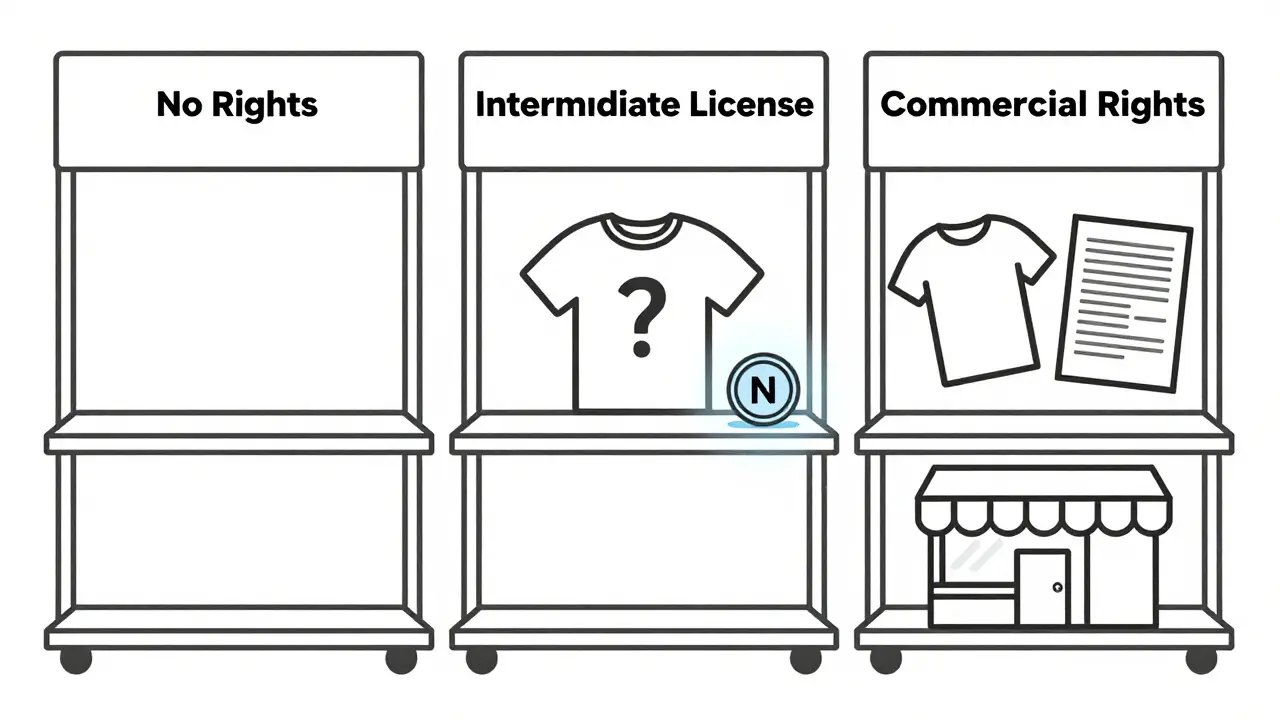
What You Can and Can’t Do
Here’s what’s safe-and what’s not:- Safe: Display your NFT on your website, social media, or as a profile picture. Resell the NFT. Use it in personal, non-commercial art projects.
- Not Safe: Print and sell posters, T-shirts, or mugs. Use the image in ads, apps, or games without written permission. Claim you own the copyright. Register the image as a trademark. Copy the artwork to create a new NFT.
Even something as simple as using your NFT in a YouTube video can be risky. If the video gets monetized, that’s commercial use. Most projects don’t allow that unless they say so.
How to Check Your Rights
Before you buy, do this:- Go to the project’s official website. Look for a “License,” “Terms of Use,” or “IP Rights” section. If it’s buried under five layers of menus, that’s a red flag.
- Read the smart contract if it’s public. You don’t need to understand code, but you can search for keywords like “license,” “copyright,” or “commercial.”
- Check OpenSea or the marketplace where you’re buying. Most don’t show IP rights clearly. Don’t assume the platform is telling you the truth.
- If the NFT costs more than $10,000, talk to a lawyer who understands digital assets. It’s worth the $300.
According to CoinGecko’s 2023 survey, only 32% of NFT marketplaces display IP rights at the point of sale. That means 68% of buyers are flying blind. Don’t be one of them.
What Creators Should Know
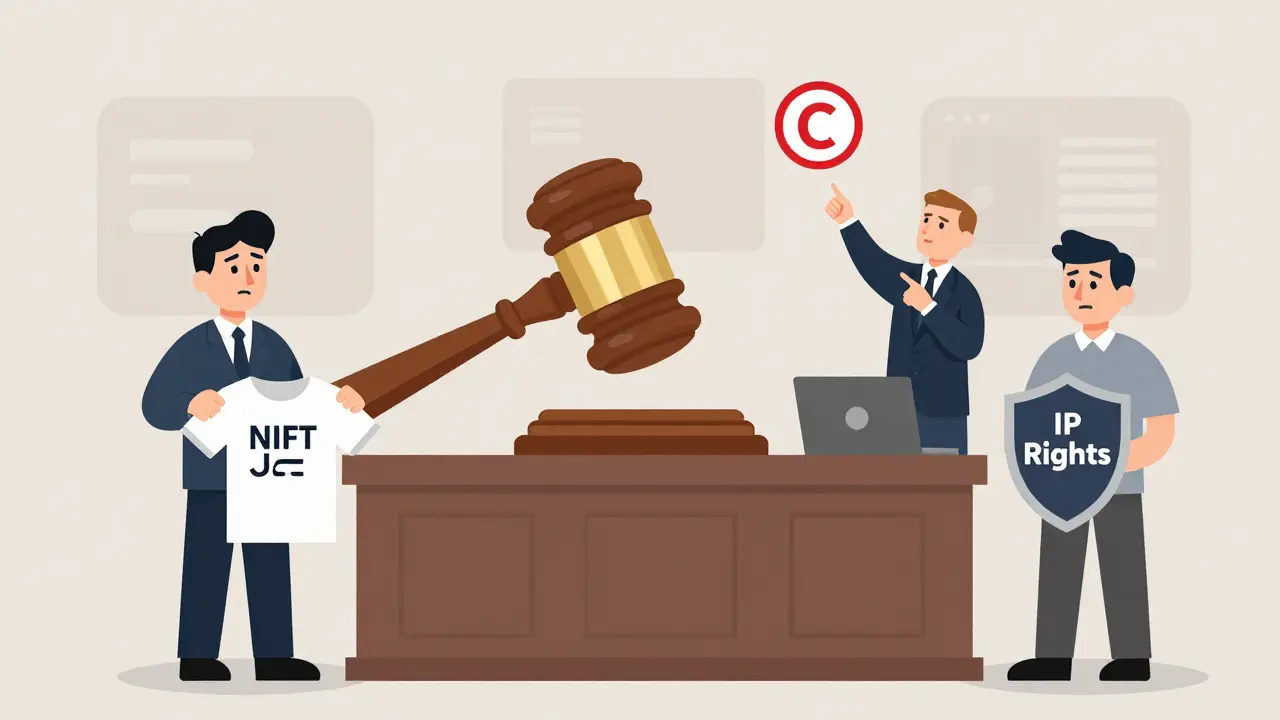
If you’re an artist minting NFTs, you have power-and responsibility. You can choose to give away rights or keep them. Giving commercial rights can build a loyal community and boost your NFT’s value. But if you keep them, make it crystal clear. Don’t rely on silence. Silence is a legal trap. Use a simple license agreement. Many artists now use Arnold Porter’s NFT License Template, which spells out exactly what the buyer gets and what they don’t. It’s free. Use it.Also, never mint art you didn’t create. Even if you found it on Instagram or Pinterest. That’s copyright infringement, and you can be sued-even if you’re just the NFT seller. The artist whose work you copied still owns the rights. Courts are starting to take these cases seriously.
The Bigger Picture
The U.S. Copyright Office has received over 1,200 copyright applications for NFT-related artwork since 2021. But almost none of those applications are for the NFT token itself. They’re for the image, music, or video the NFT represents. That’s because the token isn’t creative-it’s data. Only the underlying content can be copyrighted.And what about AI-generated art? In September 2023, the U.S. Copyright Office ruled that AI-generated images without human creative input can’t be copyrighted. That means if you use Midjourney to make a NFT and claim copyright, you’re out of luck. About 18% of NFT art sales in 2023 involved AI-generated content. Many of those are legally shaky.
What’s Next?
The market is changing. Big brands like Nike, Gucci, and Coca-Cola now include clear IP terms in their NFT drops. In 2021, only 41% of major brand NFTs did this. By 2023, it was 73%. That’s progress. But for independent artists? Only 28% include clear terms. That’s a problem.As the NFT market grows-projected to hit $136 billion by 2028, according to PwC-the legal framework will tighten. Courts will rule on more cases. The first major U.S. case, McFarland v. Doe, is already moving through the system. Expect more lawsuits over unauthorized merch, trademark disputes, and AI-generated content.
Until then, treat every NFT purchase like a software license. Read the terms. Don’t assume. Don’t guess. If you don’t understand it, don’t buy it.
Can I sell prints of my NFT art?
Only if the NFT project explicitly grants commercial rights. Most don’t. Selling prints without permission is copyright infringement, even if you own the NFT. Projects like Bored Ape Yacht Club allow it. Most others don’t. Always check the license terms before printing.
Do I own the copyright to the artwork if I own the NFT?
No. Ownership of the NFT token does not transfer copyright. The artist or project creator retains all copyright and intellectual property rights unless they explicitly give them away in writing. This is true for nearly all NFTs. The token proves you own that specific entry on the blockchain, not the rights to the image.
Can I use my NFT in a YouTube video or TikTok?
If the video is non-commercial-like a personal showcase or review-you’re usually fine. But if you monetize the video, run ads, or promote a product with the NFT art, that’s commercial use. Most NFT licenses don’t allow that. Always check the project’s terms. If it’s unclear, assume you can’t.
What happens if I use NFT art without permission?
You risk a copyright infringement lawsuit. The artist or rights holder can demand you stop, issue a takedown notice, or sue for damages. In 2023, several NFT owners were sued for making merch without permission. Even if you didn’t know it was illegal, ignorance isn’t a legal defense. The penalties can include fines and forced removal of your content.
Are NFTs protected by copyright?
No. NFTs themselves are not copyrightable. They’re digital tokens that store data-like a serial number or certificate. Copyright protects creative works: images, music, text. So the JPEG linked to the NFT can be copyrighted, but the NFT token cannot. The U.S. Copyright Office has confirmed this in multiple rulings.
Do I need a lawyer to buy an NFT?
Not for a $50 NFT. But if you’re spending $10,000 or more, it’s smart. Legal advice can save you from costly mistakes. Many NFT buyers have lost money because they didn’t understand their rights. A lawyer can review the license terms and explain what you can and can’t do with the art. It’s a small cost compared to the risk.