Privacy Coin Delisting Wave from Crypto Exchanges: Why Monero, Zcash, and Dash Are Disappearing
 Jan, 26 2026
Over the past year, something quiet but massive has been happening in the crypto world. If you owned Monero, Zcash, or Dash, you probably noticed they slowly vanished from your favorite exchange. Binance, Kraken, Upbit, OKEx Korea - all of them pulled the plug. Not because the coins broke. Not because no one wanted them. But because regulators said they had to.
What’s Really Going On With Privacy Coins?
Privacy coins aren’t just another type of cryptocurrency. They’re built to hide details that every other crypto makes public. With Bitcoin or Ethereum, anyone can see who sent what to whom, and how much. It’s like posting your bank statement online - everyone can read it. Privacy coins use advanced math - ring signatures, zero-knowledge proofs, stealth addresses - to make those details disappear. That’s great if you want to protect your finances from hackers, stalkers, or oppressive governments. But it’s a nightmare for regulators trying to stop money laundering, terrorism funding, and tax evasion. The turning point came in June 2024, when the Financial Action Task Force (FATF), the global watchdog for financial crime, updated its rules. For the first time, they explicitly said exchanges must track and report customer data for every transaction over a certain amount - the so-called "Travel Rule." Privacy coins can’t do that. Their design makes it technically impossible. So exchanges had a choice: break the law, or drop the coins.The Delisting Wave: Who Pulled the Plug?
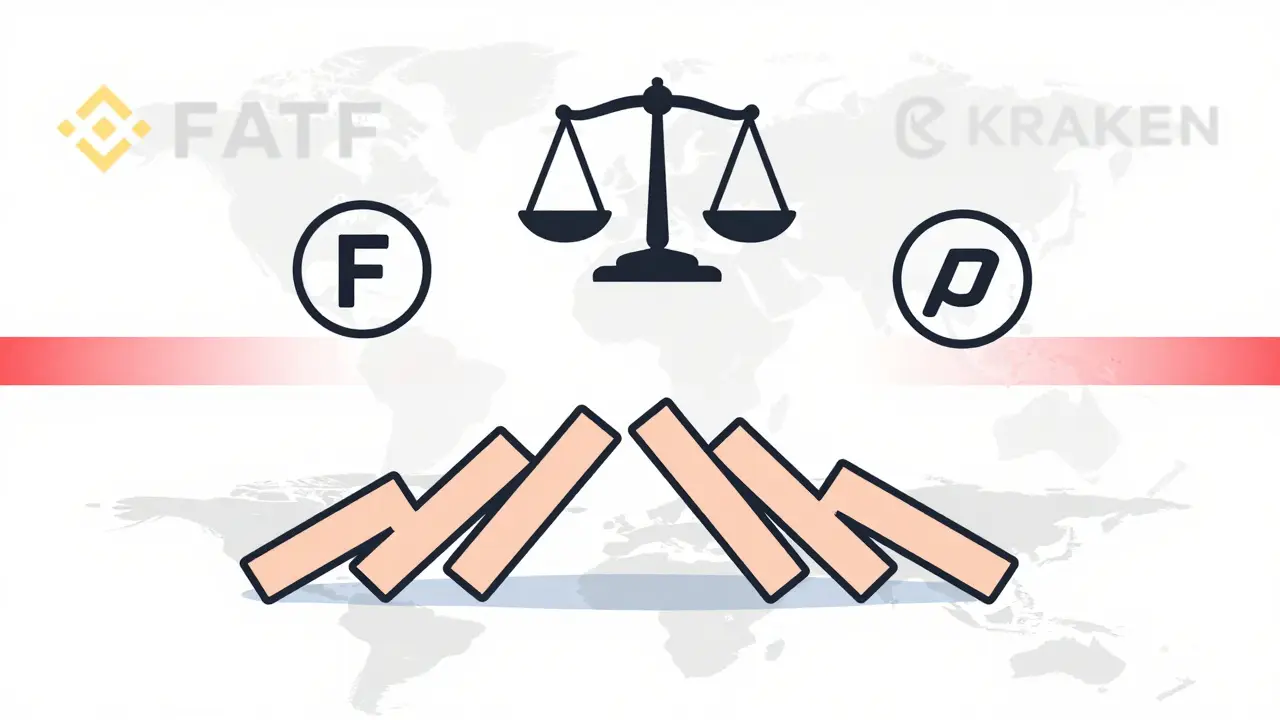
By early 2025, the dominoes started falling. Binance removed Monero, Zcash, and Dash from its U.S. and European platforms in February. That alone cut off $600 million in monthly trading volume. Kraken followed in March, citing Canada’s FINTRAC rules. Japan, which banned privacy coins back in 2018, made sure all its licensed exchanges stayed clean. South Korea’s top five exchanges - including Upbit and Bithumb - dumped six privacy coins by September 2025, citing FATF pressure. OKEx Korea axed five more by October. It wasn’t random. This was a coordinated global cleanup. CoinLaw tracked 73 exchanges worldwide delisting privacy coins in 2025 - up from just 51 in 2023. That’s a 43% jump in one year. And it wasn’t just small players. The biggest names in crypto made the move. Why? Because regulators started threatening fines, license revocations, and even criminal charges. In April 2025, Poloniex delisted Monero after direct pressure from the U.S. Treasury Department. That’s not a warning - that’s a direct order.Why Do Regulators Hate Privacy Coins So Much?
It’s not that regulators hate privacy. It’s that they can’t verify it. Think of it like a cash transaction. You can buy something with cash anonymously - and that’s legal. But if you’re moving $100,000 in cash without telling the bank, you’re breaking the law. Crypto exchanges are now treated like banks. They have to know who’s sending and receiving money. Privacy coins make that impossible. Monero uses ring signatures to mix your transaction with others, hiding your identity. Zcash uses zero-knowledge proofs to prove a transaction is valid without showing any details. Dash has private send features that obscure the trail. These aren’t flaws - they’re features. But under MiCA (the EU’s crypto rulebook), and similar laws in Australia, South Korea, and Dubai, those features are now illegal for regulated platforms. The EU is taking it even further. Starting July 2027, all 27 member states will ban anonymous crypto accounts entirely. That means even if you use a privacy coin on a non-custodial wallet, you won’t be able to trade it legally through any EU-based exchange. The U.S. and UK are moving in the same direction.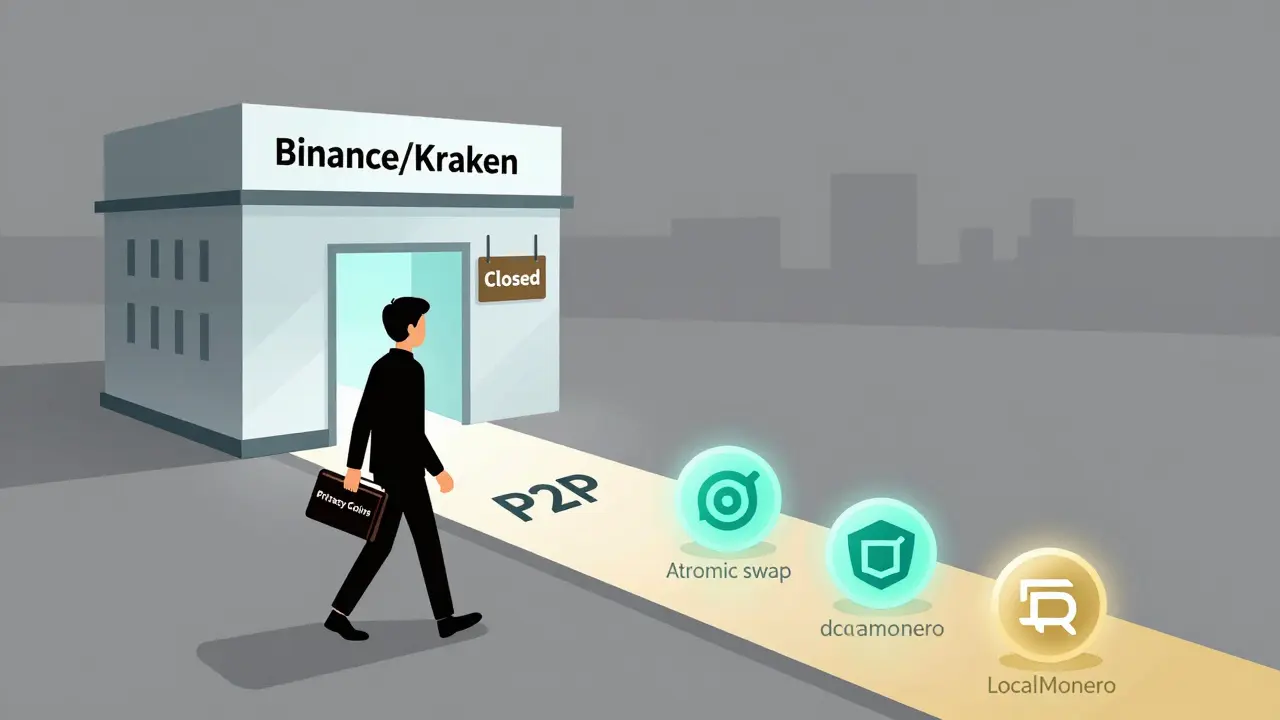
But Prices Are Rising? How?
Here’s the twist: while exchanges are dumping privacy coins, their prices are going up. In 2025, privacy coins as a group gained 71.6% - beating Bitcoin’s 48% rally. Monero jumped over 90%. Zcash rose 65%. How? Supply and demand. When exchanges delist a coin, the supply on major platforms shrinks. But demand doesn’t vanish - it just moves. People who still want privacy aren’t giving up. They’re switching to peer-to-peer platforms like LocalMonero, which saw a 19% spike in activity after the delistings. Others are using decentralized exchanges (DEXs) like Uniswap or atomic swaps to trade directly. Institutional investors, sensing scarcity and strong community loyalty, are quietly accumulating. Even Zcash’s shielded addresses - the part that hides transaction details - dropped 8% due to KYC rules. But that’s not because people stopped using it. It’s because fewer people can access it legally on big exchanges. The underground demand is still there.Where Can You Still Trade Privacy Coins?
You can’t buy Monero on Coinbase or Binance anymore. But you still can - if you know where to look. In Switzerland and Liechtenstein, some exchanges still offer privacy coins under strict KYC/AML rules. Singapore allows them with heavy monitoring. Japan? Still banned. South Korea? Gone. Australia? Restricted. Dubai? Banned since 2023. The only real option left for most users is decentralized or peer-to-peer trading. Platforms like LocalMonero, Bisq, and Hodl Hodl let you trade directly with others - no exchange, no middleman. You still need to verify your identity if you’re using a fiat gateway, but the actual crypto transfer stays private. Some users are turning to privacy-focused DeFi protocols that use zk-SNARKs or other zero-knowledge tech to anonymize trades without needing a privacy coin. It’s not perfect, but it’s working.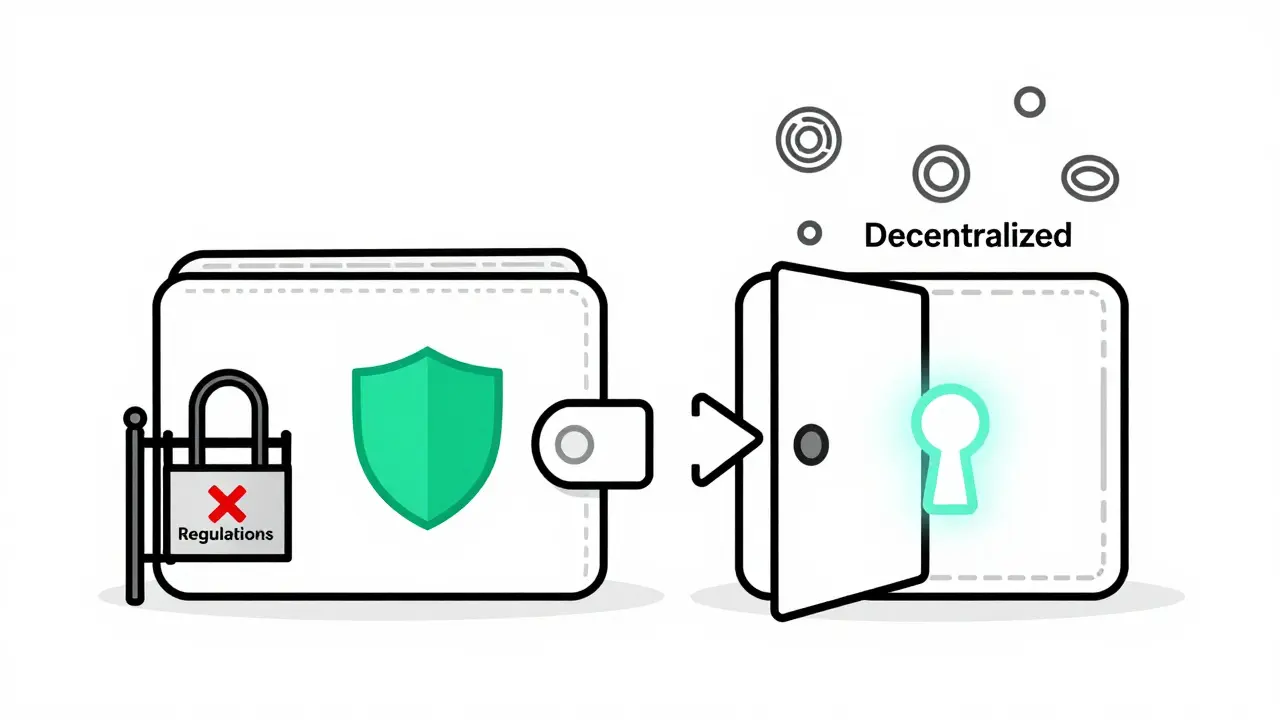
What’s Next for Privacy Coins?
The tech isn’t dead. It’s evolving. Developers are working on hybrid solutions - privacy coins that can selectively reveal transaction data to regulators without exposing everything. Imagine a privacy coin that lets you prove you’re not laundering money, without showing who you paid or how much. That’s the goal. Seven out of ten privacy coin developers say FATF rules are their biggest hurdle. But they’re not giving up. Some are building compliance modules that only activate when dealing with regulated entities. Others are exploring on-chain privacy with off-chain reporting - a kind of "privacy with audit trail." The big question isn’t whether privacy coins will survive. It’s whether they’ll survive on exchanges. The future might belong to wallets that support privacy coins natively - like Exodus, Trust Wallet, or Ledger - and decentralized platforms that don’t answer to governments.What This Means for You
If you held privacy coins on an exchange in 2025, you probably got a notice. Maybe you sold. Maybe you moved them to a wallet. If you didn’t - you might still be stuck. Most exchanges gave users 30 to 60 days to withdraw. After that, your coins were frozen or deleted. If you still want to use privacy coins:- Withdraw them to a non-custodial wallet before they get delisted.
- Use peer-to-peer platforms like LocalMonero or Bisq for trading.
- Never send privacy coins to an exchange that doesn’t support them - you’ll lose them.
- Learn how to use atomic swaps or privacy-focused DeFi apps.
Why were privacy coins delisted from crypto exchanges?
Privacy coins were delisted because they make it impossible for exchanges to comply with global anti-money laundering (AML) and counter-terrorism financing (CTF) rules. Regulations like the FATF Travel Rule require exchanges to track sender and receiver information for every transaction - something privacy coins like Monero and Zcash are designed to hide. Exchanges faced heavy fines, license revocations, or even criminal liability if they kept listing them, so they removed the coins to stay legal.
Which privacy coins were most affected by delistings?
Monero (XMR), Zcash (ZEC), and Dash (DASH) were the most targeted. These three made up over 80% of all privacy coin trading volume before the delistings. Others like PIVX, Haven (XHV), and BitTube (TUBE) were also removed, but less widely held. Monero, in particular, became the symbol of the privacy coin crackdown due to its strong anonymity features and widespread use.
Can I still buy Monero or Zcash in 2026?
Yes - but not on major centralized exchanges like Binance or Coinbase. You can still buy them on peer-to-peer platforms like LocalMonero, Bisq, or through decentralized exchanges (DEXs) that don’t require KYC. Some wallets like Exodus and Trust Wallet also support direct swaps. The key is to never send privacy coins to an exchange that doesn’t list them - your funds could be lost permanently.
Why did privacy coin prices go up even as they got delisted?
Supply dropped sharply on major exchanges, but demand didn’t disappear - it just moved underground. People who value privacy kept buying, using P2P platforms and DeFi tools. With fewer coins available on regulated exchanges, scarcity drove prices up. Institutional investors also started accumulating quietly, betting that privacy tech would become essential as surveillance grows. Monero gained over 90% in 2025 despite being delisted everywhere.
Is it legal to hold privacy coins in the U.S.?
Yes, it’s still legal to hold privacy coins in the U.S. - just not to trade them on regulated exchanges. The government hasn’t banned ownership. But if you buy or sell them through an exchange that’s required to follow AML rules (like Coinbase or Kraken), you can’t do it anymore. You can hold them in your own wallet, send them to other wallets, or trade them on non-custodial platforms without breaking the law.
Will privacy coins ever come back to exchanges?
Not unless the technology changes. Right now, privacy coins and regulatory compliance are incompatible. But developers are working on "compliant privacy" - systems that hide transaction details from the public while still allowing regulators to verify legitimacy under specific conditions. If they succeed, we might see privacy coins return to exchanges by 2028-2030. Until then, they’ll live on decentralized platforms and in private wallets.