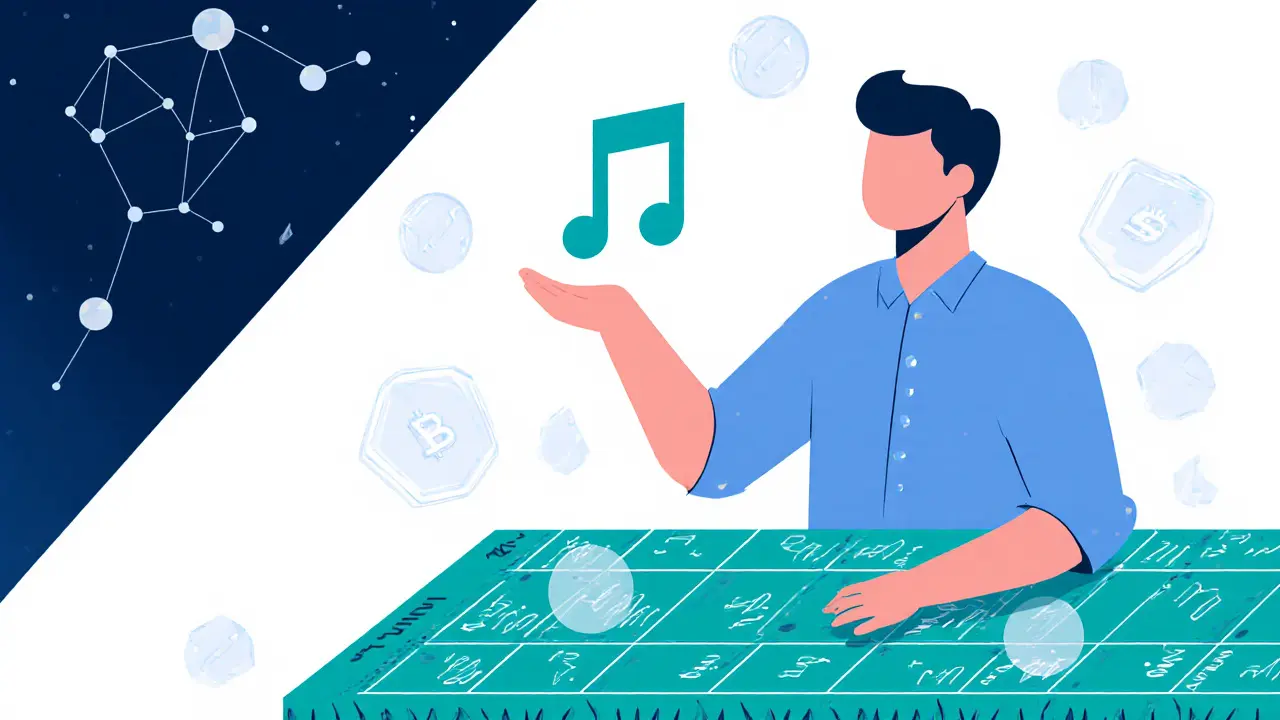
Blockchain DRM: How Blockchain Protects Digital Rights and Stops Piracy
When you buy a song, a book, or a video game, you rarely own it—you just rent access. Blockchain DRM, a system that uses blockchain to verify ownership and control how digital content is used. Also known as decentralized digital rights management, it flips the script by letting creators lock permissions directly into the code, so no middleman can take away your rights—or your profits. Unlike old-school DRM that locks files to your device or tracks your clicks, blockchain DRM records ownership on a public ledger. That means if you buy an NFT of a song, the contract says exactly who can play it, copy it, or resell it—and no one can change those rules without your approval.
This isn’t just theory. Projects like NFT ownership, a way to prove you hold a unique digital asset on a blockchain are already testing this in gaming and music. Think of it like a digital deed: if you own an NFT tank from the Age of Tanks airdrop, the blockchain doesn’t just show you have it—it enforces that only you can trade or use it. Meanwhile, blockchain copyright, the use of immutable ledgers to timestamp and verify creative work ownership helps artists prove they created something first, without relying on lawyers or registries. But here’s the catch: most blockchain DRM systems still rely on users to follow the rules. If someone downloads a protected file and shares it anyway, the blockchain can’t stop the copy—it just proves it’s unauthorized.
That’s why real-world use is still limited. Many crypto projects focus on hype, not enforcement. You’ll see coins like TRAVA or Peanut with fancy tech claims, but no actual DRM built in. Others, like the Dream Card NFT airdrop or WMX tokens, use blockchain to track access, but don’t stop users from screenshotting or redistributing content. The strongest examples? Few and far between. What works best isn’t the blockchain itself—it’s how it’s paired with smart contracts that auto-revoke access, or tokens that unlock content only for verified owners.
So what’s next? If blockchain DRM is going to replace the broken systems we have now, it needs to be simple, cheap, and foolproof. Right now, it’s mostly a promise. But in the posts below, you’ll find real cases where it’s working—like NFT-based game items that can’t be duplicated, or music tokens that pay artists every time they’re played. You’ll also see the failures: projects that claimed to use blockchain to protect content, but left it wide open. This isn’t about tech magic. It’s about smart design, clear rules, and users who actually care about ownership. Let’s look at what’s real—and what’s just noise.
Digital Rights Management Using Blockchain: How It Works and Why It Matters
0 Comments
Blockchain DRM gives creators control over their digital content by recording ownership and licensing on an immutable ledger. It cuts delays, reduces fraud, and automates royalty payments-without relying on big tech middlemen.