Cryptocurrency Sanctions: What They Are, Who They Target, and How They Impact You
When governments put cryptocurrency sanctions, official restrictions on digital assets or users to limit financial activity. These aren’t theoretical—they’re enforced by agencies like the U.S. Treasury’s OFAC and have real consequences for traders, exchanges, and even ordinary users. Unlike traditional banking, crypto moves fast and crosses borders, making it both hard to control and hard to ignore. Sanctions don’t just block wallets—they freeze assets, shut down exchanges, and cut off entire regions from global finance.
Take Iran, a country under heavy financial sanctions that has turned to crypto as a lifeline. Iranian citizens can mine Bitcoin but can’t easily convert it into usable money. Tether froze wallets linked to Iranian users, and trading hours are restricted. This isn’t an anomaly—it’s a pattern. Similar rules apply to North Korea, Syria, and Crimea. Even platforms like WazirX and BtcTurk, once trusted by locals, now face scrutiny over compliance and past hacks that exposed sanctioned funds. Meanwhile, stablecoins, digital assets designed to hold steady value. USDC and USDT are now key tools in sanction evasion—and also in compliance tracking. Regulators watch their flows closely because they’re the most liquid form of crypto money. If you’re holding tokens tied to sanctioned entities, even unknowingly, your wallet could be flagged. Projects like TRAVA.FINANCE or Peanut (NUX) might vanish overnight if their developers are linked to restricted jurisdictions.
It’s not just about countries. crypto airdrops, free token distributions meant to build community. ACMD, WMX, and Age of Tanks are popular—but if you’re in a sanctioned region, you might not be eligible. Some platforms automatically block IP addresses from restricted countries. Even if you bypass that, claiming tokens could violate sanctions law. The FAN8 airdrop? It’s a scam. But real ones? They’re increasingly filtered by geography, KYC, and compliance checks. You can’t ignore this. Whether you’re in Portugal, Singapore, or India, your access to crypto depends on where you live and who you trade with. The rules are changing fast, and the penalties are real.
Below, you’ll find real stories from people caught in these systems—how Iranian traders navigate restrictions, why some tokens vanished overnight, and how exchanges like IX.com and Coinavenir handle compliance. These aren’t theory pieces. They’re case studies from the front lines of crypto and control.
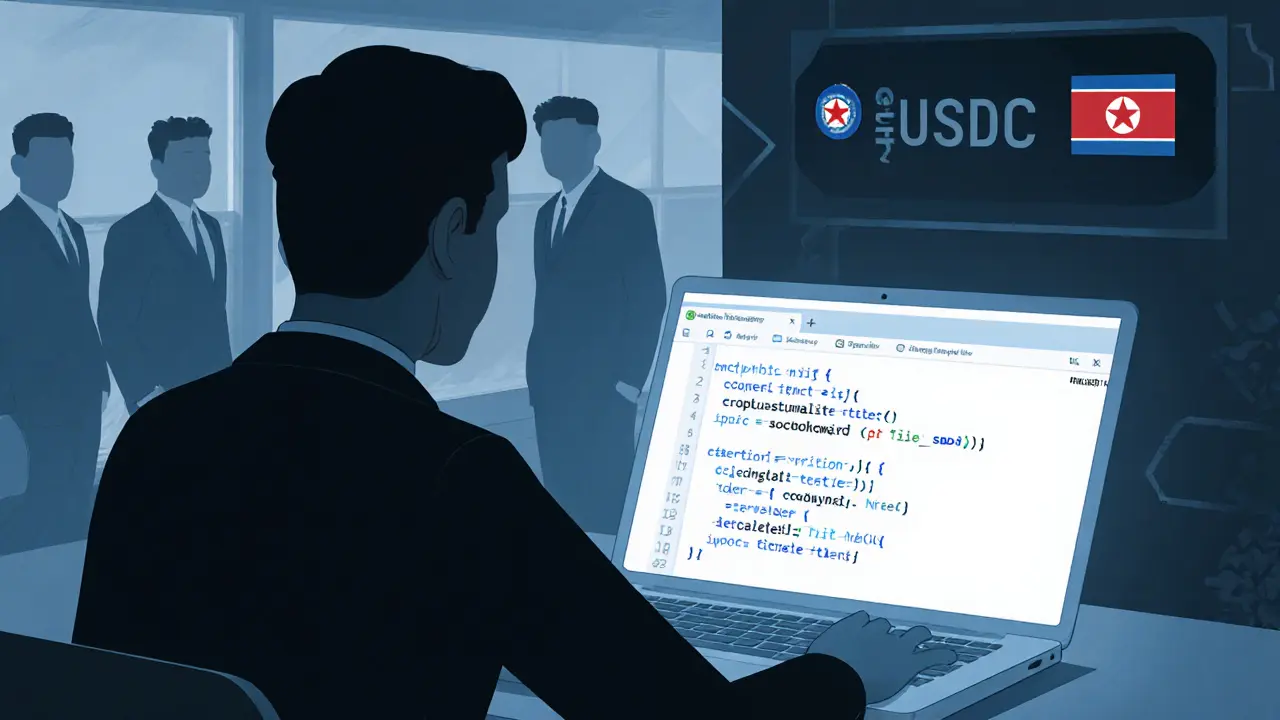
How North Korean IT Workers Use Crypto Laundering to Bypass Sanctions
0 Comments
North Korean IT workers are using fake identities and crypto payments to launder over $1.6 billion since early 2025, funding weapons programs while hiding in plain sight as remote employees. Here's how they do it - and how to stop them.