MEV Solutions: How Block Builders and Validators Are Changing Crypto Trading
When you send a crypto transaction, it doesn’t just go straight to the blockchain. It sits in a pool, waiting for a block builder, a validator or miner who selects and orders transactions to maximize profit to pack it into the next block. That’s where MEV, short for Maximal Extractable Value, miner extractable value comes in—hidden profits made by rearranging, inserting, or censoring transactions before they’re confirmed. It’s not a bug. It’s a feature. And without MEV solutions, tools and protocols designed to fair-share or neutralize these profit opportunities, regular users get crushed by bots that see your trade before it even lands.
Imagine you try to buy 100 tokens at $1 each. A bot notices your order, buys the same tokens ahead of you, drives the price up to $1.10, then sells back to you—taking your $10 profit. That’s a sandwich attack. Or a validator might delay your transaction to include a high-fee arbitrage trade first. These aren’t hypotheticals. They happen every minute on Ethereum and other chains. MEV solutions fix this by letting users opt into fair ordering, hiding transaction details until the last moment, or splitting MEV profits with the community instead of letting block builders keep it all. Projects like Flashbots, EigenPhi, and Chainlink’s CCIP are building these tools, turning what was once a free-for-all into something closer to a level playing field.
Some MEV solutions focus on privacy—encrypting mempool data so bots can’t see your trades. Others use auction systems to let users bid for fair inclusion. And then there are protocols that redistribute MEV to stakers or liquidity providers, so the value stays in the ecosystem instead of leaking to whales and bots. These aren’t just technical tweaks. They’re economic redesigns. If you trade, stake, or use DeFi, you’re already affected by MEV. The question isn’t whether it matters—it’s whether you’re protected. Below, you’ll find real-world breakdowns of how MEV impacts specific tokens, exchanges, and airdrop systems—and how some projects are fighting back with actual tools, not just promises.
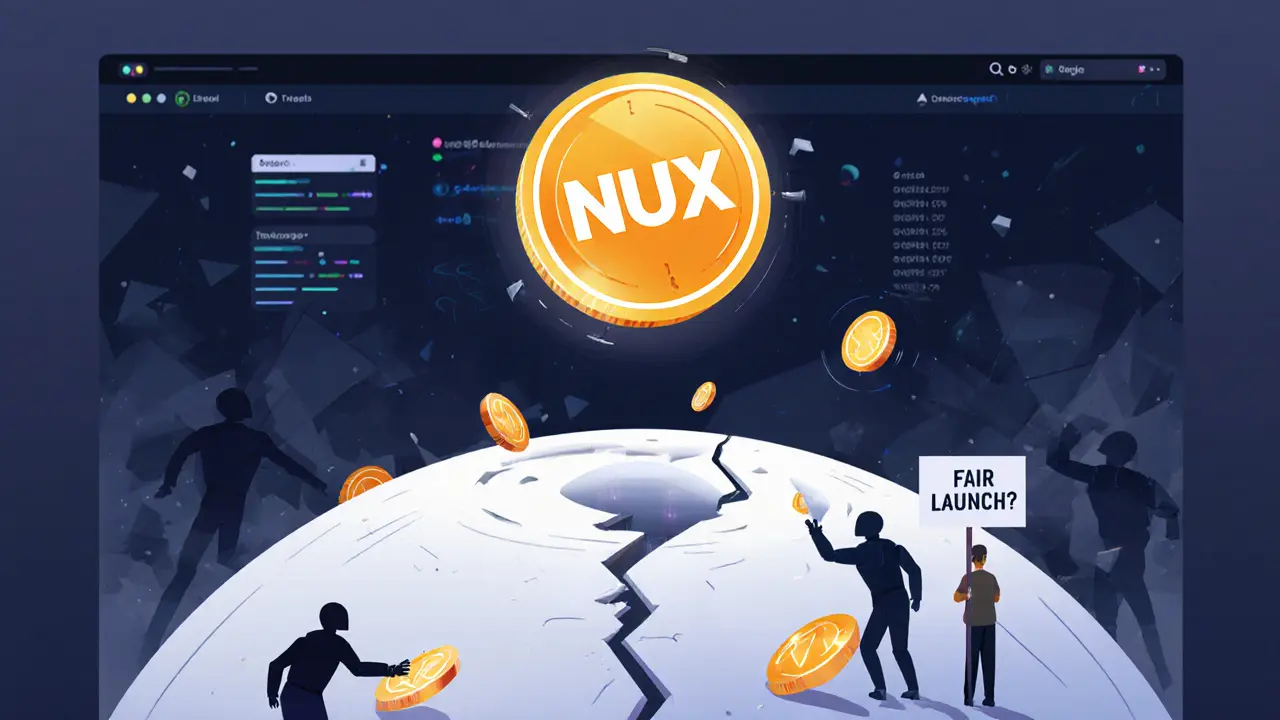
What is Peanut (NUX) Crypto Coin? Tokenomics, Use Case, and Real-World Performance
0 Comments
Peanut (NUX) is an ERC-20 token built for Fair Launch protection on DEXes, but its price has crashed 99.9% since launch. With minimal liquidity, no development updates, and zero adoption metrics, it's a high-risk asset with little future potential.