What Is Green Blockchain Technology and Why It Matters
 Feb, 14 2026
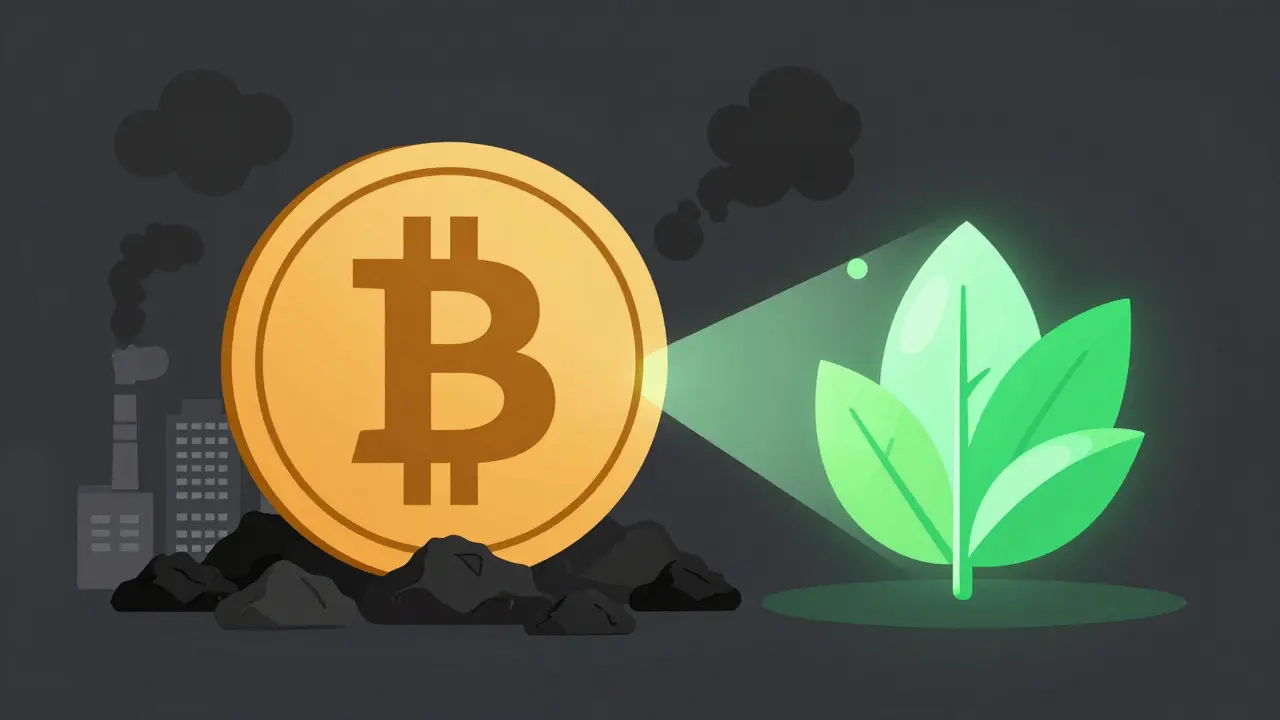
Most people think of blockchain as digital gold or the backbone of cryptocurrencies like Bitcoin. But behind that hype lies a quiet crisis: blockchain is using more electricity than some countries. If blockchain kept growing the way it has, its carbon footprint could rival that of entire nations. That’s where green blockchain technology comes in-not as a side project, but as a necessary upgrade.
Why Traditional Blockchains Are Energy Hogs
The original blockchain model, used by Bitcoin and early Ethereum, relies on something called Proof-of-Work (PoW). In PoW, miners compete to solve complex math puzzles. The first one to solve it gets rewarded with new coins. Sounds fair, right? Except it’s like having millions of people running marathon races just to decide who gets a prize-and every lap burns electricity. Bitcoin alone uses more power annually than the entire country of Argentina. That’s not a typo. Most of that energy comes from fossil fuels, especially in regions where electricity is cheap and dirty. Every time you send a Bitcoin transaction, you’re indirectly contributing to coal plants and gas turbines. It’s not just inefficient-it’s unsustainable.What Exactly Is Green Blockchain Technology?
Green blockchain technology isn’t about making old systems a little cleaner. It’s about rebuilding them from the ground up. At its core, it’s a set of blockchain designs that prioritize low energy use without sacrificing security, transparency, or decentralization. The biggest shift? Moving away from Proof-of-Work. Instead, green blockchains use consensus mechanisms like Proof-of-Stake (PoS) and Delegated Proof-of-Stake (DPoS). In PoS, you don’t need powerful computers to solve puzzles. You just need to hold and "stake" some of the network’s coins. The more you stake, the higher your chance to validate the next block. No mining rigs. No overheating data centers. Just a simple, smart way to agree on what’s true. Ethereum made this switch in 2022. Before that, it used more energy than all of Sweden. After switching to PoS? Energy use dropped by 99.95%. That’s not a small tweak. That’s a revolution.How Green Blockchains Stay Secure Without Mining
A common question: If you remove the energy-heavy mining, doesn’t that make the network easier to hack? Not at all. PoS and DPoS actually change the economics of attacks. In PoW, an attacker needs to buy massive amounts of hardware and pay for electricity. In PoS, an attacker needs to buy 51% of all the coins in circulation. That’s not just expensive-it’s self-defeating. If you own half the network, you’re betting against yourself. If you try to break it, your own coins crash in value. Plus, green blockchains often use renewable energy sources to power the small amount of computing they still need. Some networks run entirely on solar or wind. Others partner with clean energy providers to offset their footprint. The goal isn’t just to use less energy-it’s to make sure every watt comes from a source that doesn’t harm the planet.
Real-World Uses Beyond Crypto
Green blockchain isn’t just for trading tokens. It’s becoming a tool for environmental accountability. - Carbon credit tracking: Companies can issue and verify carbon offsets on a public ledger. No middlemen. No fraud. Every ton of CO2 reduced is recorded permanently. - Supply chain transparency: Coffee growers in Colombia or fishers in Indonesia can prove their products were harvested sustainably. Buyers scan a QR code and see the full journey-from farm to shelf-with zero tampering. - Renewable energy trading: Homes with solar panels can sell excess power directly to neighbors. The blockchain records each transaction, ensuring fair payment without banks or utilities taking a cut. These aren’t theoretical. Projects like ClimateChain and Power Ledger are already doing this. They’re not trying to replace the grid. They’re giving communities tools to manage resources fairly-and prove it.The Trade-Offs: What Green Blockchain Can’t Do Yet
It’s not perfect. Some purists still argue that PoW’s energy use is the price of true decentralization. They say PoS is too centralized because big coin holders control validation. There’s truth to that. In PoS, the rich get richer-literally. If you own 10,000 ETH, you get more rewards than someone with 10 ETH. That’s a real concern. Also, green blockchains are still young. Their long-term security under massive stress hasn’t been tested like Bitcoin’s has. We don’t know how they’ll hold up during a global financial crisis or a cyberattack on a major validator node. And while they’re far more efficient, they’re not zero-impact. Servers still need cooling. Data centers still use water. The hardware still gets made and eventually thrown away. Green blockchain doesn’t erase all environmental costs-it just slashes them by 90% or more.
Who’s Leading the Way?
Several blockchains have already made the leap:- Ethereum: The largest blockchain to switch to PoS. Now uses 99.95% less energy.
- Cardano: Built on PoS from day one. Designed for low energy use and academic peer review.
- Solana: Uses a hybrid consensus called Proof-of-History with PoS. Claims to process thousands of transactions per second with minimal energy.
- Algorand: Uses pure PoS and claims carbon neutrality through offsets.
The Bigger Picture: Why This Matters
Green blockchain isn’t just about saving electricity. It’s about trust. When we can prove a company’s emissions are real, when farmers can prove their crops are organic without paperwork, when communities can trade clean energy without middlemen-we’re building systems that work for people and the planet. As regulations tighten, governments will start demanding proof of sustainability. Companies that use green blockchain will have an edge. Investors are already shifting. In 2025, over 60% of new blockchain projects were built on energy-efficient models. The old way? It’s becoming a relic. This isn’t about being "eco-friendly" as a marketing buzzword. It’s about survival. If blockchain wants to be part of the future, it has to stop being part of the problem.Is green blockchain really more secure than Bitcoin?
Yes, in different ways. Bitcoin’s security comes from massive energy use-miners spend billions on hardware to protect the network. Green blockchains like Ethereum or Cardano use economic incentives instead. To attack them, you’d need to own a huge portion of the currency, which costs billions and makes your own investment lose value. It’s not about brute force-it’s about smart economics.
Can I mine green blockchain coins on my home computer?
Not really. Mining doesn’t exist in most green blockchains. Instead, you can "stake" your coins to help secure the network. You don’t need special hardware-just a wallet and some tokens. Some platforms even let you stake with as little as 0.1 ETH. It’s like earning interest, not running a power plant.
Does green blockchain cost more to use?
No-in fact, it’s usually cheaper. Ethereum’s transaction fees dropped from over $50 during peak PoW days to under $1 after switching to PoS. Other green chains like Solana or Algorand charge fractions of a cent per transaction. You’re not just saving the planet-you’re saving money.
Are all cryptocurrencies moving to green blockchain?
Most major ones are. Bitcoin still uses PoW and shows no sign of changing. But Ethereum, Solana, Cardano, Polygon, and others have all switched or were built green. New projects almost always start with PoS or similar low-energy models. The trend is clear: if it’s not green, it’s getting left behind.
How can I support green blockchain?
Start by avoiding PoW-based coins if you can. Use wallets or exchanges that support PoS networks. Stake your coins if you hold them. Support projects that publish their carbon footprint and use renewable energy. And ask companies you work with: "Are you using blockchain? Is it green?" Your choices shape the future.