What is Piteas (PTS) Crypto Coin? A Realistic Look at the PulseChain DEX Aggregator
 Dec, 17 2025
If you’ve heard of Piteas (PTS) and are wondering if it’s just another crypto gamble or something with real use, you’re not alone. Most people who stumble upon PTS see a low price, a flashy name, and think it’s a hidden gem. But here’s the truth: Piteas isn’t a coin you buy because it’s cheap. It’s a tool built for one very narrow purpose - and whether that’s useful to you depends entirely on what you’re trying to do on PulseChain.
What Exactly Is Piteas (PTS)?
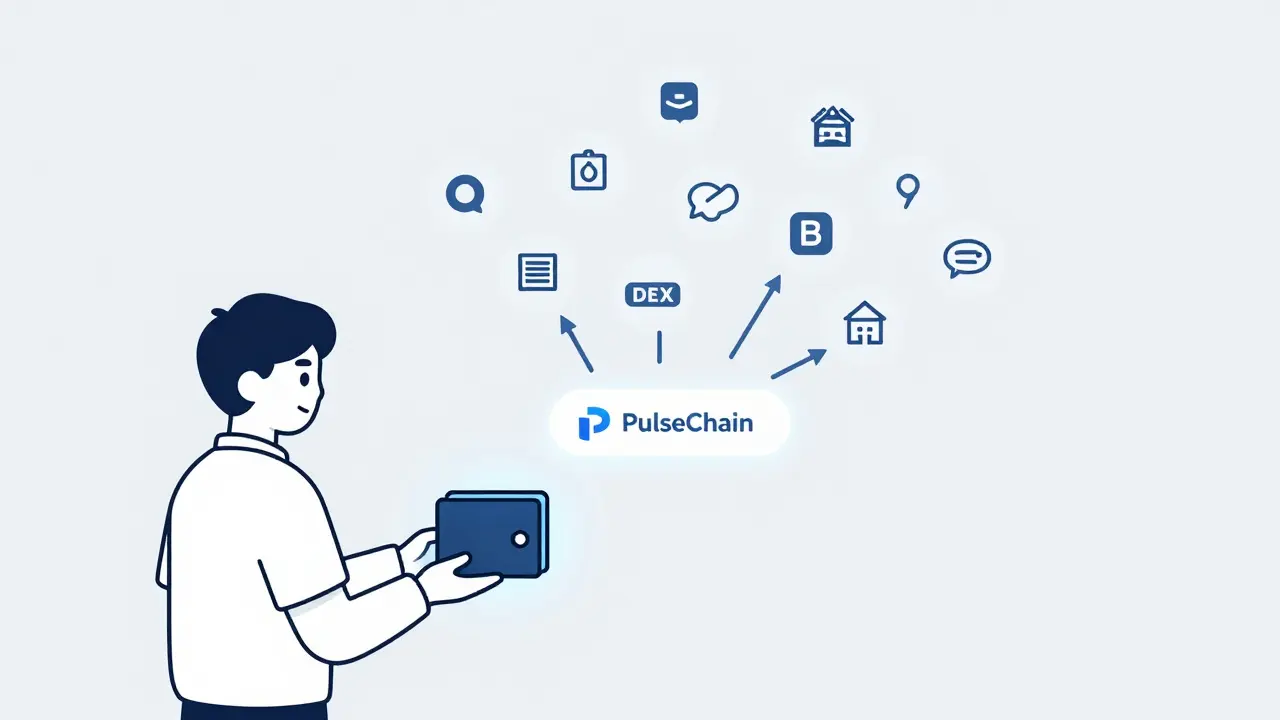
Piteas is a decentralized exchange (DEX) aggregator that runs exclusively on the PulseChain blockchain. That means it doesn’t work on Ethereum, BSC, or Solana. It only works on PulseChain - a blockchain that forked from Ethereum in 2022 and tries to offer lower fees and faster transactions. Piteas’ job is simple: it looks at all the DEXs on PulseChain at once, finds the best price for your swap, and executes it in one click.
Think of it like a flight search engine, but for crypto. Instead of checking each exchange one by one to find the best rate for swapping USDC to WETH, Piteas scans 13 different DEXs on PulseChain - including PulseX, SushiSwap on PulseChain, and others - and gives you the best deal in real time. It’s designed to cut slippage, reduce failed trades, and save you gas fees.
The PTS token is the fuel for this system. It’s not a currency you spend to buy things. It’s a governance and utility token. You can use it to vote on future upgrades, but right now, there’s almost nothing you can actually do with it besides hold it or trade it. There’s no staking, no yield farming, no rewards program. Just voting rights that haven’t been used yet.
How Does Piteas Work in Practice?
Using Piteas is straightforward if you already use a Web3 wallet like MetaMask or Rabby. You connect your wallet, pick the tokens you want to swap - say, USDC to DAI - enter the amount, and Piteas shows you the best possible rate across all its integrated exchanges. It even shows you how much you’d save compared to swapping directly on one DEX.
According to internal tests from Q3 2023, Piteas reduces slippage by 1.2% to 2.8% on average compared to going straight to PulseX or another single DEX. That might not sound like much, but on a $10,000 swap, that’s $120 to $280 saved. That’s real money in DeFi.
It also has Flashbot Protection built in, which helps prevent front-running - a common problem where bots detect your trade and jump ahead of it to profit. That’s a feature most small-chain DEXs don’t have. Piteas also cuts gas fees by 20-35% on average by batching transactions and optimizing routes.
But here’s the catch: all of this only matters if you’re already using PulseChain. If you’re on Ethereum or Arbitrum, Piteas is useless. And PulseChain itself has a tiny user base. As of late 2023, PulseChain accounted for less than 0.08% of total DEX volume across all blockchains. Piteas handles about $1.2 million in daily swaps - just 8.7% of PulseChain’s total DEX volume.
The PTS Token: Supply, Price, and Liquidity Problems
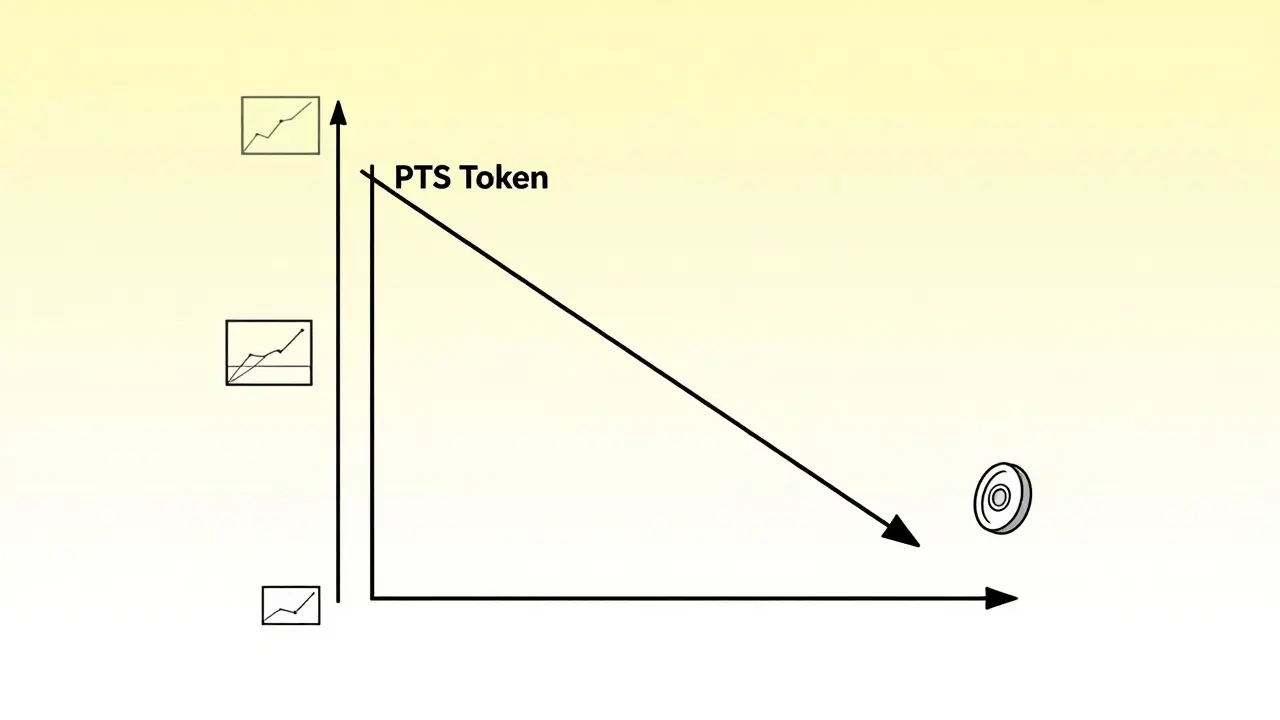
Piteas has a fixed supply of 100 million PTS tokens. About 70 million are in circulation, according to CoinStats and Bybit. The rest are locked or unclaimed. The all-time high was around $0.1887 in mid-2023. As of December 2025, it’s trading around $0.025 - down over 85% from its peak.
Here’s where things get messy: different exchanges report wildly different numbers. Coinbase says the circulating supply is zero. CoinGecko doesn’t even rank it in the top 5,000. Bybit says it’s worth $0.027, while CoinStats says $0.025. That kind of inconsistency isn’t normal for a project with serious adoption.
The real problem isn’t the price drop - it’s the liquidity. The PTS token itself has almost no trading volume. On LiveCoinWatch, daily volume for PTS is around $84. On Phux, the main exchange where it trades, the PTS/DAI pair has only $1,989 in daily volume. That means if you try to buy $500 worth of PTS, you’ll likely see 8-10% slippage. You’re not buying a token - you’re moving the market.
That’s why users on Reddit and PulseChain forums complain they can’t buy PTS without paying a huge premium. It’s like trying to buy a rare baseball card from a guy who only has one in stock. You can’t get it without blowing up the price.
Who Is Piteas For?
Piteas isn’t for casual crypto traders. It’s not for people who want to hold and HODL. It’s not for investors looking for yield or dividends.
Piteas is for one type of person: someone who actively swaps tokens on PulseChain and wants to do it as efficiently as possible. If you’re using PulseChain because you like its low fees and fast blocks, and you’re swapping between different tokens every day, then Piteas can save you time and money.
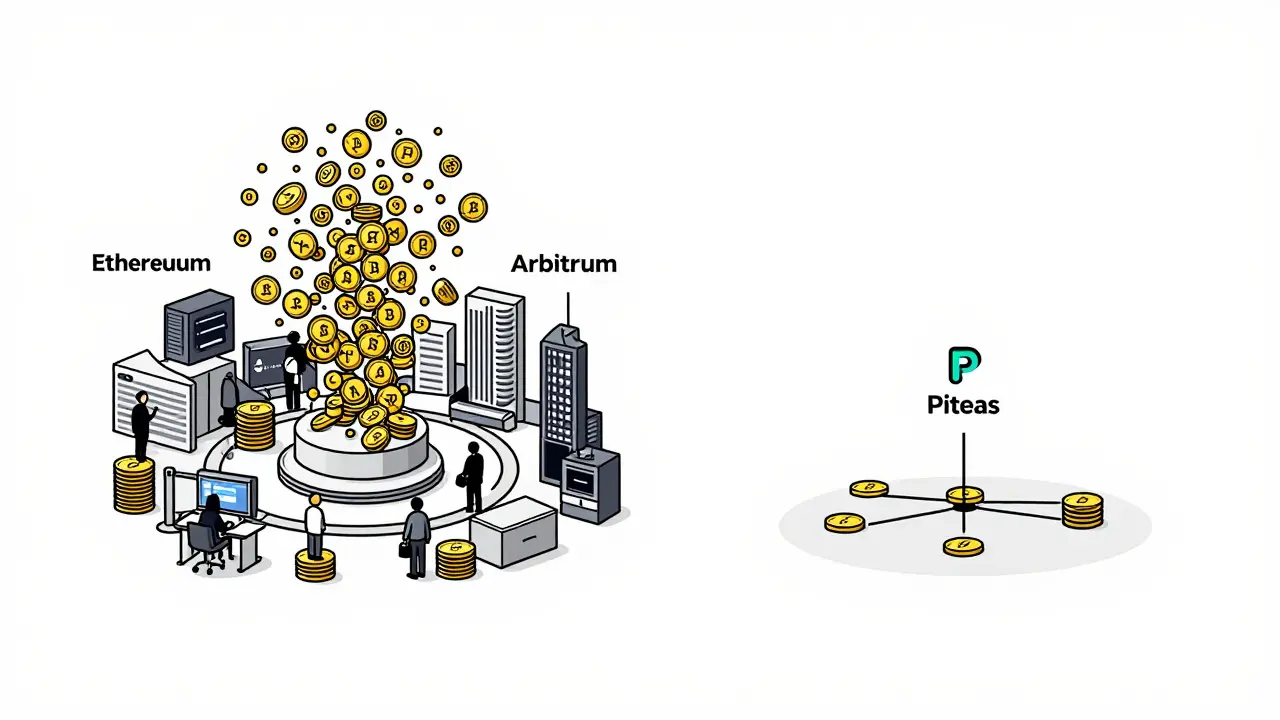
But if you’re just exploring crypto and saw PTS on CoinGecko with a low price, thinking “this could 10x,” you’re in the wrong place. Piteas doesn’t have the user base, liquidity, or utility to support that kind of speculation. Its value is tied entirely to PulseChain’s survival - and PulseChain is struggling to gain traction against Ethereum L2s like Arbitrum and Optimism, which together hold over 65% of all DeFi value.
Why Most Experts Are Skeptical
Major crypto analysts aren’t bullish on Piteas. Messari’s Q4 2023 report called it “technically competent but with unclear utility.” Benjamin Cowen, a well-known technical analyst, labeled it a “micro-cap token with extreme volatility” and warned it’s not for risk-averse investors. Ryan Sean Adams from Bankless said single-chain DEX aggregators are becoming obsolete as cross-chain solutions improve.
Even the community is divided. Users praise the interface and the swap savings - 28 out of 47 threads on PulseChainTalk mentioned how easy it was to use. But 19 threads complained about the lack of real utility for PTS. And 14 mentioned the mobile app doesn’t work well.
The biggest red flag? No roadmap. No team. No clear plan for how PTS will gain utility beyond voting. The project was launched by an anonymous team. There’s no whitepaper, no GitHub activity, no public team members. That’s not unusual in crypto - but when your entire value depends on a single, niche blockchain, anonymity becomes a liability.
Should You Buy PTS?
Here’s the bottom line:
- Don’t buy PTS if you’re looking for a long-term investment. There’s no clear path to growth.
- Don’t buy PTS if you don’t already use PulseChain. It’s useless elsewhere.
- Only consider PTS if you’re a frequent PulseChain user who swaps tokens daily and wants to save on gas and slippage - and you’re okay with the risk of holding a token with almost no liquidity.
Even then, you’re not buying a coin. You’re buying access to a tool that only works if PulseChain survives. And right now, PulseChain is a small, unproven chain with little traction outside its core fanbase.
If you want a DEX aggregator with real adoption, look at 1inch or Matcha on Ethereum or Polygon. They have millions in daily volume, real utility, and active development teams. Piteas is a niche experiment. It works technically - but it’s not built to scale.
How to Use Piteas (If You Decide To)
If you’re still interested, here’s how to get started:
- Install a Web3 wallet like MetaMask or Rabby.
- Add the PulseChain network to your wallet (RPC: https://rpc.pulsechain.com, Chain ID: 941).
- Get some PulseChain native tokens (PLS or USDC on PulseChain) to pay for gas.
- Go to piteas.io and connect your wallet.
- Select the tokens you want to swap and review the quote.
- Adjust slippage tolerance to 8-12% if you’re buying PTS - it’s needed because of low liquidity.
- Confirm the transaction and wait.
Keep in mind: you’ll need to buy PTS from Phux or another small exchange - and expect high slippage. There’s no centralized exchange listing it. No Coinbase. No Kraken. Just decentralized, low-volume trading.
What’s Next for Piteas?
There’s no official roadmap. The team hasn’t announced any new features, partnerships, or token utility upgrades. Community rumors suggest a possible integration with PulseChain’s v3 upgrade, but nothing is confirmed.
Piteas’ future depends entirely on PulseChain’s survival. If PulseChain gains millions of users, Piteas could become essential. If PulseChain fades into obscurity - as many Ethereum forks have - Piteas will vanish with it.
Right now, it’s a technically sound tool stuck in a failing ecosystem. That’s not a recipe for success. It’s a gamble on a gamble.
Is Piteas (PTS) a good investment?
No, Piteas is not a good investment for most people. It’s a micro-cap token with no real utility, extremely low liquidity, and no team or roadmap. Its value is tied entirely to PulseChain’s survival, which is uncertain. If you’re looking for growth or returns, look elsewhere.
Can I buy PTS on Coinbase or Binance?
No, PTS is not listed on any major centralized exchanges like Coinbase, Binance, or Kraken. The only places you can trade it are small decentralized exchanges on PulseChain, like Phux. Liquidity is very low, so buying even small amounts can cause large price swings.
What is Piteas used for?
Piteas is a DEX aggregator that finds the best swap rates across 13 decentralized exchanges on the PulseChain network. It helps users save on gas fees and reduce slippage when trading tokens. The PTS token is used for governance voting, but there are no other active utilities yet.
Why is PTS price so low?
PTS price is low because demand is minimal. It has no real use case beyond voting, and the PulseChain ecosystem it depends on has very few users. With only $84 in daily trading volume, the token is highly illiquid, making it hard to buy or sell without moving the price.
Is Piteas safe to use?
Technically, yes - Piteas uses Flashbot Protection and has been audited for basic security. But safety isn’t just about code. The anonymous team, lack of transparency, and dependence on a struggling blockchain make it a high-risk project. Only use it if you understand the risks and are comfortable losing your investment.