Crypto Holding Legality in Argentina: Rules, Taxes & Restrictions for 2026
 Jun, 24 2026
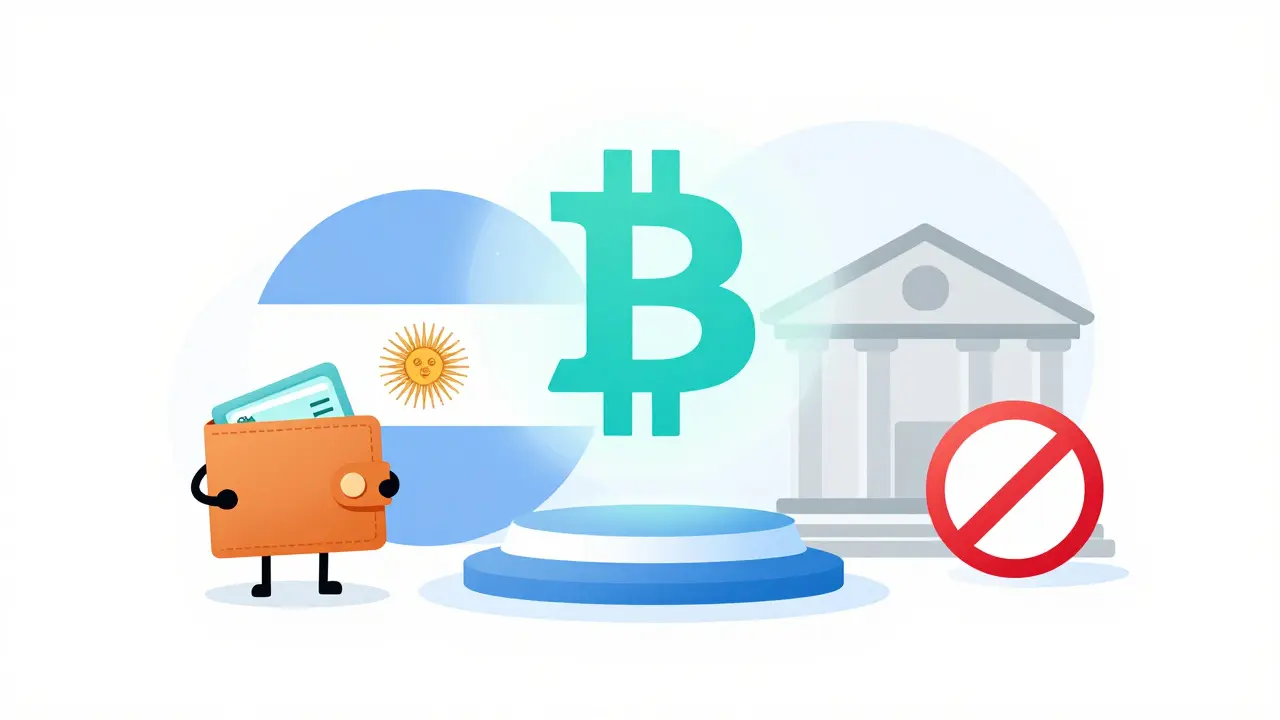
You can legally hold cryptocurrency in Argentina. That is the short answer. But if you think that means you can just buy Bitcoin on any app and transfer it to your bank account without a hitch, you are mistaken. The reality is much more complex. While owning digital assets is protected by law, using them involves navigating a maze of strict regulations, banking bans, and tax obligations.
As of mid-2026, Argentina has moved from a legal gray area to one of the most regulated crypto environments in Latin America. This shift was driven by high inflation, currency controls, and a new political administration eager to embrace digital assets while maintaining financial stability. If you live in Argentina or serve customers there, understanding these rules is not optional-it is essential to avoid fines, frozen assets, or criminal liability.
The Legal Status of Crypto in Argentina
First, let’s clear up a common misconception: cryptocurrency is not legal tender in Argentina. You cannot pay your rent or taxes directly with Bitcoin. Article 75, Section 11 of the National Constitution gives the exclusive power to issue legal tender to the Central Bank of the Republic of Argentina (BCRA). Crypto is classified as a "digital asset" or "virtual asset."
However, holding these assets is fully legal. In fact, private contracts settled with crypto are recognized under Decree 70/2023, issued in December 2023. This decree reaffirmed that parties can agree to settle debts using cryptocurrencies like Bitcoin, provided both sides consent. This was a crucial step because it removed the fear that crypto transactions were inherently void under civil law.
| Aspect | Status | Implication |
|---|---|---|
| Legal Tender | No | Mercado Pago or banks won't accept BTC for official payments. |
| Holding Assets | Yes | You can own Bitcoin, Ethereum, etc., without penalty. |
| Private Contracts | Valid | Decree 70/2023 allows settlement via crypto if agreed upon. |
| Banking Integration | Banned | BCRA prohibits banks from processing crypto trades. |
This distinction matters because it defines how you interact with the system. You own the asset, but the traditional financial system refuses to touch it. This creates a two-tiered economy where crypto exists parallel to the peso, often used as a hedge against inflation rather than a daily spending tool.
The Regulatory Framework: CNV Takes Charge
If you are running a business or providing services, the rules tighten significantly. The game-changer was Law 27,739, enacted on March 14, 2024. This law designated the National Securities Commission (CNV is the primary regulator for Virtual Asset Service Providers in Argentina) as the main authority over the crypto sector.
Previously, oversight was fragmented. Now, anyone acting as a Virtual Asset Service Provider (VASP) must register with the CNV. A VASP includes exchanges, wallet providers, and platforms that facilitate trading. The CNV issued Resolution 994/2024 in March 2024 to define exactly who qualifies as a VASP. Shortly after, the Financial Intelligence Unit (UIF enforces anti-money laundering compliance for crypto entities) released Resolution 49/2024, making VASPs reporting entities for Anti-Money Laundering (AML) and Counter-Financing of Terrorism (CFT).
The timeline for compliance was aggressive. By July 1, 2025, individuals operating as VASPs had to register. Argentine companies had until August 1, 2025. Foreign companies serving Argentinian clients had until September 1, 2025. As of mid-2026, this deadline has passed. Major players like Coinbase have already registered. Over 100 VASPs are now authorized. If you are using an unregistered platform, you are taking a significant risk. Those platforms may be shut down, and your funds could be inaccessible.
The Banking Ban: Why You Can’t Use Your Bank Account
Here is where many people get stuck. You can hold crypto, but you cannot easily move money between your bank account and a crypto exchange. On May 4, 2023, the BCRA issued a ban prohibiting banks from offering crypto-related services. This included blocking transactions to known crypto exchanges and preventing accounts linked to VASPs from operating normally.
Why did they do this? The BCRA stated it was to protect foreign currency reserves. Argentina has a long history of capital flight, and authorities feared that easy crypto access would drain pesos and dollars from the formal banking system. This ban remains in effect in 2026.
So, how do people buy crypto? They use peer-to-peer (P2P) markets, cash deposits at physical locations, or specialized fintech apps that operate outside the traditional banking network. Some registered VASPs have found ways to integrate with non-bank payment processors, but direct wire transfers from major banks like Banco Nación or BBVA to exchanges are still largely blocked or heavily scrutinized.
Taxes and Reporting Obligations
Owning crypto is legal, but it is not free from the tax man. The Argentine government has made it clear that digital assets are taxable. Under Law 27,743, which established a "whitening" (blanqueo) program, citizens were encouraged to declare previously hidden assets, including crypto holdings. While the amnesty period has ended, the obligation to report income remains.
Profits from selling digital currencies are subject to personal income tax. If you trade actively, you may need to register as a taxpayer and file quarterly returns. The SEC (Secretaría de Estado de Comercio) issued General Resolution No. 1069/2025 in June 2025, clarifying these tax obligations. Ignorance is not a defense. The AFIP (Federal Public Revenue Administration) has been cracking down on undeclared crypto gains.
Cross-border transactions also face heavy taxes. To manage economic risks and boost transparency, the government imposed cross-border taxes ranging from 5% to 15%. This makes sending money abroad via crypto expensive. For example, if you try to send stablecoins to a friend in Europe, you will likely incur these fees, plus any network gas fees. This discourages using crypto for simple remittances unless the alternative (black market dollar rates) is even worse.
Who Is Affected? Individuals vs. Businesses
Your responsibilities depend entirely on what you are doing.
For Individual Holders: You can keep your Bitcoin in a non-custodial wallet (like Ledger or Trezor) completely privately. No registration is needed for personal storage. However, when you sell for pesos, you must declare that income. If you use an exchange, ensure it is a registered VASP. Unregistered platforms may disappear overnight, leaving you with worthless tokens.
For Service Providers (VASPs): The requirements are stringent. You must:
- Register with the CNV.
- Maintain minimum net worth in USD (amounts vary by service type).
- Implement robust Know Your Customer (KYC) procedures.
- Conduct regular risk assessments.
- Report suspicious activities to the UIF within 150 days.
- Keep transaction records for five years.
- Submit monthly reports on client numbers and traded volume.
- Achieve cybersecurity standards equivalent to ISO/27001.

Market Reality: High Adoption Despite Restrictions
Despite the red tape, Argentines love crypto. Approximately 30% of adult citizens-around 15.3 million people-own digital assets. This is one of the highest adoption rates in Latin America. Why? Because inflation hit 82.5% year-over-year in 2024. When your savings lose value every month, people look for alternatives.
Stablecoins dominate this market. According to Chainalysis data from 2025, stablecoins represent 68% of all crypto transactions in Argentina. People use USDT and USDC to preserve purchasing power. It is less about speculation and more about survival. The "Cepo Cambiario" (currency controls) updated in April 2025 further restricted access to foreign currency, driving even more demand for crypto as a way to hold dollars digitally.
The market is valued at approximately $2.4 billion USD as of Q3 2025, with monthly trading volumes averaging $380 million. This shows that despite the banking ban, liquidity is moving. P2P markets are thriving, and local exchanges like Buenbit and Ripio have adapted to the regulatory environment by registering with the CNV and integrating with permitted payment channels.
Risks and Penalties
What happens if you break the rules? The consequences are severe. The UIF has the power to freeze assets and refer cases to judicial authorities. For businesses, the threat is existential. Non-compliant entities face immediate operational bans. For individuals, the risk is primarily financial: undeclared gains can lead to massive back-taxes and penalties from AFIP.
There is also the risk of fraud. With so many unregistered platforms operating in the shadows, users are vulnerable to scams. The CNV launched a "Crypto Education" portal in January 2025 to help users identify legitimate services. As of late 2025, over 250,000 users had registered. It is worth checking the CNV’s list of authorized VASPs before depositing any funds.
Looking Ahead: DeFi and Sandboxes
The regulatory landscape is not static. The government announced plans to issue specific regulations for decentralized finance (DeFi) platforms by Q2 2026. This is significant because DeFi protocols currently operate in a gray area. Will they be treated as VASPs? Or will they face a different framework? We will know soon.
Additionally, the CNV is developing a regulatory sandbox program scheduled to launch in March 2026. This will allow innovative crypto projects to operate under temporary relief while testing new models. This signals that Argentina wants to be a hub for innovation, not just a restrictive market. Experts like Dr. Martín Redrado have praised this phased approach, though some worry that strict capital requirements might favor large international players over local startups.
In summary, holding crypto in Argentina is legal, safe, and increasingly mainstream. But it requires diligence. Use registered exchanges, declare your taxes, and never assume your bank will help you move funds. The system is designed to control capital flow while allowing individual ownership. Navigate it carefully, and you can benefit from the opportunities crypto offers in this volatile economy.
Is it illegal to own Bitcoin in Argentina?
No, it is not illegal. Owning cryptocurrency is fully legal in Argentina. However, it is not considered legal tender, meaning you cannot use it to pay taxes or official bills directly. Private contracts settled with crypto are valid under Decree 70/2023.
Can I transfer money from my bank account to a crypto exchange?
Generally, no. The Central Bank of Argentina (BCRA) banned banks from offering crypto services in May 2023. Most major banks block transactions to crypto exchanges. Users typically rely on Peer-to-Peer (P2P) markets, cash deposits, or specialized fintech apps that operate outside the traditional banking system.
Do I have to pay taxes on crypto profits?
Yes. Profits from selling digital assets are subject to personal income tax. You must declare these gains to the AFIP (Federal Public Revenue Administration). Failure to do so can result in significant penalties and back-taxes. Cross-border transactions may also incur taxes ranging from 5% to 15%.
Which organizations regulate crypto in Argentina?
The National Securities Commission (CNV) is the primary regulator for Virtual Asset Service Providers (VASPs). The Financial Intelligence Unit (UIF) enforces Anti-Money Laundering (AML) and Counter-Financing of Terrorism (CFT) rules. The Central Bank (BCRA) controls banking interactions with crypto.
Are foreign crypto exchanges allowed to operate in Argentina?
Yes, but they must register with the CNV if 20% or more of their turnover comes from Argentina. The deadline for foreign VASPs to register was September 1, 2025. Platforms like Coinbase have already complied. Using unregistered foreign exchanges carries higher risks.
What happens if I use an unregistered crypto platform?
You risk losing your funds if the platform is shut down by regulators. Unregistered entities face operational bans and fines. For users, there is no legal recourse if the platform disappears or engages in fraudulent activity. Always verify that your exchange is listed as an authorized VASP by the CNV.