DAO Voting Mechanisms: How Decentralized Governance Actually Works
 Nov, 23 2026
You just bought a governance token for a new DeFi protocol. You feel powerful. But when a proposal pops up to change the fee structure, you realize you have no idea how your vote actually counts. Do you just click "Yes" and hope? If you hold 0.01% of the supply, does your voice even matter against a whale holding 40%?
This is the core problem DAO voting mechanisms try to solve. A Decentralized Autonomous Organization (DAO) isn't just a bank account with a cool name; it's a political system running on code. The way votes are counted determines who really holds power. If you want to understand why some DAOs move fast while others stall forever, or why whales sometimes lose their grip on decisions, you need to look under the hood at the voting logic.
The Whale Problem and Why Simple Majority Fails
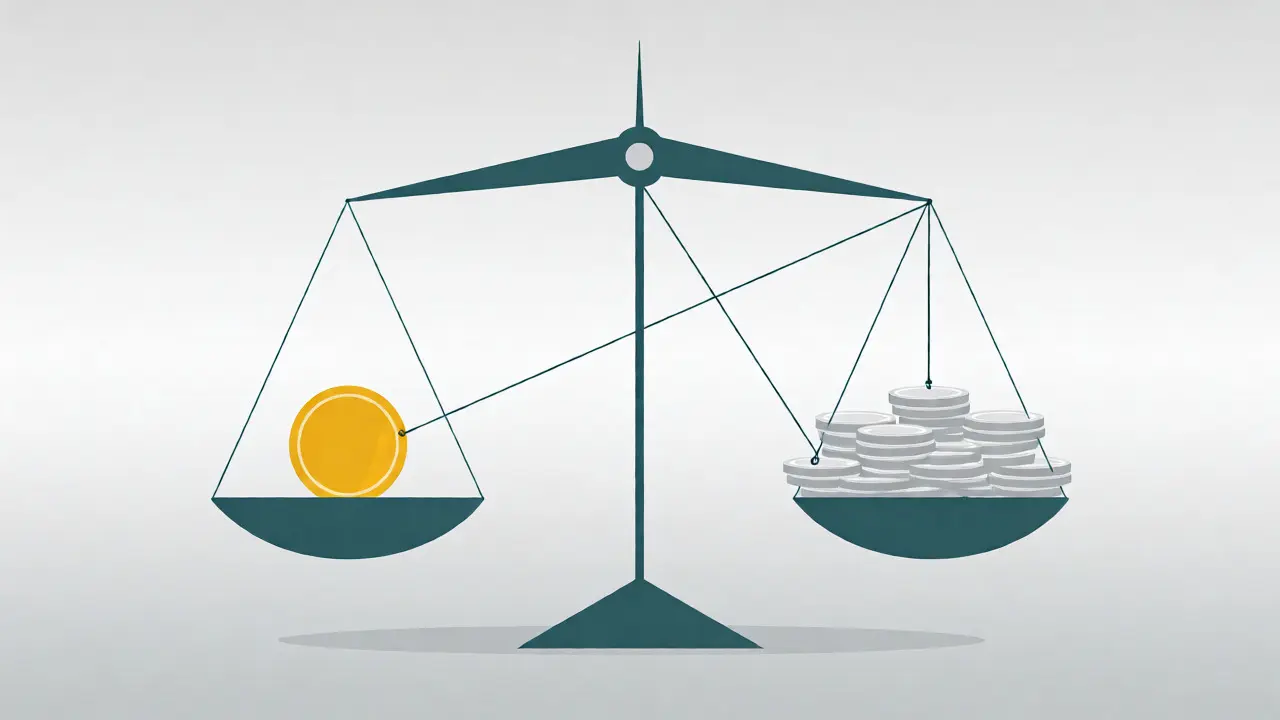
Most people assume DAO voting works like shareholder meetings: one token equals one vote. This is called Linear Voting. It’s simple, but it has a fatal flaw. If one person holds 51% of the tokens, they control everything. They can pass any proposal, reject any competitor, and drain the treasury without caring about the other 99% of holders.
This creates a plutocracy, not a democracy. Whales often buy up governance tokens not because they care about the community, but to steer the ship in a direction that benefits their specific trading position. To fix this, developers created more complex systems designed to dilute the raw power of large holdings.
Quadratic Voting: Making Bulk Power Expensive
Quadratic Voting is arguably the most popular solution to the whale problem. Instead of linear costs, the price of voting increases quadratically. Here is the math: casting n votes costs n² tokens.
- 1 vote costs 1 token.
- 2 votes cost 4 tokens.
- 3 votes cost 9 tokens.
- 10 votes cost 100 tokens.
Why does this matter? Imagine Alice has 100 tokens and Bob has 10,000 tokens. In linear voting, Bob crushes Alice every time. In quadratic voting, if Bob wants to cast 100 votes, he needs 10,000 tokens. He uses his entire balance. Alice, wanting to cast 10 votes, only needs 100 tokens. She uses her entire balance too. Suddenly, they have equal influence on that specific issue, despite the massive wealth gap.
This mechanism allows participants to express the intensity of their preference. If you feel strongly about a proposal, you pay exponentially more to push it through. If you’re lukewarm, you spend less. It prevents small groups from being steamrolled by wealthy actors who don’t actually care deeply about the outcome.
Conviction Voting: Patience Over Impulse
If Quadratic Voting solves wealth inequality, Conviction Voting solves impulsivity. This model doesn't ask for a single snapshot vote. Instead, voting power accumulates over time based on how long you keep your stake committed to a proposal.
The utility of a vote grows asymptotically toward a maximum limit. If you unstake your tokens early, your accumulated conviction resets or decays. This forces voters to think twice before flipping their stance. It filters out "vote brigading," where external actors buy tokens just before a vote closes to swing the result. By requiring sustained commitment, Conviction Voting favors proposals that have deep, lasting community support rather than those backed by temporary hype.
Brian D. Colwell, a key researcher in this space, notes that this system adds personal accountability. Since your voting power correlates with your locked capital, you risk opportunity cost if you back a bad idea. It turns voting into an investment decision, not just a button click.
Liquid Democracy: Delegating Your Voice
Not everyone wants to read every technical proposal. Retail investors often lack the time or expertise to evaluate smart contract upgrades. Liquid Democracy, also known as Delegative Voting, lets you hand your voting rights to someone else-like a tech-savvy friend or a dedicated community leader.
You can delegate your tokens to a representative who understands the topic. Crucially, this delegation is revocable. If your delegate starts voting in ways you dislike, you can pull your power back instantly or switch to a different expert. This hybrid approach combines direct democracy with representative efficiency. It boosts participation rates because passive holders still contribute to the total quorum, even if they aren't actively clicking buttons.
However, there is a catch. Popular delegates can accumulate massive amounts of delegated power, potentially recreating the whale problem in a new form. If one influencer controls 30% of the delegated votes, they become a kingmaker. Good Liquid Democracy implementations require transparency tools so voters can see exactly how their delegates are behaving.
Multisig and Quorum: Security vs. Speed
For critical actions, like moving millions of dollars from the treasury, many DAOs skip broad voting entirely. They use Multisig Voting. This requires a pre-defined number of trusted signatories (e.g., 5 out of 7) to approve a transaction. It’s faster and more secure against spam attacks, but it centralizes trust. If three signatories collude, they can hijack the funds.
Alternatively, Token-based Quorum Voting sets a minimum participation threshold. A proposal might fail automatically if fewer than 10% of all tokens participate. This ensures legitimacy but risks paralysis. If the community is apathetic, urgent updates might never pass simply because not enough people showed up to vote.
| Mechanism | Primary Goal | Best For | Main Risk |
|---|---|---|---|
| Linear Voting | Simplicity | Routine, low-stakes decisions | Whale dominance |
| Quadratic Voting | Preference Intensity | Controversial policy changes | Sybil attacks (fake identities) |
| Conviction Voting | Sustained Support | Long-term strategic goals | Slow decision speed |
| Liquid Democracy | Expertise & Participation | Complex technical proposals | Delegate concentration |
| Multisig | Security | Treasury management | Centralization of trust |
Implementation Challenges: Sybils and Identity
None of these fancy mechanisms work if one person can pretend to be ten people. This is the Sybil Attack. In Quadratic Voting, if I can create ten fake wallets, I can bypass the quadratic cost curve. I can cast ten votes for the price of one token each, effectively mimicking linear voting.
To combat this, robust DAOs integrate proof-of-identity systems. These range from simple KYC checks to zero-knowledge proofs that verify a user is human without revealing their name. Without identity verification, Quadratic Voting collapses into a game of wallet creation. Similarly, Conviction Voting requires sophisticated smart contracts to track time-weighted stakes accurately, which consumes more gas fees than simple snapshot voting.
The Future: Hybrid Models and AI
We are moving away from one-size-fits-all voting. Modern DAOs use hybrid models. Routine operational tasks might use Simple Majority for speed. Major protocol upgrades might use Quadratic Voting to ensure fairness. Emergency fund releases might use Multisig for security.
Emerging trends include Holographic Consensus, where prediction markets determine which proposals get attention, and Range Voting, allowing users to score options on a scale. Researchers are also exploring AI-driven delegation, where algorithms suggest the best delegate for you based on your past voting history and stated preferences.
Regulatory pressure is another factor. As governments scrutinize crypto, anonymous voting may face restrictions. Balancing decentralization with compliance will shape the next generation of voting protocols.
What is the main difference between Linear and Quadratic Voting?
In Linear Voting, each token equals one vote, meaning whales dominate. In Quadratic Voting, the cost of votes increases exponentially (n²), making it expensive for whales to cast many votes, thus leveling the playing field for smaller holders.
How does Conviction Voting prevent manipulation?
Conviction Voting requires voters to lock their tokens for a period. Voting power accumulates over time, so last-minute buyers cannot easily sway the outcome. This encourages long-term commitment and reduces impulsive voting.
Is Liquid Democracy better than direct voting?
It depends on the community. Liquid Democracy increases participation by letting users delegate to experts, but it risks creating new power centers if delegates accumulate too much influence. Direct voting offers more control but suffers from low engagement.
What is a Sybil attack in DAO voting?
A Sybil attack occurs when one actor creates multiple fake identities (wallets) to gain disproportionate voting power. This undermines mechanisms like Quadratic Voting unless paired with strong identity verification.
Why do some DAOs use Multisig instead of voting?
Multisig is used for high-security, low-frequency actions like treasury transfers. It is faster and safer against spam than full community voting, though it relies on trusting a small group of signatories.