Federated Sidechains Explained: How Bitcoin Scales with Trusted Groups
 Jun, 14 2026
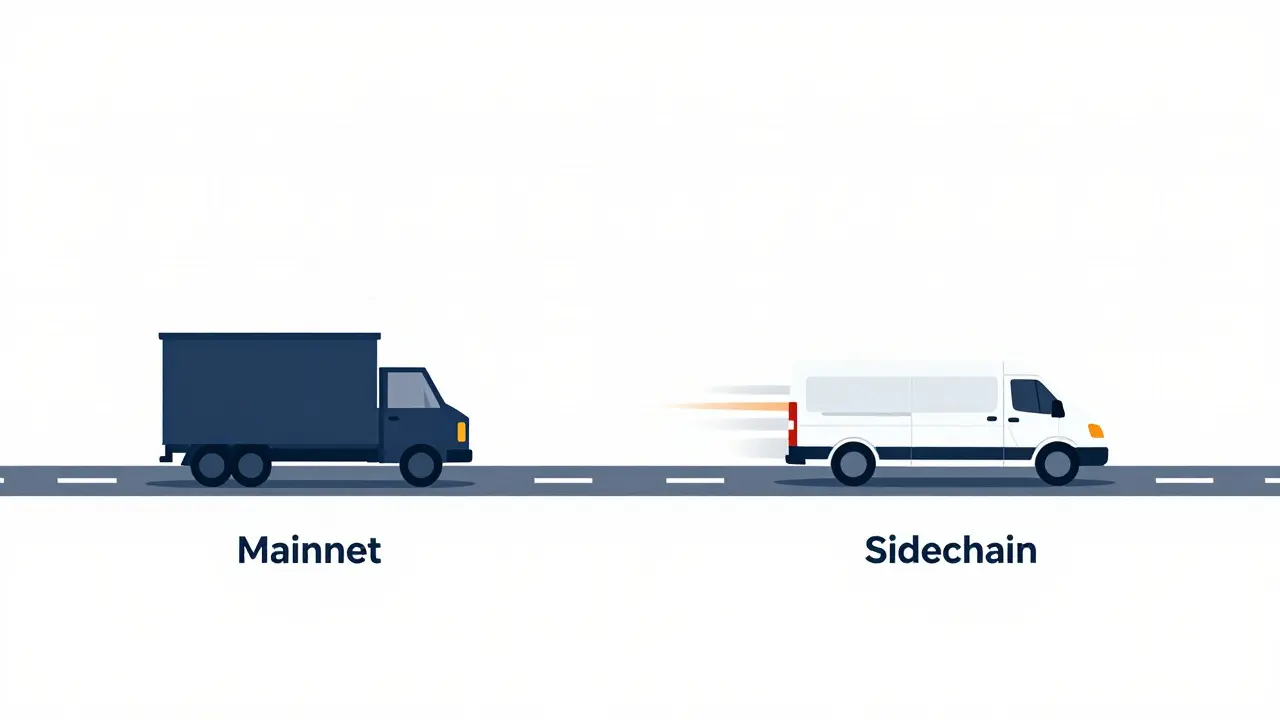
Imagine you want to send a package across the country. You could mail it via standard post-secure, reliable, but slow and expensive. Or, you could use a private courier service that’s lightning-fast and cheap, but requires you to trust a specific company to handle your goods. In the world of Bitcoin, the decentralized digital currency launched in 2009, this trade-off is real. The main network (Layer 1) is incredibly secure but struggles with speed and cost during peak times. This is where federated sidechains, parallel blockchains connected to a parent chain via a trusted group come into play.
Federated sidechains are not just a theoretical concept; they are currently the only deployed type of Bitcoin sidechain technology. They offer a pragmatic solution for immediate scalability, allowing users to move assets off the main chain for faster transactions and then back again when needed. But how do they work? And why do we need to trust a small group of people instead of relying on thousands of miners?
The Core Mechanism: Two-Way Pegs and Synthetic Assets
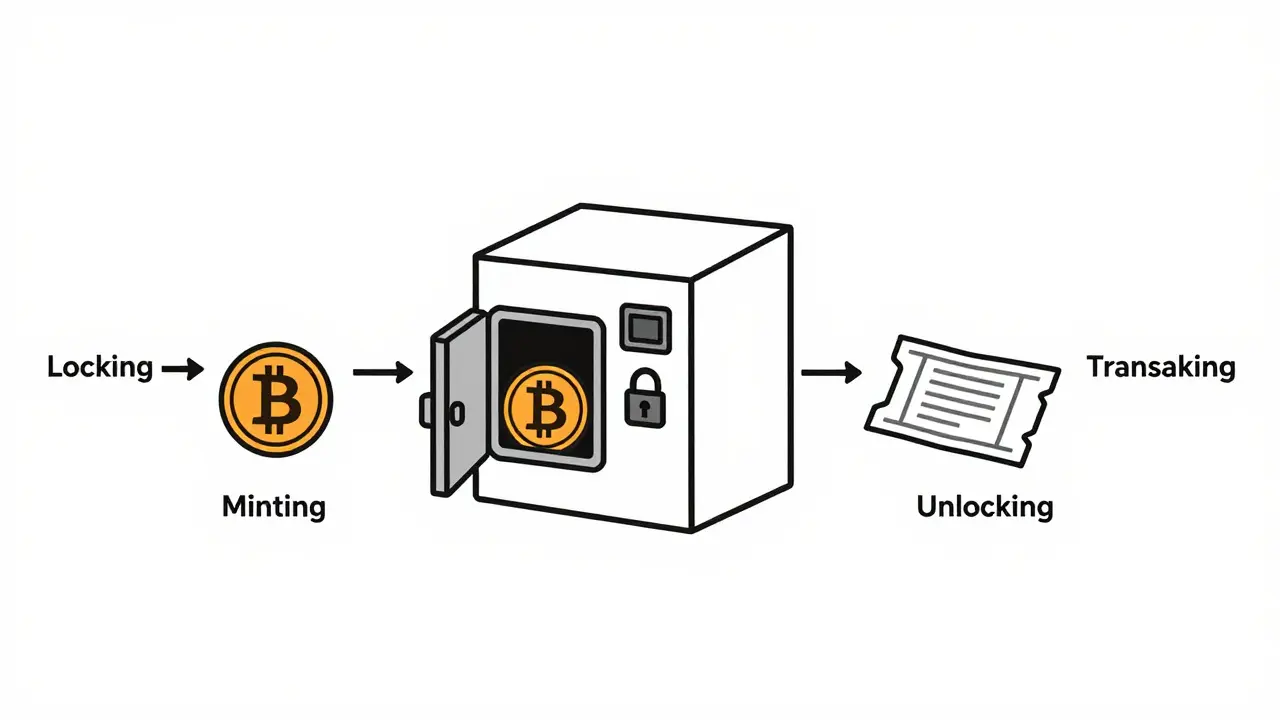
To understand federated sidechains, you first need to grasp the concept of a two-way peg, a mechanism allowing assets to be locked on one chain and unlocked on another. Think of it like a parking garage ticket system. When you enter, you give up your car (lock your Bitcoin on the main chain) and receive a ticket (a token on the sidechain). You can use that ticket to park, eat at the food court, or shop within the garage complex. When you leave, you hand over the ticket, and your car is returned to you.
In technical terms, here is what happens:
- Locking: You send your Bitcoin to a specific address controlled by the federation. These coins are effectively frozen on the main Bitcoin blockchain.
- Minting: After a confirmation period, an equivalent amount of tokens is released on the sidechain. These are called synthetic assets, tokens representing value from another blockchain. They are not actual Bitcoin, but they are backed 1:1 by the locked Bitcoin.
- Transacting: You use these synthetic tokens on the sidechain. Transactions here are fast and cheap because the sidechain doesn’t need to compete with global mining power for block space.
- Burning and Unlocking: To get your Bitcoin back, you send the synthetic tokens to a special "burn" address on the sidechain. This destroys the tokens. The federation then verifies this destruction and unlocks your original Bitcoin on the main chain, sending it to your wallet.
This process ensures that the total supply of Bitcoin remains unchanged. No new Bitcoin is created; access is simply transferred between chains. This is crucial for maintaining the integrity of Bitcoin’s monetary policy while still enabling utility elsewhere.
Who Runs the Show? The Federation Model
Here is where the term "federated" comes in. Unlike the Bitcoin mainnet, which relies on Proof-of-Work (PoW) where anyone with enough hardware can mine blocks, a federated sidechain is run by a selected group of trusted entities known as the federation, a consortium of parties managing the sidechain's operations.
The federation performs two critical jobs:
- Custody: They hold the private keys to the multisig wallets that lock the Bitcoin on the main chain. If the federation colludes or is hacked, the locked Bitcoin could be stolen.
- Block Production: Instead of miners solving complex puzzles, federation members sign blocks with cryptographic keys. This allows for much faster block times and lower energy consumption.
The security of this model depends entirely on the structure of the federation. Experts emphasize that the group must be large enough, geographically distributed, and publicly known. Ideally, members should have diverging interests so that no single party or coalition can easily compromise the system without detection. For example, if a federation includes major exchanges, tech companies, and academic institutions from different continents, the likelihood of them all agreeing to steal funds drops significantly.
Shinobi, a well-known educator in the Bitcoin space, points out that federations are particularly useful for smaller systems. In a tiny network, using a miner-based peg might actually be dangerous because miners could theoretically steal from a small group of users without triggering widespread consensus action from the broader Bitcoin community. A federation provides a more accountable layer of security for niche applications.
Federated vs. Traditional Blockchains: The Trade-Offs
You might wonder: why not just make everything decentralized? The answer lies in efficiency versus security. Let’s compare federated sidechains with traditional Proof-of-Work blockchains like Bitcoin.
| Feature | Federated Sidechain | Traditional PoW (e.g., Bitcoin Mainnet) |
|---|---|---|
| Consensus | Signed blocks by trusted federation members | Proof-of-Work by competitive miners |
| Decentralization | Low to Medium (depends on federation size) | High (thousands of independent nodes/miners) |
| Transaction Speed | Fast (seconds to minutes) | Slow (~10 minutes per block) |
| Cost | Very Low (often just a few sats) | Variable (can be high during congestion) |
| Security Model | Trust-based (reliance on federation honesty) | Economic-based (cost of attack is prohibitive) |
| Energy Consumption | Negligible | High |
Federated sidechains sacrifice the extreme decentralization of Bitcoin’s base layer to gain substantial efficiency. They are excellent for their specific purpose as sidechains but would be unsuitable for base-layer security. You wouldn’t want to store your life savings solely on a sidechain if the federation is poorly structured, but for daily transactions or smart contract execution, the speed and cost benefits are undeniable.
Why Use Federated Sidechains? Real-World Applications
If the trust assumption feels risky, consider the alternatives. Currently, there are no other types of Bitcoin sidechains deployed in production environments that offer similar functionality. Federated sidechains serve as a stepping stone toward more advanced implementations while providing immediate utility. Here is where they shine:
- Smart Contract Execution: Bitcoin’s native scripting language is limited. Sidechains can implement Turing-complete languages, allowing for complex decentralized finance (DeFi) applications, automated market makers, and lending protocols without altering Bitcoin’s core code.
- Privacy Enhancements: Some sidechains integrate privacy features like zero-knowledge proofs, allowing users to transact anonymously while still being anchored to the transparent Bitcoin ledger for final settlement.
- High-Frequency Trading: Traders need speed. A federated sidechain can process thousands of transactions per second, enabling arbitrage and trading strategies that are impossible on the congested mainnet.
- Experimental Innovation: Developers can test new governance models, fee structures, or consensus mechanisms on a sidechain. If something goes wrong, the stronger and more decentralized base layer (Bitcoin) remains unaffected. This sandbox environment encourages innovation without systemic risk.
For instance, imagine a supply chain application that needs to track goods in real-time. Writing every single movement to the Bitcoin mainnet would be prohibitively expensive and slow. A federated sidechain can handle these micro-transactions efficiently, with periodic settlements back to Bitcoin for ultimate security.

Risks and Challenges: What Could Go Wrong?
No technology is perfect, and federated sidechains introduce specific risks that users must understand.
Centralization Risk: The most significant concern is the concentration of power. If the federation consists of only five entities, and three of them collude, they can steal all locked funds. This is why transparency and geographic distribution are vital. Users should always research who makes up the federation before depositing assets.
Interoperability Complexity: Managing interactions between the main chain and multiple sidechains adds layers of complexity. Bugs in the pegging mechanism or bridge contracts can lead to loss of funds. We have seen examples in other ecosystems where bridges were exploited due to poor code audits. Rigorous testing and open-source verification are essential.
Regulatory Scrutiny: Because federations are identifiable groups, they may face regulatory pressure that anonymous miners do not. Governments might target federation members to freeze assets or enforce compliance, potentially disrupting the sidechain’s operation.
However, industry experts argue that these risks are manageable. The key is to view federated sidechains not as replacements for Bitcoin, but as complementary tools. You keep your long-term holdings on the mainnet and use the sidechain for active spending or specialized applications.
The Future: From Federated to Decentralized Pegs
The original sidechains whitepaper described federated sidechains as an appendix-a way to deploy sidechains immediately while potentially upgrading to more decentralized two-way verified pegs in the future. As the technology matures, we may see transitions to models using Simple Payment Verification (SPV) proofs, which would allow sidechains to verify Bitcoin blocks independently without relying on a central federation.
Until then, federated sidechains remain the primary working implementation for Bitcoin scaling. They represent a pragmatic balance between the ideal of total decentralization and the practical need for speed and functionality. For developers building on Bitcoin, understanding this model is essential. It offers a path to expand Bitcoin’s ecosystem beyond simple peer-to-peer cash, enabling a rich layer of applications that respect Bitcoin’s security while enhancing its usability.
As you explore blockchain solutions, remember that "trustless" is an ideal, but "trusted" systems often deliver results today. Federated sidechains are that bridge-imperfect, but indispensable for the current state of Bitcoin innovation.
What is a federated sidechain?
A federated sidechain is a parallel blockchain connected to a main blockchain (like Bitcoin) through a two-way peg managed by a consortium of trusted entities called a federation. It allows users to transfer assets to the sidechain for faster and cheaper transactions, then back to the main chain when needed.
How does a two-way peg work?
A two-way peg locks assets on the main chain (e.g., Bitcoin) in a multisig wallet controlled by the federation. In exchange, synthetic tokens are minted on the sidechain. To reverse the process, users burn the sidechain tokens, which triggers the release of the original assets on the main chain.
Are federated sidechains safe?
Safety depends on the federation’s structure. If the federation is large, geographically distributed, and consists of reputable entities with diverging interests, the risk of collusion is low. However, they are less secure than the Bitcoin mainnet because they rely on trust rather than pure economic incentives.
Why not just use Layer 2 solutions like Lightning Network?
Lightning Network is excellent for fast payments but has limitations regarding complex smart contracts and data storage. Federated sidechains can support full Turing-complete programming, making them suitable for DeFi, gaming, and enterprise applications that require more computational power than Lightning can provide.
Can I lose my Bitcoin on a federated sidechain?
Yes, if the federation members collude to steal the locked funds, or if the bridge contract has a vulnerability that gets exploited. Always ensure the federation is transparent and audited before moving significant amounts of capital.
What is the difference between a sidechain and a Layer 2?
Sidechains are separate blockchains with their own consensus mechanisms and security models, connected via a two-way peg. Layer 2 solutions (like Lightning or Rollups) build directly on top of the main chain, inheriting its security to varying degrees and often settling disputes on-chain. Sidechains offer more flexibility but less direct security inheritance.