How NFT Creators Earn Royalties on Resales
 Mar, 15 2026
When you buy an NFT, you’re not just buying a digital image. You’re entering a system designed to keep paying the original creator every time it changes hands. That’s the promise of NFT royalties - automatic payments to artists, musicians, and designers every time their work is resold. It sounds simple. But in practice, it’s a mess.
How Royalties Actually Work
NFT royalties aren’t magic. They’re coded into smart contracts when the NFT is first created. Think of it like a built-in commission. If a creator sets a 5% royalty, then every time that NFT is sold on a marketplace that honors it, 5% of the sale price gets sent directly to the creator’s wallet. No invoices. No chasing buyers. No middlemen.
This system started with early NFT projects like CryptoPunks and CryptoKitties back in 2017. But it really took off when Ethereum’s ERC-721 standard became the norm. The smart contract for each NFT includes a field - often called seller_fee_basis_points - that says, “Take this percentage from every resale and send it here.”
For example: If someone sells an NFT for 2 ETH and the royalty is set at 5%, then 0.1 ETH (5% of 2 ETH) goes to the creator. The rest goes to the seller. The whole thing happens in under 30 seconds on Ethereum, with almost no chance of error - if the marketplace plays by the rules.
Why This Matters for Creators
Before NFTs, artists had zero control over what happened after their work sold. A painting might go from $500 to $50,000, but the original artist got nothing. NFT royalties changed that. For the first time, digital creators could earn from the secondary market - forever.
Some creators rely on it. Artist Pak, creator of The Merge, earned over $91 million in royalties from secondary sales alone between 2021 and 2023. That’s not a fluke. It’s the model working as intended.
According to TokenMinds (2023), 92% of NFT collections use percentage-based royalties. Most set rates between 2% and 10%. Some platforms, like Rarible in its early days, let creators set rates as high as 50%. That didn’t last. Buyers rebelled. Sales dropped. The market settled into a rough norm: 5% is the sweet spot.
It’s not just about money. Royalties build trust. Collectors know they’re supporting the creator, not just flipping a JPEG. That loyalty turns buyers into fans. And fans are more likely to buy the next drop.
The Big Problem: Not All Marketplaces Play Fair
Here’s where it falls apart. Royalties aren’t enforced by the blockchain. They’re enforced by marketplaces.
That means if a marketplace decides to ignore royalties, the smart contract doesn’t care. It’s like having a signed contract that only one side reads.
In 2022, OpenSea started weakening enforcement. By July, they switched to a collection-level opt-in system - meaning creators had to manually turn on royalties for each collection. And even then, the max was capped at 10%.
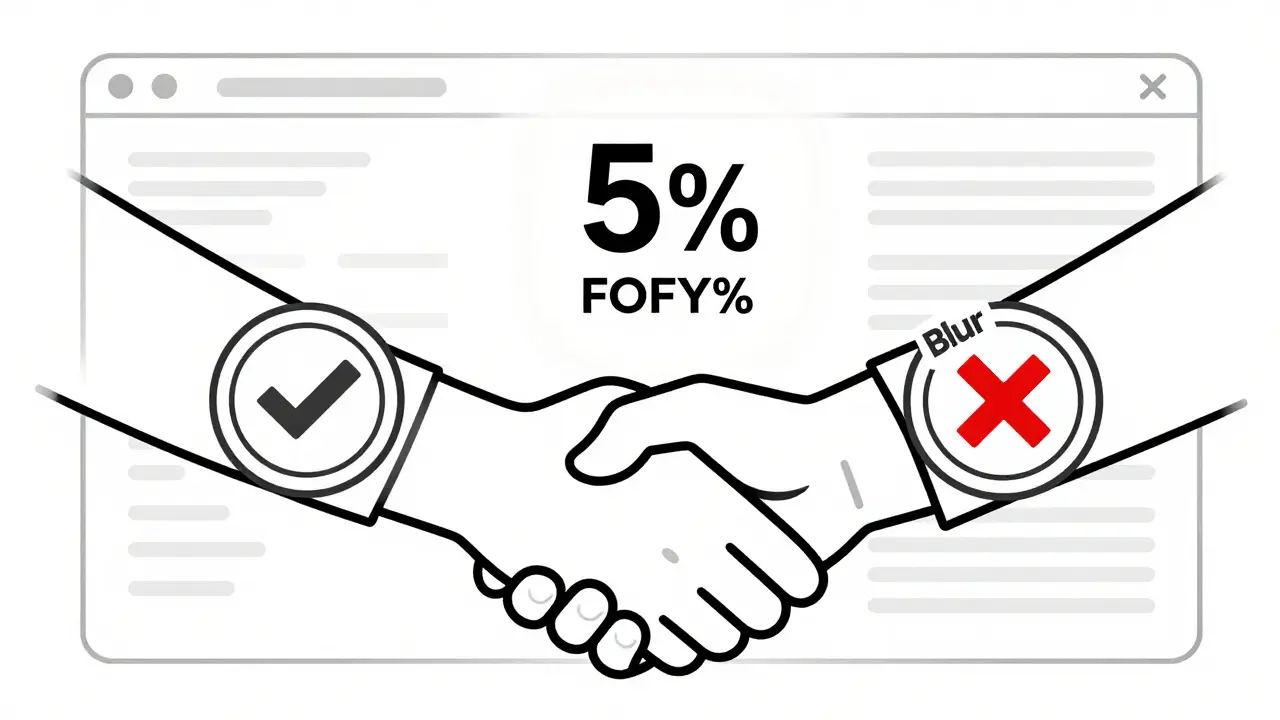
Then came Blur. In February 2023, Blur - a fast-growing Ethereum NFT trading platform - dropped royalties entirely. No exceptions. No warnings. Just gone. Within months, Blur handled over half of all Ethereum NFT trades. Why? Because traders loved it. No fees. No cuts. Pure profit.
Meanwhile, Foundation kept enforcing 10% on every sale. Magic Eden, focused on Solana, kept royalties but made them optional. Rarible and SuperRare stayed true. The result? A fractured ecosystem. A creator’s 5% royalty might work on Foundation but vanish on Blur. That’s not a glitch. That’s the new reality.
Reddit threads are full of angry creators. One artist, u/ArtByMia, lost $3,200 in projected royalties when her collection moved to Blur. NFT Plazas found that 68% of creators experienced unpaid royalties in 2022.
The Trade-Off: More Liquidity, Less Pay
Blur didn’t kill royalties out of spite. It did it because it worked.
Research from SSRN (2022) showed that every 1% increase in royalty rate led to a 0.8% drop in primary market prices. Why? Buyers know they’ll pay more later. So they bid lower upfront.
And when royalties are high - say, 10% or more - secondary trading slows down. INFORMS Journal (2023) found collections with royalties had 15.7% less liquidity on average. That means fewer sales. Fewer opportunities for creators to earn.
It’s a paradox. High royalties help creators earn long-term. But they hurt sales volume. Low or no royalties boost trading - but kill ongoing income.
Some collectors started a “royalty rebellion.” They refused to buy NFTs with high royalties. Others hunted for royalty-free collections to flip quickly. The market split in two: creators vs. traders.
What’s Being Done About It?
The industry isn’t ignoring this. New standards are emerging.
EIP-2981, introduced in 2021, was meant to be the universal royalty standard. It lets any marketplace read the creator’s royalty info from the NFT’s metadata - no custom code needed. But adoption is slow. Most platforms still use their own methods.
Then there’s the Royalty Registry, launched in early 2023. It’s a public ledger that tracks royalty rates across chains. Think of it like a GPS for royalties. If a marketplace supports it, it can check the registry before a sale and enforce the right percentage.
Some are even proposing staking models. The idea? Marketplaces that want to list royalty-enabled NFTs must lock up tokens as collateral. If they don’t pay royalties, they lose their stake. It’s a financial penalty for bad behavior.
And in April 2023, Magic Eden introduced “royalty enforcement scores.” It ranks collections based on how consistently royalties are paid. High-scoring collections get promoted. Low-scoring ones get buried. It’s not perfect, but it’s a step.
What Creators Should Do Now
If you’re a creator, here’s your reality:
- Set your royalty at 5%. Higher rates scare off buyers. Lower rates don’t pay enough.
- Use platforms that still enforce royalties: Foundation, SuperRare, Rarible, and Magic Eden (with opt-in).
- Don’t rely on OpenSea or Blur. They don’t guarantee payments.
- Use tools like Manifold Studio or Royalty Registry to standardize your setup.
- Document everything. If you mint on Ethereum, make sure your metadata includes the correct
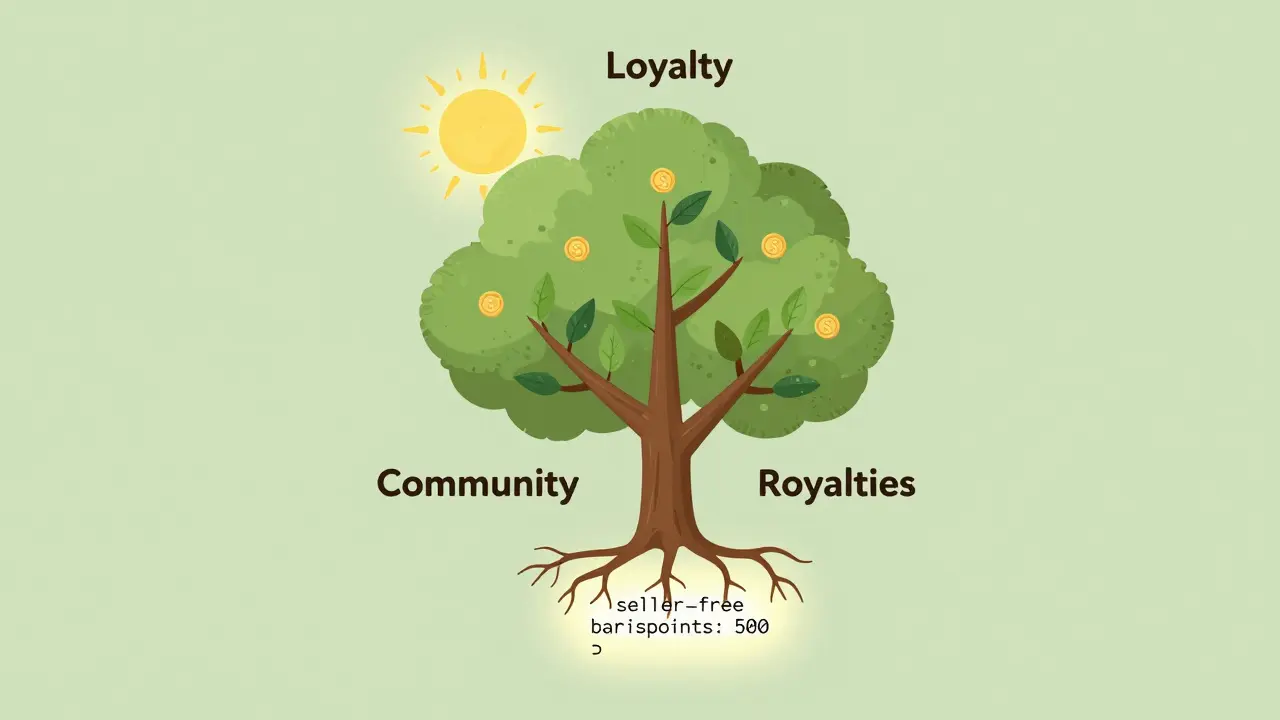
seller_fee_basis_pointsvalue (e.g., 500 = 5%). - Build your own community. If your buyers are loyal, they’ll support you even if the marketplace doesn’t.
Remember: Royalties aren’t legal contracts. They’re code. And code can be ignored. That’s why your reputation matters more than the smart contract.
The Future: Will Royalties Survive?
Right now, only 42% of new NFT collections implement royalties - down from 78% in early 2022. That’s a steep drop.
Some experts predict royalties will stabilize at 5% by 2025. Others say they’ll fade entirely unless there’s technical enforcement - not just voluntary compliance.
Regulators are watching. The European Union’s Digital Markets Act (2023) might label royalties as “unfair.” California’s AB-2281 could give them legal weight. But until then, it’s a free-for-all.
One thing’s clear: The era of creators earning forever from every resale is under pressure. The market is choosing between liquidity and loyalty. And right now, liquidity is winning.
But if you build something people love - and you’re transparent about how you’re paid - you might still be the exception. The ones who survive won’t be the ones with the highest royalties. They’ll be the ones with the strongest community.
Do NFT royalties work on all blockchains?
No. Ethereum-based NFTs (ERC-721) use royalty systems that vary by platform. Solana uses a different metadata standard, and while platforms like Magic Eden support it, enforcement isn’t universal. Binance Smart Chain and Polygon have their own implementations. There’s no single standard across chains.
Can I change my royalty rate after minting?
No. Once an NFT is minted, the royalty percentage is locked into its smart contract. You can’t change it. That’s why it’s critical to set the right rate before launch. Some platforms let you update the rate for future mints of the same collection, but existing NFTs keep their original terms.
Are NFT royalties legally enforceable?
Not yet. Royalties are built into smart contracts, but they aren’t recognized as binding legal agreements. Courts haven’t ruled on them. Platforms like Rarible require creators to grant them royalty-free rights to the content. So while the code pays, the law doesn’t protect you. Your contract is with the marketplace - not the buyer.
Why did Blur eliminate royalties?
Blur removed royalties to attract high-volume traders. By letting buyers keep 100% of resale profits, Blur became the fastest-growing NFT marketplace in early 2023. It prioritized trading volume over creator compensation. This strategy worked - Blur captured over 50% of Ethereum NFT volume within months.
How much do creators actually earn from royalties?
It varies wildly. Top creators like Pak earned tens of millions. But most earn far less. A 2023 NFT Plazas survey found that 5-15% of creators’ total income came from royalties. For many, it’s a small bonus - not a living wage. Success depends on collection popularity, community size, and marketplace choice.