Liquidation Risk in Crypto Lending: How It Works and How to Avoid It
 Mar, 18 2026
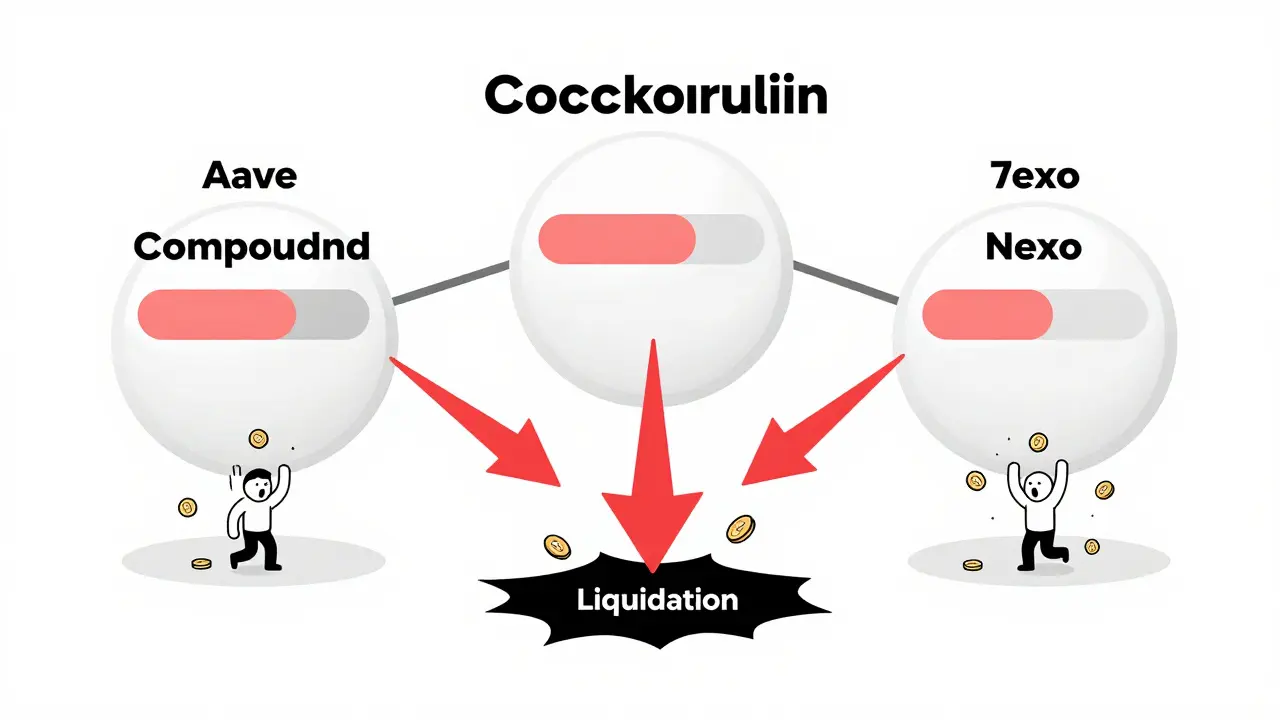
When you borrow crypto, you’re not just taking out a loan-you’re betting against market volatility. And if the market moves against you, your collateral can vanish in minutes. This isn’t science fiction. It’s happening right now on platforms like Aave, Compound, and Nexo. Liquidation risk is the silent killer of crypto borrowers, and most people don’t understand it until it’s too late.
What Is Liquidation in Crypto Lending?
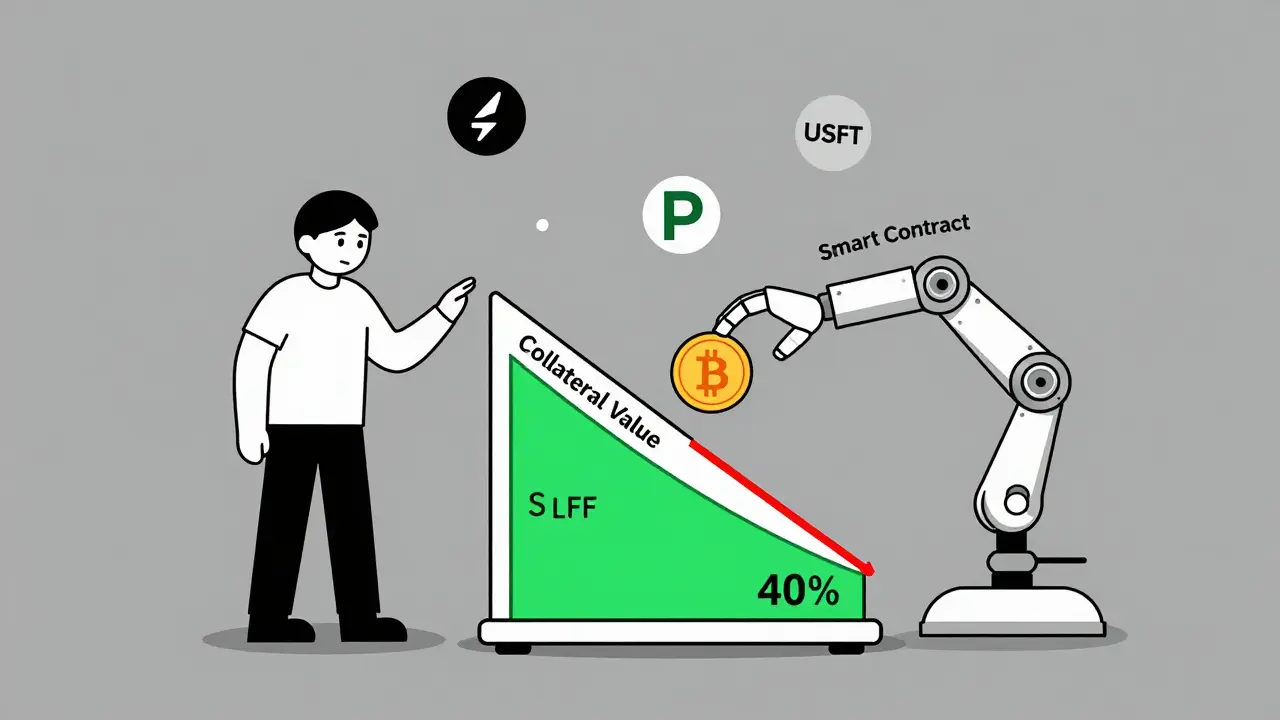
Liquidation in crypto lending means your collateral gets sold automatically because your loan is no longer properly backed. Think of it like a margin call, but faster, colder, and completely automated. There’s no human on the other end. No call. No warning. Just a smart contract executing a sale the moment your loan-to-value (LTV) ratio crosses a line you didn’t realize existed.
Here’s how it works in practice: You deposit 1 BTC as collateral to borrow $10,000 in USDT. The platform requires a 50% LTV, meaning you must deposit at least $20,000 worth of BTC to borrow $10,000. If BTC’s price drops hard-say, from $50,000 to $30,000-you now have only $30,000 in collateral. Your LTV jumps from 50% to 33%. Wait, that’s better, right? No. Because the platform doesn’t care about your LTV dropping-it cares about it rising. When your collateral value falls, your LTV goes up. If it hits 80%, your entire BTC position gets sold off to repay the $10,000 loan. You lose your collateral. The platform keeps the repayment. And you walk away with nothing.
Why Crypto Liquidations Are So Brutal
Traditional finance gives you breathing room. If you fall behind on a margin call, your broker might call you. You can ask for an extension. You can sell other assets. You can talk your way out of it.
Crypto doesn’t care.
On-chain lending protocols like Aave and Compound use health factors to track your position. A health factor above 1 means you’re safe. Below 1? Liquidation. And it doesn’t wait. If your health factor drops below 1 during a 30% price crash-common during crypto bear markets-you’re liquidated within seconds. No second chances. No mercy.
Why? Because crypto markets never sleep. Prices swing 20-50% in a single day. A liquidity event on Binance can trigger a cascading sell-off across DeFi protocols in minutes. To protect lenders, these systems are designed to act before humans can react.
And there’s another layer: liquidation bonuses. To encourage people to liquidate undercollateralized loans, protocols offer rewards of 3% to 15% of the collateral value. That means bots and traders are actively scanning the blockchain for weak positions. They’re hunting you. Not because they’re evil. Because it’s profitable.
How Liquidation Thresholds Vary Across Platforms
Not all lending platforms are built the same. Here’s how major players handle liquidation risk:
| Platform | Max LTV Ratio | Liquidation Threshold | Health Factor Trigger | Liquidation Bonus |
|---|---|---|---|---|
| Aave v3 | 75% | 80% | Below 1.0 | 8% |
| Compound | 75% | 80% | Below 1.0 | 5% |
| Nexo | 50% | 70% | N/A (LTV-based) | 10% |
| BlockFi (defunct) | 50% | 70% | N/A | 10% |
| Celsius (defunct) | 50% | 70% | N/A | 10% |
Notice something? Centralized platforms like Nexo have lower max LTVs-meaning you can borrow less. But they also liquidate sooner. Aave and Compound let you borrow more, but they’re more aggressive about liquidation. And remember: Celsius and BlockFi collapsed because they didn’t manage risk well. They lent too much against too volatile assets. When the market turned, they couldn’t cover losses. That’s the danger of ignoring liquidation risk.
Real Stories: What Happens When You Get Liquidated
Reddit threads are full of heartbreak.
One user in 2023 borrowed $15,000 in DAI against 0.5 ETH. ETH was at $3,800. He thought he was safe. Then Ethereum dropped 40% in 12 hours. His collateral value fell to $11,400. His LTV jumped to 131%. Liquidation triggered. He lost all his ETH. He still owed $15,000 in DAI. He didn’t get a second chance.
Another user on Twitter posted a screenshot of his position: 12 BTC collateral, $250,000 loan. Price dropped. Liquidation hit. He lost 11.7 BTC. He was left with 0.3 BTC. He said, “I thought I had a 20% buffer. I didn’t even know the threshold was 80%.”
These aren’t rare. In 2023, over 18% of all DeFi loans were liquidated. That’s nearly 1 in 5. And that’s during a relatively calm market. During the 2022 Terra collapse, liquidations spiked to 30% in a single week.
The emotional toll is real. People lose life savings. Retirement funds. Crypto is not a game. But too many treat it like one.
How to Protect Yourself
There are only three ways to survive liquidation risk:
- Keep your LTV way below the threshold. Most people borrow at 60-70%. That’s suicide. Experts who’ve lost money recommend staying under 30-40%. If your max liquidation is 80%, 40% gives you a 40-point cushion. That’s enough to survive a 30% crash.
- Use multiple collateral types. Aave lets you deposit ETH, BTC, SOL, and stablecoins together. Diversifying collateral reduces your exposure to any single asset crash. If BTC drops but ETH rises, your health factor stays stable.
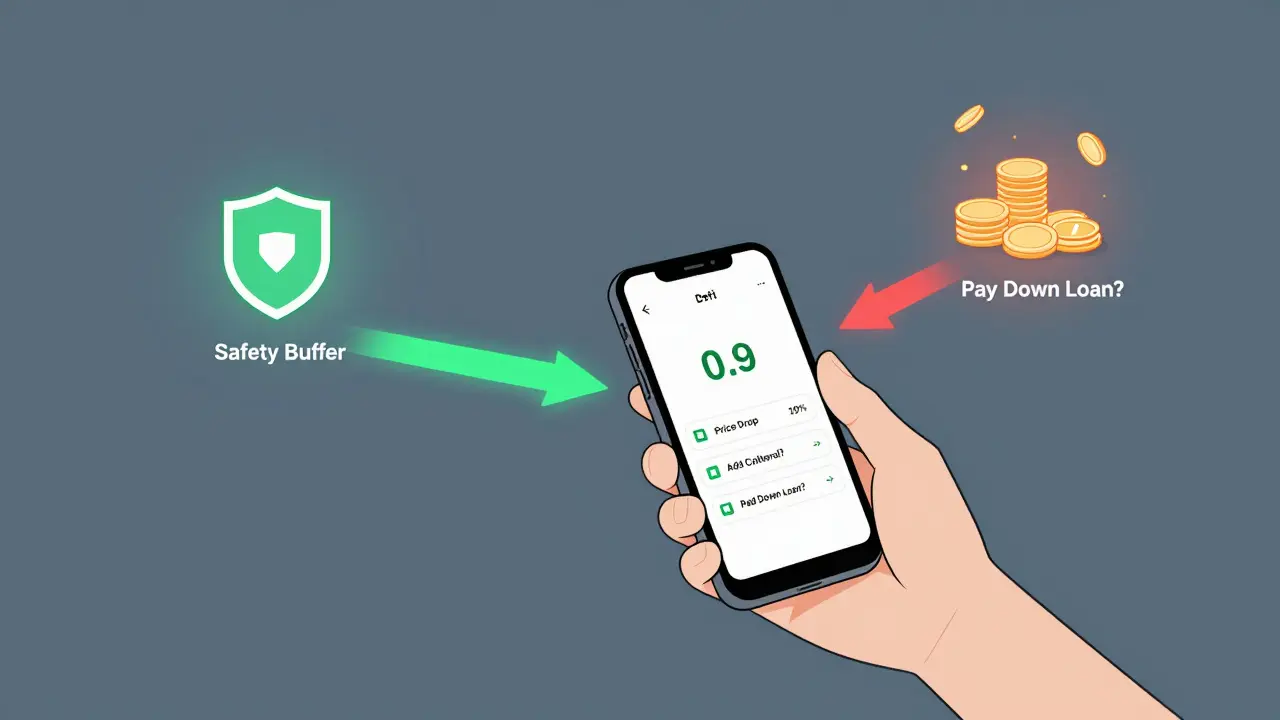
- Set up alerts and monitor daily. Use tools like DeFi Saver, Zapper, or even simple price alerts on CoinGecko. If your collateral value drops 10%, you have time to add more or pay down the loan. Waiting until it hits 75%? Too late.
Some users even set up emergency funds in stablecoins just to top up collateral. It’s not glamorous. But it’s the difference between keeping your assets and losing everything.
The Bigger Picture: Why This Matters
Liquidation isn’t just a personal risk-it’s a systemic one. When one position gets liquidated, it dumps assets on the market. That drives prices down. That triggers more liquidations. That’s a feedback loop. And it’s happened before.
In March 2020, Bitcoin dropped 50% in a day. Over $300 million in crypto loans were liquidated. It wasn’t because borrowers were reckless. It was because the market moved faster than the system could handle.
Now, protocols are trying to fix this. Aave added dynamic health factors. Nexo partnered with Chainlink for better price feeds. Some are testing partial liquidations-selling only part of your collateral instead of the whole thing. But these are baby steps.
The real problem? Borrowers still don’t understand what they’re signing up for. They see “earn 8% APY” and think it’s free money. They don’t read the fine print. They don’t calculate health factors. They assume the system will protect them. It won’t.
What’s Next?
The future of crypto lending won’t be about higher yields. It’ll be about safety. Platforms that offer:
- Grace periods before liquidation
- AI-driven warnings based on market trends
- Insurance against liquidation (like Nexus Mutual or Cover Protocol)
- Auto-rebalancing collateral pools
Will win. The ones that keep pushing “high leverage = high reward” will keep losing users. And eventually, they’ll fail.
If you’re borrowing crypto, you’re not just borrowing money. You’re borrowing volatility. And volatility doesn’t care if you’re broke, stressed, or just starting out. It moves. And if you’re not ready, it will take everything.
What happens if I get liquidated?
Your collateral is automatically sold by the protocol to repay your loan. You lose all the assets you put up as security. You may still owe money if the sale doesn’t cover the full loan amount-though most protocols prevent this by overcollateralizing loans. Either way, you walk away with nothing. No second chances.
Can I avoid liquidation by paying back early?
Yes. Paying down your loan reduces your LTV and improves your health factor. If you see your collateral value dropping, paying even a small portion of your loan can prevent liquidation. Some platforms let you repay in the borrowed asset (like USDT) or in collateral (like BTC). Always check the protocol’s rules.
Why do some platforms have lower LTV limits than others?
Platforms with lower LTV limits (like Nexo at 50%) are more conservative. They assume higher volatility and want to reduce the chance of liquidation. Platforms like Aave (75% max LTV) let you borrow more but require tighter monitoring. Lower LTV = safer. Higher LTV = riskier but more capital-efficient.
Are centralized lending platforms safer than DeFi?
Not necessarily. Centralized platforms like Celsius and BlockFi collapsed because they used customer deposits to make risky investments. DeFi protocols like Aave and Compound don’t lend out your collateral-they lock it in smart contracts. But DeFi has faster liquidations and no customer service. Centralized platforms may offer more hand-holding, but they also carry counterparty risk. If the company goes under, you lose everything.
How often do liquidations happen?
In normal markets, about 15-25% of DeFi loans are liquidated each year. During crashes, that number can spike to 30-40%. In 2023, over $1.2 billion in crypto collateral was liquidated across all major protocols. The more volatile the asset you use as collateral, the higher your risk.
Final Thought
Crypto lending isn’t broken. It’s working exactly as designed. The problem isn’t the system. It’s the people who treat it like a bank. If you don’t understand liquidation risk, you shouldn’t be borrowing. Period. The market doesn’t forgive ignorance. It only takes.