Malta Blockchain Island Strategy: Crypto Business Guide 2026
 Nov, 6 2026
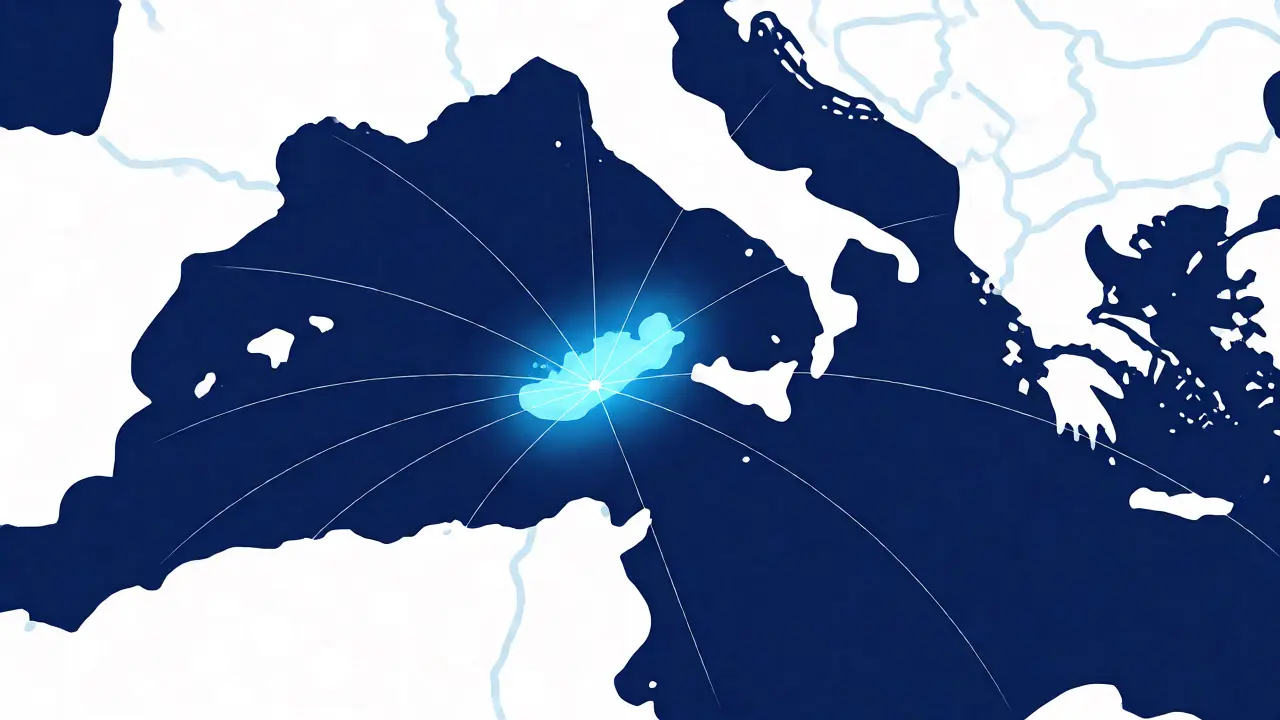
Imagine running a global crypto exchange from a Mediterranean island with fewer people than a mid-sized suburb in Auckland. That’s the reality of Malta, officially branded as the Blockchain Island. It’s not just a marketing gimmick; it’s a calculated legal and economic strategy that turned a small EU nation into one of the world’s most important hubs for digital assets. If you’re wondering why giants like Binance set up shop there, or if you’re considering moving your own crypto operations, you need to understand how this system actually works.
The core appeal isn’t just about low taxes-it’s about regulatory certainty. In many countries, crypto businesses operate in a gray zone, constantly fearing sudden crackdowns. Malta flipped the script by passing three specific bills in 2018 that defined what a digital asset is, who can trade it, and how it must be regulated. This clarity attracts serious players who want to sleep at night knowing their licenses won’t be revoked overnight due to political whims.
The Legal Backbone: The VFA Framework
You can’t talk about Malta without mentioning the Virtual Financial Assets (VFA) Act. This law is the foundation of the entire ecosystem. Before 2018, most jurisdictions treated crypto tokens as either securities, commodities, or nothing at all. Malta created a new category. The VFA Act introduced a "Financial Instrument Test," a three-step process to determine if a token is a security, an electronic money token, or a virtual financial asset. This test gives lawyers and regulators a clear roadmap, reducing ambiguity for startups launching Initial Coin Offerings (ICOs).
This framework is overseen by the Malta Financial Services Authority (MFSA). Unlike some regulators that are purely punitive, the MFSA has taken a more collaborative approach, especially in the early days. They established a sandbox environment where innovative projects could test their models under supervision before getting full authorization. Today, the MFSA issues circulars to keep Virtual Asset Service Providers (VASPs) aligned with evolving standards, such as those required by the European Union’s Markets in Crypto-Assets (MiCA) regulation.
Tax Advantages That Actually Matter
Let’s cut through the noise on taxes. Everyone wants to know: "Do I have to pay tax on my Bitcoin?" In Malta, the answer depends on whether you are holding or trading. If you buy cryptocurrency and hold it as a long-term investment-essentially treating it as a store of value-you generally pay no capital gains tax upon disposal. This is a massive advantage for investors who accumulate assets over years rather than day-trading them.
However, if you are actively trading with the intent to make a profit, the Maltese tax authorities view this as a business activity. Here, income tax rates apply, ranging from 15% to 35%. But here is the kicker: Malta uses an imputation credit system. While the headline corporate tax rate is 35%, companies can often reduce their effective tax rate to between 0% and 5% through refunds and credits when profits are distributed to shareholders. This makes it incredibly efficient for holding companies and international trading firms.
| Activity Type | Tax Treatment | Effective Rate Potential |
|---|---|---|
| Long-term Holding (Investment) | No Capital Gains Tax | 0% |
| Active Trading (Business Income) | Income Tax (Progressive) | 15% - 35% |
| Corporate Profits (Distributed) | Imputation Credit System | 0% - 5% Effective |
| Foreign Income (GRP Holders) | Flat Rate on Remittance | 15% |
For individuals looking to relocate, the Global Residence Programme (GRP) offers a flat 15% tax rate on foreign income remitted to Malta, provided you spend at least 183 days a year there. This requires careful planning and documentation, but for high-net-worth crypto holders, it provides a predictable fiscal environment within the EU.

MiCA Compliance and EU Integration
As of 2026, the landscape has shifted with the full implementation of the EU’s Markets in Crypto-Assets (MiCA) regulation. Some feared this would dilute Malta’s unique advantages, but the opposite happened. Because Malta already had a robust framework, transitioning to MiCA was smoother than for countries starting from scratch. Now, a license obtained in Malta acts as a passport, allowing businesses to offer services across the entire European Economic Area (EEA). This single-market access is invaluable for exchanges wanting to serve millions of European customers without setting up separate entities in every member state.
The MFSA continues to refine its guidelines to ensure consumer protection and market integrity. Recent amendments aim to clarify crypto-to-crypto transactions, which previously existed in a gray area. By aligning with EU standards while maintaining its competitive tax structure, Malta positions itself as the bridge between traditional finance and the decentralized web.
Lifestyle and Operational Benefits
Beyond laws and taxes, the practical side matters. Malta is an English-speaking country with a strong legal tradition based on British Common Law. This makes contracts easier to draft and enforce compared to jurisdictions using civil law systems unfamiliar with Anglo-American business practices. The time zone is also convenient for operating globally, overlapping with both Asian and US markets during different parts of the day.
Infrastructure is another plus. The government has invested heavily in digital connectivity, and the local banking sector has adapted to support crypto-friendly businesses, though opening accounts still requires thorough due diligence. For entrepreneurs, the community aspect is powerful. Valletta and Sliema host numerous meetups, hackathons, and conferences, creating a network effect where talent, investors, and partners converge. You aren’t isolated; you’re part of a dense cluster of innovation.
Risks and Considerations
It’s not all sunshine and sea breezes. Banking remains a hurdle. While improved, some traditional banks are still cautious about crypto-related flows, requiring strict Anti-Money Laundering (AML) compliance. You must prove the source of your funds clearly. Additionally, the cost of living in Malta has risen significantly in recent years, particularly housing. Budget accordingly if you plan to move physically.
Regulatory scrutiny is also increasing. As the industry matures, the "wild west" era is over. Expect rigorous audits and reporting requirements. The benefit of certainty comes with the burden of compliance. If you prefer a hands-off approach, Malta might feel too demanding compared to offshore jurisdictions with minimal oversight. However, for serious businesses aiming for longevity and institutional trust, this rigor is a feature, not a bug.
Does Malta charge capital gains tax on cryptocurrency?
Generally, no. If you hold cryptocurrency as a long-term investment (a store of value), disposals are typically exempt from capital gains tax. However, if you are deemed to be trading actively with the intention of making a profit, the gains may be classified as business income and subject to progressive income tax rates.
What is the main regulatory body for crypto in Malta?
The Malta Financial Services Authority (MFSA) is the primary regulator. It oversees Virtual Financial Assets (VFAs) and ensures compliance with the VFA Act and subsequent EU regulations like MiCA.
Can a crypto business licensed in Malta serve other EU countries?
Yes. Under the EU's Markets in Crypto-Assets (MiCA) regulation, a license granted in Malta allows the provider to passport their services across the entire European Economic Area, eliminating the need for separate licenses in each member state.
How does the Malta tax refund system work for corporations?
Malta applies a standard 35% corporate tax rate, but it operates an imputation credit system. When profits are distributed to shareholders, they receive a credit against their personal tax liability. Through various mechanisms, including participation exemptions and refund claims, the effective tax rate for qualifying international companies can drop to between 0% and 5%.
Is it easy to open a bank account for a crypto company in Malta?
It is possible but requires preparation. Banks conduct strict due diligence regarding the source of wealth and funds. Having a solid business plan, clear transaction history, and compliant AML procedures significantly increases the chances of approval. Several specialized fintech banks also operate in the jurisdiction.