MarketExchange Crypto Exchange Review: Why This Platform Is a Known Scam
 Mar, 16 2026
If you’re looking at MarketExchange as a place to trade crypto, stop. This isn’t a real exchange. It’s a scam. And if you deposit any money there, you won’t get it back.
MarketExchange.io claims to offer fast trading, low fees, and secure storage. But every single thing it says is a lie. There’s no team, no license, no audits, and no real users. Just a website built to steal your crypto.
It Doesn’t Exist on Any Real Crypto Platform
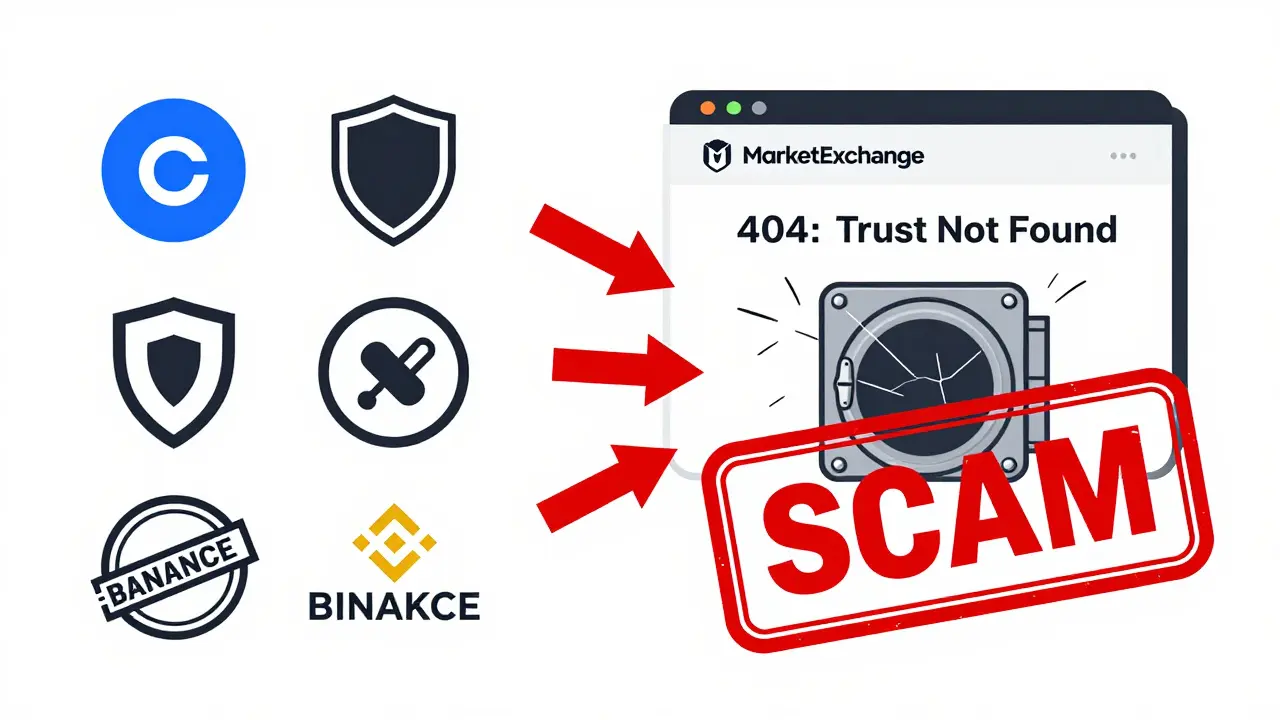
Legitimate exchanges like Coinbase, Kraken, and Binance are listed on CoinGecko and CoinMarketCap. These sites track trading volume, security, and regulatory status. MarketExchange isn’t there. Not even close. It’s absent from every major database that tracks real crypto platforms. That’s not an accident. It’s a red flag so loud you should hear it from across the room.
Even more telling? It’s not registered with FinCEN, the UK’s FCA, or any other financial regulator in the world. No exchange that’s been around longer than a month operates without at least one license. MarketExchange has zero. That means it’s breaking the law just by existing.
No Transparency. No Proof. No Trust.
Real exchanges publish their security details. Coinbase uses $255 million in insurance from Lloyds of London. Kraken stores 95% of funds in cold wallets and publishes monthly proof-of-reserves. Binance shows you every transaction on the blockchain.
MarketExchange? It says “Advanced Security” with no details. No cold storage numbers. No insurance policy. No audit reports. No blockchain explorer links for deposits or withdrawals. Just buzzwords. That’s like a bank saying “We’re safe!” without showing you vaults, cameras, or guards.
And what about fees? Legitimate exchanges list exact rates: Binance charges 0.1% for spot trades. Coinbase uses a sliding scale based on your trading volume. MarketExchange? No fee schedule. No breakdown. Just “transparent pricing.” That’s code for “we’ll make up fees after you deposit.”
The User Experience Is a Trap
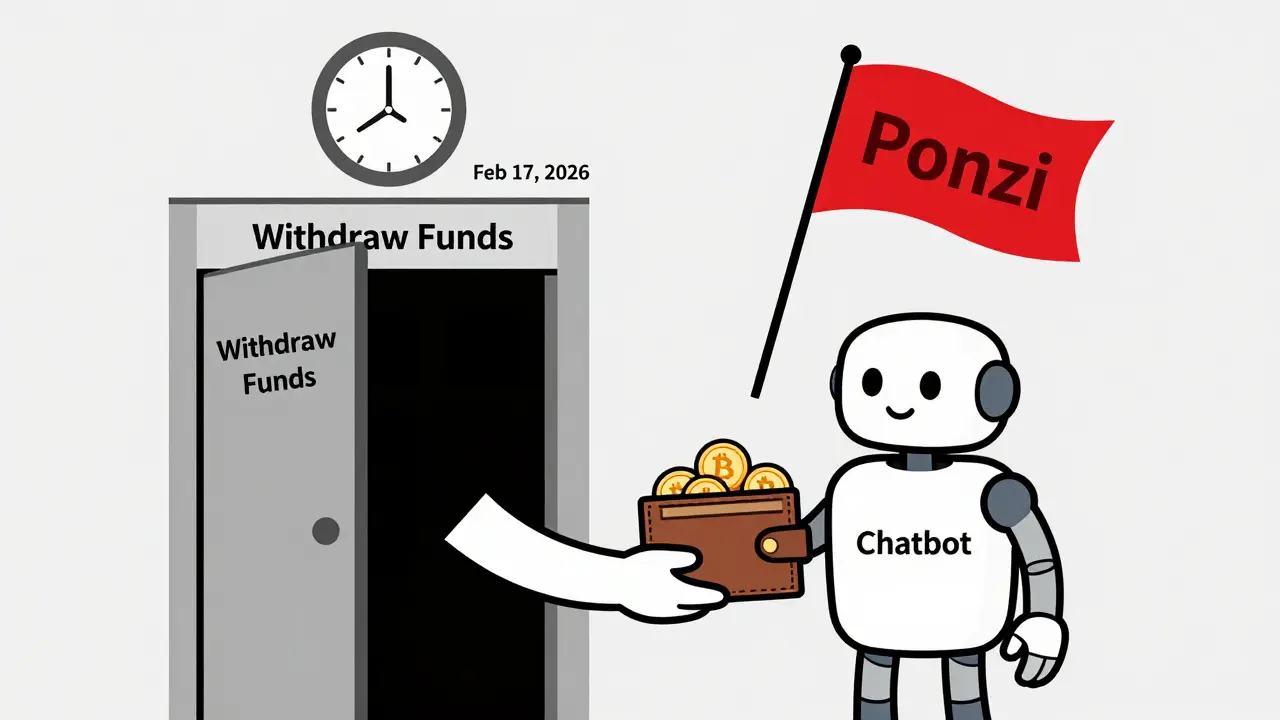
Here’s how it works: You sign up. You deposit $100 in USDT. You see your balance go up. You trade a little. You make $20. You try to withdraw $120. Suddenly, your account is “flagged for AML review.” They demand a $30 “verification fee” to unlock your funds. You pay. The money vanishes. Support disappears. No phone number. No email reply. Just an automated chatbot that says “please wait.”
This isn’t rare. Reddit’s r/CryptoScams has 17 verified reports from March 2025 onward. Every single one follows the same pattern: small win, big trap. The platform lets you withdraw under $100 to build false trust. Then it locks everything when you try to take out real money.
And the KYC? It’s fake. Legitimate exchanges take 2-3 days to verify you. MarketExchange approves accounts in minutes. Why? Because they don’t care who you are. They just want your crypto.
Staking? 24.7% APY? That’s a Red Flag
In October 2025, MarketExchange added “staking” - promising 24.7% annual returns on USDT. Let that sink in. Coinbase pays 2.97%. Kraken pays 3.5%. Even high-yield DeFi protocols rarely go over 8%. A 24.7% return on a centralized exchange? That’s not innovation. That’s a Ponzi.
Real staking earns returns from network rewards, not magic. MarketExchange has no network. No blockchain. No validator nodes. So where’s the money coming from? Your next deposit. And the one after that. When new users stop joining, the whole thing collapses. And it will. Fast.
Technical Clues: The Website Is Built to Fail
Check the domain: marketexchange.io. Registered on February 17, 2025. Expiring February 17, 2026. That’s a one-year term. Real exchanges register domains for 5-10 years. Why? Because they plan to stick around. Scams? They plan to vanish.
The site runs on cheap shared hosting - the same kind used by phishing pages and fake Amazon stores. No enterprise firewall. No DDoS protection. No security team on standby. Meanwhile, Coinbase handles over 100 million transactions daily with 99.98% uptime. MarketExchange? It goes down during peak hours. Users report login failures, frozen balances, and disappearing trades.
And the social media? @Marketexch_io on Twitter has 1,247 followers. No real engagement. No replies to questions. No customer service. Just ads. Compare that to Coinbase’s 2.4 million followers, with active replies, support threads, and transparency posts. One is a company. The other is a ghost.
Experts Say: Avoid It. Full Stop.
CipherBlade, a blockchain security firm, gave MarketExchange a 98.7/100 scam score. INDSPN.org called it “not a feature - it’s a warning.” MIT’s Dr. Elena Rodriguez said platforms like this should be treated as “hostile until proven otherwise.” And they never will be.
The Crypto Currency Certification Consortium (C4) put MarketExchange on its “Red List” of known scams. Chainalysis flagged it in their 2025 fraud report as one of the top 10 new fake exchanges that year. No reputable analyst, researcher, or security firm has ever defended it. Not one.
What Happens If You Deposit?
You think you’re investing. You’re not. You’re handing over your crypto to criminals.
Once your funds are on MarketExchange, they’re gone. No chargebacks. No recovery. No legal recourse. The platform operates through offshore payment processors with no ties to real banks. Even if you report it to your bank, they can’t touch it.
And there’s no customer support. No ticket system. No email address you can reach. Just a chatbot that says “contact us” - and then vanishes.
Real exchanges have help centers. MarketExchange has silence.
What Should You Do Instead?
If you want to trade crypto safely, use one of these:
- Coinbase - Regulated in 41 U.S. states and 12 countries. Easy for beginners.
- Kraken - Holds VASP licenses in 28 countries. Publishes monthly audits.
- Binance - Processes over $4 trillion in volume in 2024. Deep liquidity.
- Bybit - Strong derivatives trading, transparent fee structure.
All of them have:
- Public license numbers
- Published proof-of-reserves
- Real customer support
- Blockchain-traceable transactions
- Multi-factor authentication
MarketExchange has none of that. And that’s not a mistake. It’s the whole point.
Final Warning
There’s no “maybe.” No “I’ll try it with a small amount.” If you think you’re being smart by risking $50, you’re wrong. Scammers don’t care how much you put in. They care that you trusted them. And once you do, they take everything.
MarketExchange isn’t a crypto exchange. It’s a digital robbery. Walk away. Block it. Warn others. And never, ever deposit anything there.