Mercenary Capital in Liquidity Mining: How Short-Term Investors Shape DeFi
 Mar, 2 2026
When you hear about a DeFi protocol offering 500% APY, it sounds too good to be true. And often, it is. But not because the math is wrong - because the people chasing it aren’t looking to build anything. They’re just here to grab rewards and leave. This is mercenary capital - money that moves fast, doesn’t stick around, and leaves chaos in its wake.
What Is Mercenary Capital?
Mercenary capital isn’t about belief in a project. It’s about numbers. Investors who use this strategy don’t care if a protocol lasts a year or a day. They care about one thing: the highest yield right now. When a new DeFi protocol launches, it often offers massive token rewards to anyone who deposits crypto into its liquidity pools. These rewards are usually in the form of the protocol’s native token - say, $SUSHI or $COMP - and they’re designed to attract users and create trading volume. But here’s the twist: most of these investors don’t hold the tokens. They swap them for USDC or ETH the moment they earn them. Then they move on to the next 800% APY pool. This behavior isn’t just common - it’s the norm. Studies show the average liquidity miner stays in a protocol for just 14.7 days before jumping ship, according to data from Variant Fund. That’s not a user. That’s a transient speculator.How Liquidity Mining Works (And Why It’s Tempting)
Liquidity mining lets you earn rewards by providing assets to decentralized exchanges. For example, you deposit $10,000 worth of ETH and USDC into a pool on Uniswap. In return, you get LP tokens, which you then stake in a farming contract to earn extra tokens. It’s like getting paid to lend your money - except the pay is in crypto, and it’s volatile. The allure? APYs that skyrocketed past 1,000% during DeFi Summer in 2020. In those early days, protocols like Compound and SushiSwap were handing out tokens like candy. People made fortunes - sometimes in hours. But those numbers weren’t sustainable. They were designed to bootstrap adoption, not build long-term value. The problem? When those rewards stop, the money leaves. And when it leaves, it takes the price of the token down with it. Why? Because everyone who earned the token is selling it. No one is holding. No one believes in the long-term. Just profit.The Collapse of Big Data Protocol
In September 2021, a protocol called Big Data Protocol (BDP) exploded onto the scene. Over a single weekend, it sucked up $1.2 billion in total value locked (TVL). That’s more than 10% of the entire DeFi ecosystem at the time. It wasn’t because BDP had a revolutionary product. It was because it offered insane APYs - 1,200% in some pools. Within five days, it was gone. The token crashed 99%. TVL dropped to near zero. Why? Because every dollar that came in was mercenary capital. No one was building. No one was using the protocol. It was pure yield farming. When the rewards dried up, the capital vanished. And with it, trust in the whole system took a hit.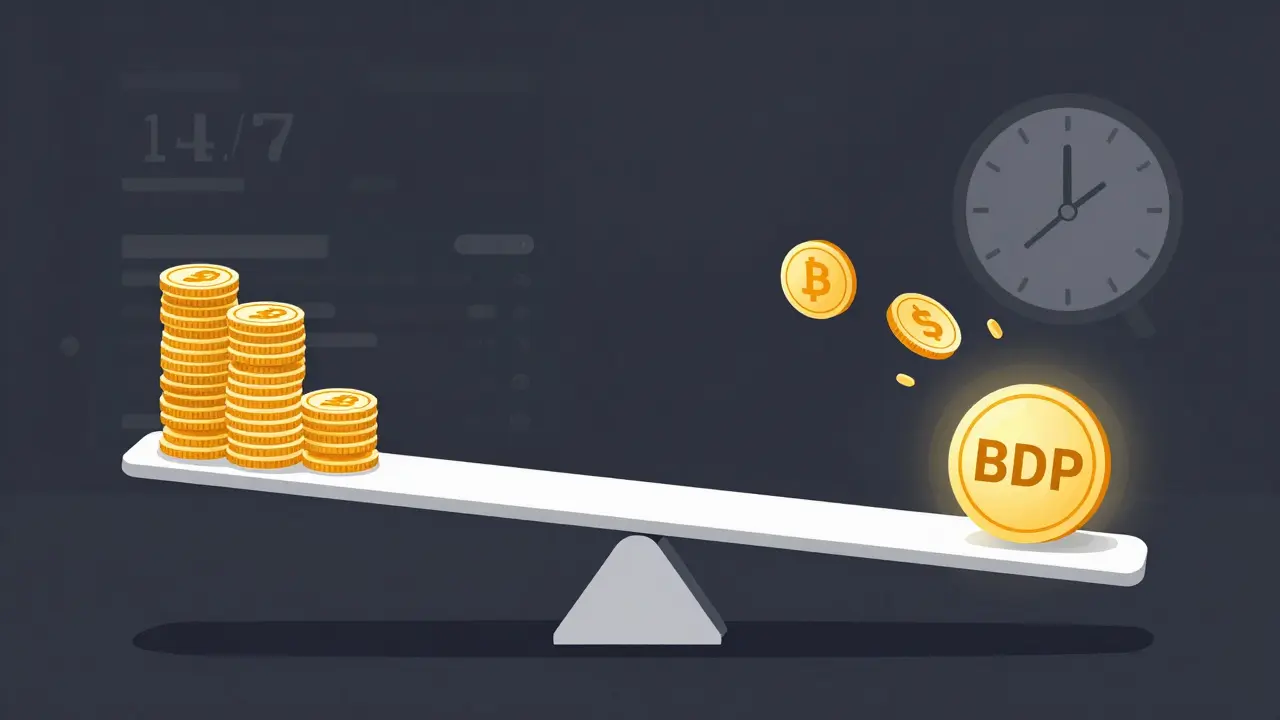
Impermanent Loss: The Hidden Cost
Mercenary investors often ignore one brutal truth: impermanent loss. When you deposit two tokens into a liquidity pool - say, ETH and USDC - and their prices change relative to each other, you end up with less value than if you’d just held the tokens in your wallet. This isn’t theoretical. In May 2021, during a major crypto crash, some liquidity providers lost over 50% of their capital due to price swings - even while earning $12,000 in SUSHI rewards. One Reddit user lost $28,000 in impermanent loss on a single position. That’s not a risk. That’s a trap. Most people don’t understand this until it’s too late. They see the APY, click “Deposit,” and assume they’re making money. But if the price of ETH drops 30% while USDC stays flat, your LP position is underwater - even if you earned 100% in rewards. The math doesn’t lie.How Protocols Are Fighting Back
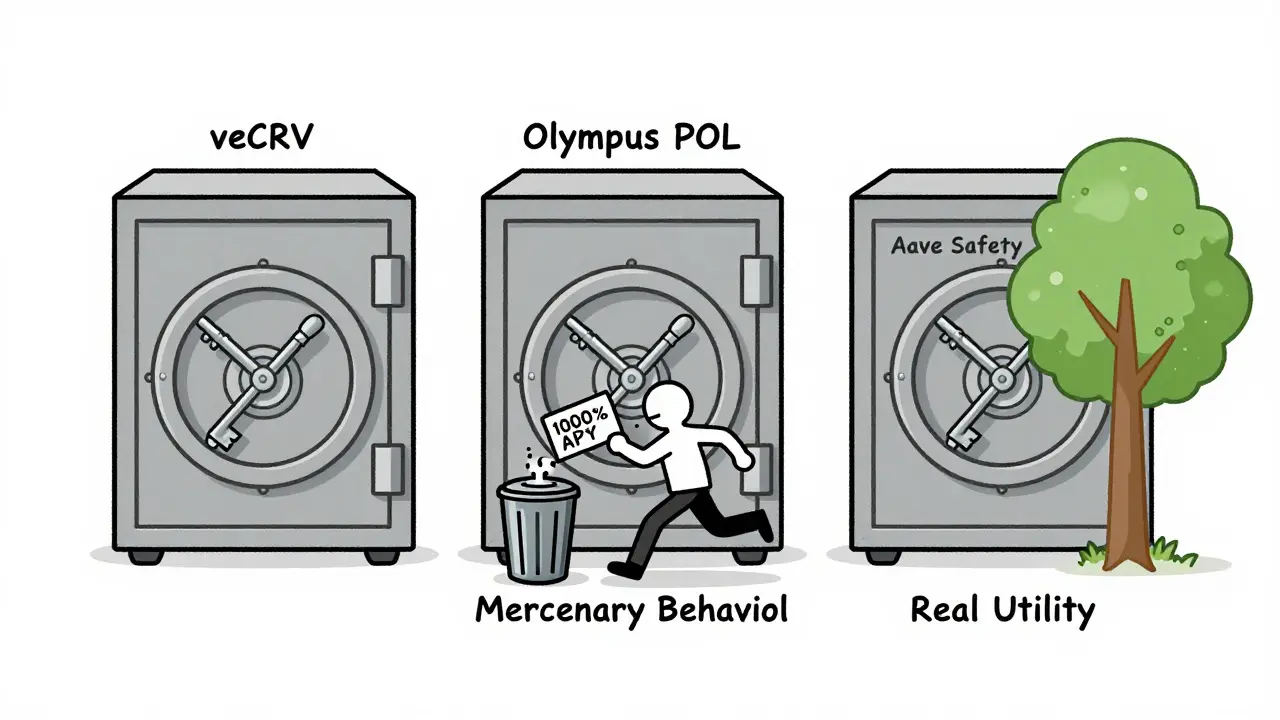
The industry didn’t ignore this. It adapted. And now, we’re seeing the rise of DeFi 2.0 - models designed to keep capital from fleeing. Curve Finance introduced veCRV in August 2021. To earn the highest rewards, you have to lock your CRV tokens for up to four years. As of October 2023, 65% of all CRV supply is locked. That’s not mercenary capital. That’s commitment. Olympus DAO created Protocol-Owned Liquidity (POL). Instead of paying users to provide liquidity, Olympus buys liquidity itself using discounted bonds. Users who lock their assets get discounted OHM tokens - but they’re incentivized to hold, not sell. The result? A more stable, less volatile ecosystem. Aave’s Safety Module requires users to lock AAVE tokens for 182 days to earn staking rewards. Over 3.2 million AAVE tokens - nearly a quarter of the total supply - are locked in this way. Bancor added withdrawal penalties: if you pull your money out too fast, you pay a fee. Up to 1% for same-day exits. That alone cut mercenary behavior by 47%. These aren’t gimmicks. They’re structural changes that force users to think longer-term.The Human Cost: Time, Stress, and Loss
Chasing APYs isn’t passive investing. It’s a full-time job. One Reddit user documented spending 11 hours a week monitoring 7 different protocols. He earned 23.7% in 30 days - but he had to constantly track gas fees, reward schedules, and price swings. He didn’t sleep. He didn’t relax. He just moved money. And when a protocol suddenly cuts rewards? Chaos. In October 2023, one user reported a protocol slashed rewards by 75% overnight. Within 48 hours, 82% of liquidity providers pulled out. That’s not a market correction. That’s a mass panic. A survey of 1,243 DeFi users found that 76.8% would leave immediately if they saw a better APY elsewhere. Only 18% said they’d stay for the long haul. That tells you everything you need to know.