Providing Liquidity to AMM Pools: A 2026 Guide to Risks, Rewards, and Capital Efficiency
 May, 18 2026
You put your crypto into a pool. You expect steady fees. Instead, you watch the value of your position shrink while the token price moves away from your entry point. This isn’t bad luck; it’s how Automated Market Makers (AMMs) work. Providing liquidity is one of the most misunderstood activities in decentralized finance. It looks passive, but it requires active management, deep understanding of market mechanics, and a tolerance for specific risks that traditional investing doesn’t have.
In 2026, the landscape has shifted dramatically. The days of "set-and-forget" liquidity provision on Ethereum mainnet are largely over due to high gas costs and suboptimal capital allocation. Newer Layer 2 networks offer better efficiency, but they come with their own complexities. If you want to earn yield without losing principal to impermanent loss, you need to understand the math behind the screens, the differences between full-range and concentrated liquidity, and which platforms actually pay you enough to cover the risks.
How AMM Liquidity Pools Actually Work
Traditional exchanges use an order book where buyers and sellers match orders at specific prices. AMMs replace this with a smart contract-based pool. When you provide liquidity, you deposit two tokens in equal value-for example, $1,000 worth of ETH and $1,000 worth of USDC. These tokens sit in a shared pot that traders pull from when they swap assets.
The price of the tokens in the pool is determined by a mathematical formula, most commonly the constant product model (x * y = k) pioneered by Uniswap. As someone buys ETH from the pool, the amount of ETH decreases and USDC increases. To keep the product constant, the price of ETH must rise. You, as the liquidity provider (LP), earn a small fee from every trade that happens against your capital. In return, you receive LP tokens that represent your share of the pool.
This mechanism ensures there is always liquidity available, even if no human trader is actively quoting prices. However, it also means you are constantly selling your appreciated asset to buy the depreciating one within the pair. This rebalancing is the source of both your fees and your potential losses.
The Hidden Cost: Impermanent Loss Explained
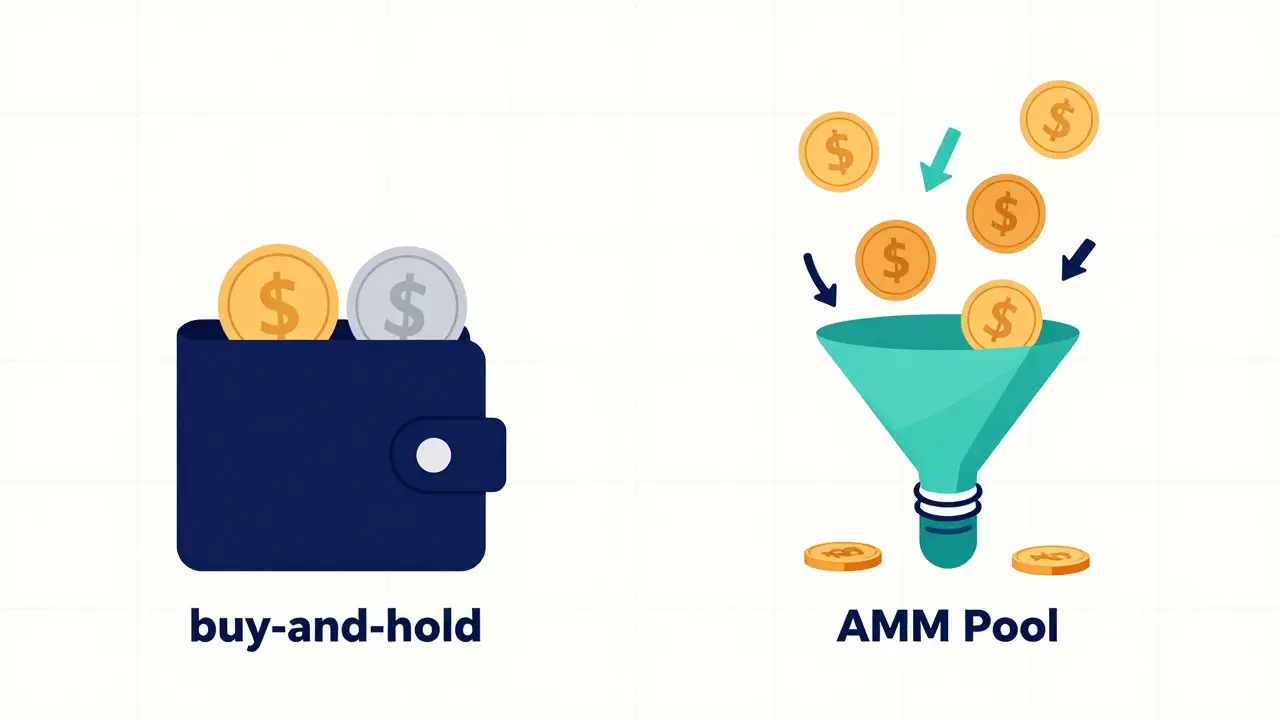
If you’ve heard warnings about providing liquidity, they’re likely about impermanent loss (IL). IL occurs when the price ratio of the tokens in the pool changes compared to when you deposited them. Because the AMM automatically rebalances your holdings, you end up with less of the winning token and more of the losing one than if you had just held them in your wallet.
Recent academic research from 2025 highlights a stark reality: on average, realized impermanent loss leads to a 3.8% loss per position compared to a simple buy-and-hold strategy. This isn’t theoretical. It’s a measurable drag on profitability. For instance, if you provide ETH-USDC liquidity and ETH doubles in price, the pool will sell half your ETH to maintain balance. You still profit because ETH went up, but you profit less than if you had just held the ETH. If the trading fees don’t exceed this difference, you lose money relative to holding.
Impermanent loss becomes permanent if you withdraw during a period of divergence. While stablecoin pairs like USDC-USDT have minimal IL risk because their prices stay correlated, volatile pairs like ETH-SOL or ETH-BTC carry significant exposure. Understanding this trade-off is crucial before deploying capital.
Concentrated Liquidity: Higher Returns, Higher Complexity
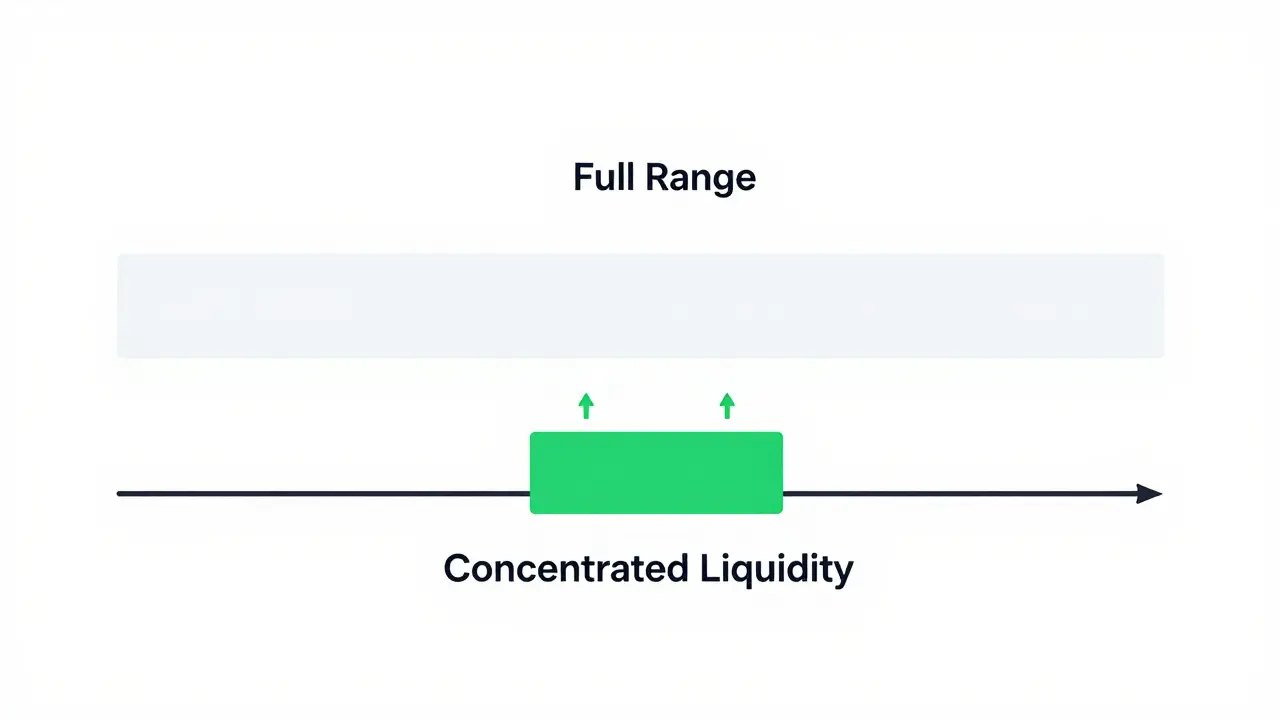
The introduction of Uniswap V3 changed the game by allowing concentrated liquidity. Instead of spreading your capital across the entire price range (from zero to infinity), you can allocate it within a specific price band. If you believe ETH will trade between $3,000 and $4,000, you only provide liquidity in that range.
This dramatically improves capital efficiency. Your funds are working harder, generating more fees per dollar invested because they’re not sitting idle outside the active trading range. However, it introduces new risks. If ETH breaks above $4,000, your position converts entirely to USDC, and you stop earning fees until the price returns to your range. You now hold a single-asset position, exposed to directional risk rather than diversification.
Managing concentrated liquidity requires active monitoring. You may need to adjust your ranges frequently as markets move. This turns liquidity provision from a passive income stream into an active trading strategy. Many newcomers underestimate this complexity, leading to poor performance despite using "advanced" features.
Platform Dynamics: Where Is the Smart Money?
Not all liquidity pools are created equal. Research from the CAAW 2025 conference reveals significant disparities in how capital is allocated across blockchain networks. Ethereum’s WETH-USDC pools on Uniswap V3 are substantially overcapitalized. Over 66% of current capital is allocated suboptimally, meaning LPs are competing fiercely for limited trading volume. Returns here often range from 12% to 22%, which may not adequately compensate for the opportunity cost of not staking elsewhere.
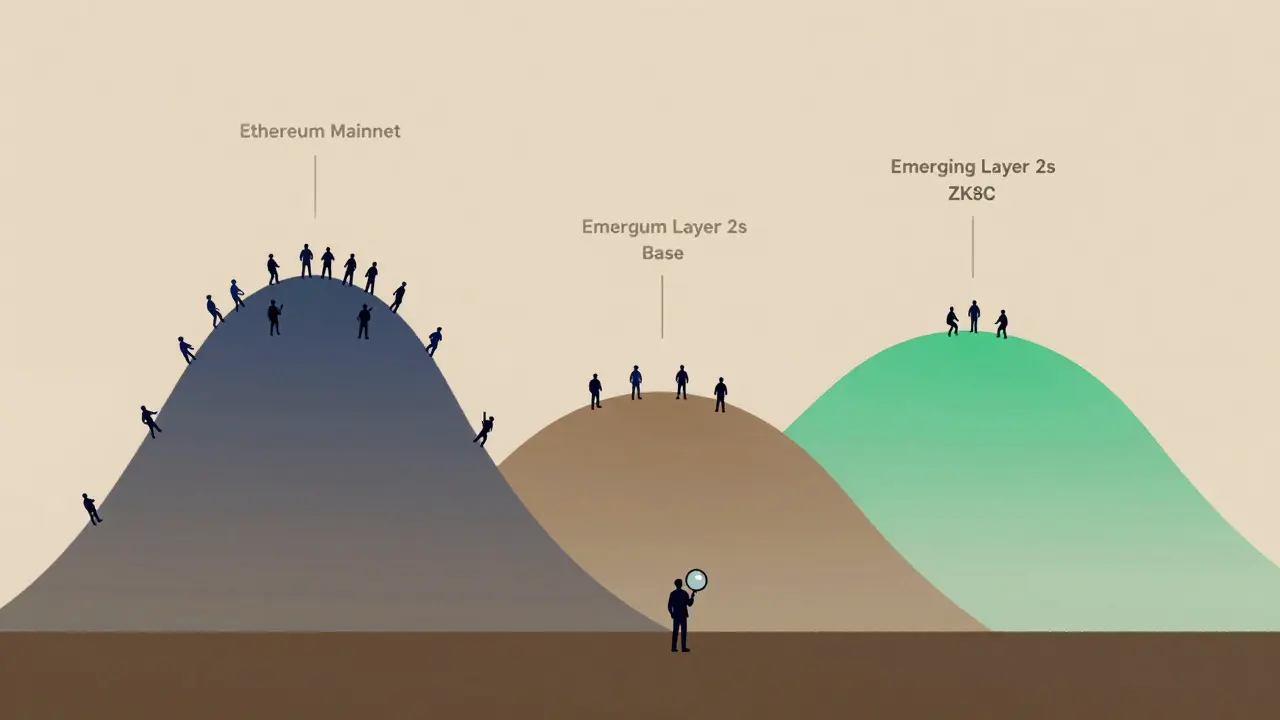
In contrast, Layer 2 solutions show different dynamics. Established chains like Arbitrum and Optimism exhibit negative elasticity between Total Value Locked (TVL) and trading volume-meaning adding more liquidity doesn’t necessarily increase trading activity. However, emerging blockchains like Base and ZKsync demonstrate positive elasticity. On these newer networks, increased TVL correlates with higher trading volume, suggesting better opportunities for early movers who can capture fees before competition saturates the market.
When choosing a platform, consider the following:
- Uniswap: Dominant player with highest TVL and infrastructure. Best for major pairs but highly competitive.
- Curve: Specializes in stablecoins and similar assets. Lower IL risk, ideal for conservative yields.
- PancakeSwap: Competitive yields on Binance Smart Chain with lower transaction costs.
- Balancer: Enables multi-asset pools with customizable weights. Good for portfolio diversification beyond two-token pairs.
- Raydium: Solana-based, offering ultra-fast transactions and integration with Serum DEX’s order book.
Strategies for Profitable Liquidity Provision
To overcome the headwinds of impermanent loss and competition, successful LPs employ specific strategies. Academic analysis identifies four key approaches that enhance profitability:
- Correlated Token Pairs: Provide liquidity in pools where tokens move together, such as ETH-wETH or USDC-USDT. Correlation reduces impermanent loss significantly.
- Larger Position Ranges: In concentrated liquidity models, wider ranges reduce the frequency of being fully converted to one asset, though they slightly dilute fee concentration.
- Longer Durations: Holding positions longer allows trading fees to compound, potentially offsetting temporary IL events.
- Volatility Matching: Align your strategy with expected token volatility. High-volatility pairs require narrower ranges and more active management, while low-volatility pairs suit broader, passive approaches.
Advanced practitioners increasingly use algorithmic trading strategies integrated with AMM positions. These bots automatically adjust liquidity ranges based on real-time market conditions, maximizing returns while minimizing manual intervention. For those without coding skills, third-party tools offer semi-automated management services.
Risk Management and Realistic Expectations
Liquidity provision is not a guaranteed income source. It’s a risk-adjusted yield strategy. Before committing capital, analyze pool-specific metrics including historical volatility, correlation between token pairs, and fee generation potential. Don’t rely on projected annual percentage rates (APRs) alone-they fluctuate wildly and often include unsustainable incentives.
Consider the tax implications too. Various jurisdictions are examining how LP token rewards and impermanent loss are treated for tax purposes. In many cases, receiving reward tokens is considered taxable income at fair market value upon receipt. Keep detailed records of all deposits, withdrawals, and reward claims.
Finally, start small. Use testnets or small amounts on mainnet to understand the user interface and mechanics of managing concentrated positions. Most platforms provide documentation, but quality varies. Uniswap offers extensive educational resources, while newer platforms may lack detailed guidance. Investing time in learning is cheaper than losing capital through misunderstanding.
| Platform | Best For | Impermanent Loss Risk | Capital Efficiency | Key Advantage |
|---|---|---|---|---|
| Uniswap V3 | Major pairs, active management | High (volatile pairs) | Very High | Deep liquidity, wide adoption |
| Curve | Stablecoins, pegged assets | Low | Medium | Low slippage, minimal IL |
| Balancer | Multi-asset portfolios | Variable | High | Customizable pool weights |
| Raydium | Solana ecosystem | High | High | Speed, low fees |
| PancakeSwap | BSC users, yield farming | Medium-High | Medium | Competitive yields, low cost |
What is the biggest risk when providing liquidity to AMM pools?
The biggest risk is impermanent loss, which occurs when the price ratio of the tokens in the pool changes significantly from your deposit time. This causes you to hold less of the appreciating asset and more of the depreciating one compared to simply holding the tokens in your wallet. If trading fees do not exceed this loss, you underperform a buy-and-hold strategy.
Is providing liquidity profitable in 2026?
Profitability depends heavily on your strategy and platform choice. On overcapitalized networks like Ethereum, returns may not justify the risks for passive providers. However, emerging Layer 2 networks like Base and ZKsync offer better elasticity between TVL and volume, creating opportunities for active managers who can optimize concentrated liquidity positions.
How does concentrated liquidity differ from standard liquidity?
Standard liquidity spreads your capital across all possible prices, ensuring you always earn some fees but with lower efficiency. Concentrated liquidity allows you to target specific price ranges, increasing fee generation per dollar invested. However, it requires active management and exposes you to higher risk if the price exits your range.
Which AMM platform is best for beginners?
Curve is often recommended for beginners due to its focus on stablecoins and similar assets, which minimizes impermanent loss risk. Uniswap also offers excellent educational resources and user interfaces, making it a good choice for learning the mechanics of liquidity provision before moving to more complex strategies.
Can I avoid impermanent loss completely?
You can minimize impermanent loss by providing liquidity in pools with highly correlated tokens, such as stablecoin pairs (USDC-USDT) or wrapped versions of the same asset (ETH-wETH). These pairs experience minimal price divergence, reducing the impact of rebalancing losses.
Are liquidity mining rewards worth pursuing?
Liquidity mining rewards can boost returns, but they often inflate APRs unsustainably. Once rewards decrease, the underlying fee revenue may not support the previous yield levels. Always evaluate the base fee APY separately from incentive rewards to assess long-term viability.
What happens if I withdraw my liquidity during a market crash?
If you withdraw during a market crash, any impermanent loss incurred becomes permanent. You will realize the reduced value of your position compared to holding the assets individually. Timing withdrawals carefully is essential to lock in profits or limit losses.
How much capital do I need to start providing liquidity?
There is no minimum requirement on most AMMs, but practical considerations apply. On Ethereum, gas fees can make small deposits unprofitable. Layer 2 networks allow smaller entries. Start with an amount you are comfortable losing while learning the mechanics, typically $100-$500 for testing strategies.