State Channel Implementations: A Deep Dive into Off-Chain Scaling
 Jul, 2 2026
Imagine trying to send a text message every time you want to buy a coffee. Now imagine that every single text message costs five dollars and takes ten minutes to deliver. That is essentially what happens when you try to use the main Ethereum or Bitcoin blockchains for small, frequent transactions. The network gets clogged, fees skyrocket, and patience wears thin. This is the scalability problem that has plagued blockchain technology since its early days.
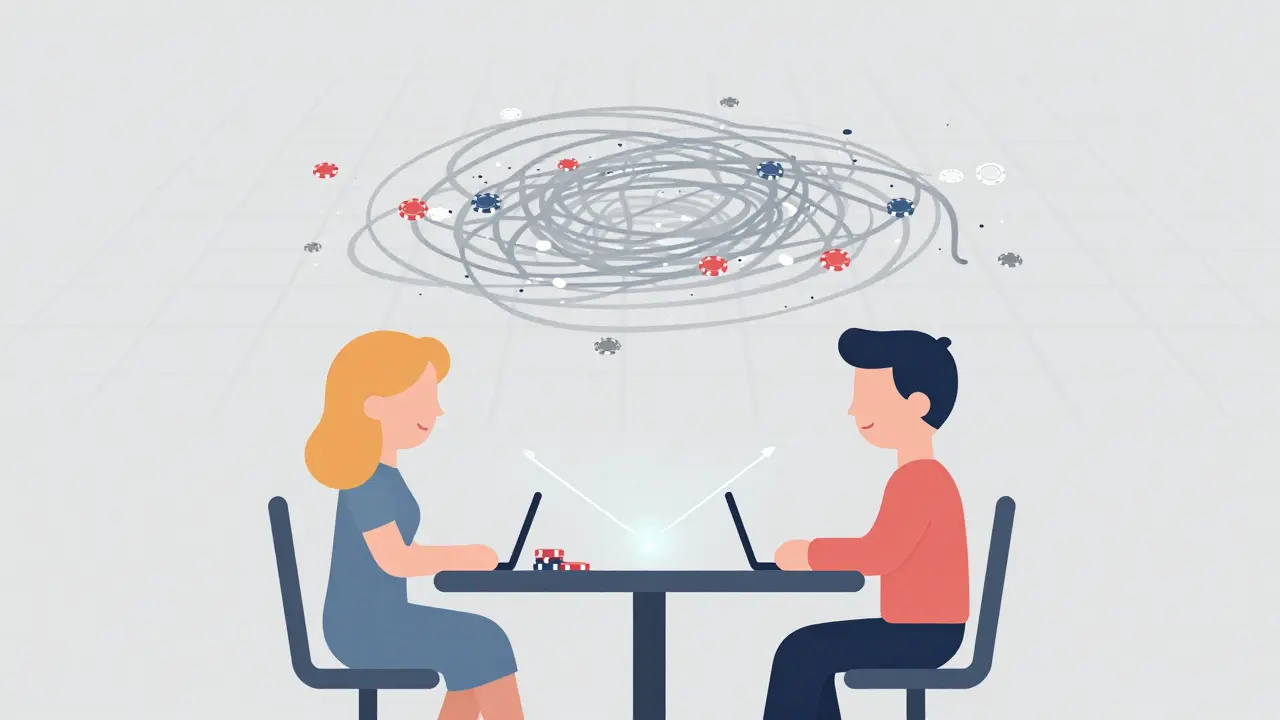
Enter State Channels, which are a Layer-2 scaling solution that allows participants to conduct multiple transactions off-chain while only recording the opening and closing states on the main blockchain. Think of them as a private side conversation between two people at a loud party. You can exchange hundreds of messages quickly and cheaply without shouting over the crowd (the main chain). When you're done, you summarize the outcome and post it publicly. This approach doesn't just speed things up; it fundamentally changes how we think about transaction efficiency in decentralized systems.
How State Channels Actually Work
To understand state channel implementations, you need to look past the hype and see the mechanics. The process isn't magic; it's cryptography and smart contracts working in tandem. It operates in three distinct phases: opening, transacting, and settling.
First, the Channel Opening. Two parties lock funds into a multisignature smart contract on the main blockchain. For example, if Alice and Bob want to play poker using Bitcoin, they each deposit 1 BTC into a joint wallet controlled by both their keys. This step is on-chain, so it costs gas fees and takes time. But you only do this once.
Next comes the Off-Chain Transaction Phase. This is where the real work happens. Alice and Bob trade signed state updates. If Alice wins a hand, she sends Bob a cryptographic signature saying, "I now owe you 0.5 BTC, and I have 1.5 BTC." Bob countersigns. They keep doing this for hours, thousands of times. None of these updates hit the blockchain. They happen instantly, with near-zero fees, often processing in under 100 milliseconds. Each new update invalidates the previous one, ensuring only the latest balance matters.
Finally, the Channel Settlement. When they finish playing, they submit the final signed state to the blockchain. The smart contract sees the latest signatures, verifies them, and distributes the funds accordingly. The entire history of thousands of hands is compressed into two on-chain transactions: open and close.
Major Implementations: Lightning vs. Raiden
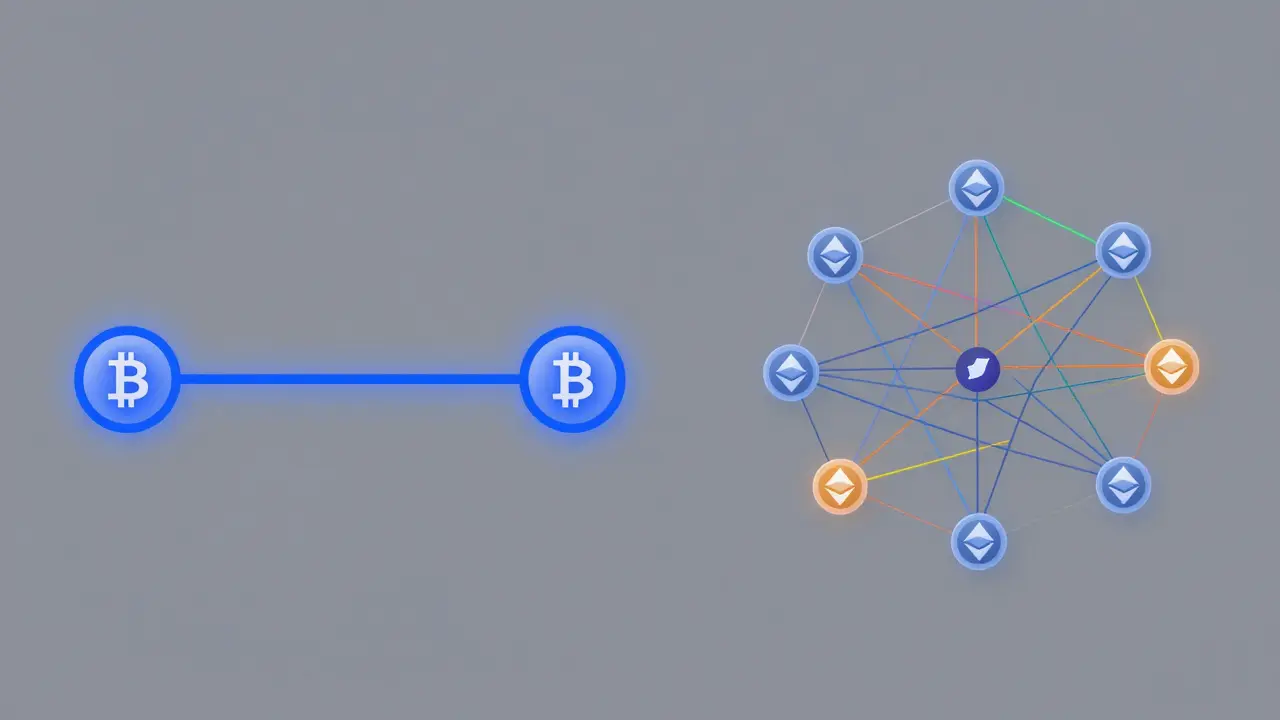
While the concept is universal, the execution varies by blockchain. The two most prominent examples are the Lightning Network for Bitcoin and the Raiden Network for Ethereum. Understanding their differences helps clarify where state channels fit in the broader ecosystem.
| Feature | Lightning Network (Bitcoin) | Raiden Network (Ethereum) |
|---|---|---|
| Primary Use Case | Micropayments, remittances | Gaming, token transfers |
| Programming Language | Go (LND), C++ | Python, Solidity |
| Security Model | 2-of-2 Multisig + HTLCs | Smart Contract Dispute Logic |
| Community Size | ~1,247 active GitHub contributors | ~389 active GitHub contributors |
| Routing Success Rate | 68.3% (for payments <$10) | Data insufficient |
The Lightning Network is the veteran here. Launched in 2018, it has become the backbone for Bitcoin micropayments. Its strength lies in its simplicity and robust security model using Hashed Timelock Contracts (HTLCs). These allow payments to route through multiple nodes without trusting intermediaries. However, liquidity management remains a headache. Users often find themselves unable to send money because their specific channel lacks sufficient balance, requiring complex rebalancing techniques.
On the other hand, the Raiden Network leverages Ethereum's smart contract capabilities. This allows for more flexible logic, such as transferring ERC-20 tokens instead of just native ETH. This makes Raiden ideal for gaming ecosystems where players trade in-game assets. Yet, it suffers from smaller community support and less mature tooling compared to Lightning. Developers report higher complexity in integrating Raiden due to rapidly changing APIs.
The Trade-Offs: Why Not Everyone Uses Them
If state channels are so efficient, why hasn't everyone switched? The answer lies in the trade-offs. State channels excel in specific scenarios but fail in others. They are not a silver bullet for all blockchain scalability issues.
Consider capital efficiency. In a state channel, you must lock 100% of your intended spending power upfront. If you open a $100 channel, that $100 is stuck there until you close it. Research indicates this leads to approximately 65% capital utilization inefficiency. Compare this to rollups like Optimism or Arbitrum, where you can deposit once and spend freely across many applications with near 100% efficiency. For DeFi users who need to move capital between protocols constantly, state channels feel restrictive.
Then there is the issue of connectivity. State channels are bilateral. You need a direct connection to the person you're paying, or a reliable path through intermediate nodes. If that path breaks-which happens frequently due to liquidity constraints-the payment fails. This contrasts sharply with optimistic rollups, which offer near-perfect success rates because they don't rely on peer-to-peer routing. As Vitalik Buterin noted in his 2021 roadmap, state channels remain theoretically optimal for specific use cases but have proven harder to generalize than rollup approaches.
Real-World Applications and User Experience
Despite the challenges, state channels are solving real problems. Let's look at actual usage data rather than theoretical promises.
In the realm of daily commerce, Lightning Network users report significant cost savings. One user documented making 1,247 coffee purchases over 11 months, paying between $0.02 and $0.05 per transaction via Lightning. On-chain, those same transactions would have cost hundreds of dollars in fees. Similarly, Bitrefill, a digital gift card platform, processes 1.2 million monthly purchases via Lightning, reducing their processing cost from $2.17 to $0.003 per transaction. This is a 99.8% reduction in overhead, enabling business models that were previously impossible.
However, the user experience is far from seamless. Trustpilot reviews for Lightning wallets like Phoenix highlight "initial setup complexity" as a major pain point, mentioned in 63% of negative reviews. Users complain about unexpected channel closures during app updates and the technical burden of maintaining liquidity. For the average consumer, managing a state channel feels like being a bank teller. It works, but it requires effort.
Enterprise adoption tells a different story. Companies with predictable, high-volume bilateral flows thrive. Remittance corridors, particularly between El Salvador and Mexico, handle 18.7% of Lightning volume. Here, the reliability and low cost outweigh the setup friction. The key is predictability. If you know who you're paying and how much, state channels shine. If you're buying random NFTs from strangers, they fall flat.
Developing with State Channels: What You Need to Know
For developers, building on state channels is a steep climb. It requires deep knowledge of cryptography, consensus mechanisms, and specific programming languages. If you're targeting Lightning, you need proficiency in Go or C++. For Raiden, Python and Solidity are essential. Courses like Coursera's Blockchain Specialization estimate a 12-16 week learning curve just to reach competent implementation levels.
Common pitfalls include poor liquidity management and handling uncooperative closures. If one party goes offline, you must monitor the blockchain for dispute windows-typically 1,000 to 2,000 blocks on Ethereum-to ensure they don't cheat by submitting an old state. This requires constant vigilance or sophisticated monitoring tools. Documentation quality also varies. Lightning's BOLT specifications score highly (4.3/5) in developer surveys, while Raiden's documentation struggles (3.6/5) due to rapid API changes without clear deprecation notices.
Yet, the rewards can be substantial. Gaming studios using Raiden reported reducing microtransaction costs by 99%. While development time increased by three months due to custom channel logic, the long-term operational savings justified the investment. The lesson? State channels are for builders who prioritize efficiency over ease of use.
The Future: Hybrid Models and Virtual Channels
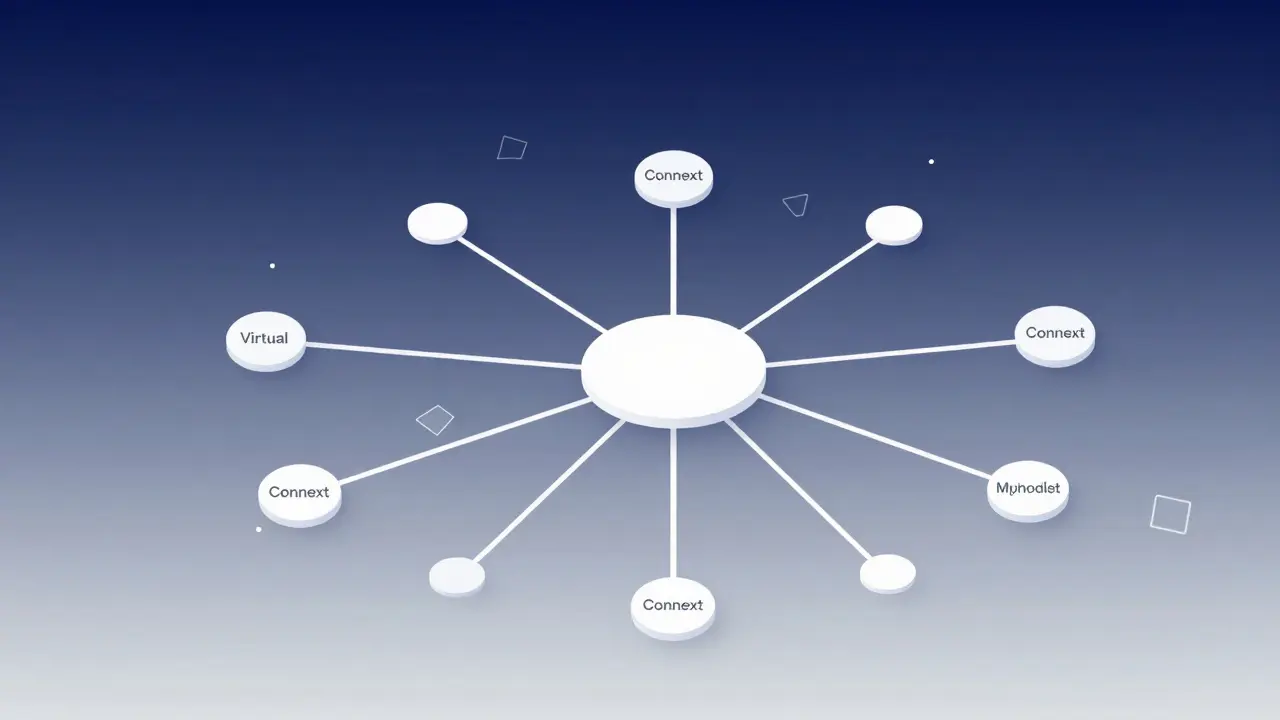
The landscape is evolving. Pure state channels are facing competition from hybrid approaches. Projects like Connext's NXTP protocol are introducing "state channel hubs" that improve routing success rates to 89.4% for small transactions. Meanwhile, Lightning Labs released Lightning Loop v2, which reduces rebalancing costs by 63% through non-custodial liquidity management.
Academic research from MIT suggests "virtual channels" could eliminate the need for direct connections, addressing the network effect bottleneck. Imagine sending money to someone without having a direct line to them, yet still enjoying off-chain speeds. This innovation could bridge the gap between the flexibility of rollups and the efficiency of state channels.
Market forecasts suggest a split future. Messari predicts rollups will capture 78-85% of the Layer-2 market by 2027 due to better composability. However, Arcane Research forecasts Lightning Network capacity will grow by 1,950% by late 2025, driven by emerging market remittances. State channels won't disappear; they will niche down, dominating high-frequency, bilateral interactions while rollups handle complex, multi-party DeFi applications.
Are state channels secure?
Yes, state channels inherit the security of the underlying blockchain. Since the final state is settled on-chain, participants cannot steal funds without triggering a dispute. Mechanisms like Hashed Timelock Contracts (HTLCs) and challenge periods prevent cheating. However, security relies on users staying online to monitor for malicious behavior during the channel's life.
What is the difference between state channels and rollups?
State channels require bilateral connections and upfront capital locking, making them ideal for known counterparties and micropayments. Rollups batch thousands of transactions from various users onto the main chain, offering better capital efficiency and composability for complex DeFi apps. State channels offer near-instant finality, while rollups may have delay periods for fraud proofs or validity checks.
Do I need to stay online to use a state channel?
Ideally, yes. To protect against a counterparty broadcasting an outdated state, you must be able to detect it and initiate a dispute within the challenge window. If you go offline for too long, you risk losing funds. Newer technologies like watchtowers aim to mitigate this by allowing third parties to monitor your channels on your behalf.
Which is better: Lightning Network or Raiden Network?
It depends on your needs. Choose Lightning Network if you are working with Bitcoin and need robust, battle-tested infrastructure for micropayments and remittances. Choose Raiden Network if you are on Ethereum and need to transfer ERC-20 tokens or integrate into gaming ecosystems. Lightning has a larger community and better tooling, while Raiden offers more flexibility with smart contracts.
Why aren't state channels used for everything?
State channels suffer from poor capital efficiency (locking 100% of funds) and limited connectivity (requiring direct paths). They struggle with spontaneous payments to unknown recipients and complex multi-party interactions. Rollups and other Layer-2 solutions offer better scalability for general-purpose computing and DeFi, where users interact with many different protocols dynamically.