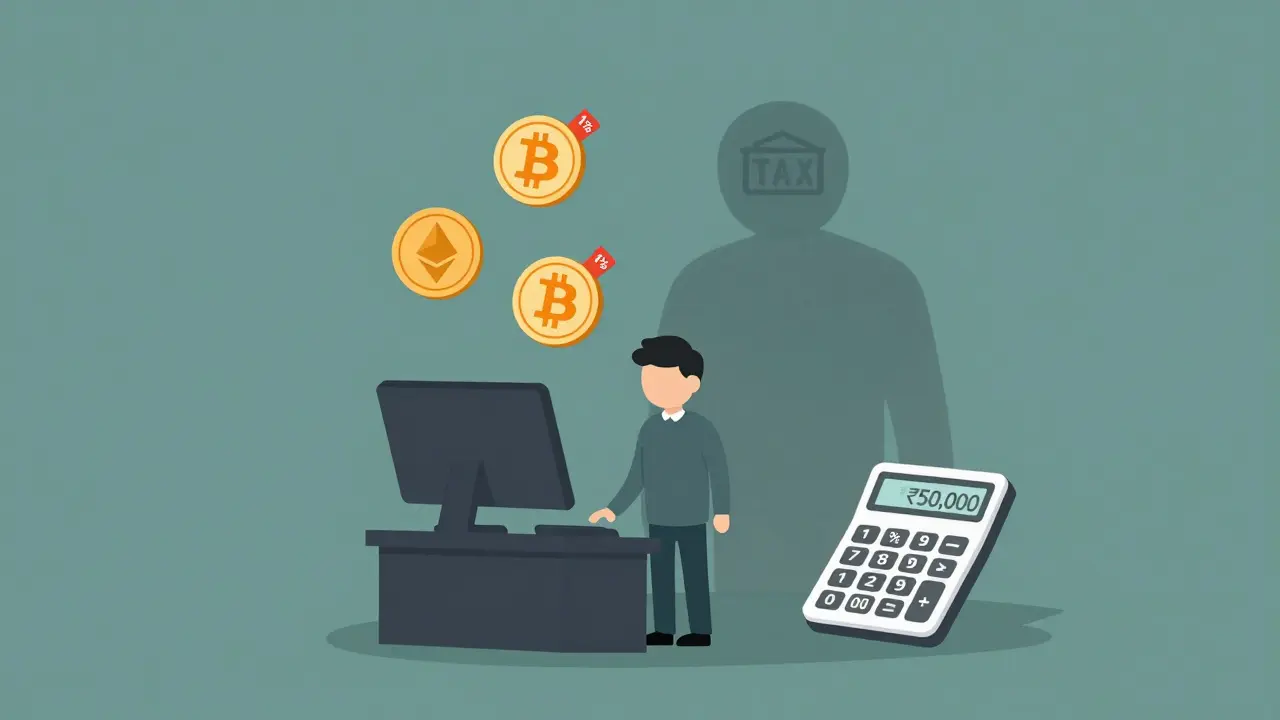
1% TDS on Crypto Transactions in India: What You Need to Know in 2025
India's 1% TDS on crypto transactions deducts tax at every trade. Learn how it works, who it affects, thresholds, crypto-to-crypto rules, GST叠加, and what to do in 2025.
Read MoreWhen you buy or sell crypto in India, a 1% TDS, a tax deducted at source on cryptocurrency transactions as mandated by India’s Income Tax Department. Also known as Tax Deducted at Source on digital assets, it’s not a tax on profits—it’s a withhold-and-report system that applies to every trade over ₹50,000 in a single financial year. This rule, introduced in July 2022 and still active in 2025, affects everyone from casual buyers to active traders. It doesn’t matter if you made a profit or lost money. If you traded, 1% was taken out before the transaction completed.
Many confuse this with capital gains tax, but they’re separate. The 1% TDS, a mandatory deduction applied by exchanges at the time of trade. Also known as crypto TDS, it’s collected by platforms like WazirX, CoinSwitch, and ZebPay and sent directly to the government. Meanwhile, capital gains tax, a 30% tax on profits from selling crypto, regardless of holding period. Also known as crypto profit tax, it’s filed separately during income tax returns. So you might pay both: 1% upfront when you trade, and another 30% later if you turned a profit. Exchanges don’t calculate your gains—they just take the 1%. You’re responsible for the rest.
Why does this matter? Because it turns every trade into a paper trail. If you bought Bitcoin on Binance and transferred it to CoinSwitch to sell, the 1% TDS kicks in on the sell side. If you used a peer-to-peer platform like LocalBitcoins, the buyer or seller should deduct it—but most don’t, putting you at risk. The tax department now cross-checks exchange data with bank statements. If you didn’t report TDS deductions, you’ll get a notice. And yes, they know if you used a VPN to trade on foreign platforms—India’s tax authorities have partnered with global data providers to track offshore crypto activity.
This rule didn’t kill crypto in India. It just made it more transparent. People still trade. But now they keep records. They track every transaction. They save screenshots of TDS certificates. They file Form 26AS like they would for salary income. The ones who ignore it? They get penalties. The ones who understand it? They sleep better.
Below, you’ll find real stories and breakdowns from Indian crypto users who’ve navigated this system. Some lost money to scams pretending to "refund" TDS. Others learned how to legally reduce their tax burden. A few even turned compliance into a habit that saved them from audits. These aren’t theoretical guides—they’re lived experiences. Whether you’re new to crypto or have been trading since 2021, what’s here will help you avoid costly mistakes and understand exactly how the system works today.
India's 1% TDS on crypto transactions deducts tax at every trade. Learn how it works, who it affects, thresholds, crypto-to-crypto rules, GST叠加, and what to do in 2025.
Read More