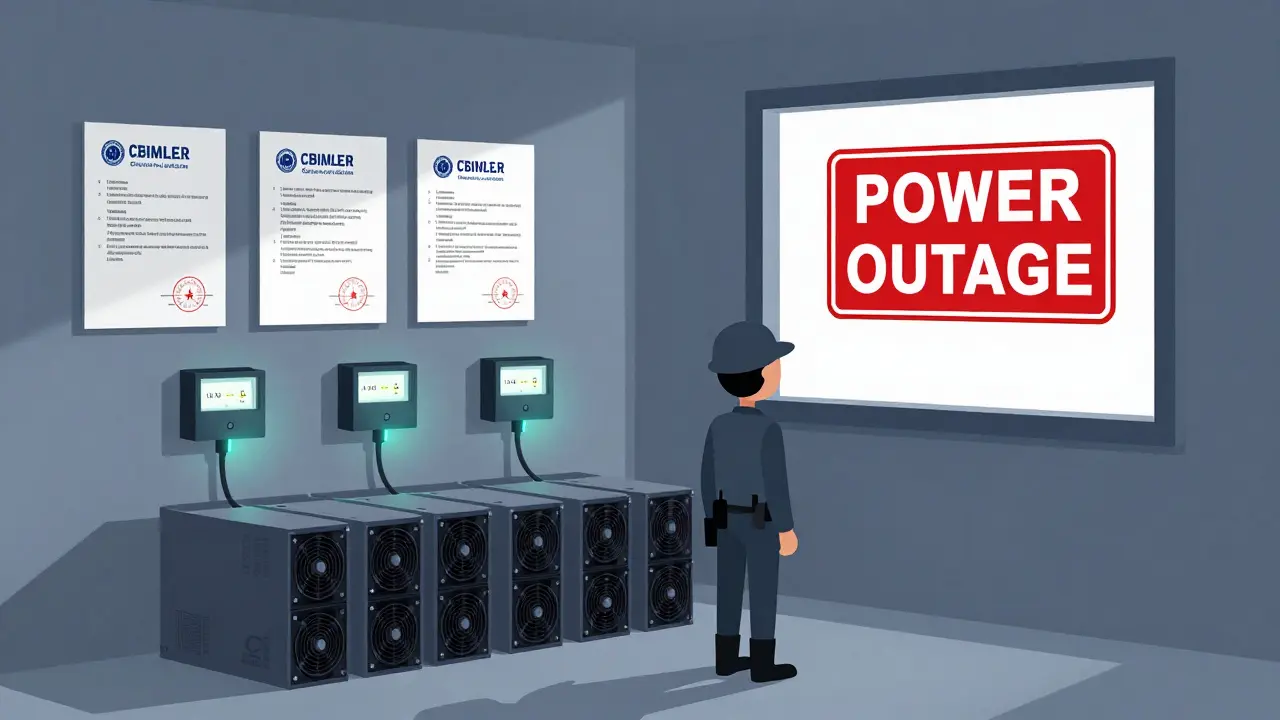
Mining Crypto in Iran: Law and Restrictions in 2025
Crypto mining in Iran is legal but tightly controlled. Learn how 2025 regulations, power shortages, and state-backed operations make mining risky-even for those who follow the rules.
Read MoreWhen you hear about crypto mining electricity, the amount of power used to validate blockchain transactions and secure networks like Bitcoin. It's not just a technical detail—it's the real cost behind every coin mined. Every time a miner solves a puzzle to add a block, thousands of watts flow through machines that run nonstop. In places like Texas or Kazakhstan, mining farms light up entire neighborhoods. But in others, like China or Iran, governments shut them down because the grid can't handle it.
Bitcoin mining power, the dominant force in crypto energy use, consumes more electricity than most countries. Also known as cryptocurrency energy consumption, it’s not just about Bitcoin—Ethereum’s shift to proof-of-stake cut its power use by 99.9%, but Bitcoin’s demand keeps growing. Miners chase cheap power: hydro in Canada, geothermal in Iceland, or surplus coal in Inner Mongolia. The goal? Beat the electricity cost so the coin’s value still covers hardware, cooling, and rent. If power spikes, miners shut off. Simple as that. mining hardware, the ASICs and GPUs that do the actual work. These machines aren’t like your laptop—they’re built to run 24/7, heat up like ovens, and need industrial cooling. A single ASIC miner can pull 3,000 watts. Multiply that by 100,000 units, and you’re talking power plants, not solar panels.
The real question isn’t whether crypto mining uses electricity—it’s whether it’s worth it. Some say it’s wasteful. Others point out that miners often use stranded energy—wind power at night, flared gas, or hydro surplus that would’ve been lost anyway. In 2025, the most profitable miners aren’t the ones with the fastest chips—they’re the ones with the cheapest kilowatts. And as regulations tighten in the EU and U.S., the ones who can’t adapt are getting pushed out.
What you’ll find below are real stories from the frontlines: how Afghan families rely on mining when banks collapse, how India’s new tax rules hit miners hard, and why some miners are moving to places where electricity costs less than bottled water. These aren’t theory pieces—they’re case studies from people who live with the bills, the heat, and the risks every day.
Crypto mining in Iran is legal but tightly controlled. Learn how 2025 regulations, power shortages, and state-backed operations make mining risky-even for those who follow the rules.
Read More