Cryptocurrency Legality: Where It's Allowed, Banned, and Punished
When we talk about cryptocurrency legality, the rules that determine whether you can own, trade, or mine digital money in your country. Also known as crypto regulation, it’s not about technology—it’s about power, control, and survival. In some places, crypto is a lifeline. In others, it’s a crime. And in a few, it’s both at the same time.
Take crypto mining Iran, a legal activity tightly controlled by the state, where miners need government permission to use electricity. Also known as Iranian crypto law, it’s not about banning Bitcoin—it’s about who gets to run the machines and who pays for the power. Meanwhile, in India crypto taxation, a 1% tax kicks in on every crypto trade, no matter how small. Also known as TDS on crypto, it doesn’t stop people from trading—it just makes every transaction a paper trail. These aren’t just policies. They’re real-world filters that decide who can use crypto and who gets crushed by it.
And then there’s crypto ban penalties, the consequences you face if you break the rules. In Algeria, you might get fined. In Russia, your assets can be seized. In North Korea, crypto laundering funds weapons programs—and the world tries to catch them. Most countries don’t jail ordinary people for holding Bitcoin. But they’ll shut down exchanges, freeze wallets, and cut off internet access to stop it from spreading. The real question isn’t whether crypto is legal—it’s whether you can use it without losing everything.
What you’ll find below aren’t abstract debates. These are real stories from people living under these rules: Afghan families sending money through Bitcoin because banks are gone. Iranian miners risking arrest to keep their rigs running. Indian traders calculating every trade to avoid tax traps. And scammers pretending to offer free tokens to people who don’t even know if crypto is legal where they live.
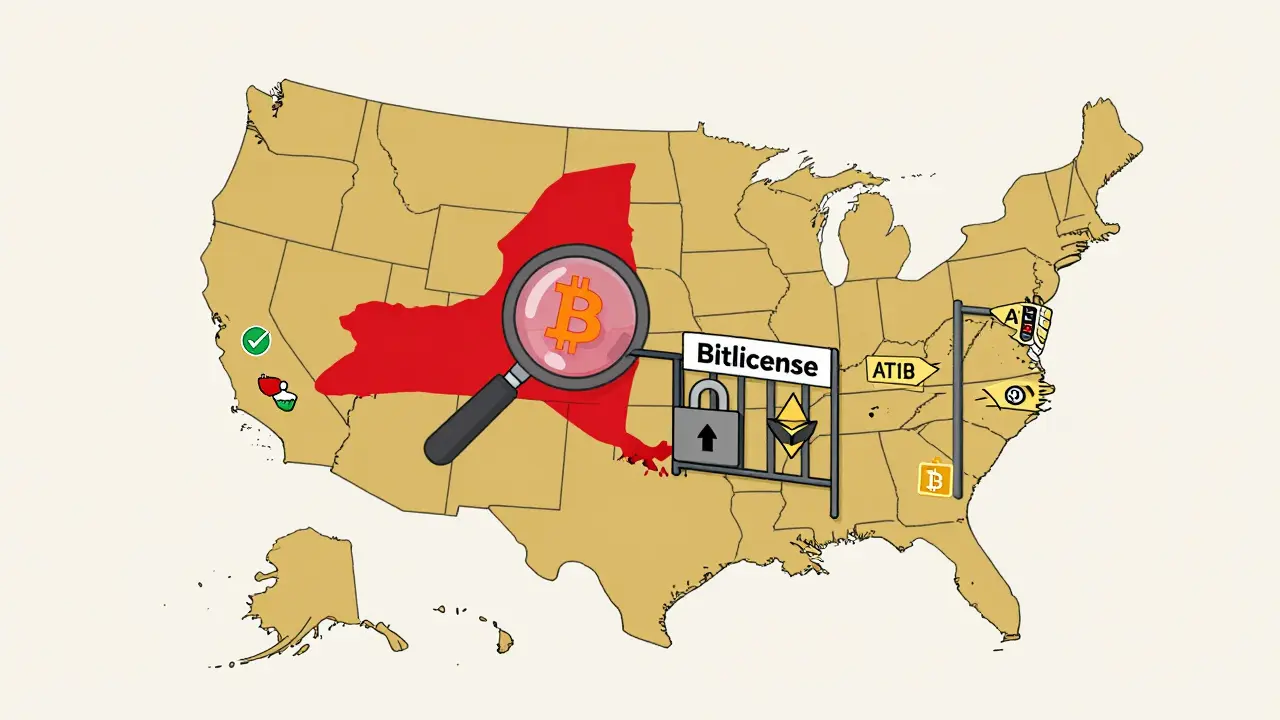
State-by-State Crypto Regulations in the United States: What’s Legal Where in 2025
0 Comments
In 2025, U.S. crypto rules vary wildly by state. New York demands strict licenses, Texas welcomes crypto with open arms, and most states rely on outdated laws. Know where you stand before you trade or build.