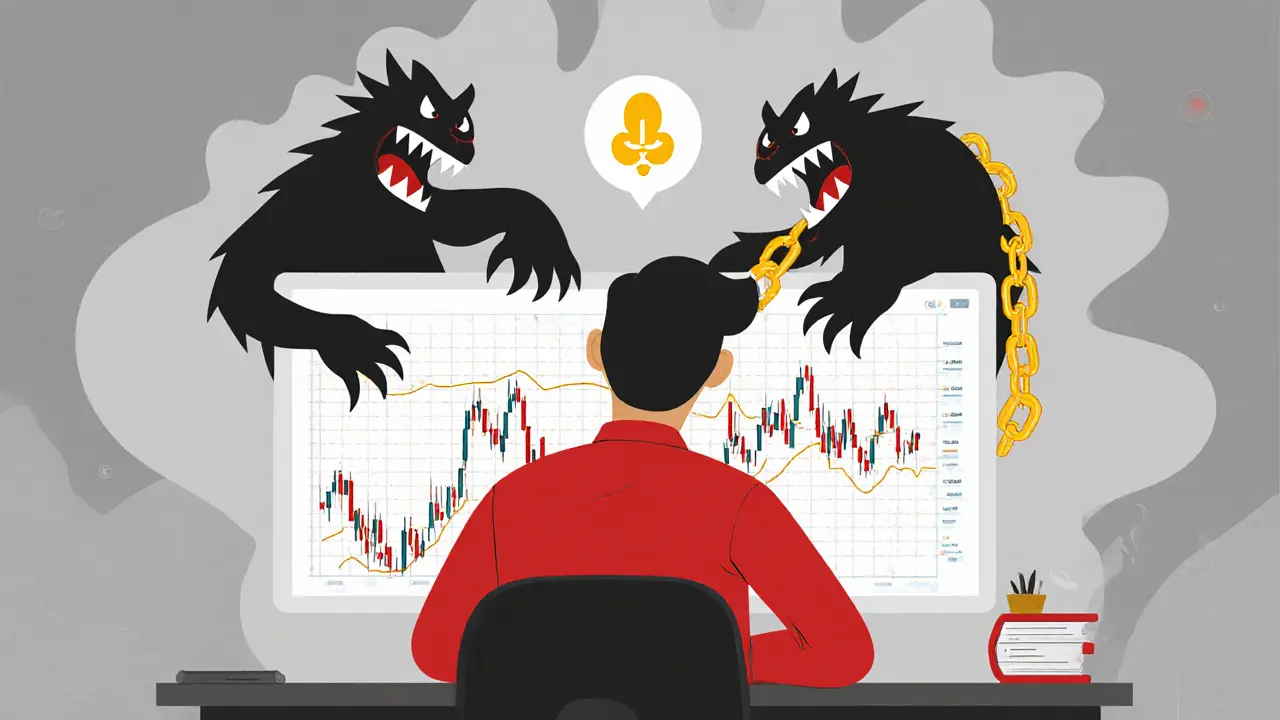
Emotional Risk Management in Crypto: Stay Calm When Markets Crash
When you buy a crypto coin and it drops 80% in a week, your brain doesn’t care about the whitepaper. It screams sell now. That’s not a strategy—it’s emotional risk management, the practice of recognizing and controlling psychological reactions to market moves to avoid self-sabotage. Most people lose money in crypto not because they picked the wrong coin, but because they let fear, greed, or FOMO make the calls for them.
Crypto fear and greed, a measurable index of market sentiment driven by human behavior rather than fundamentals swings wildly. You see a meme coin like BananaGuy spike overnight and jump in, thinking you’re smart. Then it crashes, and you hold on, hoping it’ll come back—because admitting you made a mistake hurts more than losing money. Meanwhile, someone else sells at a 20% loss because they saw a news headline and panicked. Both are victims of the same problem: no system to manage their emotions. Behavioral finance, the study of how psychological biases affect financial decisions shows this isn’t rare. It’s universal. Even experienced traders freeze, chase, or hold too long. The difference? They’ve built rules to override their instincts.
Look at the posts here. TRAVA.FINANCE dropped 99.8% from its peak. Peanut (NUX) crashed 99.9%. FCK925 and BananaGuy have zero utility. Yet people still hold them, not because they believe in the tech—but because they can’t accept they were wrong. On the flip side, traders who stick to stop-losses, limit orders, and pre-defined exit plans survive these swings. They don’t ignore emotion. They plan for it. They know that when the market goes wild, their best tool isn’t a chart—it’s a written rule.
Emotional risk management isn’t about being robotic. It’s about knowing your triggers. Are you the type who buys when everyone’s talking? Do you check your portfolio 50 times a day? Do you ignore bad news because you don’t want to face a loss? These aren’t personality flaws—they’re patterns you can fix. The posts below show real cases: failed airdrops, hacked exchanges, dead projects. Each one is a lesson in how emotion turns a small loss into a disaster. You’ll see how people reacted when their investments vanished—and how others walked away with their sanity intact.
Emotional Risk Management in Trading: How to Stop Letting Fear and Greed Destroy Your Profits
0 Comments
Emotional risk management in trading helps you control fear, greed, and revenge trading so you stick to your plan-even when the market gets wild. Learn proven techniques used by top traders to protect your capital and improve performance.