Japan Crypto Regulations: What You Need to Know in 2025
When it comes to Japan crypto regulations, the country’s approach to digital assets is one of the most structured and enforced in the world. Also known as crypto legal framework Japan, it’s not about banning crypto—it’s about controlling how it’s used, taxed, and traded. Unlike places where crypto is either ignored or outlawed, Japan treats it as a legal payment method, but only if you follow the rules.
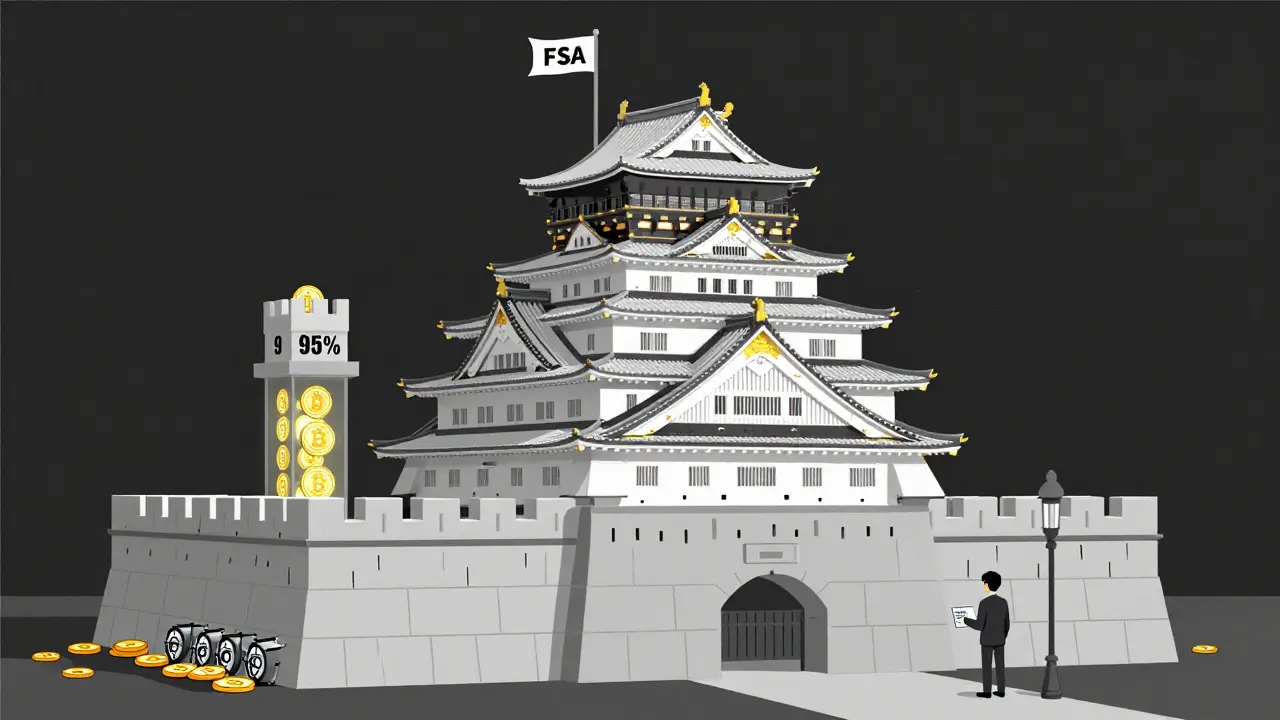
The FSA Japan, the Financial Services Agency, is the main body overseeing all crypto activity. Also known as Japan financial regulator, it requires every exchange operating in the country to be licensed, undergo regular audits, and keep customer funds separate from company money. If an exchange isn’t on the FSA’s official list, it’s not legal to operate there. That’s why you won’t find Binance or Bybit officially serving Japanese users—they either comply or stay out. This isn’t just bureaucracy. It’s a system built after the 2018 Coincheck hack, where $530 million in NEM was stolen. Since then, Japan has moved fast to protect users, not just punish bad actors.
crypto taxation Japan, is another major piece of the puzzle. Also known as crypto income tax Japan, the government treats crypto gains as miscellaneous income, not capital gains. That means if you trade Bitcoin for Ethereum, or sell your ETH for yen, you owe tax on the profit—even if you never cashed out to your bank. The rates can hit up to 55% depending on your total income. Most people don’t realize this until tax season hits, and then they’re scrambling to file. Meanwhile, mining is legal but not incentivized. There are no tax breaks, and electricity costs are high. So most mining operations either shut down or move overseas.
Japan doesn’t ban DeFi, NFTs, or airdrops—but if they involve Japanese users, they’re under scrutiny. If a platform doesn’t have an FSA license, it can’t legally market to Japanese residents. That’s why you see so many fake airdrops targeting Japan: scammers know people are looking for free crypto, and they exploit the confusion. Real projects? They’re registered, audited, and transparent. Fake ones? They vanish after collecting wallets.
What’s clear in 2025 is this: Japan doesn’t want to stop crypto. It wants to own it. The rules are tight, the penalties are real, and the enforcement is relentless. But if you play by them, you can trade, hold, and even build in Japan—legally. Below, you’ll find real cases, exchange reviews, and scam alerts that show exactly how these rules affect everyday users. No theory. No fluff. Just what’s happening on the ground.
Crypto Exchange Regulations in Japan by FSA: What You Need to Know in 2025
0 Comments
Japan's FSA enforces the world's strictest crypto exchange rules: mandatory cold storage, local licensing, and heavy penalties for non-compliance. Learn how the 2025 FIEA shift reclassifies tokens as securities and what it means for investors.