MetaMask in Banned Countries: What Works, What Doesn't, and How Users Survive
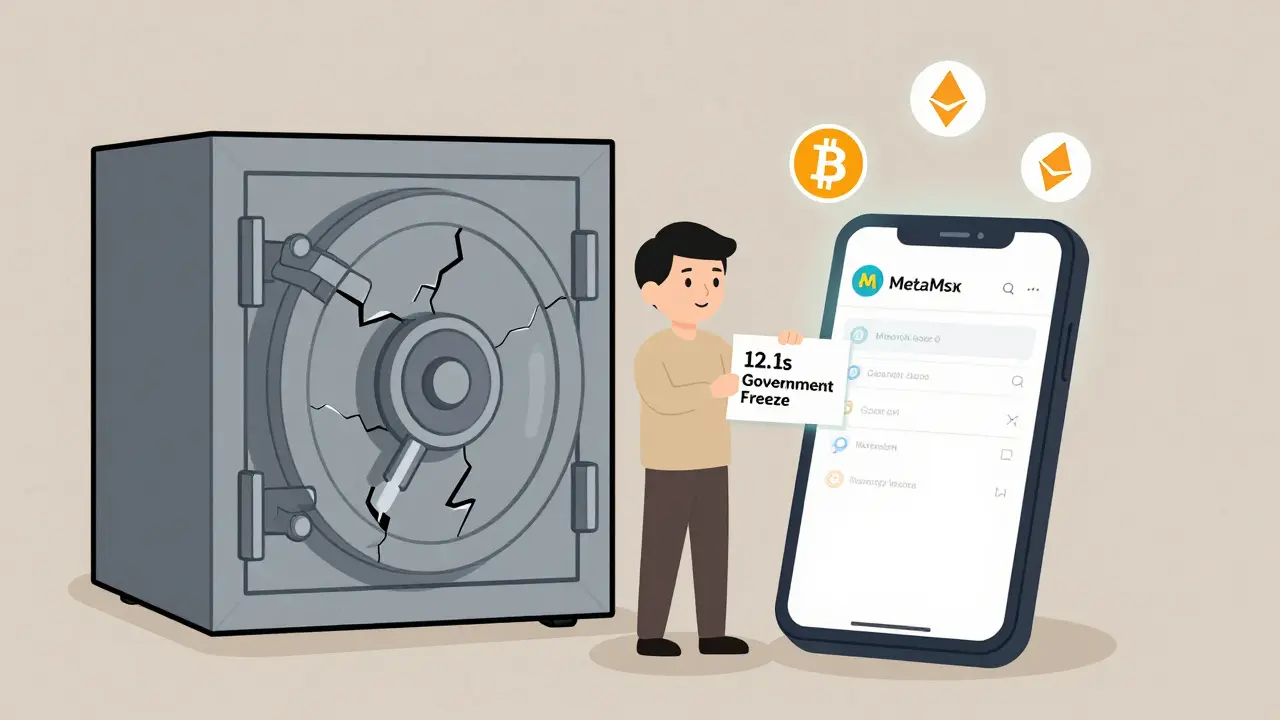
When governments block crypto, MetaMask, a non-custodial wallet that lets users control their own keys without relying on banks or exchanges. Also known as a self-custody crypto wallet, it becomes one of the few tools left for people to send, save, and spend digital money. In places like Iran, Afghanistan, and Russia, where banks are frozen, remittances are cut off, and foreign currency is hard to get, MetaMask isn’t a luxury—it’s a lifeline. People use it to receive Bitcoin and USDT from family abroad, pay for medicine, or even buy food when local banks refuse to process payments.
But using MetaMask in a banned country isn’t as simple as downloading the app. VPN, a tool that hides your real location by routing your internet through another country. Also known as a network tunnel, it’s often the first step to even opening MetaMask. Many crypto exchanges like Bybit and Binance block traffic from restricted regions using geofencing, and MetaMask itself doesn’t stop you—but your internet connection might. That’s why users in Iran and Nigeria rely on tools like Outline or ProtonVPN to connect to decentralized networks. Even then, there’s risk: account freezes, seized funds, and legal threats. In Iran, mining is legal but using crypto to pay for goods isn’t. In Afghanistan, the Taliban banned crypto outright, yet USDT still moves through underground networks, carried by women using burner phones and encrypted chats.
Stablecoins, digital tokens pegged to the US dollar to avoid Bitcoin’s volatility. Also known as crypto cash, they’re the real workhorses in banned regions. Bitcoin is too slow and expensive for daily use. USDT, on the other hand, moves fast, costs pennies to send, and holds its value. That’s why Afghan families and Iranian workers rely on it—not for speculation, but survival. You won’t find a MetaMask tutorial for these users that says "buy ETH first." They start with USDT. They trade it peer-to-peer through Telegram. They convert it to local currency through trusted middlemen. It’s not finance. It’s frictionless barter, powered by blockchain.
And it’s not just individuals. In North Korea, state-backed hackers use MetaMask to launder stolen crypto, proving how powerful self-custody tools can be when unregulated. Meanwhile, in India, a 1% tax on every trade pushes users toward peer-to-peer MetaMask transfers to avoid reporting. The same tool that lets a teenager in Texas trade meme coins lets a mother in Kabul feed her kids. The difference? Intent. One uses it for fun. The other uses it to stay alive.
What you’ll find below aren’t just guides on how to bypass blocks. They’re real stories of people who turned MetaMask into a tool of resistance, resilience, and survival—when no other option was left.
Non-Custodial Crypto Wallets in Restricted Countries: How to Stay in Control When Banks Won't Let You
0 Comments
Non-custodial crypto wallets let you control your money without banks or exchanges - crucial in countries where crypto is restricted. Learn how they work, which ones to use, and how to stay safe when no one else can help you.