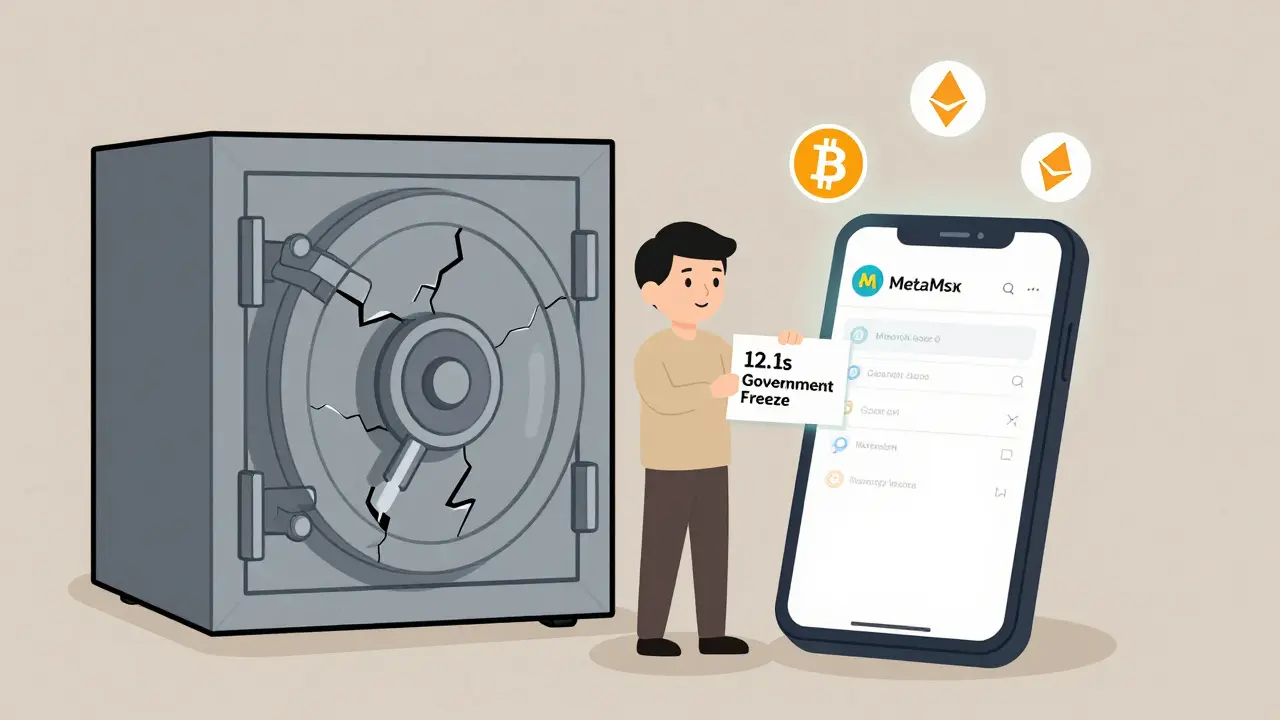
Self-Custody Crypto: Take Control of Your Digital Assets
When you hold your own self-custody crypto, the practice of owning and managing your cryptocurrency without relying on third-party exchanges or services. Also known as non-custodial wallets, it means your private keys, the secret codes that give you access to your crypto live only on your device—no one else can touch your coins. This isn’t just a technical detail; it’s the core promise of blockchain: true ownership. If you don’t hold the keys, you don’t hold the crypto.
Most people start by storing crypto on exchanges like Binance or Coinbase. It’s easy—until it isn’t. Exchanges get hacked, freeze accounts, or shut down in certain countries. In Iran, users saw their Tether wallets locked. In India, tax rules made trading risky. And in the U.S., some states demand licenses just to operate. When you use a custodial service, you’re trusting someone else with your money. But with crypto wallets, software or hardware tools that store your private keys and let you send/receive digital assets, you’re the bank. You control when and where you move funds. You don’t need permission to send Bitcoin to a family member in Afghanistan. You don’t wait for a platform to lift a ban. You just do it.
That freedom comes with responsibility. Losing your private key means losing your coins—forever. There’s no customer support line to call. No password reset. That’s why tools like hardware wallets and seed phrase backups matter. People who use Bitcoin custody, the methods and practices used to securely store and manage Bitcoin without third parties know this. They write down their 12 words. They keep them in fireproof safes. They test recovery before they hold real value. It’s not about being paranoid—it’s about being smart. The posts below show real cases: how Afghan families use crypto to survive, how Iranian miners fight power cuts, how Indian traders handle 1% tax deductions. Every story here ties back to one truth: if you want real control over your money, you need self-custody. And if you’re serious about it, you’ll find the tools, the risks, and the lessons here—no fluff, no hype, just what works.
Non-Custodial Crypto Wallets in Restricted Countries: How to Stay in Control When Banks Won't Let You
0 Comments
Non-custodial crypto wallets let you control your money without banks or exchanges - crucial in countries where crypto is restricted. Learn how they work, which ones to use, and how to stay safe when no one else can help you.