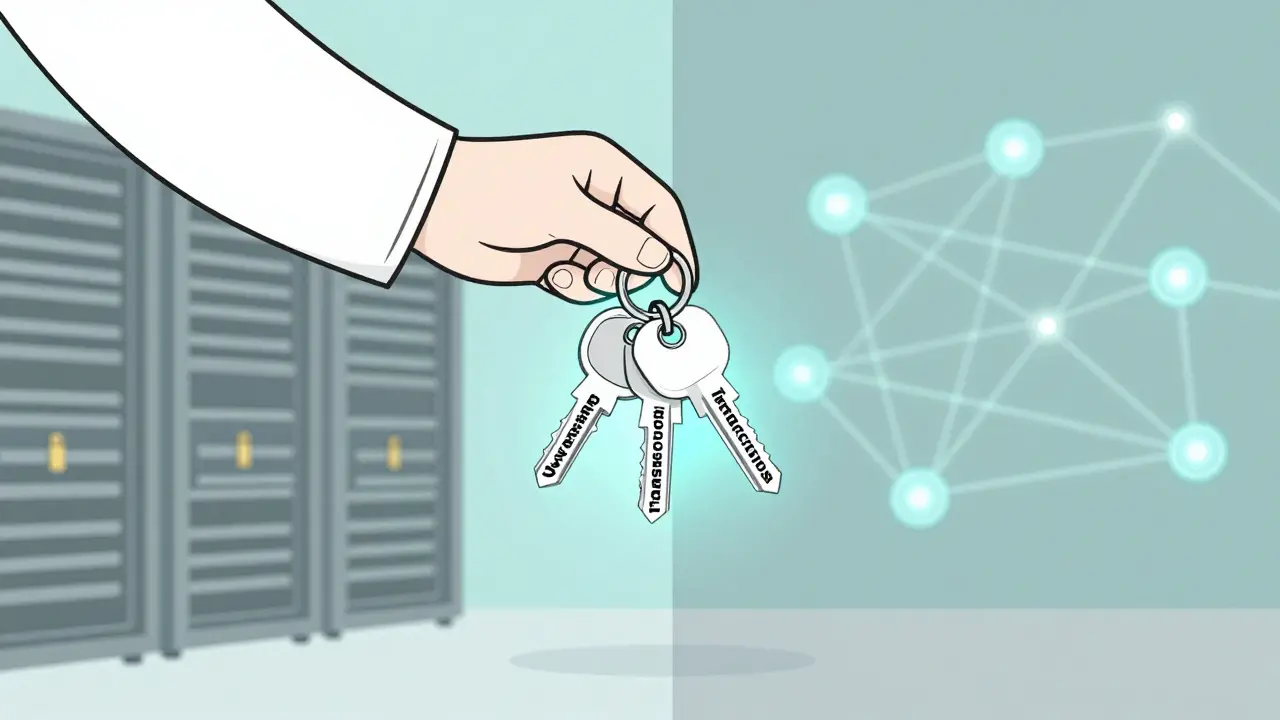
Self-Sovereign Identity in Crypto: Take Back Control of Your Digital Life
When you use a self-sovereign identity, a digital identity you fully own and control without needing permission from any company or government. Also known as decentralized identity, it’s not stored on a server you can’t access—it lives in your wallet, under your keys, and only you decide who sees what. This isn’t theory. It’s how people in Iran, Afghanistan, and other restricted regions keep sending money, proving who they are, and staying connected when banks shut them out.
Think about non-custodial wallets, crypto wallets where you hold your own keys and no third party can freeze your funds. They’re the tool that makes self-sovereign identity real. Without them, your identity is still tied to someone else’s rules. With them, you don’t need a passport to send USDT to your family in Kabul. You don’t need a bank account to prove you’re not a robot. You just need your seed phrase. And that’s why countries like Japan and the U.S. are scrambling to regulate crypto exchanges—because when people use self-sovereign identity, traditional control systems break down.
Crypto regulations, laws that try to force crypto users into government-approved systems are trying to catch up. But they’re always one step behind. In New York, you need a BitLicense to trade. In Texas, you can buy Bitcoin at a gas station. Meanwhile, someone in Afghanistan uses a non-custodial wallet to receive remittances through Tether—no ID, no bank, no permission. That’s self-sovereign identity in action. It’s not about being anonymous. It’s about being autonomous.
And it’s not just for rebels or activists. It’s for anyone tired of being tracked, taxed, or blocked by systems they didn’t agree to. If you’ve ever wondered why people in banned countries still use crypto, or why wallets like MetaMask work where banks don’t, the answer is simple: they’re building their own digital identity. No middleman. No gatekeeper. No apology.
Below, you’ll find real stories from people who’ve used self-sovereign identity to survive censorship, avoid surveillance, and bypass broken systems. Some of these posts show how it’s done. Others show what happens when governments try to stop it. All of them prove one thing: your identity doesn’t belong to a corporation or a state. It belongs to you.
Future of Web3 Internet: How Decentralization Is Reshaping Online Ownership and Control
0 Comments
The future of the Web3 internet is about ownership, not apps. With blockchain, AI, and regulation aligning, Web3 is moving from crypto experiments to enterprise reality-giving users control over their data, identity, and assets.