State Crypto Laws: What’s Legal, Illegal, and How It Affects You
When we talk about state crypto laws, the rules governments set for buying, selling, mining, or using digital currencies within their borders. Also known as cryptocurrency regulations, these laws don’t just affect traders—they shape whether you can send money to family, earn crypto through mining, or even hold a wallet without risking fines or worse. There’s no global standard. What’s legal in Japan is a crime in Nigeria. What’s taxed in India is ignored in El Salvador. And in places like Iran and Afghanistan, crypto isn’t just a financial tool—it’s a survival mechanism.
These laws aren’t just about banning or allowing crypto. They’re tied to crypto taxation, how governments collect money from crypto trades, mining profits, or even holding coins. For example, India’s 1% TDS on every trade forces users to track every swap, while Japan’s 2025 FIEA update reclassifies many tokens as securities, triggering full financial oversight. Meanwhile, crypto mining laws, the rules around using electricity and hardware to produce new coins. In Iran, mining is legal but tightly controlled—power shortages mean even legal miners get shut off. In North Korea, state-backed teams use crypto mining to launder over $1.6 billion, bypassing sanctions with fake identities and stablecoins. Then there’s cryptocurrency legality, whether owning or using crypto is outright forbidden. In Afghanistan, the Taliban banned it, yet USDT and Bitcoin flow underground to keep families fed. In Algeria, you could face jail for trading. But in most places, individuals aren’t jailed for holding crypto—instead, regulators target exchanges, payment processors, and mining farms.
These rules don’t exist in a vacuum. They’re shaped by politics, economics, and tech access. A country with weak banks, like Afghanistan, leans on crypto because it’s the only option left. A country with strict capital controls, like Iran, lets you mine but blocks you from spending your coins abroad. And places like Japan and the U.S. states are racing to catch up with innovation, adding layers of compliance that make trading harder—but safer for investors.
What you’ll find below isn’t a list of abstract policies. It’s real stories from people living under these laws: Afghan families using Bitcoin to send remittances, Iranian miners fighting power cuts, Indian traders calculating TDS on every swap, and users in Japan navigating new security rules that freeze accounts overnight. These aren’t hypotheticals—they’re daily realities. Whether you’re holding, trading, mining, or just trying to avoid getting scammed, understanding state crypto laws isn’t optional. It’s how you protect yourself.
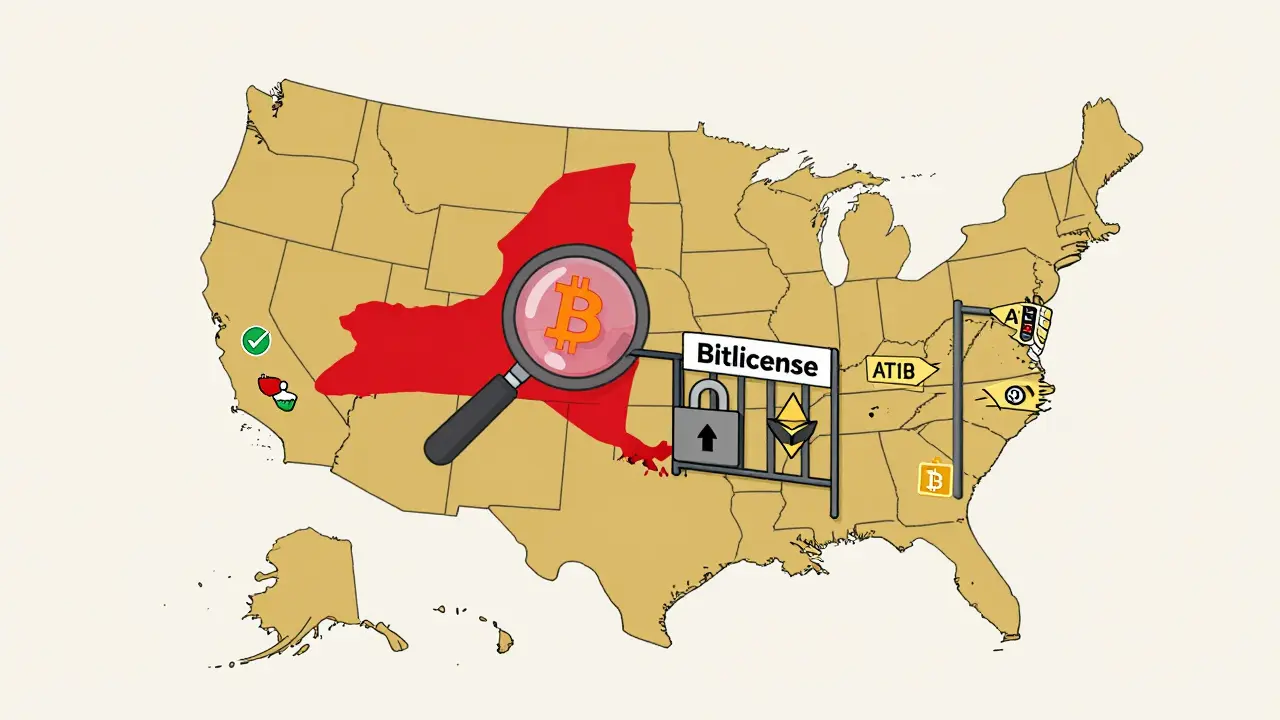
State-by-State Crypto Regulations in the United States: What’s Legal Where in 2025
0 Comments
In 2025, U.S. crypto rules vary wildly by state. New York demands strict licenses, Texas welcomes crypto with open arms, and most states rely on outdated laws. Know where you stand before you trade or build.