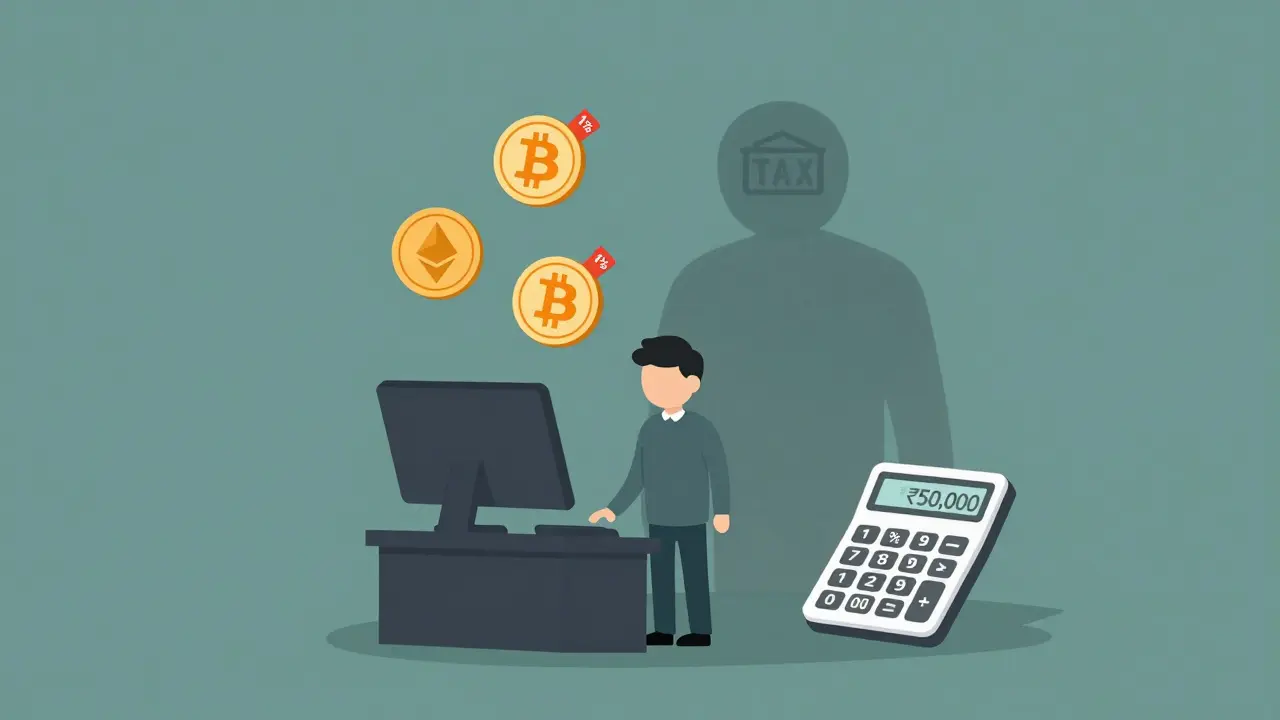
1% TDS on Crypto Transactions in India: What You Need to Know in 2025
India's 1% TDS on crypto transactions deducts tax at every trade. Learn how it works, who it affects, thresholds, crypto-to-crypto rules, GST叠加, and what to do in 2025.
Read MoreWhen you earn or trade TDS on cryptocurrency, Tax Deducted at Source applied to digital asset transactions. Also known as crypto tax withholding, it’s not a suggestion—it’s a legal requirement in countries like India, Nigeria, and others where regulators treat crypto income like wages or business revenue. Unlike traditional taxes you pay once a year, TDS is taken right at the moment you receive or sell crypto—often by exchanges or platforms acting as tax agents.
This isn’t just about big investors. If you’re earning crypto through staking, mining, or airdrops, or even getting paid in Bitcoin for freelance work, TDS might already be pulling money out of your wallet before you even see it. In India, for example, a 1% TDS kicks in on every crypto trade over ₹50,000. That means if you sell $1,000 worth of Ethereum, $10 gets withheld automatically. No invoice. No paperwork. Just gone. And if you’re in Iran or Afghanistan, where banks are shut down and crypto is the only way to send money home, TDS adds another layer of friction—making it harder to move value when you need it most.
TDS doesn’t just target traders. It hits miners who sell their rewards, freelancers paid in USDT, and even people who get tokens from play-to-earn games like Footballcraft or Age of Tanks. If the platform you’re using is registered under local tax law, they’re required to deduct it. That’s why some exchanges block users from certain countries—they can’t comply without risking fines. Meanwhile, in Japan and other strict jurisdictions, TDS is just one part of a bigger compliance puzzle that includes cold storage rules, licensing, and reclassifying tokens as securities.
Here’s the thing: TDS isn’t the same as capital gains tax. It’s a prepayment. You might get it back when you file your annual return—if you file at all. Most people don’t. And that’s where the real risk lies. If you ignore it, you’re not just missing a payment—you’re opening yourself up to penalties, account freezes, or worse. That’s why posts about Bybit geofencing, Iran’s crypto restrictions, or Tether freezing wallets all tie back to this: compliance isn’t optional anymore. It’s baked into the system.
What you’ll find below isn’t theory. It’s real cases. From Afghan families using USDT to survive under a crypto ban, to Iranian miners fighting power shortages while dodging state controls, to users getting burned by fake airdrops that look like tax refunds—each story shows how TDS on cryptocurrency isn’t just a line on a form. It’s a force shaping who can use crypto, how they use it, and whether they can keep what they earn.
India's 1% TDS on crypto transactions deducts tax at every trade. Learn how it works, who it affects, thresholds, crypto-to-crypto rules, GST叠加, and what to do in 2025.
Read More