Unlicensed Crypto Mining in Iran: How the IRGC Runs a Shadow Cartel
 May, 19 2026
The Hidden Engine of Iran’s Energy Crisis
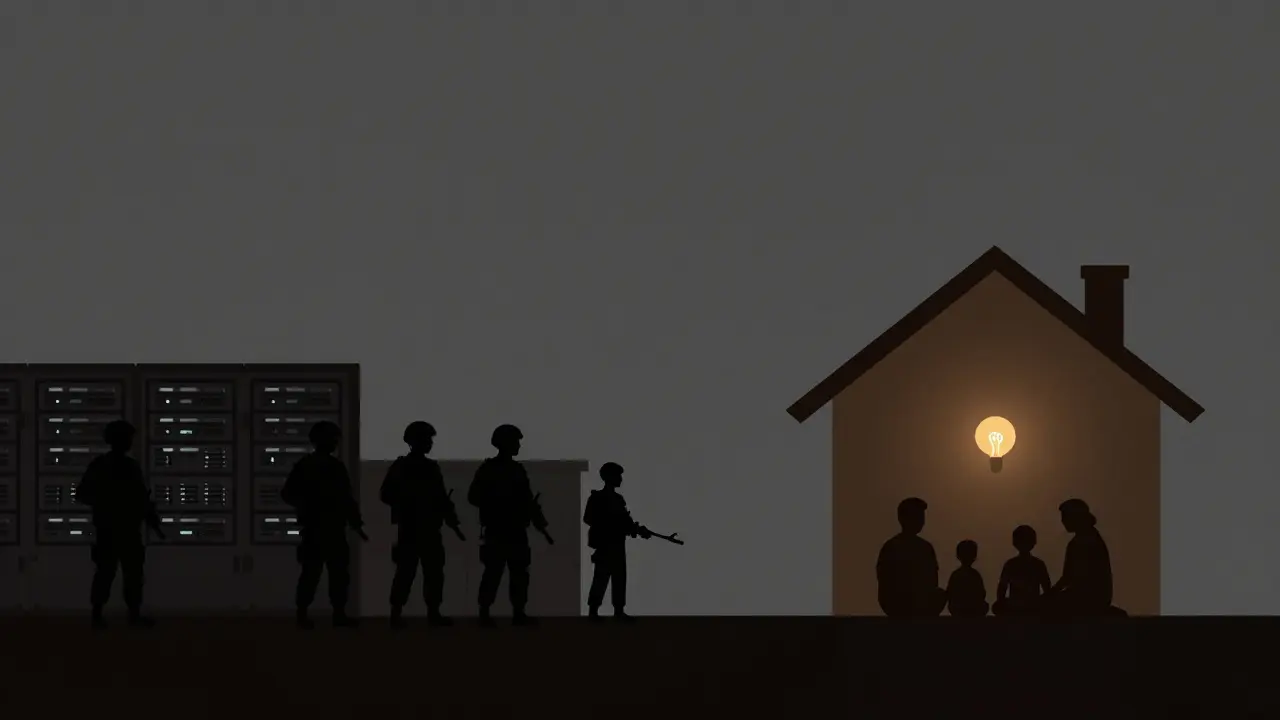
When the lights go out in Tehran during the sweltering summer months, ordinary families don’t just blame an aging grid. They know exactly who is stealing their power. The culprit isn’t a foreign adversary or a natural disaster-it is a domestic powerhouse operating in the shadows. Unlicensed cryptocurrency mining in Iran is a massive, state-backed operation that consumes vast amounts of electricity while leaving civilians in the dark. At the center of this storm sits the Islamic Revolutionary Guard Corps (IRGC), Iran's powerful military and political organization that controls significant economic sectors.
This isn't a story about rogue hackers running servers in basements. It is a calculated strategy by the regime to bypass international sanctions, generate hard currency, and consolidate power. By late 2019, reports surfaced that the IRGC had moved aggressively into the crypto sector under direct orders from Supreme Leader Ali Khamenei. What started as a niche interest has evolved into what investigators call a "crypto cartel." This group systematically plunders national electricity resources, creating a two-tiered system where the elite mine Bitcoin with impunity while factories shut down and homes suffer blackouts.
How the IRGC Built a Crypto Monopoly
The shift began around 2019-2020. As U.S. sanctions tightened, cutting off Iran’s access to global financial markets, the regime needed a new way to earn dollars without using traditional banks. Cryptocurrency offered the perfect solution: it was decentralized, anonymous, and borderless. The IRGC didn't just enter the market; they engineered a monopoly.
They leveraged their control over special economic zones and military bases to set up large-scale mining farms. A prime example is the 175-megawatt Bitcoin mining facility in Rafsanjan, located in Kerman Province. On paper, this was a joint venture between an IRGC-affiliated enterprise and foreign investors, mostly from China. In reality, it was a shielded operation designed to exploit Iran’s artificially low electricity prices. These farms are not subject to civilian oversight. They operate behind armed guards, connected directly to the grid, often bypassing meters entirely.
The scale is staggering. Estimates suggest there are approximately 180,000 active mining devices across Iran. Of these, only about 80,000 are in private hands. That leaves roughly 100,000 units-more than half the country’s hashing power-under the control of state or quasi-state organizations. This includes entities like Astan Quds Razavi, a massive religious foundation and charitable trust supervised by the Supreme Leader. Together, these groups form a de facto monopoly, profiting from the nation’s most scarce resource: energy.
| Feature | Licensed Private Miners | Unlicensed IRGC/State Miners |
|---|---|---|
| Electricity Cost | High tariffs (up to $0.05-$0.10/kWh) | Subsidized or free (effectively $0) |
| Regulatory Oversight | Monitored by Ministry of Industry | Minimal to none; protected by military status |
| Sales Requirement | Mandatory sale to Central Bank of Iran | No requirement; profits retained internally |
| Power Stability | Frequent outages and load shedding | Dedicated lines; priority access |
| Legal Status | Legal but financially unsustainable | Gray area; technically illegal but politically protected |
The Legal Loophole and the Energy Theft
In 2019, the Iranian government officially recognized cryptocurrency mining as a legal industry. Licenses were issued by the Ministry of Industry, Mines, and Trade. But this regulation was never about fairness. It was a trap for private citizens. Licensed miners faced high energy tariffs and were forced to sell their mined Bitcoin directly to the Central Bank of Iran (CBI), the nation's central bank which manages monetary policy and currency reserves. For many legitimate operators, this made mining financially impossible. Why pay high rates and surrender your profits when you could just go underground?
So, they did. But the biggest players didn't need licenses. They had something better: political immunity. In 2022, the Iranian parliament quietly passed legislation allowing the military to establish its own private power plants and transmission lines. This was a game-changer. It gave the IRGC the legal cover to build infrastructure specifically for crypto mining, redirecting electricity meant for cities and industries straight to their secret farms.
Energy Minister Ali Abadi, a former IRGC commander himself, acknowledged the severity of the issue. He described unauthorized crypto mining as "putting a hand in others' pockets" and called it "an ugly and unpleasant theft." His words highlight the moral bankruptcy of the situation. The minister knows exactly who is stealing the power-his former colleagues-and yet the operations continue unchecked. The IRGC-linked miners simply refuse to pay utility bills. If the bill comes due, they ignore it. If inspectors come knocking, they are met with armed guards. It is a classic case of the rule of law applying to everyone except the rulers.
Crypto as a Sanctions Evasion Tool
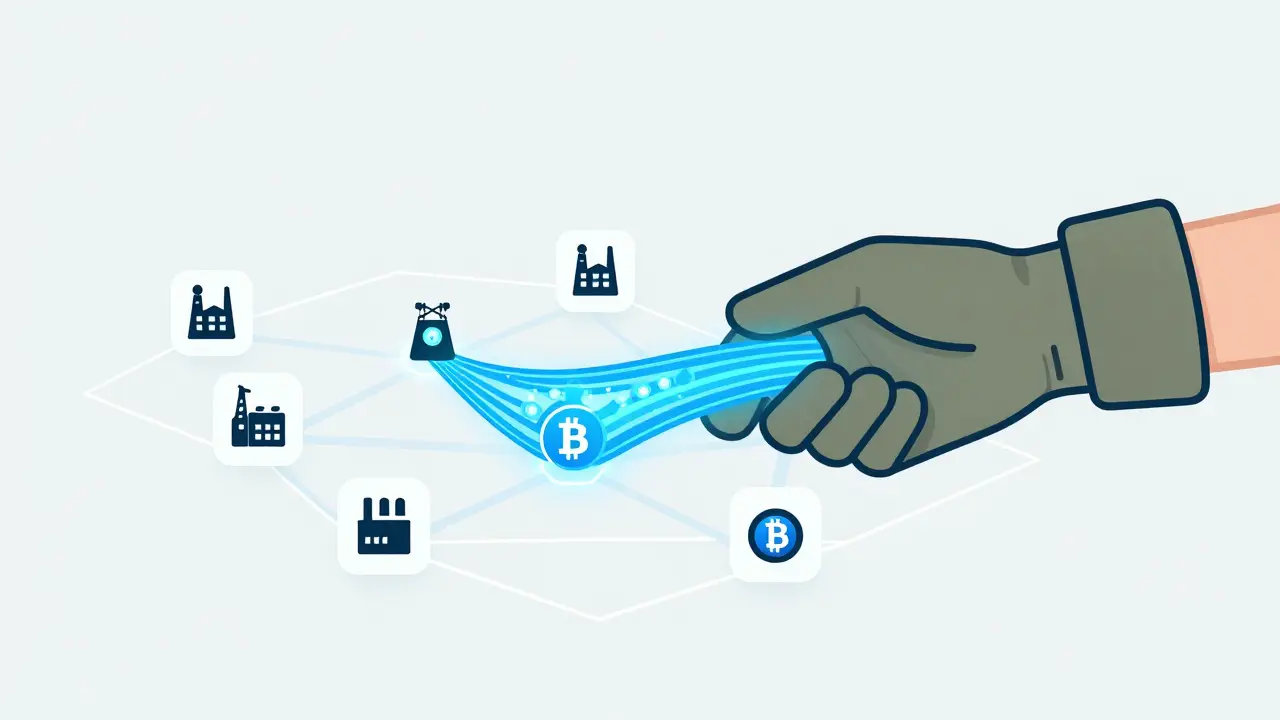
Why does the world care about Bitcoin mining in Iran? Because it is a lifeline for a sanctioned regime. Traditional banking channels are blocked. SWIFT transfers are frozen. But blockchain networks have no borders. The IRGC uses cryptocurrency to fund proxy groups involved in regional conflicts, purchase restricted technology, and maintain diplomatic leverage. Blockchain analytics firms have identified Iran as one of the world’s major Bitcoin producers, largely due to these state-sponsored farms.
The anonymity of crypto is key here. Unlike wire transfers, which leave clear audit trails through multiple banks, crypto transactions occur directly between digital wallets. Two-way encryption keeps participants hidden. The U.S. Treasury Department and Israeli intelligence have targeted specific Bitcoin wallets linked to the IRGC, trying to trace the flow of funds. But the sheer volume of transactions makes it difficult to stop the bleeding. The IRGC has turned crypto into a shadow economy, generating billions in revenue without ever touching a dollar account in New York or London.
The Human Cost: Blackouts and Hardship
While the IRGC counts its profits in Satoshi, ordinary Iranians count their suffering in hours without power. The energy consumption of industrial-scale Bitcoin farms is immense. Rows of specialized ASIC miners run 24/7, generating heat and draining the grid. During peak summer months, when demand is highest, the grid collapses. Hospitals switch to generators. Food spoils in refrigerators. Factories halt production, costing jobs and livelihoods.
The contrast is stark. In one province, a factory might be shut down for eight hours a day due to "load shedding," while ten miles away, an IRGC mining farm hums along uninterrupted. This isn't just an energy crisis; it is a social injustice. The regime prioritizes its financial survival over the basic welfare of its people. And because the mining operations are so profitable, there is little incentive to change. The more the grid struggles, the more valuable the subsidized electricity becomes to the cartel.
Recent Regulatory Moves and Citizen Resistance
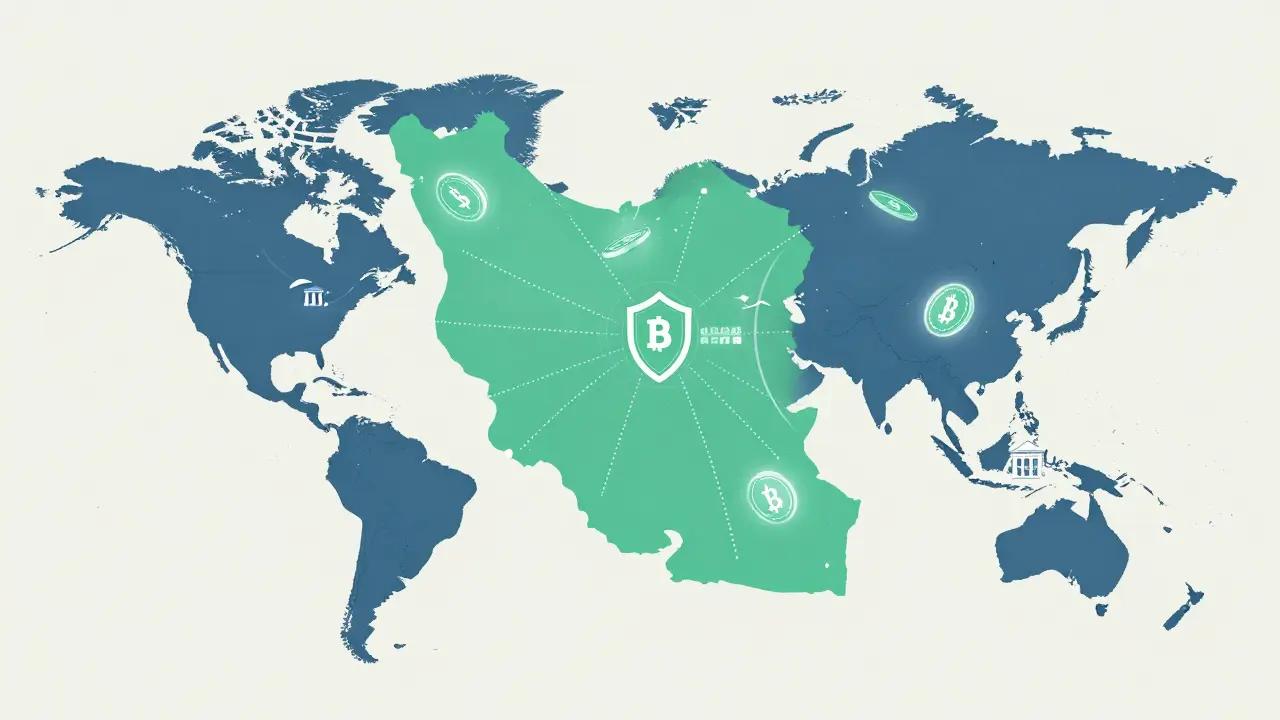
In December 2024, the Central Bank of Iran attempted to tighten control by blocking all cryptocurrency-to-rial payments on local internet websites. It looked like a crackdown. But by January 2025, the CBI began selectively unblocking exchanges using a government API that required full user data access. The goal wasn't to stop crypto use; it was to monitor it. The state wants to ensure that only approved actors benefit from the system.
Ordinary Iranians aren't buying it. Many turn to virtual private networks (VPNs) to access foreign exchanges like Nobitex or Binance, avoiding local scrutiny. They trade in small amounts, hoping to preserve some wealth against inflation. But they can't compete with the IRGC. Citizens face strict limits, high fees, and constant risk of being flagged by authorities. Meanwhile, the state continues to expand its mining capacity, knowing that the average person has no choice but to comply.
What Comes Next?
The future of unlicensed crypto mining in Iran looks unlikely to change anytime soon. The IRGC has too much at stake. They have invested heavily in hardware, infrastructure, and political influence. Shutting down these operations would mean losing a critical source of revenue and weakening their grip on the economy. Instead, expect the cartel to grow larger, more efficient, and more entrenched.
For the rest of the world, this represents a growing challenge. Sanctions enforcement is becoming harder as regimes find creative ways to circumvent them. Iran’s model shows how easily energy resources can be weaponized for financial gain. Until there is a fundamental shift in how power is distributed-both literally and politically-the lights will keep going out in Tehran, while the IRGC’s servers keep humming.
Is cryptocurrency mining legal in Iran?
Yes, but with severe restrictions. The government legalized mining in 2019, but licensed miners must pay high electricity tariffs and sell their Bitcoin to the Central Bank. Most private miners operate illegally to avoid these costs, while state-backed entities like the IRGC operate in a gray area with political protection.
How does the IRGC profit from crypto mining?
The IRGC profits by accessing subsidized or free electricity, operating large-scale mining farms in special economic zones, and selling Bitcoin on international markets. This allows them to bypass sanctions and generate hard currency without using traditional banking systems.
Why does Iran have frequent power outages?
Power outages are caused by a combination of an aging grid, high energy demand, and the diversion of electricity to unlicensed crypto mining farms operated by the IRGC and other state entities. These farms consume vast amounts of power, leaving less for residential and industrial use.
Can ordinary Iranians mine Bitcoin legally?
Technically yes, but it is financially unviable. Licensed miners face high electricity costs and must sell their earnings to the Central Bank at fixed rates. Most citizens choose to trade crypto via VPNs instead of mining, as mining requires expensive hardware and stable power.
Who controls the majority of mining hardware in Iran?
Estimates suggest that state-related entities, including the IRGC and affiliated foundations like Astan Quds Razavi, control up to 100,000 of the 180,000 active mining devices in Iran. This gives them a dominant share of the country’s total hashing power.
How does crypto help Iran evade sanctions?
Cryptocurrency allows for direct, borderless transactions without intermediaries like banks. This enables the IRGC to receive payments for goods or services, fund proxy groups, and convert assets into hard currency without triggering alerts in the traditional financial system.