What Crypto Exchanges Are Banned in Russia: 2026 Status & Alternatives
 Aug, 9 2026
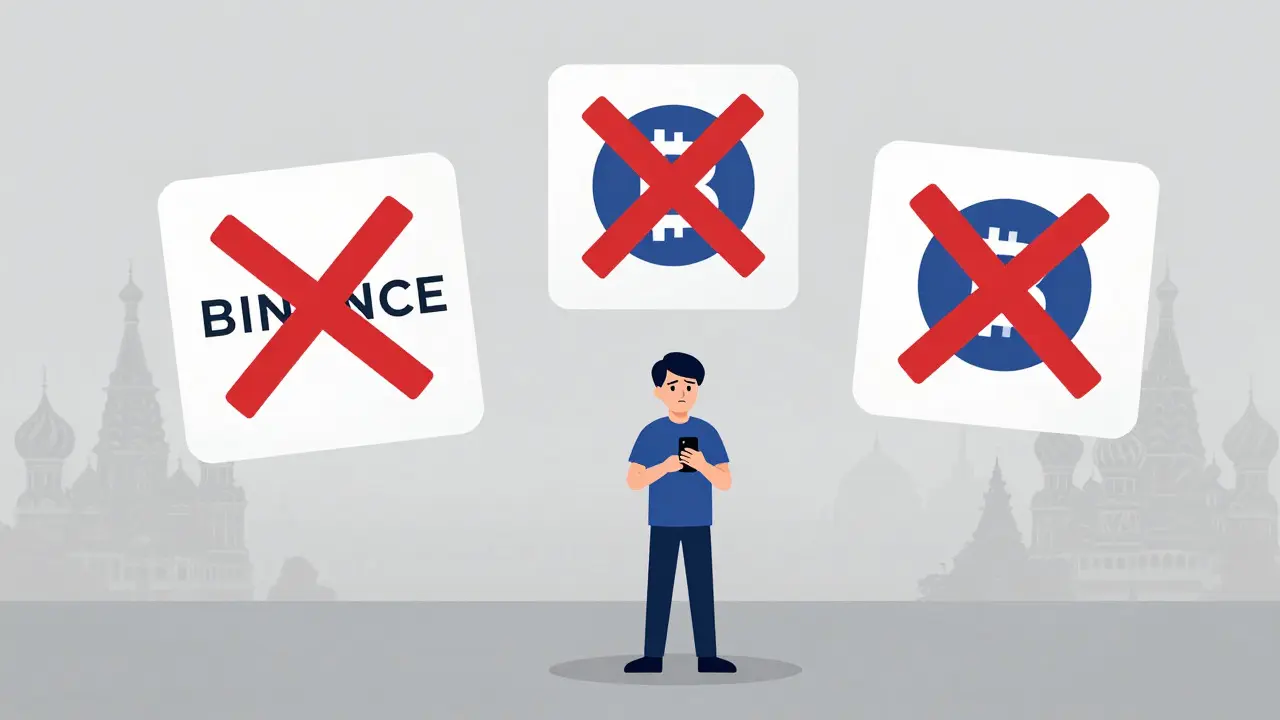
Trying to buy or sell Bitcoin in Russia right now feels less like a simple transaction and more like navigating a minefield. You might assume that because the government talks about banning crypto for payments, all exchanges are off-limits. The reality is much messier. There isn't one single list of "banned" exchanges that applies to everyone. Instead, you have a split system: some platforms are sanctioned by the US Treasury (making them risky to touch), others are blocked by Russian internet regulators (Roskomnadzor), and many major global names simply stopped serving Russian users to avoid trouble.
If you are holding crypto in Russia today, knowing which exchange is actually safe-or at least functional-is critical. Using the wrong platform can mean frozen funds, legal headaches, or worse. Let's break down exactly who is banned, who is sanctioned, and what you can actually use in 2026.
The Big Ones: Why Binance, Coinbase, and Kraken Aren't Here
You probably won't find Binance, the world's largest cryptocurrency exchange by volume on your phone if you are trying to log in from Moscow. Same goes for Coinbase, a major US-based digital asset exchange and Kraken, a popular international crypto exchange known for security. Are they officially "banned" by a Russian law? Not exactly. They are effectively excluded.
These platforms pulled out or restricted access due to a combination of US sanctions pressure and the Bank of Russia's strict rules. The Bank of Russia prohibits financial institutions from investing in cryptocurrencies and makes it nearly impossible for banks to process transactions related to foreign crypto exchanges. So, even if an exchange technically allows Russian IPs, you can't deposit rubles easily, and your bank might flag the transfer as suspicious. This creates a de facto ban for most retail users.
For the average person, this means you cannot rely on the big Western names for daily trading. You have to look elsewhere.
The Sanctioned List: Garantex, Grinex, and the Risks
This is where things get dangerous. While some exchanges are just inconvenient, others are actively targeted by international law enforcement. The most famous name here is Garantex, a Russian cryptocurrency exchange sanctioned by the US Treasury for facilitating sanctions evasion.
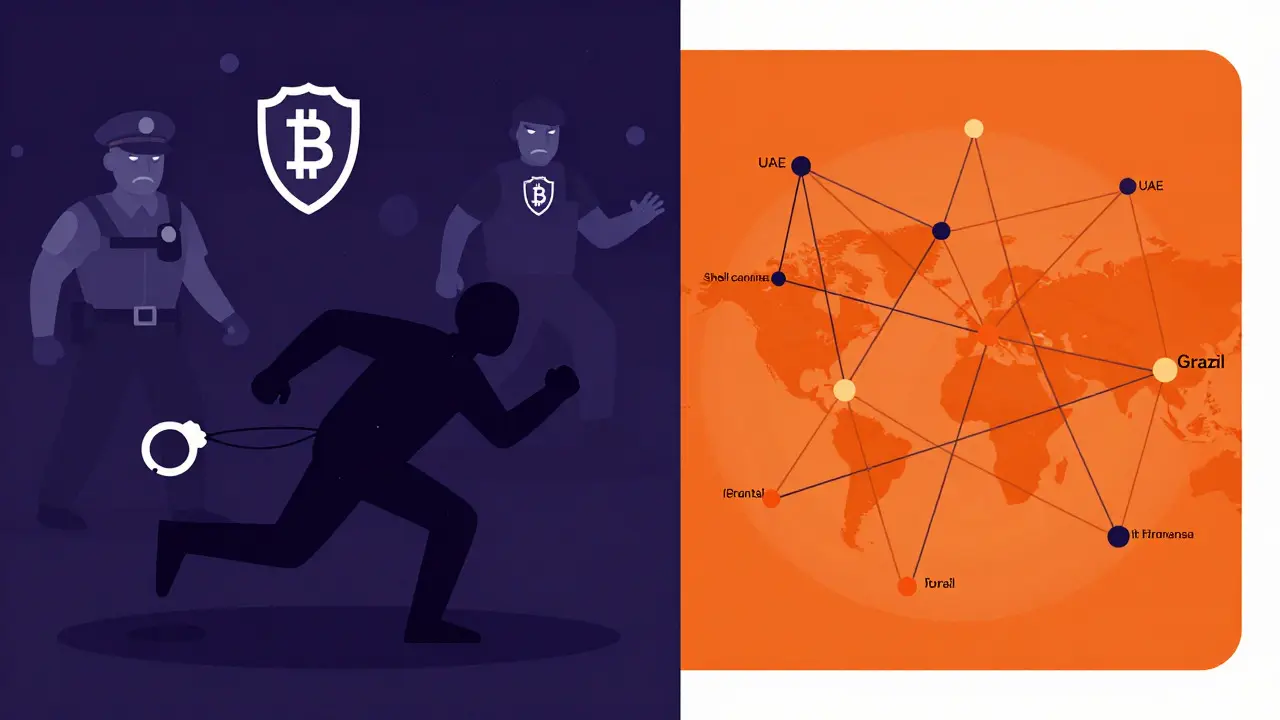
Garantex has been under US sanctions since 2022. In March 2025, the situation escalated dramatically. The U.S. Secret Service, working with German and Finnish authorities, seized its web domain and froze over $26 million in cryptocurrency. The Department of Justice indicted executives Aleksandr Mira Serda and Aleksej Besciokov. Besciokov was arrested in India, and there is a $5 million reward for information leading to Serda's arrest.
But did Garantex die? Transparency International Russia suggests otherwise. They found that Garantex evolved into a decentralized money laundering network operating through shell companies in the UAE, Brazil, Kyrgyzstan, Spain, Thailand, Georgia, Hong Kong, and Russia. Inside Russia, financial flows are handled by Exved, a payment service founded by Sergey Mendeleev, the architect of Garantex's infrastructure. Exved markets itself as "the first exchange for importers and exporters," but it carries the same stigma and risk as its predecessor.
Then there is Grinex, a cryptocurrency exchange created by former Garantex employees and also designated by OFAC. Grinex was specifically set up to continue operations after Garantex faced heat. It is also on the US Treasury's sanctions list. If you use these platforms, you are not just breaking Russian rules; you are potentially violating US sanctions, which can lead to your assets being frozen globally.
| Platform | Status in Russia | Risk Level | Key Issue |
|---|---|---|---|
| Garantex | Sanctioned / Evolved | High | US Treasury sanctions; linked to money laundering networks |
| Grinex | Sanctioned | High | OFAC designation; successor to Garantex |
| BestChange | Unblocked (Compliant) | Medium | Temporarily banned in 2025; lifted after removing ruble-foreign currency info |
| Binance | Restricted Access | Low (for access) | No official ban, but banking/payment processing is blocked |
| Coinbase | Restricted Access | Low (for access) | Geoblocked or limited functionality for Russian users |
The Comeback Kid: How BestChange Survived
Not every story ends with a ban. BestChange, a major cryptocurrency aggregation platform connecting buyers and sellers offers a different case study. BestChange was temporarily banned by Roskomnadzor in early 2025. The regulator demanded changes.
Nikita Zuborev, a senior analyst at BestChange, explained that the platform had to remove ruble-based foreign currency exchange information and restrict listings for certain international currencies, including the Kazakhstani tenge. They also had to tighten restrictions on foreign payment systems. After making these adjustments and collaborating with legal experts to satisfy the Central Bank of Russia, Roskomnadzor removed BestChange from the restricted sites list in 2025.
This shows a key pattern: Russia doesn't want to kill crypto entirely. It wants to control it. If you comply with their specific data and reporting demands, you can stay open. BestChange survives because it acts as a P2P aggregator rather than a custodial exchange holding user funds directly, and it bends to regulatory pressure.
The New Rules: What Changed in 2024-2026?
To understand why exchanges are treated differently, you need to look at the laws. Back in July 2020, Russia passed legislation that legalized crypto transactions but banned using them for domestic payments. That rule took effect in January 2021. You couldn't buy bread with Bitcoin.
However, the landscape shifted in summer 2024. New laws permitted digital currency payments in international trade. This created a loophole for companies doing foreign business while keeping domestic restrictions tight. Then, on October 4, 2025, Deputy Finance Minister Ivan Chebeskov announced that Russia is developing dedicated national infrastructure for cryptocurrency activities. This is an experimental framework developed with the Bank of Russia.
The goal? State-controlled crypto operations. Think of it like China's digital yuan or the EU's digital euro. The Bank of Russia permits "especially qualified" investors-those meeting high financial thresholds-to engage in crypto dealings. For regular people, the path is narrower.
How Regular Russians Trade Crypto Today
So, if the big exchanges are gone and the sanctioned ones are risky, how do people actually move money? The answer is Peer-to-Peer (P2P) trading and local aggregators.
- P2P Markets: Platforms like BestChange connect buyers and sellers directly. You don't trust the platform with your money; you trust the counterparty. The platform just facilitates the ad listing. This avoids the need for the exchange to hold fiat currency, which is heavily regulated.
- Local Exchanges: Some smaller, locally registered exchanges operate under the new "qualified investor" regimes or focus strictly on crypto-to-crypto swaps without fiat on-ramps.
- Cryptomats: Physical locations where people meet to exchange cash for crypto. These are growing because they bypass banking systems entirely, though they carry physical safety risks.
The Bank of Russia is watching closely. They have issued methodological recommendations for identifying suspicious crypto activities. Enhanced Anti-Money Laundering (AML) measures require credit institutions to report anything weird. If you suddenly start moving large sums of rubles to a personal account that looks like a crypto trader, your bank will freeze your card. This is the real "ban"-not a website block, but a banking blockade.
What Should You Do?
If you are in Russia and want to trade crypto, follow these steps to stay safe:
- Avoid Sanctioned Names: Stay away from Garantex, Grinex, and any platform explicitly listed by the US Treasury's Office of Foreign Assets Control (OFAC). Even if they work, your assets could be frozen internationally.
- Use Compliant Aggregators: Platforms like BestChange, which have successfully negotiated with Roskomnadzor, are safer bets for finding P2P partners.
- Check Your Bank's Policy: Before sending rubles, ask your bank if they allow transfers to individuals involved in crypto. Many Sberbank or Tinkoff accounts get flagged for frequent small transfers to unknown individuals.
- Consider Non-Custodial Wallets: Hold your crypto in wallets you control (like Trust Wallet or Ledger) rather than leaving it on an exchange. This protects you if the exchange gets banned or hacked.
- Watch for Regulatory Updates: The "experimental legal regime" announced in late 2025 is still evolving. Keep an eye on announcements from the Bank of Russia regarding "qualified investors."
The bottom line is that Russia hasn't banned crypto. It has banned uncontrolled crypto. The state wants to track the money, tax the profits, and prevent sanctions evasion. As long as you play within those lines, you can still trade. But the days of anonymous, easy access to global exchanges are over.
Is Binance banned in Russia?
Binance is not officially banned by a specific Russian law, but it faces severe operational restrictions. Due to US sanctions and Bank of Russia rules, Russian users often face geoblocking, inability to deposit rubles via bank cards, and potential account freezes. Effectively, it is inaccessible for most retail traders.
Can I use Garantex in Russia safely?
Using Garantex is highly risky. It is sanctioned by the US Treasury for sanctions evasion. While it continues to operate through shell entities like Exved in Russia, using it may expose your funds to international freezing and legal scrutiny. Most experts advise avoiding it.
Why was BestChange unbanned?
BestChange was temporarily blocked in 2025 but regained access after complying with Roskomnadzor's demands. This included removing ruble-based foreign currency exchange info and restricting certain international currency listings. Its status as a P2P aggregator helped it negotiate compliance without shutting down completely.
Are there any legal crypto exchanges in Russia?
Russia is developing a state-controlled infrastructure for crypto. Currently, only "especially qualified" investors (those with high net worth) can legally trade on compliant platforms under the new experimental regime. For regular users, P2P aggregators like BestChange are the primary legal avenue.
Will my bank freeze my account if I trade crypto?
Yes, it is possible. The Bank of Russia requires banks to monitor for suspicious crypto-related activity. Frequent transfers to P2P sellers or unusual transaction patterns can trigger AML flags, leading to temporary freezes or account closures until you prove the source of funds.