What is Beraborrow (POLLEN)? A Guide to the Token, Protocol, and Risks
 Jul, 1 2026
Have you ever wanted to borrow money without paying interest? In traditional finance, that’s impossible. But in the world of decentralized finance (DeFi), protocols like Beraborrow are changing the rules. Built on the Berachain network, this protocol lets users unlock liquidity from their crypto assets while still earning rewards. It sounds too good to be true, but it comes with a specific set of mechanics-and risks-that you need to understand before diving in.
If you’ve seen the ticker POLLEN popping up in crypto discussions, you’re looking at the governance token for this ecosystem. This guide breaks down what Beraborrow actually does, how the POLLEN token fits into the picture, and whether it’s worth your attention in 2026.
How Beraborrow Works: The Core Mechanism
To understand POLLEN, you first need to understand the machine it runs. Beraborrow is a collateralized debt position (CDP) protocol. Think of it like a pawn shop, but digital, permissionless, and automated via smart contracts. However, unlike most DeFi lending platforms where you pay variable interest rates based on supply and demand, Beraborrow offers interest-free loans.
Here is the step-by-step process:
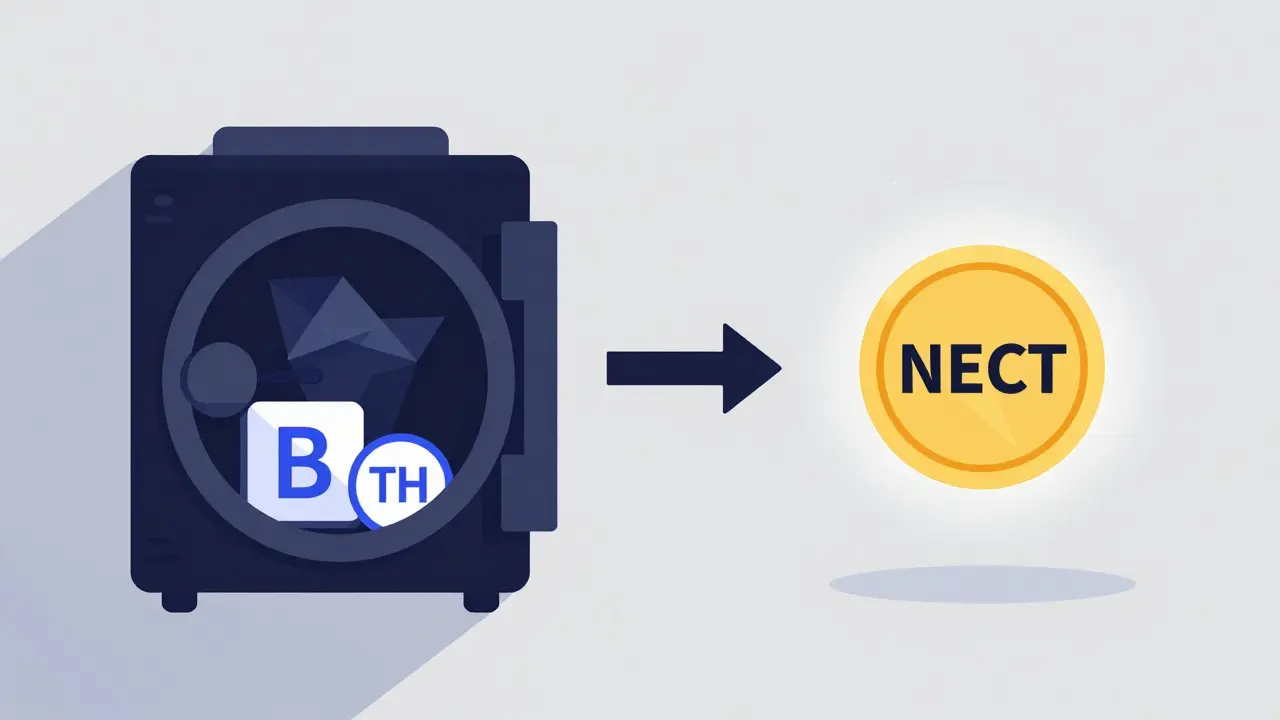
- Deposit Collateral: You deposit assets into a vault called a "Den." These assets can include native Berachain tokens (BERA), liquid staking tokens (LSTs) for ETH or BTC, and even liquidity provider (LP) positions.
- Mint NECT: Against your collateral, you mint Nectar (NECT), an over-collateralized stablecoin pegged to the US dollar.
- Earn Yield: Crucially, your deposited collateral doesn’t sit idle. Because Berachain uses a unique consensus mechanism called Proof of Liquidity (PoL), your collateral continues to earn yield rewards as long as it’s locked in the Den.
- Use NECT: You can use the borrowed NECT elsewhere in the DeFi ecosystem-providing liquidity, trading, or holding-while keeping your original asset exposure.
This model is heavily inspired by Liquity, a popular Ethereum-based borrowing protocol. By forking Liquity’s architecture, Beraborrow inherits its zero-interest loan structure but adapts it specifically for Berachain’s PoL incentives. Instead of paying interest to lenders, borrowers pay a one-time stability fee when they mint NECT.
What is the POLLEN Token?
So, where does POLLEN come in? If NECT is the fuel, POLLEN is the steering wheel and the reward system. It serves two primary functions: governance and value capture.
Governance Power
POLLEN holders vote on critical protocol parameters. This includes deciding which new assets can be used as collateral, adjusting fee structures, and managing liquidity incentives. As the protocol grows, these decisions become increasingly valuable because they determine the risk profile and profitability of the entire system.
Value Capture via vePOLLEN
The protocol employs a "vote-escrow" model known as vePOLLEN. When you lock your POLLEN tokens for a set period, you receive vePOLLEN. These locked tokens give you stronger voting power and, more importantly, entitle you to a share of the protocol’s revenue. Specifically, vePOLLEN holders are slated to receive 60% of the protocol fees generated by NECT usage. This creates a direct alignment between the health of the protocol and the value of the token.
Tokenomics and Supply Details
Understanding the supply dynamics is crucial for any potential investor. Here are the hard numbers for POLLEN as of mid-2026:
| Metric | Value |
|---|---|
| Maximum Supply | 420,000,000 POLLEN |
| Community Allocation | 37.4% |
| Seed & Strategic Investors | 31.6% |
| Team & Advisers | 18% |
| Treasury | 5% |
| Liquidity Pool | 5% |
| Public Offering | 2.5% |
The token launched in March 2025 with a private sale followed by a public offering on Fjord Foundry. The fully diluted valuation (FDV) at launch was targeted around $42 million USD. Since then, the circulating supply has increased as tokens have been unlocked and distributed to early users who earned points through using NECT in the ecosystem.

Market Performance and Volatility
Let’s talk about price, because this is where things get tricky. POLLEN has experienced extreme volatility since its inception. In April 2025, shortly after launch, the token hit an all-time high (ATH) ranging between $0.0450 and $0.06745 depending on the exchange data source. By mid-2026, prices had corrected significantly, trading in the range of $0.0005 to $0.01.
This drawdown of over 90% is not uncommon for micro-cap governance tokens in DeFi. Several factors contribute to this:
- Low Liquidity: POLLEN is primarily traded on decentralized exchanges (DEXs) like Kodiak V3 within the Berachain ecosystem. Trading volumes are often thin, meaning large buy or sell orders can cause significant slippage.
- Data Discrepancies: Different trackers show varying market caps and circulating supplies. For instance, CoinGecko might list a different circulating supply than CoinMarketCap due to how they count locked vs. unlocked tokens. Always verify on-chain data if possible.
- Ecosystem Dependence: POLLEN’s value is tied directly to Berachain’s success. If Berachain fails to attract sustained liquidity, POLLEN suffers.
As of July 2026, POLLEN is ranked outside the top 5,000 cryptocurrencies by market cap, classifying it as a high-risk, speculative asset rather than a blue-chip investment.
Beraborrow vs. Traditional Lending Protocols
How does Beraborrow stack up against giants like Aave or MakerDAO? The key difference lies in the interest model and the underlying chain mechanics.
| Feature | Beraborrow (POLLEN) | Aave / MakerDAO |
|---|---|---|
| Interest Rate | Zero interest (one-time fee) | Variable/Stable interest rates |
| Collateral Yield | Earns PoL rewards while borrowed | Usually earns no yield or minimal yield |
| Stablecoin | NECT (over-collateralized) | USDC, DAI, etc. |
| Governance Reward | Fee sharing via vePOLLEN | Varying models (e.g., MKR burns) |
| Risk Profile | High (new ecosystem, oracle risks) | Medium/Low (established, audited) |
Beraborrow’s advantage is efficiency for yield farmers. If you hold LP tokens that are already generating swap fees, locking them in Beraborrow allows you to leverage that position without losing the underlying yield. In contrast, locking assets in Aave typically stops those assets from earning external yields unless they are yield-bearing tokens themselves.

Key Risks to Consider
No DeFi protocol is without risk. Before interacting with Beraborrow or buying POLLEN, consider these specific threats:
Oracle Vulnerabilities
In June 2025, security researchers identified a vulnerability related to how LP tokens were priced. Initially, the protocol relied on BEX price feeds, which could be manipulated during periods of low liquidity. This was mitigated by switching to Chronicle oracles and increasing redemption fees. While fixed, this highlights the complexity of pricing dynamic LP tokens as collateral. Any future oracle failure could lead to under-collateralized loans and liquidations.
Liquidation Risk
Like all CDPs, if the value of your collateral drops too quickly relative to your NECT debt, your position will be liquidated. Because Berachain assets can be volatile, maintaining a healthy collateralization ratio is essential. The protocol uses stability pools to absorb these liquidations efficiently, but users must monitor their positions actively.
Smart Contract Risk
Although Beraborrow has undergone audits and security competitions (including participation in Cantina’s security track), it remains a relatively young protocol. Bugs or exploits in the smart contract code could result in total loss of funds. Always check the latest audit reports before depositing significant capital.
Who Should Use Beraborrow?
Beraborrow isn’t for everyone. It’s best suited for:
- Berachain Native Users: Those already holding BERA, ETH LSTs, or LP positions on Berachain who want to leverage their holdings without selling.
- Yield Optimizers: Advanced users who understand how to compound PoL rewards and manage collateral ratios manually.
- Speculative Investors: Traders willing to take on high volatility for potential upside in the POLLEN token if Berachain gains mainstream adoption.
It is likely not suitable for beginners who are unfamiliar with DeFi concepts like impermanent loss, oracle manipulation, or liquidation thresholds. The learning curve is steep, and the support documentation is currently geared more toward developers than retail users.
Future Outlook
The trajectory of Beraborrow and POLLEN depends heavily on the broader success of Berachain. If Berachain’s Proof of Liquidity model proves superior to traditional Proof of Stake chains in attracting sustainable TVL, Beraborrow stands to benefit as the leading CDP protocol in that ecosystem. The introduction of vePOLLEN fee-sharing aims to create a sticky community of long-term holders, which could stabilize the token price over time.
However, competition is fierce. Other chains are launching similar PoL-inspired mechanisms, and established players like Aave are expanding their multi-chain presence. For POLLEN to retain value, Beraborrow must continue to innovate, maintain robust security, and offer unique utility that competitors cannot easily replicate.
Is POLLEN a good investment in 2026?
POLLEN is a high-risk, high-reward speculative asset. It has dropped over 90% from its all-time high and trades with low liquidity. It may be suitable only for investors who strongly believe in the long-term success of the Berachain ecosystem and understand DeFi governance mechanics. It is not recommended for conservative investors.
How do I earn POLLEN tokens?
You can acquire POLLEN by purchasing it on decentralized exchanges like Kodiak V3, or by earning points through using the Beraborrow protocol (such as providing liquidity with NECT). These points can later be swapped for POLLEN tokens during distribution events.
What is the difference between NECT and POLLEN?
NECT is the stablecoin you borrow against your collateral; it is pegged to the US dollar. POLLEN is the governance token that gives you voting rights and a share of protocol fees. You use NECT for transactions and leverage, while you hold POLLEN for governance and value appreciation.
Can I lose my collateral in Beraborrow?
Yes. If the value of your deposited collateral drops below the required collateralization ratio, your position will be liquidated. This means your assets are sold to repay the NECT debt, and you may lose a portion of your collateral as a penalty.
Is Beraborrow safe to use?
Beraborrow has undergone security audits and fixed known vulnerabilities, such as oracle pricing issues. However, like all DeFi protocols, it carries smart contract risk and relies on the security of the Berachain network. Never invest more than you can afford to lose.