What is Magpie (MGP) Crypto Coin? A Simple Breakdown of the DeFi Governance Token
 Mar, 21 2026
Magpie (MGP) isn’t just another crypto coin. It’s the backbone of a growing DeFi ecosystem built to fix one of the biggest problems in decentralized finance: governance token inflation and weak user incentives. If you’ve ever wondered why some DeFi projects lose momentum after launch, Magpie’s design offers a real answer - and it’s changing how people earn and vote in crypto.
What Exactly Is MGP?
MGP is the native governance and reward token of Magpie XYZ, a decentralized finance protocol that connects multiple DeFi platforms under one umbrella. Think of it like a membership card that gives you voting rights and rewards across several DeFi apps - not just one. It’s not meant to be a currency you spend at the store. Instead, it’s a tool that lets you influence how different DeFi protocols grow and share profits.
The total supply of MGP is capped at 1 billion tokens. As of early 2026, around 319 million are in circulation. That means over 68% of the supply is still locked up, waiting to be released slowly over time. This slow release helps prevent sudden price crashes from massive token dumps.
How MGP Works: The veTokenomics Model
Magpie’s real innovation lies in how it uses something called veTokenomics. This system was first introduced by Curve Finance, but Magpie made it even more powerful.
Here’s how it works: When you hold MGP, you can lock it up on the Magpie platform to turn it into vlMGP (vote-locked MGP). This isn’t just a way to earn rewards - it’s a way to gain real power.
- Locking MGP = more voting power
- Locking MGP = higher rewards from multiple DeFi protocols
- Locking MGP = access to "bribes" - payments from other projects to influence governance votes
The longer you lock your MGP, the more benefits you get. You can lock for up to four years, and your voting weight increases the longer you commit. But if you need to unlock early, there’s a 60-day waiting period - or you can force unlock and pay a penalty. This design pushes people to stay long-term, which helps stabilize the whole system.
How Magpie Makes Money - And How You Do Too
Magpie doesn’t charge fees like a bank. Instead, it acts as a middleman between DeFi protocols and users. Here’s the flow:
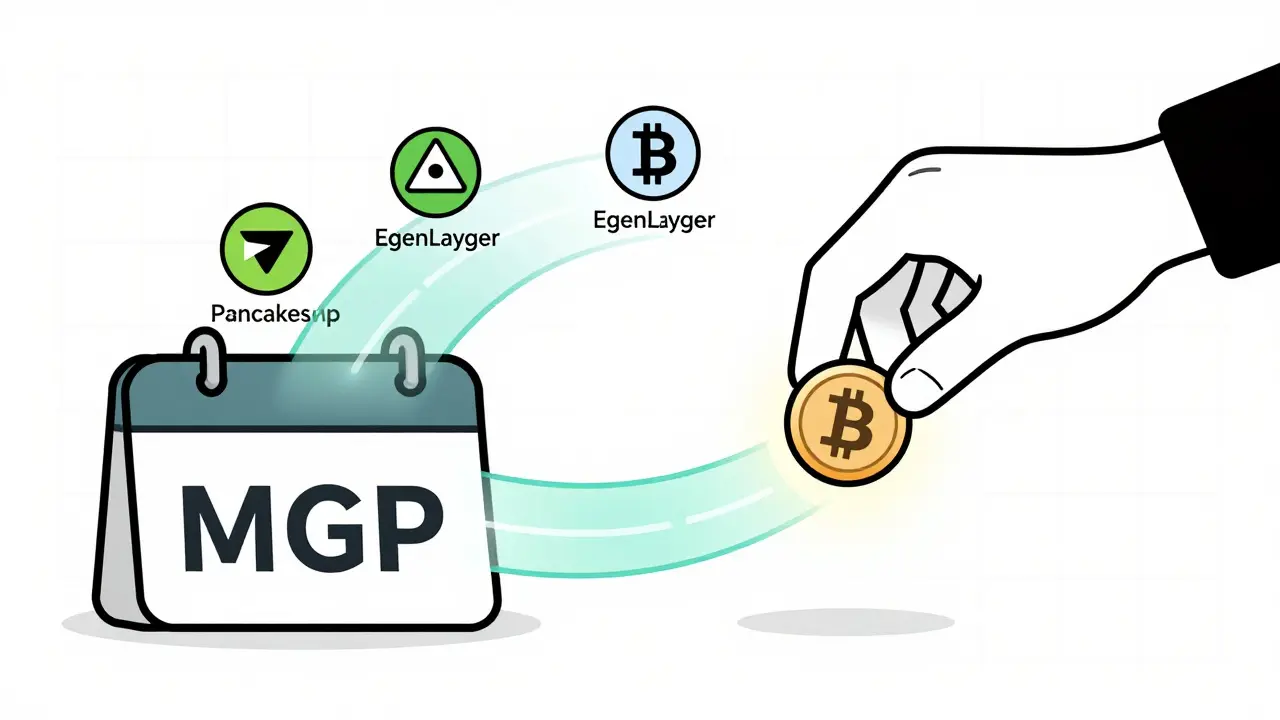
- Magpie uses MGP to buy governance tokens from other DeFi platforms like PancakeSwap and Wombat Exchange.
- It locks those tokens as veTokens to boost voting power and earn protocol fees.
- Those fees - from trading, staking, and lending - get shared back with vlMGP holders.
- Magpie also takes a small cut from each SubDAO’s revenue and adds it to the community treasury.
So if you hold vlMGP, you’re not just sitting on a token. You’re earning a slice of revenue from multiple DeFi apps - without having to interact with each one separately.
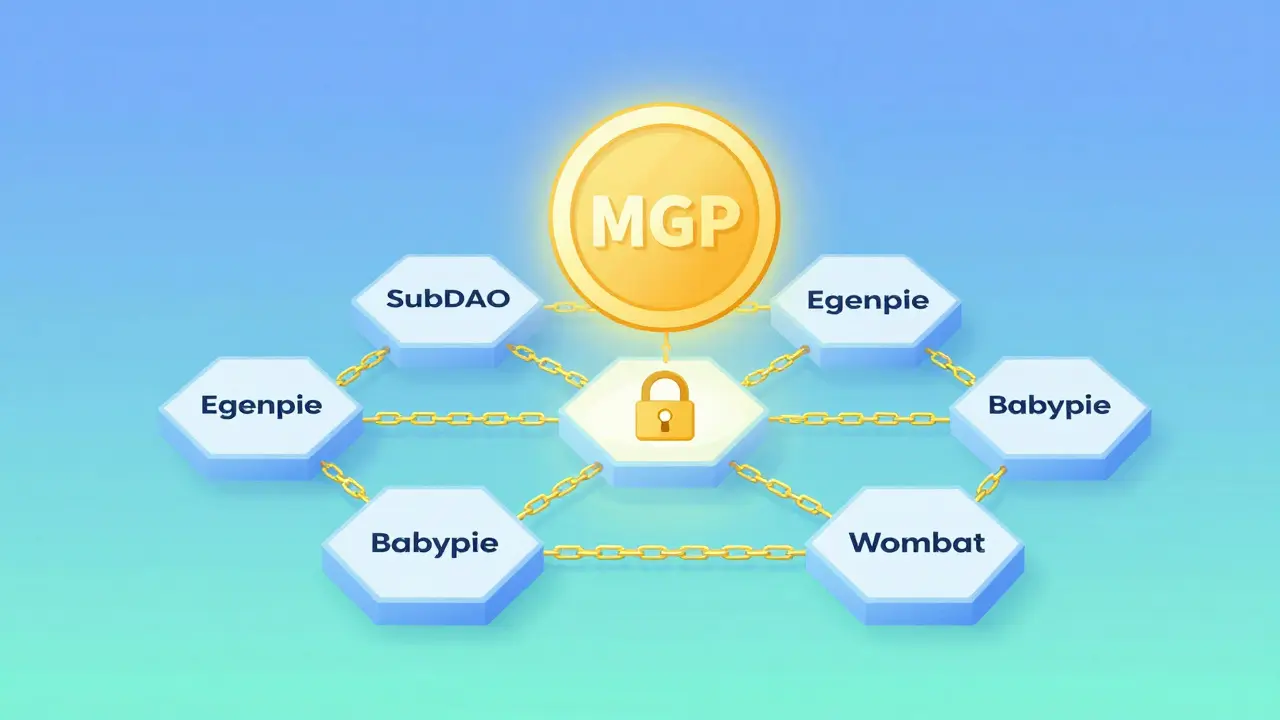
The SubDAO Ecosystem: More Than Just One App
Magpie isn’t a single app. It’s a network of smaller projects called SubDAOs. Each SubDAO handles a specific function and has its own token, but they all connect back to MGP.
- Eigenpie: Built on top of EigenLayer, this SubDAO lets Ethereum stakers re-stake their assets for extra rewards. In just 12 hours after launch, over $30 million in ETH was re-staked through Eigenpie.
- Babypie: This one lets Bitcoin holders earn yield by staking their BTC in a liquid staking solution - something most DeFi platforms don’t offer.
- Wombat SubDAO: The original partner, this integrates with Wombat Exchange to boost liquidity and rewards for traders.
Each SubDAO has its own governance token (like EGP for Eigenpie), but MGP holders get a say in all of them. That’s rare. Most DeFi projects keep governance separate. Magpie ties them all together.
Market Performance and Real-World Numbers
As of March 2026, MGP is trading around $0.0027 per token. That’s down from its peak of over $0.006 in late 2024, but not unusual for DeFi tokens. The market cap hovers around $25-30 million, with a fully diluted value (FDV) of roughly $70-90 million.
Its total value locked (TVL) - meaning how much crypto users have deposited into Magpie’s system - is about $19.6 million. That’s small compared to giants like Uniswap or Aave, but it’s growing steadily. The community is active, with consistent participation in governance votes and SubDAO proposals.
On exchanges like Coinbase and Crypto.com, MGP has low daily volume - under $4,000. That means it’s not a pump-and-dump coin. It’s held mostly by long-term users who care about governance, not short-term gains.

Why Magpie Matters
Most DeFi protocols struggle because their users don’t stick around. They jump from one yield farm to another, chasing the highest APY. Magpie flips that. It rewards loyalty. The more you lock, the more you earn - not just from one app, but from dozens.
It also solves a hidden problem: small DeFi projects can’t afford to pay for governance participation. Magpie steps in, buys their governance tokens, locks them, and shares the rewards. That keeps those projects alive and growing.
And with integrations like EigenLayer and Bitcoin staking, Magpie is building bridges between blockchains - something most DeFi platforms ignore.
Who Is MGP For?
MGP isn’t for everyone. If you’re looking for a coin to flip in a week, walk away. But if you:
- Hold DeFi tokens and want better rewards
- Want to vote on how protocols evolve
- Believe in long-term DeFi growth over short-term hype
Then MGP gives you real power - not just a balance on a screen.
Is MGP a good investment?
MGP isn’t a traditional investment like Bitcoin or Ethereum. It’s a governance tool. Its value comes from how much utility you get from locking it, not just its price. If you’re active in DeFi and want to earn from multiple protocols without juggling 10 different apps, then yes - holding and locking MGP can be valuable. But if you’re hoping for a quick 10x return, you’re likely to be disappointed.
Can I stake MGP directly?
Not exactly. You don’t stake MGP like you stake ETH or SOL. Instead, you lock it to create vlMGP. This unlocks voting power and rewards across all SubDAOs. The process happens on the Magpie platform. You can’t do it on exchanges or wallets - you need to interact with the protocol directly.
How do I get MGP tokens?
You can buy MGP on decentralized exchanges like PancakeSwap or Wombat Exchange using ETH, BNB, or USDT. You can also earn it by providing liquidity to Magpie’s pools or participating in SubDAO events. There’s no official centralized exchange listing yet, so be cautious of fake tokens.
What’s the difference between MGP and vlMGP?
MGP is the base token you hold. vlMGP is what you get when you lock MGP on the Magpie platform. It’s a representation of your locked stake. You can’t trade vlMGP - it’s only used for voting and earning rewards. Think of MGP as cash and vlMGP as a membership card you get when you deposit that cash.
Is Magpie safe?
Magpie’s code has been audited by reputable firms, and its treasury is managed by a multi-sig wallet. However, like all DeFi projects, there’s risk. Smart contract bugs, market crashes, or loss of user interest could affect value. Never invest more than you can afford to lose. Always use a trusted wallet and double-check contract addresses before interacting.