What is PRivaCY Coin (PRCY)? A Deep Dive into the High-Risk Privacy Token
 Jul, 23 2026
Imagine finding a coin on the sidewalk that claims to be worth thousands. You pick it up, excited, only to realize it’s made of plastic and barely holds any value. That is exactly what happened to PRivaCY Coin, also known as PRCY, a cryptocurrency that promised ultimate anonymity but delivered extreme volatility and confusion.
If you are wondering why your portfolio dropped overnight or if this obscure token is worth your time, you are not alone. PRCY hit an all-time high of $6,593 in January 2024, a number so astronomical for a micro-cap coin that it raised immediate red flags among seasoned traders. By mid-2026, the price had collapsed to fractions of a cent. This article breaks down what PRCY actually is, how its technology works, and whether it still has any life left in it.
The Promise: Ultimate Anonymity
At its core, PRCY was designed to solve one problem: privacy. In a world where every Bitcoin transaction is recorded on a public ledger, PRCY aimed to make transactions invisible. It marketed itself as a "fully anonymous staking token and payment system." The project claimed to use advanced cryptographic techniques like Bulletproofs, Ring Confidential Transactions (RingCT), and mandatory stealth addresses.
To understand why this matters, think of sending cash versus sending a check. With a check, the bank knows who sent it and who received it. With cash, no one does. PRCY tried to bring that cash-like privacy to the digital world. It used a dual-key system to generate unique addresses for every transaction, ensuring that even if someone looked at the blockchain, they couldn't easily link two transactions to the same user.
| Feature | PRivaCY Coin (PRCY) | Monero (XMR) | Zcash (ZEC) |
|---|---|---|---|
| Privacy Method | RingCT, Stealth Addresses | Ring Signatures, Stealth Addresses | Zero-Knowledge Proofs (zk-SNARKs) |
| Ring Size | 27-32 (Claimed) | Dynamic (typically 16+) | N/A (Uses zk-SNARKs) |
| Market Cap (2026) | ~$61,000 | ~$2.7 Billion | ~$480 Million |
| Development Activity | Stagnant since 2023 | High (Active GitHub) | Moderate |
| Regulatory Status | High Risk (Travel Rule Violation) | Banned in some jurisdictions | Selective Privacy Options |
How PRCY Works: The Technical Reality
Under the hood, PRCY runs on a Proof-of-Stake (PoS) consensus mechanism. This means that instead of miners using powerful computers to secure the network, holders of PRCY tokens stake their coins to validate transactions. To participate in the highest level of security, users needed to run masternodes, which required locking up 2,500 PRCY tokens as collateral.
The codebase is primarily written in C++ and C, languages chosen for their speed and efficiency. However, looking at the project's GitHub repository tells a different story than the marketing materials. The last stable release, version 2.0.0.6, was published in March 2023. As of 2026, there have been minimal updates, with only four watchers and fourteen forks. For a security-focused project, this lack of activity is alarming. Cryptography evolves quickly; without constant updates, vulnerabilities can emerge.
One of the key selling points was the "Ring Size" of 27-32. In simple terms, this means each transaction mixes your signature with 26-31 other signatures to hide the real sender. While theoretically stronger than smaller ring sizes, the effectiveness depends on the health of the network. If the network is small and inactive, those "other" signatures might not be random enough to provide true anonymity.
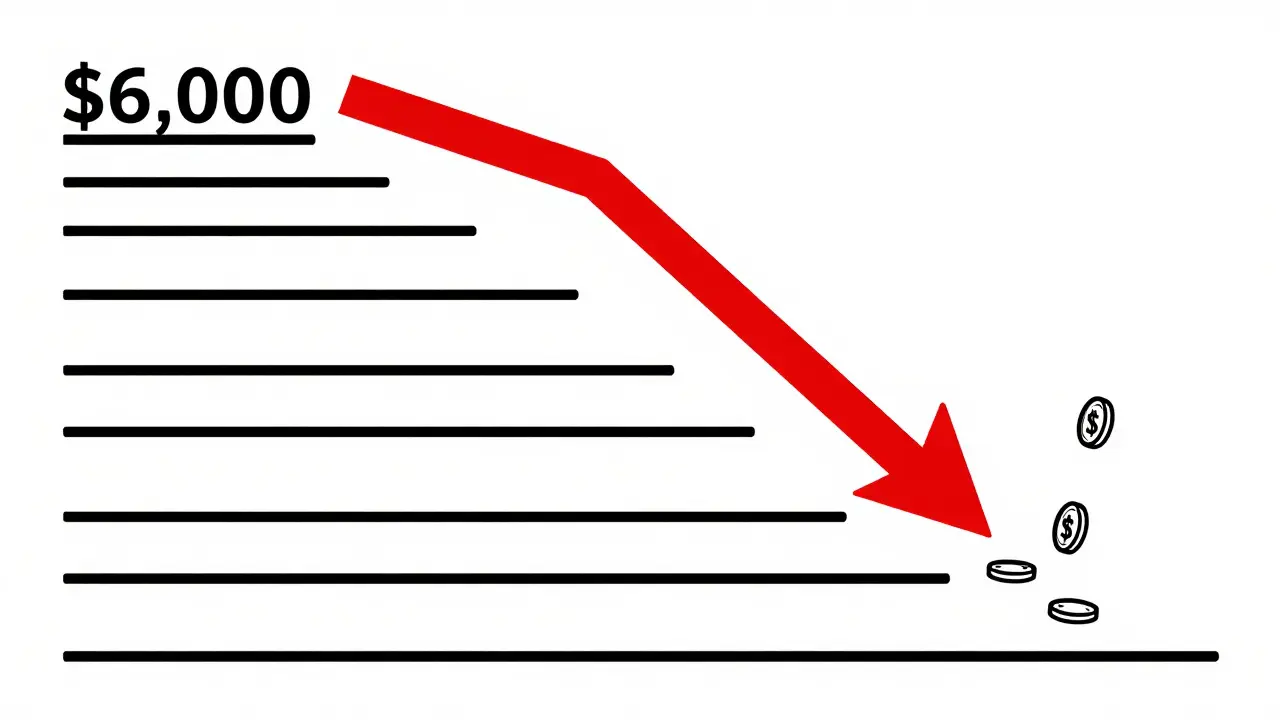
The Market Crash: From $6,000 to Pennies
The most striking aspect of PRCY's history is its price action. In January 2024, the token spiked to $6,593.64. How did a coin with a market cap of less than $100,000 reach such heights? The answer lies in low liquidity and potential market manipulation. When very few people are trading a coin, a single large buy order can send the price soaring. Conversely, a single sell order can crash it.
By early 2026, the price had plummeted by over 99%, settling around $0.0027 to $0.0034. Data from Coinbase and CoinGecko showed discrepancies in supply numbers, further confusing investors. One platform listed a circulating supply of 14 million tokens, while another reported nearly 62 million. This inconsistency makes it difficult to calculate the true value of the coin.
Trading volume metrics also varied wildly. Some sources reported daily volumes of under $100, while others showed spikes of over $60,000. This volatility suggests that the market for PRCY is thin and prone to sudden swings, making it a dangerous asset for anyone looking for stability.
User Experience: A Steep Learning Curve
If you decide to hold PRCY, be prepared for a frustrating experience. Unlike major cryptocurrencies that offer mobile apps and easy-to-use wallets, PRCY relies on a desktop-only wallet. This wallet requires continuous internet connectivity and full synchronization with the blockchain, which can take 48 to 72 hours on standard hardware.
Users on Reddit and GitHub have reported significant issues. Common complaints include wallet crashes during synchronization, outdated documentation, and inconsistent staking rewards. One user described spending 36 hours trying to get the wallet to sync properly. Another noted that the masternode collateral requirements did not match the official documentation.
Customer support is virtually non-existent. Trustpilot reviews average just 2.1 out of 5 stars, with many users citing "zero response" to inquiries. The official Telegram channel has only 1,247 members, and moderator activity has been sparse since late 2024. For a project promising "user-friendly" features, the reality is far from it.
Regulatory Risks: The Travel Rule Threat
Perhaps the biggest threat to PRCY is not technical, but legal. The Financial Action Task Force (FATF) introduced the "Travel Rule," which requires cryptocurrency exchanges to share information about the originator and beneficiary of transactions. Privacy coins like PRCY, which aim to hide this information, are in direct conflict with these regulations.
In the United States and the European Union, regulators have cracked down on privacy coins. Several major exchanges have delisted Monero and Zcash due to compliance pressures. PRCY, with its "complete anonymity" claim, is likely to face similar scrutiny. Without listings on major exchanges like Binance or Coinbase, liquidity dries up, and the coin becomes harder to trade.
As of 2026, PRCY is absent from top-100 exchanges. It is only available on small platforms like Phantom Exchange, which limits its accessibility and increases the risk of fraud. If these smaller exchanges shut down or lose license approvals, holders may find themselves unable to sell their tokens.

Is PRCY Still Alive?
So, is PRCY dead? Not officially. The website still exists, and the blockchain continues to process transactions. However, the ecosystem is nearly non-existent. There are no merchant acceptances, no decentralized exchange integrations, and no active development team visible on GitHub.
Industry analysts from Delphi Digital categorized PRCY as a "high-risk, low-probability revival" project. They estimated less than a 15% chance of the coin surviving beyond 2027. Messari's 2025 Privacy Coin Report noted that projects with PRCY's combination of ultra-low market cap and development inactivity typically disappear within 18 to 24 months.
The dramatic 96% price drop in a single day in early 2026 mirrors patterns seen in "rug pulls," where developers abandon a project after pumping the price. While there is no definitive proof of malice, the signs are concerning. The roadmap promised mobile wallets and atomic swaps, none of which have materialized.
Alternatives to Consider
If you are interested in privacy coins, there are more established options with active communities and regular updates. Monero (XMR) remains the gold standard for untraceable transactions, with a robust network of nodes and a strong developer community. Zcash (ZEC) offers optional privacy through zero-knowledge proofs, allowing users to choose between transparent and private transactions.
For those who want exposure to privacy tech without holding risky tokens, consider investing in companies that develop privacy-enhancing technologies or blockchain infrastructure. These assets often provide better liquidity and regulatory clarity than standalone privacy coins.
What is the current price of PRivaCY Coin (PRCY)?
As of mid-2026, PRCY trades at approximately $0.0027 to $0.0034. This represents a massive decline from its all-time high of $6,593 in January 2024. Prices vary significantly across different tracking platforms due to low liquidity and data inconsistencies.
Is PRCY a scam?
While not definitively labeled a scam, PRCY exhibits many characteristics of high-risk or abandoned projects. These include development stagnation since 2023, poor customer support, misleading marketing claims, and extreme price volatility. Investors should exercise extreme caution.
How do I stake PRCY?
Staking PRCY requires downloading the desktop wallet, synchronizing the entire blockchain (which can take days), and keeping the wallet unlocked and online. You need at least 2,500 PRCY to run a masternode. Due to frequent crashes and outdated guides, this process is technically challenging for most users.
Why did PRCY's price drop so much?
The price drop is attributed to low liquidity, potential market manipulation, and loss of investor confidence. With no major exchange listings and stagnant development, sellers outnumbered buyers, leading to a rapid collapse in value. Regulatory fears also played a role.
Is PRCY better than Monero?
No. Monero has a larger market cap, active development, widespread adoption, and a proven track record. PRCY lacks liquidity, has an inactive development team, and faces greater regulatory risks. Monero is considered the industry leader in privacy coins.
Where can I buy PRCY?
PRCY is not listed on major exchanges like Binance or Coinbase. It is only available on smaller platforms like Phantom Exchange. Buying on these sites carries higher risks of fraud, slippage, and limited exit options.