What is Wrapped Solana (wSOL)? A Simple Guide to the Token
 Jul, 10 2026
You hold Solana (SOL) in your wallet. You want to provide liquidity on a decentralized exchange or borrow against your holdings. But when you try to connect, the interface asks for Wrapped Solana, not native SOL. Why? Because native SOL is the fuel of the network, but it isn't formatted like the other tokens that power the decentralized finance (DeFi) ecosystem. This is where Wrapped Solana (wSOL) comes in.
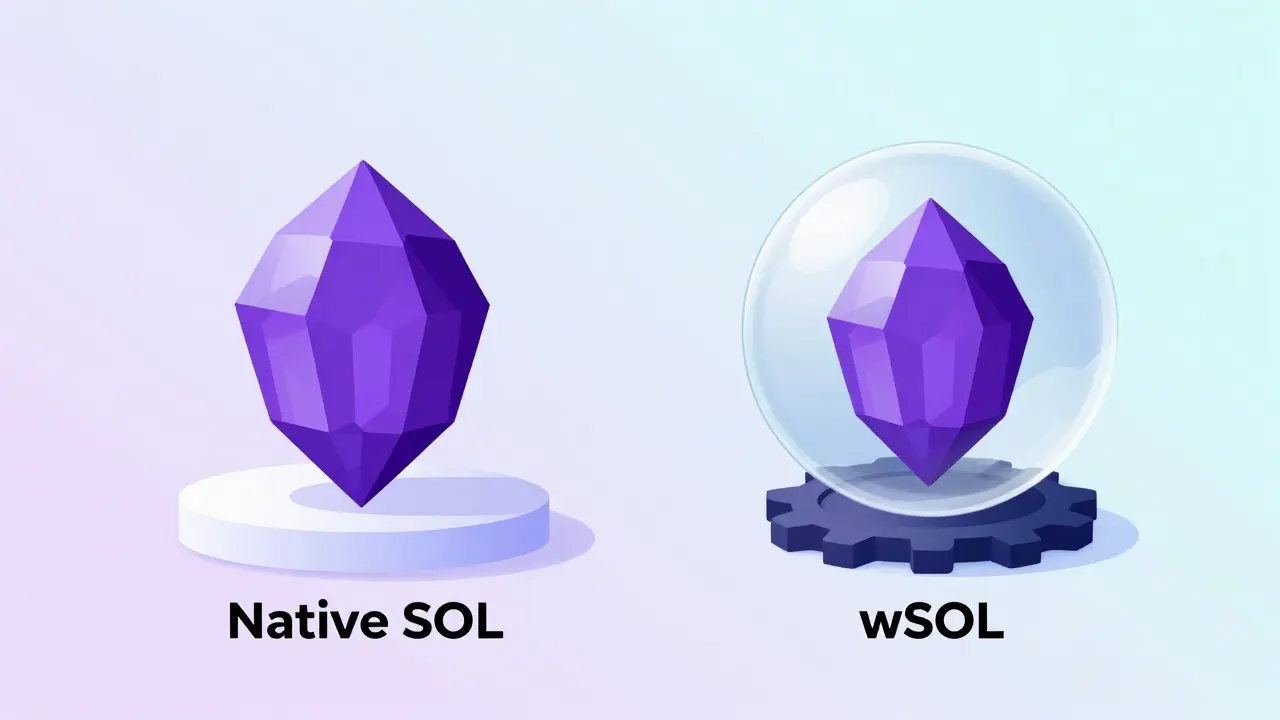
wSOL is simply SOL dressed up as an SPL token. It allows your native cryptocurrency to play nicely with smart contracts, lending protocols, and automated market makers that require a specific technical standard. Without wSOL, SOL would be stuck paying gas fees and staking, unable to participate in the broader financial applications built on top of the blockchain. Understanding this distinction is crucial for anyone looking to maximize their yield or navigate the Solana DeFi landscape efficiently.
Why Native SOL Can't Do Everything
To understand why we need a wrapped version, we have to look at how the Solana Blockchain handles data. Native SOL is the base layer asset. It’s used to pay transaction fees (gas) and to stake validators who secure the network. Technically, native SOL lives directly in system accounts, not in the token program structure that most applications expect.
Most decentralized applications (dApps) on Solana are built using the Solana Program Library (SPL). The SPL is a set of standards-similar to ERC-20 on Ethereum-that define how tokens should behave, transfer, and interact with wallets. When a developer builds a decentralized exchange like Raydium or a lending platform like MarginFi, they code these platforms to accept SPL tokens. They don’t build special logic to handle raw, native SOL because it requires different handling for rent exemption and account creation.
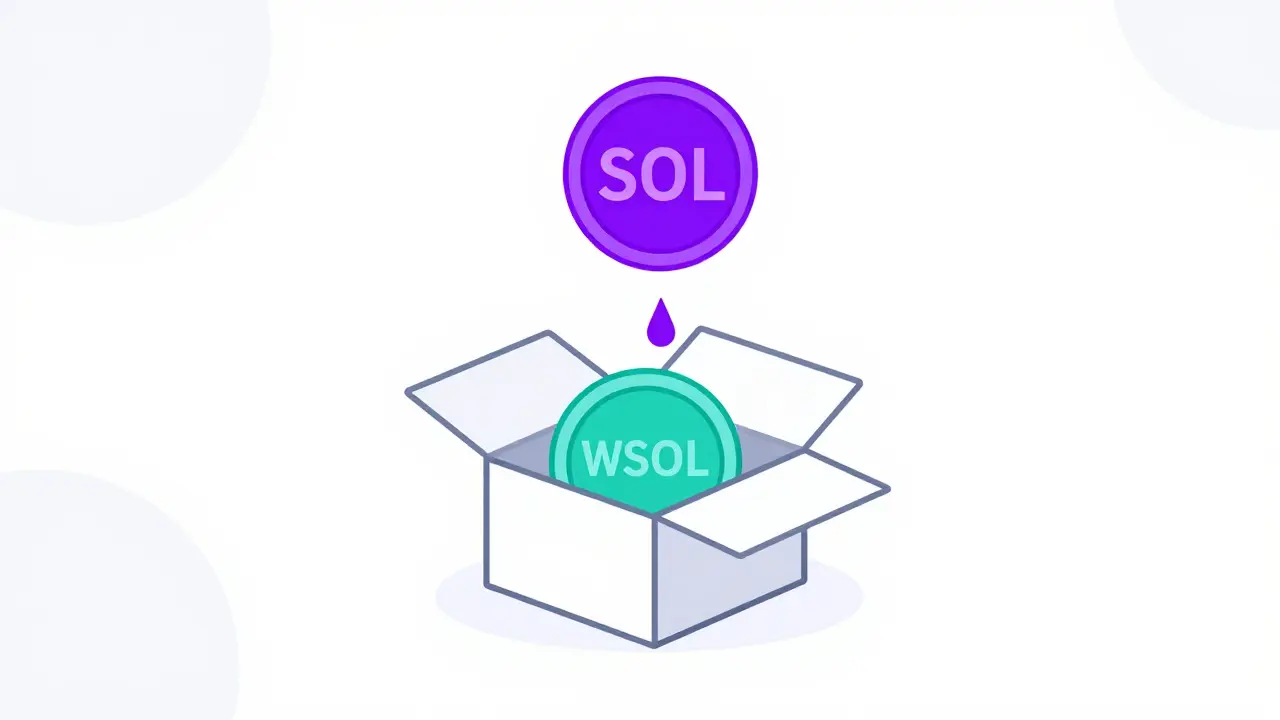
If you tried to deposit native SOL into a generic SPL-only pool, the transaction would fail. The protocol literally wouldn't recognize the format. So, the solution was to create a bridge: wrap the native SOL into an SPL-compliant token. That token is wSOL. It behaves exactly like any other meme coin or utility token on the network, but its value is backed 1:1 by real SOL locked in a contract.
How the Wrapping Process Works
The concept of wrapping might sound complex, involving third-party custodians and trust issues common in cross-chain bridges. However, wSOL is unique because it operates entirely on the native chain without external intermediaries. This makes it significantly more secure than assets like Wrapped Bitcoin (wBTC), which rely on multisig custodians.
Here is the step-by-step mechanism:
- Deposit: You send native SOL to a specific smart contract address. This address is hardcoded into the Solana Token Program:
So11111111111111111111111111111111111111112. - Minting: The smart contract locks your native SOL. In return, it mints an equivalent amount of wSOL tokens and sends them to your wallet.
- Usage: You now hold wSOL. You can trade it, lend it, or provide liquidity just like any other SPL token.
- Unwrapping: When you’re done, you send the wSOL back to the same contract. The contract burns the wSOL tokens and releases your original native SOL back to your wallet.
This process is non-custodial. No company holds your keys. No centralized entity can freeze your funds. The math is simple: 1 wSOL always equals 1 SOL. If there are 30 million wSOL in circulation, there are exactly 30 million SOL locked in the wrapping contract. This transparency eliminates counterparty risk, which is a major concern in the wider crypto space.
Key Differences: wSOL vs. Other Wrapped Assets
Not all wrapped tokens are created equal. Comparing wSOL to other wrapped assets highlights its efficiency and security advantages.
| Feature | Wrapped Solana (wSOL) | Wrapped Bitcoin (wBTC) | Native SOL |
|---|---|---|---|
| Custody Model | Non-custodial (Smart Contract) | Custodial (Merchants/Custodians) | N/A (Base Asset) |
| Standard | SPL Token | ERC-20 Token | System Account |
| Wrap/Unwrap Time | < 1 second | 10-30 minutes | N/A |
| Primary Use Case | DeFi Liquidity & Lending | Ethereum DeFi Access | Gas Fees & Staking |
| Counterparty Risk | Low (Code Audited) | Medium (Trust Required) | None |
The speed difference is stark. Because wSOL stays on the Solana network, wrapping takes less than a second. wBTC requires moving Bitcoin to a custodian, waiting for confirmations, and then minting on Ethereum. For active traders providing liquidity, that delay is unacceptable. wSOL enables near-instantaneous arbitrage and capital deployment.
When Should You Use wSOL?
You don't need to convert all your SOL to wSOL immediately. In fact, keeping some native SOL is essential. Here is a practical rule of thumb:
- Keep Native SOL for: Paying transaction fees (gas), staking with validators, and holding long-term savings in a cold wallet. Native SOL is slightly cheaper to store because it doesn't require a separate token account with rent exemption costs.
- Convert to wSOL for: Providing liquidity on DEXs like Orca or Jupiter, supplying collateral to lending protocols like Solend, and participating in yield farming strategies.
If you see a "Swap" button on a DEX, you are almost certainly swapping wSOL pairs. Even if the UI shows "SOL," under the hood, the router often converts your native SOL to wSOL instantly to execute the trade. Understanding this helps you interpret slippage and fees correctly.
Common Pitfalls and User Experience
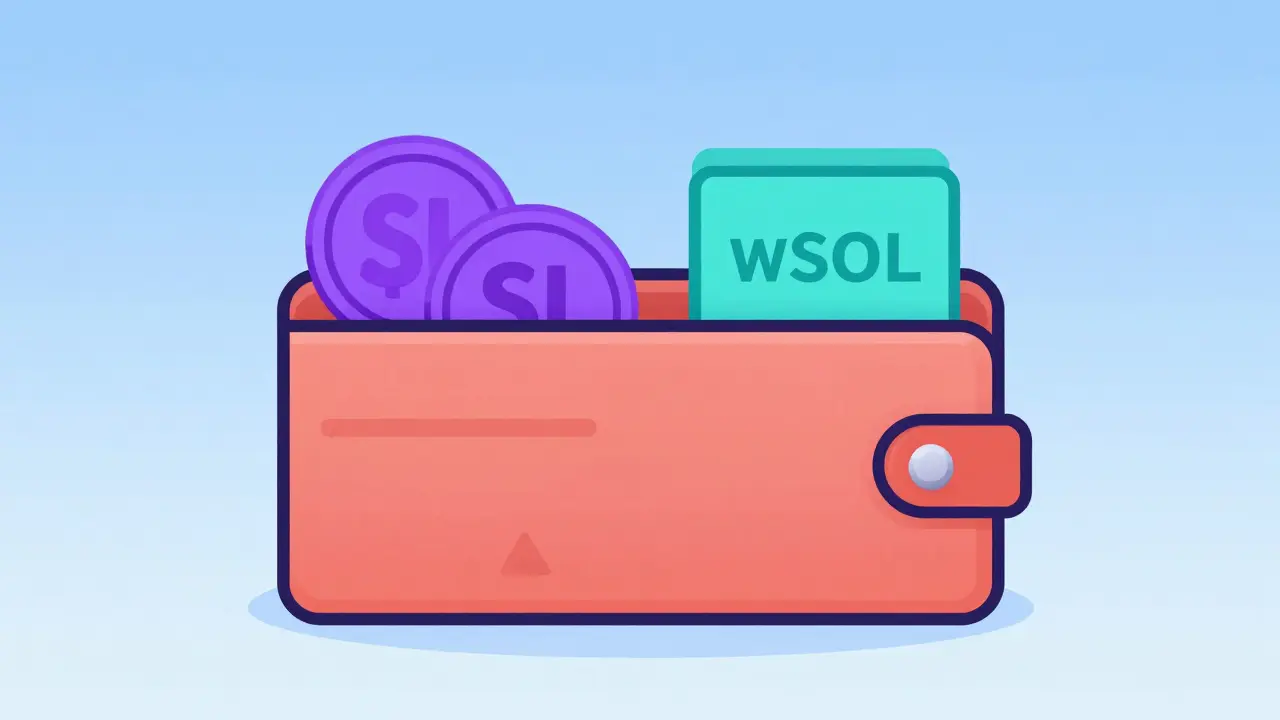
While the technology is robust, the user experience can be tricky for beginners. Many new users get confused seeing two balances in their wallet: one for SOL and one for wSOL. They might think they have double the money, or they might accidentally leave wSOL sitting idle when they intended to stake it.
Wallet interfaces like Phantom and Solflare have improved significantly, offering one-click wrap/unwrap features. However, errors still occur. A common issue is running out of native SOL to pay for the gas fee required to unwrap wSOL. Since unwrapping is a transaction, it costs gas. If you convert 100% of your balance to wSOL, you might find yourself unable to initiate the unwrap transaction because you have no native SOL left to pay the fee. Always keep a small buffer of native SOL (e.g., 0.01 SOL) in your wallet.
Another consideration is the "rent" cost. On Solana, every token account requires a small amount of SOL to be reserved as rent-exempt storage. Creating a wSOL token account costs roughly 0.002 SOL. While negligible for large holders, this adds up for micro-transactions. Advanced users sometimes batch their wraps to minimize these overhead costs.
The Future of wSOL
As Solana's architecture matures, the line between native and wrapped assets may blur. Proposals like SIP-2618 aim to optimize batch wrapping, reducing costs further. Some developers argue that future upgrades could allow native SOL to act like an SPL token natively, potentially making wSOL obsolete. However, until such a fundamental change occurs, wSOL remains the backbone of Solana's DeFi economy.
Data from DeFi analytics platforms consistently shows that the majority of Total Value Locked (TVL) on Solana is denominated in wSOL. It is the universal solvent of the ecosystem. Whether you are a casual trader swapping tokens or a sophisticated investor managing yield positions, interacting with wSOL is inevitable. By understanding its mechanics, you remove friction from your workflow and gain confidence in navigating the decentralized finance landscape.
Is wSOL safe to use?
Yes, wSOL is considered very safe. Unlike cross-chain wrapped tokens, it does not rely on centralized custodians. It uses a transparent, open-source smart contract on the Solana blockchain. The risk is limited to potential bugs in the Solana Token Program itself, which is heavily audited and battle-tested.
Does wSOL earn interest?
Holding wSOL in a wallet does not earn interest. However, you can supply wSOL to lending protocols like Solend or MarginFi to earn yield. Alternatively, providing wSOL liquidity on a DEX earns trading fees. The interest comes from the DeFi activity, not the token itself.
Can I lose my SOL while wrapping?
You cannot lose principal value due to de-pegging, as wSOL is strictly 1:1 with SOL. The only costs are transaction fees (gas) for wrapping and unwrapping. Ensure you are using official wallet interfaces to avoid phishing scams that mimic wrapping services.
Why do I need wSOL if I already have SOL?
Many DeFi protocols are coded to accept only SPL tokens. Native SOL is treated differently by the blockchain's core ledger. wSOL acts as a standardized wrapper that allows your SOL to interact seamlessly with these smart contracts without requiring developers to write custom code for native assets.
How much does it cost to wrap SOL?
The cost is minimal, typically less than $0.01 in SOL gas fees. The main expense is the rent-exempt reservation for the new token account, which is approximately 0.002 SOL. This is a one-time cost per wallet address for the first wSOL account.