What is Zcash (ZEC)? A Guide to Privacy Crypto
 Sep, 18 2026
Imagine sending money digitally, but instead of a public ledger showing everyone your balance and every transaction you've ever made, only the people involved know what happened. That's the core promise of Zcash, a cryptocurrency that lets you choose between total transparency and total privacy. Launched in October 2016 by the Electric Coin Company, led by Zooko Wilcox-O'Hearn, Zcash wasn't just another Bitcoin copy. It was a radical experiment in cryptography, built on research from MIT, Johns Hopkins, and Tel Aviv University. The goal? To fix Bitcoin's biggest flaw: lack of on-chain privacy.
As of late August 2026, Zcash sits comfortably among the top 11 cryptocurrencies globally, with a market cap hovering around $14 billion. But why does it matter? Because unlike most digital currencies where your financial history is public record, Zcash gives you control. You decide who sees your data. This article breaks down exactly how it works, why it's different, and whether it fits into your crypto portfolio.
The Core Concept: Optional Privacy
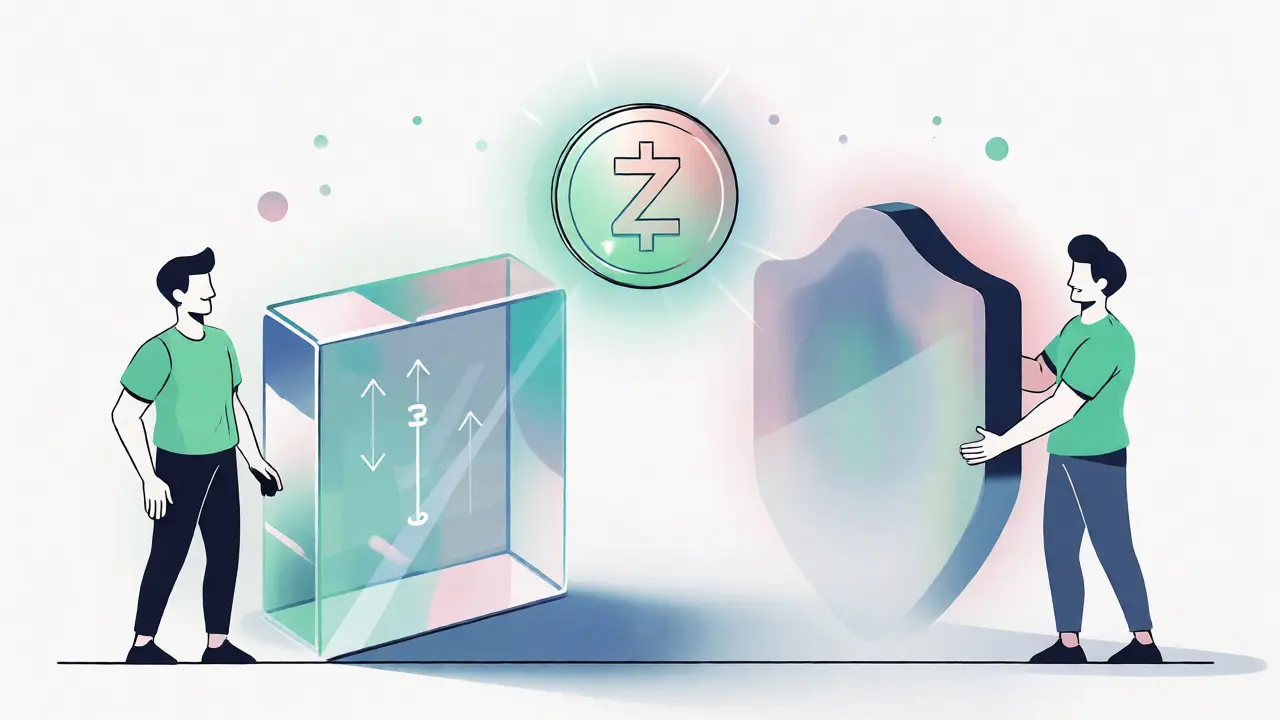
Most people assume "privacy coin" means everything is hidden. Monero, for instance, hides everything by default. Zcash takes a different approach. It offers optional privacy through shielded transactions. When you send ZEC transparently, it looks just like a Bitcoin transaction-public address, visible amount. Anyone can audit it. But when you use a shielded address, the sender, recipient, and amount are encrypted. The network still verifies the transaction is valid, but no one else knows who sent what to whom or how much.
This flexibility is crucial. Businesses might need transparent transactions for compliance and auditing, while individuals might prefer shielded ones for personal confidentiality. Zcash supports both simultaneously on the same blockchain. This dual nature makes it versatile, appealing to institutions needing selective disclosure via viewing keys, as well as individuals seeking anonymity.
How It Works: Zero-Knowledge Proofs
The magic behind Zcash's privacy lies in zero-knowledge proofs, specifically zk-SNARKs (Succinct Non-Interactive Arguments of Knowledge). Think of it like proving you know a password without actually saying the password. In a shielded transaction, Zcash proves that:
- The sender owns the funds.
- The transaction hasn't been spent before (preventing double-spending).
- The total input equals the total output (no new coins were created out of thin air).
All this happens without revealing the actual values or addresses on the public ledger. This technology was groundbreaking. Zcash was the first practical implementation of zk-SNARKs in a cryptocurrency, setting the stage for many modern blockchains we see today.
Technical Evolution: From Sprout to Orchard
Zcash has evolved significantly since its launch. Early versions used a protocol called Sprout, followed by Sapling. Both relied on a "trusted setup ceremony." This meant a group of people had to generate cryptographic parameters together. If even one person kept their part of the secret, they could theoretically create infinite fake coins. It was a security risk.
That changed with Network Upgrade 5 (NU5) in May 2022. NU5 introduced the Orchard shielded pool and Halo 2 proof system. Halo 2 doesn't require a trusted setup. It uses recursive proofs on the Pasta curve cycle (Pallas and Vesta), eliminating that single point of failure. This upgrade made Zcash more secure and trustless. It also introduced Unified Addresses, allowing users to have one address that works across different privacy pools, simplifying the user experience.
| Feature | Sapling | Orchard |
|---|---|---|
| Proof System | Groth16 zk-SNARKs | Halo 2 |
| Trusted Setup | Required | Not Required |
| Curve | BLS12-381 | Pasta (Pallas/Vesta) |
| Proof Size | ~192 bytes | ~1.5 KB |
Economics and Supply
Zcash mimics Bitcoin's monetary policy closely. The maximum supply is capped at 21 million ZEC. Block rewards halve roughly every four years, creating a deflationary pressure over time. As of mid-2026, about 16.7 to 16.8 million ZEC are in circulation, meaning nearly 80% of all coins that will ever exist have already been mined.
The price has seen significant volatility. In its early days in October 2016, speculation drove ZEC to an all-time high of nearly $5,941 due to thin liquidity. Fast forward to late August 2026, and ZEC trades in the $830-$860 range. This represents a substantial recovery from earlier cycles, reflecting growing adoption and confidence in its technology. The fixed supply model appeals to investors looking for scarcity, similar to Bitcoin, but with the added utility of privacy.
Mining and Consensus
Zcash currently uses Proof-of-Work consensus with the Equihash algorithm. Originally designed to be ASIC-resistant (meaning regular computers could mine it efficiently), specialized mining hardware eventually dominated the network. This centralization of mining power is a common critique, though not unique to Zcash.
Block times are faster than Bitcoin's. While Bitcoin targets 10 minutes per block, Zcash aims for approximately 75 seconds. This allows for quicker confirmations, though throughput remains in the low single-digit transactions per second range on-chain. Future upgrades, notably the planned "Crosslink," aim to transition Zcash toward Proof-of-Stake. This shift would drastically reduce energy consumption and potentially improve scalability, aligning Zcash with broader industry trends toward sustainability.

Zcash vs. Monero: Which Privacy Coin?
Comparing Zcash to Monero is inevitable. Both are privacy leaders, but their philosophies differ. Monero enforces privacy by default using ring signatures and stealth addresses. Every transaction is hidden. Zcash offers a choice. This makes Zcash friendlier to regulators and exchanges that might delist fully private coins. However, it also means users must actively choose to use shielded addresses to get privacy. If you send transparently, you lose the benefit.
Monero is often preferred for absolute anonymity needs, like dark web markets. Zcash shines in scenarios requiring selective transparency, such as salary payments where the employer needs proof of payment but the employee wants to hide the amount from colleagues. Neither is strictly "better"; they serve different use cases.
Getting Started with Zcash
If you want to try Zcash, here's the basic workflow:
- Acquire ZEC: Buy it on major exchanges like Kraken or Coinbase. Note that some exchanges only support transparent deposits/withdrawals initially.
- Choose a Wallet: Use a wallet that supports shielded transactions, such as the official Zashi wallet or YWallet. Ensure it supports the latest Orchard protocol.
- Understand Addresses: Learn the difference between t-addresses (transparent) and z-addresses (shielded). Sending from a z-address to a t-address reveals the amount upon receipt.
- Manage Viewing Keys: If you're a business, generate full viewing keys to share with auditors without giving them spending power.
Be aware that shielded transactions can take longer to sync and verify due to the cryptographic complexity. Always back up your seed phrase securely. Losing access to a shielded wallet means losing access to those funds permanently, as there's no central authority to reset passwords.
Is Zcash completely anonymous?
No, not completely. Zcash offers optional privacy. Transparent transactions are public and traceable like Bitcoin. Only shielded transactions provide strong privacy. Even then, metadata analysis can sometimes reveal patterns if users aren't careful about mixing funds.
Why did Zcash remove the trusted setup?
The trusted setup required participants in the initial parameter generation to keep their secrets safe. If compromised, someone could mint unlimited fake ZEC undetected. The move to Halo 2 in the Orchard upgrade eliminated this requirement, making the system more secure and trustless.
Can I mine Zcash with my computer?
Technically yes, but it's not profitable. While Equihash was designed to resist ASICs, specialized mining hardware now dominates the network. Mining with a standard GPU or CPU will likely result in losses after electricity costs.
What is the maximum supply of Zcash?
The maximum supply is fixed at 21 million ZEC, identical to Bitcoin's cap. This scarcity model is intended to preserve value over time through predictable issuance and halving events.
Is Zcash moving to Proof-of-Stake?
Yes, the project roadmap includes a transition to Proof-of-Stake via the upcoming Crosslink upgrade. This change aims to reduce energy consumption and improve network efficiency, though specific timelines may vary based on development progress.