What is Zero (ZER) Crypto? Privacy Tech, Price, and Risks in 2026
 May, 2 2026
Imagine sending money to a friend where the bank sees nothing-no amount, no sender, no receiver. Just a silent transfer that leaves no digital footprint. That is the promise of Zero (ZER), a privacy-focused cryptocurrency designed to hide transaction details using advanced cryptography. Launched in 2017, ZER tries to solve one of the biggest complaints about Bitcoin: total transparency. On the Bitcoin blockchain, anyone can trace your funds back to your wallet address. Zero changes that rule entirely.
But here is the catch. While the technology sounds like science fiction, the market reality is quite different. As of May 2026, Zero trades at fractions of a cent with almost zero daily volume. It sits outside the top 5,000 cryptocurrencies by market cap. So, why does it still exist? And more importantly, should you even consider buying it?
The Core Technology: How Zero Hides Your Money
To understand Zero, you have to look past the ticker symbol and into the code. Zero isn't just another coin; it’s an experiment in cryptographic anonymity. The project builds directly on the Bitcoin Core codebase, which means it inherits Bitcoin’s proven security model but swaps out the transparent ledger for a private one.
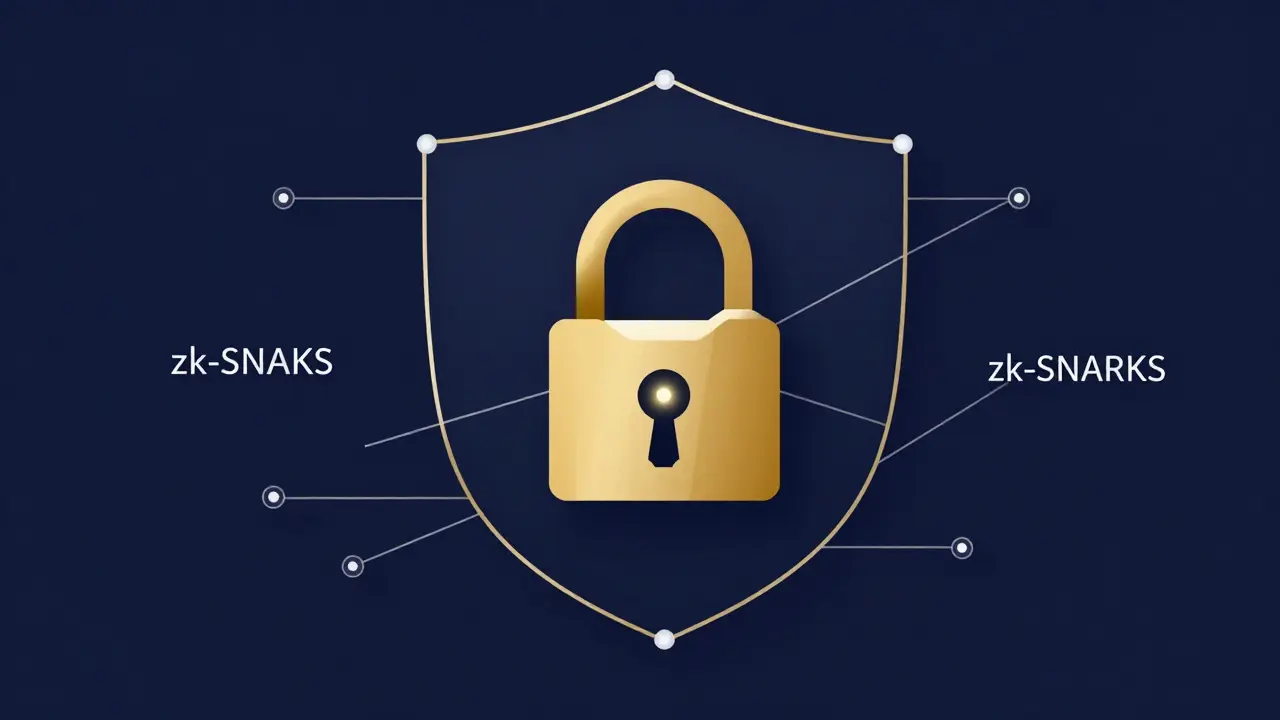
The magic happens through zk-SNARKs (zero-knowledge succinct non-interactive arguments of knowledge). This is a mouthful, so let’s break it down simply. A zk-SNARK allows one party to prove to another that they know a value (like "I have enough money to pay this invoice") without revealing what that value actually is.
- Proof of Validity: The network confirms the transaction is legitimate.
- Hidden Data: The sender, receiver, and amount remain encrypted.
- No Central Server: Unlike mixing services that pool coins, Zero validates privacy natively on-chain.
This technology traces its roots back to academic research from Johns Hopkins University. Professors Matthew D. Green, Ian Garman, and Christina Miers originally proposed the Zerocoin protocol as a way to add anonymity to Bitcoin. Zero (ZER) takes that theoretical framework and implements it into a working currency. The idea is simple: mint zerocoins with regular Bitcoin, then spend them anonymously. The cryptographic link between the original Bitcoin and the new zerocoin is broken, making tracing impossible.
Market Reality: Price, Supply, and Liquidity
If the tech is solid, why is the price so low? The answer lies in liquidity and adoption. Cryptocurrency markets are driven by attention and utility. Zero has struggled to capture either.
As of early May 2026, the price of ZER is incredibly fragmented across exchanges. This fragmentation is a red flag for traders. On Coinbase, ZER might list around $0.0167, while CoinGecko shows it closer to $0.0103. MEXC lists it even lower at roughly $0.0101. These discrepancies aren’t just minor fees; they signal a lack of active arbitrageurs. When a healthy market exists, bots instantly buy low on one exchange and sell high on another, equalizing the price. With Zero, those bots stay away because the volume is too thin.
| Metric | Value / Range | Note |
|---|---|---|
| Price Range | $0.0101 - $0.0378 | High variance due to low liquidity |
| Circulating Supply | ~14.3 Million ZER | Max supply capped at 17 Million |
| Market Cap | $148K - $553K | Depends on which exchange price is used |
| 24-Hour Volume | $0 - $8.57 | Extremely low trading activity |
| All-Time High | $12.38 | Reached during earlier speculative cycles |
Look at that 24-hour volume. Some data points show literally zero dollars traded in a day. Others show less than ten dollars. If you try to sell $1,000 worth of ZER, you could crash the price on that specific exchange because there simply aren’t enough buyers waiting on the other side. This is known as slippage risk, and it is severe for micro-cap coins like Zero.
Zero vs. The Privacy Giants
You might wonder, "Why not just use Monero or Zcash?" Those are the established leaders in privacy coins. Zero attempts to carve out a niche by positioning itself as a lighter, more Bitcoin-compatible alternative. But the competition is fierce.
- Monero (XMR): Uses ring signatures and stealth addresses. It is the gold standard for untraceable transactions but faces heavy regulatory scrutiny.
- Zcash (ZEC): Also uses zk-SNARKs, similar to Zero. However, Zcash has much higher liquidity, wider exchange support, and a larger developer community.
- Dash (DASH): Offers "PrivateSend," a mixing feature that is easier to use but less cryptographically robust than zk-SNARKs.
Zero’s main disadvantage isn’t technical-it’s network effects. Merchants don’t accept it. Exchanges delist it frequently. Developers move to projects with bigger budgets. In the crypto world, being first doesn’t matter if you’re last in mindshare.
The Identity Crisis: Which Zero Are You Talking About?
Here is where things get messy. The ticker "ZER" is not unique. If you search for Zero crypto, you might stumble upon completely different projects. This confusion is dangerous for investors.
- Zero (ZER) - The Original: The privacy coin discussed above, launched in 2017, based on Bitcoin Core and Zerocoin protocols.
- ZeroVert (ZER): A merge-mineable coin linked to Vertcoin (VTC). It uses the Scrypt-N algorithm and has a different supply mechanism. Do not confuse this with the privacy-focused Zero.
- Solana ZERO Tokens: Various meme tokens or small caps built on the Solana blockchain may use the name "ZERO." These have no relation to the original Zero project.
Always check the contract address and the underlying blockchain before buying. Buying the wrong ZER means your investment has no connection to the privacy technology you were interested in.
Regulatory Risks and the Future of Privacy Coins
The landscape for privacy coins is shifting dramatically in 2026. Governments worldwide are cracking down on anonymous transactions due to concerns about money laundering and tax evasion. Major centralized exchanges like Coinbase and Binance have already delisted several privacy coins, including Monero and Zcash, in certain jurisdictions.
Zero (ZER) operates in this same gray area. Its core feature-hiding transaction details-is exactly what regulators want to eliminate. While the technology remains legal in most places, the ability to trade it easily is shrinking. If major exchanges ban ZER, the remaining liquidity will vanish, likely driving the price to near zero.
Furthermore, the development activity around Zero appears stagnant. There are few recent updates, no major partnerships, and limited social media engagement compared to newer Layer-2 privacy solutions. Without active development, the code becomes vulnerable to bugs, and the project loses relevance.
Should You Buy Zero (ZER)?
Let’s be direct. For the average investor, Zero is not a recommended asset. The risks outweigh the potential rewards. The extreme illiquidity means you might not be able to exit your position when you want to. The regulatory headwinds threaten the long-term viability of the entire privacy coin sector. And the competition from established players like Monero makes it hard for Zero to gain traction.
However, if you are a researcher, a cryptography enthusiast, or someone deeply interested in the history of zero-knowledge proofs, Zero serves as an interesting case study. It demonstrates how academic concepts like the Zerocoin protocol can be implemented in real-world software. It also highlights the harsh realities of the crypto market: great tech doesn’t guarantee success if users don’t adopt it.
If you decide to experiment with ZER, treat it as speculation, not investment. Use only money you can afford to lose entirely. Check multiple exchanges for price discrepancies, but expect high slippage. And always verify you are interacting with the correct blockchain contract.
Is Zero (ZER) safe to store?
Yes, technically. Since Zero is built on Bitcoin Core principles, you can often store it in wallets that support Bitcoin-like assets or dedicated privacy coin wallets. However, safety depends on the wallet's maintenance. Given the low activity around the project, ensure you use a reputable, open-source wallet that explicitly supports ZER to avoid losing access to your funds.
What is the difference between Zero (ZER) and Zcash (ZEC)?
Both use zk-SNARKs for privacy, but Zcash is a larger, more established project with better liquidity and exchange support. Zero was launched later and aims to offer similar privacy features with a different implementation approach based on the Zerocoin protocol. Zcash has faced significant regulatory pressure, but Zero faces even greater challenges due to its tiny market presence.
Why is the price of Zero so different on various exchanges?
The price differences are caused by extremely low trading volume. In liquid markets, prices equalize quickly because traders arbitrage the spread. In illiquid markets like Zero's, large price gaps persist because there aren't enough buyers and sellers to balance the books. This makes trading risky due to potential slippage.
Can I mine Zero (ZER)?
Mining information for Zero is scarce and often outdated. Originally, it may have supported mining algorithms compatible with its proof-of-work consensus. However, given the project's age and low activity, mining profitability is negligible. Most users acquire ZER through exchanges rather than mining. Always check the latest GitHub documentation for current consensus mechanisms.
Is Zero (ZER) banned in any countries?
While Zero itself isn't universally banned, many financial regulators restrict or ban trading of privacy coins on centralized exchanges within their borders. Countries with strict anti-money laundering laws often force exchanges to delist coins that obscure transaction origins. This indirectly limits where you can legally trade ZER.