Wrapped Assets and Bridge Mechanisms Explained for Blockchain Users
 Mar, 19 2026
Blockchains don’t talk to each other. That’s the simple truth behind why wrapped assets exist. If you own Bitcoin and want to use it in an Ethereum-based DeFi app, you can’t just send BTC there. The networks operate on different rules, different codes, different languages. So how do you bring Bitcoin into Ethereum? The answer is wrapping.
What Are Wrapped Assets?
Wrapped assets are digital tokens that represent real crypto assets on a different blockchain. The most common example is Wrapped Bitcoin (WBTC). It’s not Bitcoin itself-it’s a token on Ethereum that’s backed 1:1 by actual Bitcoin held in reserve. Every WBTC you hold means one BTC is locked away somewhere, waiting to be unlocked when you decide to redeem it.WETH (Wrapped Ether) works the same way. Ethereum’s native ETH isn’t always compatible with older DeFi contracts designed for ERC-20 tokens. So WETH was created-a version of ETH that follows the ERC-20 standard so it can be used in lending, swapping, and staking apps without breaking anything.
This isn’t magic. It’s engineering. Wrapped tokens solve a real problem: isolation. Before them, Bitcoin was stuck on its own chain. Ethereum was stuck on its own. You couldn’t use BTC to earn interest on Aave, or use ETH to trade on a Bitcoin-based DEX. Wrapped assets broke those walls down.
How Do Bridge Mechanisms Work?
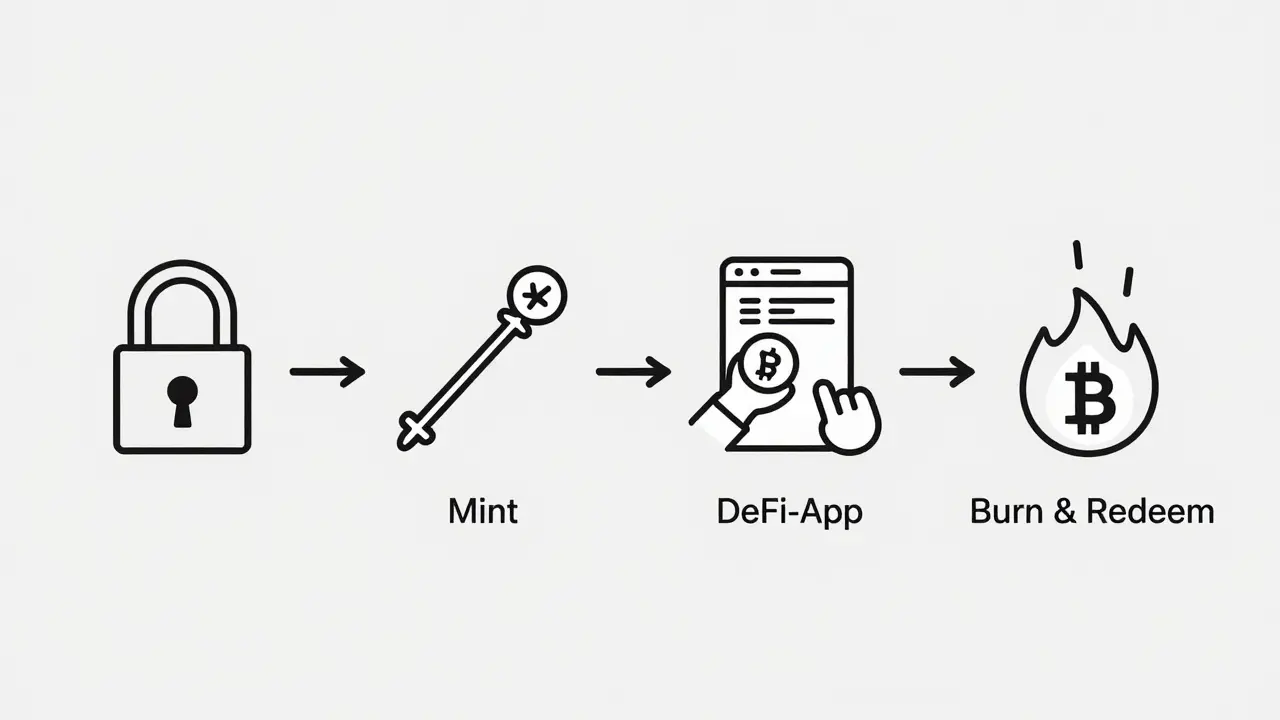
Bridges are the machines that make wrapping possible. Think of them as crosswalks between two busy streets. You can’t just walk from one to the other-you need a signal, a guard, and a way to prove you’re allowed to cross.The standard bridge process has four steps:
- Lock - You send your native asset (like BTC) to a secure wallet controlled by a custodian or smart contract.
- Mint - The bridge detects the locked asset and creates an equal amount of wrapped tokens (like WBTC) on the target chain (Ethereum).
- Use - You now have WBTC. You can swap it, lend it, or add it to liquidity pools just like any other ERC-20 token.
- Burn and Redeem - When you want your original BTC back, you send WBTC to the bridge. It burns the WBTC and releases the BTC from the lock.
This system only works if the bridge keeps a perfect 1:1 balance. If someone mints 10,000 WBTC but only locks 8,000 BTC, the whole thing collapses. That’s why trust and security are everything.
Custodians and the Trust Problem
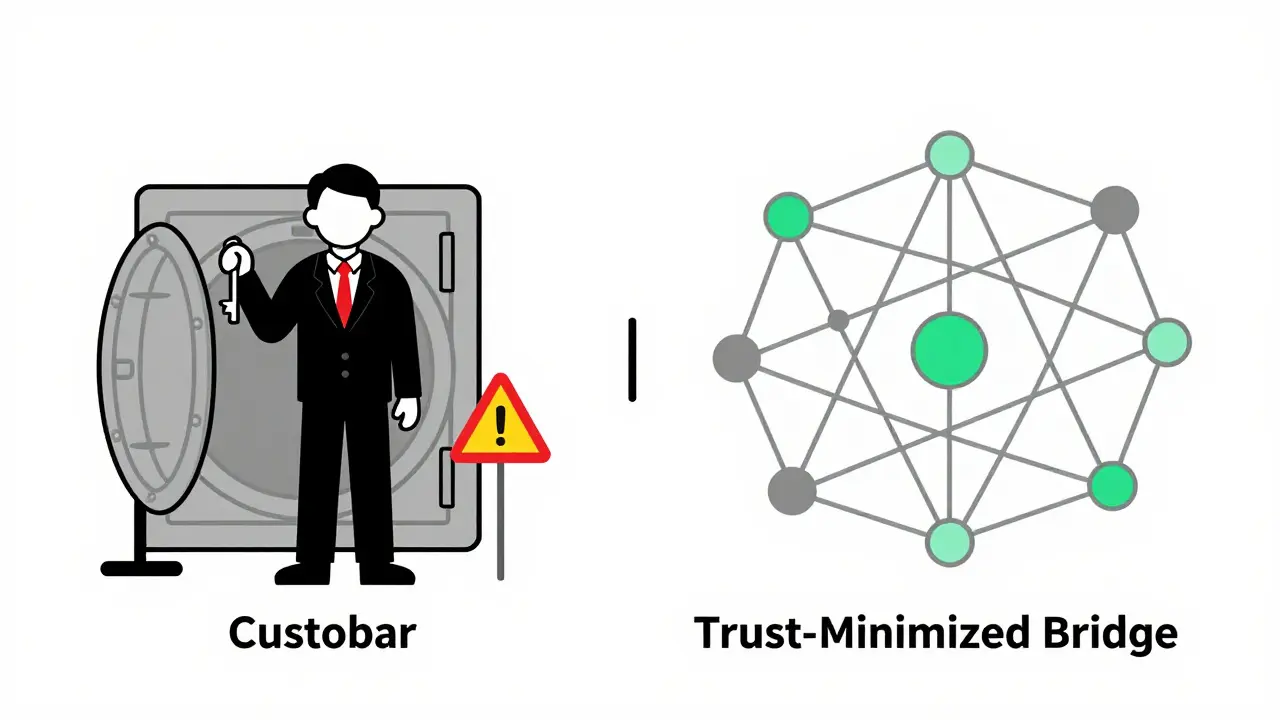
Most wrapped tokens today rely on custodians-trusted third parties who hold the real assets. For WBTC, this is a group of companies called the WBTC DAO. They manage the Bitcoin reserves and sign off on minting and burning. But here’s the catch: you’re trusting humans, not code.This is the biggest flaw in the system. Blockchains are supposed to be decentralized. But wrapped assets force you to rely on centralized actors. If those custodians get hacked, go rogue, or just disappear, your WBTC could become worthless-even if the Bitcoin underneath is still safe.
Proof of Reserves helps. Some projects publicly show their Bitcoin wallet balances so you can check that the supply matches. But even that can be faked. A wallet could show 10,000 BTC, but 2,000 of it might be borrowed or locked elsewhere. Without real-time, verifiable audits, you’re still guessing.
Wrapped vs. Synthetic Assets
Don’t confuse wrapped assets with synthetic assets. They look similar, but they’re built differently.Wrapped assets = real asset locked, digital twin created. You own a token that represents actual BTC, ETH, or LTC. The underlying asset exists and is held.
Synthetic assets = no real asset held. Instead, a smart contract uses collateral (like ETH) to mimic the price of Bitcoin. If BTC goes up, your synthetic BTC goes up too-but no real BTC was ever involved. MakerDAO’s sUSD and Synthetix’s sBTC are examples.
The difference matters because wrapped assets preserve ownership. If you hold WBTC, you can redeem it for real Bitcoin. Synthetic assets only track price. You can’t get real BTC back-just a payout based on its value.
Why This Matters for DeFi
DeFi exploded because of liquidity. And liquidity needs movement. If all your assets are stuck on one chain, your options are limited.Wrapped assets changed that. WBTC alone brought billions of dollars in Bitcoin liquidity into Ethereum DeFi. Suddenly, Bitcoin holders could earn yield on Aave, trade on Uniswap, or stake on Curve-all without selling their BTC. This wasn’t just convenient. It was transformative.
Today, you’ll find wrapped versions of Bitcoin, Ethereum, Litecoin, and even Solana on dozens of chains. Binance Chain, Polygon, Avalanche, and Arbitrum all support wrapped tokens. The more chains that connect, the more powerful DeFi becomes.
Trust-Minimized Bridges: The Next Step
The industry knows the custodian model is fragile. That’s why developers are building trust-minimized bridges-systems that don’t need humans to hold assets.Chainlink’s CCIP is one example. Instead of relying on a few companies to lock BTC, it uses decentralized oracle networks to verify transactions across chains. Validators, not custodians, confirm that BTC was sent. Smart contracts then automatically mint or burn wrapped tokens based on that proof.
Other projects like LayerZero and Axelar are doing similar things. They use consensus mechanisms across multiple independent nodes to verify cross-chain transfers. No single entity controls the funds. No single point of failure.
These aren’t perfect yet. They’re slower, more complex, and still being tested. But they’re the future. As they mature, we’ll see fewer high-profile hacks and less reliance on centralized teams.
What’s Next?
Wrapped assets won’t disappear. They’re too useful. But they’ll evolve.Layer 2 solutions like zkSync and Starknet are already handling billions in transactions with lower fees. As they grow, they’ll need more cross-chain connections. That means more demand for wrapped tokens-not less.
Regulators are watching too. After the 2022 bridge hacks and the 2024 WBTC exploit, governments are pushing for clearer rules. Expect audits, licensing, and maybe even mandatory reserve disclosures.
The goal isn’t to kill wrapped assets. It’s to make them safer. And the technology is moving fast. Within five years, most wrapped tokens will likely be backed by decentralized bridges, not custodians.
For now, if you’re using WBTC or WETH, know what you’re trusting. Check the issuer. Look at reserve reports. Understand the bridge. Don’t assume it’s as safe as holding ETH on Ethereum. It’s not. But when used carefully, wrapped assets unlock possibilities no single blockchain ever could.
What is the difference between WBTC and Bitcoin?
WBTC is a tokenized version of Bitcoin that runs on the Ethereum blockchain. It’s backed 1:1 by actual Bitcoin held in reserve by custodians. You can’t send WBTC to a Bitcoin wallet, and you can’t send Bitcoin to an Ethereum DeFi app without converting it to WBTC first. WBTC lets Bitcoin interact with Ethereum’s ecosystem-but it’s not Bitcoin itself.
Can I create my own wrapped asset?
Technically yes, but not easily. Creating a wrapped asset requires setting up a secure custody system, a smart contract for minting and burning, and a way to verify asset deposits. Most wrapped tokens are issued by established teams like BitGo (for WBTC) or Ren (for wrapped Bitcoin on other chains). Without trust, audits, and liquidity, your wrapped token won’t be adopted.
Are wrapped assets safe?
They’re only as safe as the bridge and custodian behind them. WBTC has never been hacked, but other wrapped tokens have lost millions when custodians were compromised. Always check who’s holding the underlying asset. Look for multi-sig wallets, public reserve proofs, and decentralized bridges. Avoid wrapped assets with no transparency.
Why do we need wrapped assets if blockchains are merging?
Blockchains aren’t merging-they’re connecting. Even if Ethereum and Solana become more compatible, Bitcoin will likely stay on its own chain. Wrapped assets let Bitcoin, Litecoin, Dogecoin, and others participate in DeFi without changing their core protocols. They’re the bridge between the old and the new.
Do wrapped assets have transaction fees?
Yes. When you wrap or unwrap, you pay the gas fees of the blockchain you’re on. Wrapping BTC to WBTC costs Ethereum gas. Unwrapping WBTC back to BTC costs Bitcoin network fees (if the bridge requires a Bitcoin transaction). Some bridges also charge small service fees. Always check the total cost before wrapping.