CBDC Development vs Private Crypto: How Governments Are Competing in 2026
 May, 16 2026
The war for your wallet is no longer a theoretical debate. It is happening right now, and the stakes have never been higher. As of 2025, 134 countries, representing 98% of global GDP, are actively building or testing Central Bank Digital Currencies (CBDCs). This is not a trickle; it is a flood. Meanwhile, private cryptocurrencies like Bitcoin and Ethereum face increasing regulatory pressure as governments seek to reclaim control over monetary policy. The question isn't whether CBDCs will exist-they already do in places like the Bahamas and Nigeria-but how they will compete with the decentralized ethos of private crypto.
The Scale of Government Adoption
You might think CBDCs are still just ideas on paper. They are not. The momentum has shifted from niche experiments to strategic national priorities. In 2023, only 114 countries were exploring digital currencies. By 2025, that number jumped to 134. Among these, 81 central banks are in active exploration, while 69 have moved into pilot and development stages. That means nearly half of the world’s major economies are ready to launch their own digital cash within the next few years.
Actual deployment is limited but real. Depending on who you ask, either 4 or 11 countries have fully launched CBDCs. The Bahamas’ Sand Dollar, Nigeria’s eNaira, Jamaica’s JAM-DEX, and Zimbabwe’s ZiG are live systems processing real transactions. For users in these regions, this isn’t about speculation-it’s about daily survival and payment efficiency. For the rest of us, it signals a clear direction: governments want a piece of the digital pie.
Cross-Border Payments: The Battleground
Where do CBDCs actually beat private crypto? Cross-border payments. Traditional banking is slow, expensive, and opaque. Private cryptocurrencies solve this but often lack regulatory clarity. CBDCs aim to offer the best of both worlds: speed and compliance. Currently, 29 countries are participating in cross-border CBDC initiatives, including major projects like mBridge and Project Dunbar.
The results are striking. In 2025, $59 billion worth of cross-border transactions were processed via CBDCs-a 45% increase from 2024. Seventeen bilateral agreements now ensure interoperability between nations. If you’re a business sending money internationally, this matters. You get near-instant settlement without the volatility of Bitcoin or the complexity of navigating multiple fiat exchanges. However, this convenience comes at a cost: total transparency to government authorities.
| Feature | Central Bank Digital Currency (CBDC) | Private Cryptocurrency (e.g., Bitcoin) |
|---|---|---|
| Issuer | National Central Bank | Decentralized Network / Community |
| Legal Status | Legal Tender | Asset / Commodity (varies by jurisdiction) |
| Privacy | Low (Government tracks all transactions) | High (Pseudonymous, though traceable on-chain) |
| Volatility | Stable (pegged to fiat) | High (market-driven) |
| Censorship Resistance | None (can be frozen/reversed) | High (cannot be seized if keys are secure) |
| Regulatory Compliance | Built-in (AML/KYC integrated) | External (exchanges handle compliance) |
Technical Implementation: Who Gets It Right?
Not all CBDCs are built the same way. Some focus on retail users, others on wholesale banking. The Reserve Bank of India, for instance, expanded both its retail and wholesale CBDCs throughout 2025. They added offline functionality-crucial for areas with poor internet connectivity-and broadened participation beyond traditional banks. This shows a pragmatic approach: technology must serve the user, not just the regulator.
Japan takes a more methodical route. The Bank of Japan has run pilots since April 2023, focusing heavily on user experience and interface design. They are testing how CBDCs coexist with existing payment instruments like credit cards and mobile wallets. Their goal isn’t to replace everything overnight but to integrate smoothly. This contrasts sharply with some private crypto projects that demand users abandon familiar systems entirely.
However, technical sophistication doesn’t guarantee success. Cybersecurity remains a massive hurdle. The International Monetary Fund (IMF) highlighted in October 2024 that CBDC ecosystems amplify existing risks. A centralized ledger is a single point of failure. If a central bank’s system is hacked, the entire economy could freeze. Private cryptocurrencies distribute risk across thousands of nodes, making them harder to take down completely. But they also suffer from smart contract bugs and exchange hacks. Neither option is perfectly safe.

Regulatory Pressure and Restrictions
This brings us to the core tension: restrictions. Governments love CBDCs because they offer visibility. Forty-eight percent of countries involved in cross-border CBDC projects have aligned their Anti-Money Laundering (AML) and Counter-Financing of Terrorism (CFT) regulations. Thirty-eight percent are exploring blockchain-based identity verification for faster compliance checks. This creates a stark contrast with private crypto, where regulators struggle to enforce rules on decentralized networks.
If you value financial privacy, CBDCs are likely not for you. Every transaction is recorded, traceable, and potentially reversible. In authoritarian regimes, this power can be used to punish dissent or restrict spending during crises. Even in democracies, the potential for surveillance capitalism is high. Private cryptocurrencies offer an escape hatch, albeit one that is becoming increasingly difficult to use due to stricter KYC requirements on exchanges.
The IMF warns that CBDC issuance could complicate liquidity forecasting and draw short-term interest rates away from policy targets. To mitigate this, central banks are designing access criteria and holding limits. For example, you might only be allowed to hold a certain amount of CBDC in your digital wallet, forcing larger sums into commercial banks. This protects the banking system but limits individual freedom. It’s a trade-off: stability versus liberty.
User Adoption and the Risk of Bank Runs
Will people actually use CBDCs? The Atlantic Council points out a critical danger: bank runs. If citizens fear economic instability, they might rapidly convert their commercial bank deposits into CBDCs, which are backed directly by the state. This drains liquidity from banks, reducing their ability to lend and potentially crashing the financial system. This risk is highest in countries with unstable political climates.
Private cryptocurrencies avoid this specific risk because they operate outside the traditional banking system. When Bitcoin rises, it doesn’t drain reserves from JPMorgan Chase. However, crypto markets are highly correlated with broader economic sentiment. During crises, investors often sell crypto to buy gold or cash, leading to massive price crashes. So while the mechanisms differ, the psychological impact on users can be similar.
Adoption also depends on utility. If a CBDC offers better rewards, lower fees, or seamless integration with daily apps, people will switch. If it feels like a spy tool, they will resist. In developing economies, where financial inclusion is a priority, CBDCs can provide banking services to the unbanked. In developed nations, the value proposition is less clear unless convenience significantly outweighs privacy concerns.
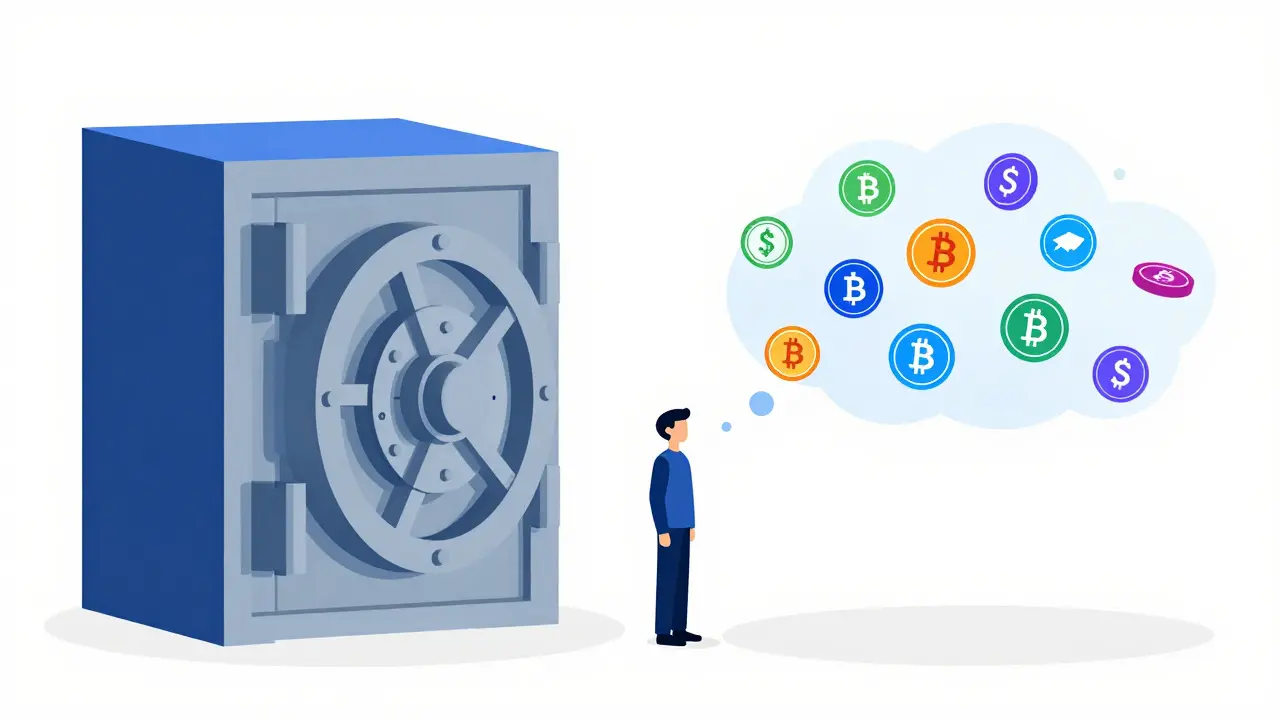
Geopolitics and National Security
Money is power, and digital money is the new frontier. The United Nations Development Programme notes that over 100 central banks are working on CBDCs to enhance financial inclusion and sovereignty. But there’s a darker side: sanctions evasion and geopolitical leverage. If the US loses leadership in setting digital currency standards, its ability to enforce sanctions diminishes. Other nations could build parallel systems that bypass the dollar.
Private cryptocurrencies complicate this further. They are borderless and apolitical. A person in Iran can use Bitcoin to receive funds from Europe without touching the SWIFT system. This undermines national security objectives for many governments. Hence, the push for CBDCs is partly about maintaining control over capital flows. Without CBDCs, governments rely on intermediaries that can be circumvented. With CBDCs, every cent is accounted for.
What Does This Mean for You?
If you are an everyday consumer, the immediate impact might be minimal. You’ll likely see CBDC options appear in your banking app within the next two to three years. They may offer cashback bonuses or instant transfers. Whether you adopt them depends on your trust in your government and your need for privacy.
If you are a business owner, pay attention to cross-border features. CBDCs could drastically reduce transaction costs for international trade. Partnering with early adopters like India or members of the mBridge project could give you a competitive edge. However, prepare for stricter reporting requirements. The days of anonymous offshore accounts are ending.
If you are a crypto enthusiast, don’t panic. Private cryptocurrencies will survive, but their role will shift. They may become less about daily payments and more about store-of-value assets or censorship-resistant tools. The competition won’t eliminate crypto; it will force it to mature. Regulations will tighten, but innovation will continue. The key is to stay informed and adaptable.
Are CBDCs the same as Bitcoin?
No. CBDCs are issued by central banks and act as digital versions of existing fiat currency. They are centralized, regulated, and legally tender. Bitcoin is decentralized, operates independently of any government, and is not legal tender in most countries. While both use blockchain-like technology, their purposes and structures are fundamentally different.
Which countries have launched CBDCs?
As of 2025, confirmed launches include the Bahamas (Sand Dollar), Nigeria (eNaira), Jamaica (JAM-DEX), and Zimbabwe (ZiG). Some reports suggest up to 11 countries have fully operational systems, but data varies. Most other nations, including the US, UK, and EU members, are still in pilot or research phases.
Can CBDCs track my spending?
Yes. Unlike cash, CBDC transactions are recorded on a digital ledger controlled by the central bank. While privacy protections vary by country, the inherent design allows for full traceability. This enables efficient tax collection and fraud prevention but raises significant surveillance concerns.
Will CBDCs kill private cryptocurrencies?
Unlikely. CBDCs target efficiency and compliance in mainstream payments. Private cryptocurrencies serve niches requiring decentralization, censorship resistance, and speculative investment. They may coexist, with CBDCs handling daily transactions and crypto acting as a hedge against inflation or government overreach.
How do CBDCs affect cross-border payments?
CBDCs can make cross-border payments faster and cheaper by removing intermediaries. Projects like mBridge allow direct settlement between central banks. In 2025, $59 billion was processed via CBDCs for international transfers, showing strong growth. However, this requires bilateral agreements and standardized regulations.
Is the US Dollar going to have a CBDC?
The Federal Reserve is studying a potential US CBDC, but no launch date has been set. Political opposition focuses on privacy and security risks. While the US is behind China and the Eurozone in development, it remains a key player in setting global standards through G20 collaborations.
What are the risks of using CBDCs?
Risks include loss of financial privacy, potential for government censorship of transactions, cybersecurity vulnerabilities in centralized systems, and the possibility of bank runs if citizens move funds too quickly from commercial banks to CBDC wallets during crises.