CoinLion Crypto Exchange Review: Features, Fees, and Real User Experience
 Mar, 17 2026
When you're looking for a crypto exchange, you don't just want another place to buy Bitcoin. You want something that works when you need it, costs less than you expect, and actually keeps your money safe. That’s the promise CoinLion makes - but does it deliver? Let’s cut through the marketing and look at what CoinLion really offers in 2026, based on real user reports, technical details, and how it stacks up against the giants.
What Is CoinLion, Really?
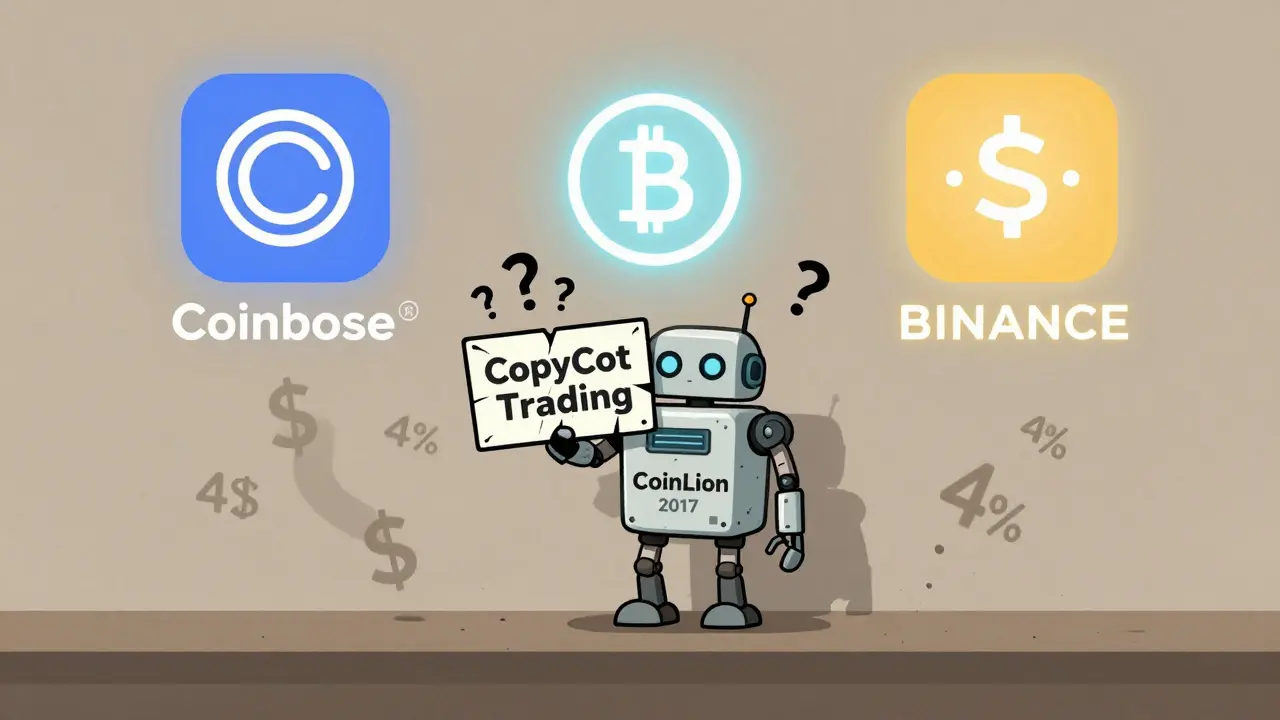
CoinLion launched back in August 2017, during the first big wave of crypto interest. It wasn’t just another exchange. It claimed to be the first platform to combine trading, portfolio tracking, and social features all in one place. Its big sell? A system called CopyCat Trading - a patented tool that lets you automatically copy trades from experienced traders, whether they’re humans or bots. You don’t have to guess what to buy. You just follow someone who’s already winning. It also says it offers downside protection on all trades. That means if a trade goes south, CoinLion claims it will step in and limit your losses. Sounds great. But here’s the catch: no one can tell you how that works. There’s no public explanation. No white paper. Just a promise. CoinLion supports trading on Ethereum (its utility token, CL, is an ERC-20 token) and integrates with Solana. It offers apps for iOS, Android, Windows, Mac, Linux, and Chromebook. That’s wide coverage. But if you can’t find the fee schedule, how do you know if it’s worth using?The CopyCat Trading System - Innovation or Illusion?
The CopyCat system is CoinLion’s crown jewel. Patented in the U.S. (patents US10915745, US11436850, US11631264), it’s real. The U.S. Patent Office doesn’t hand out patents for fake tech. So yes, the system exists. But does it work well? Users who’ve tried it say it’s not beginner-friendly. You need to understand trading basics before you can use CopyCat effectively. Pick the wrong trader to follow, and you’ll lose money just as fast as if you traded on your own. There’s no performance history shown publicly. No win rate stats. No risk ratings. Just a list of traders - some with names, some with handles - and a button to copy. Compare that to Binance or Coinbase, where you can see how a strategy performed over 30, 90, or 365 days. CoinLion gives you nothing. That’s a red flag. If you’re paying to copy trades, you deserve transparency. You don’t get it here.Fees: The Silent Killer
This is where CoinLion falls apart. As of February 2026, there is no public fee structure. No website page. No FAQ. No contact info that answers it. You sign up, you deposit, and then - boom - you get charged. That’s not how legitimate exchanges operate. Reviews.io shows 7 out of 18 verified users complained about “hidden fees.” That’s nearly 40%. One user said they were charged 4% to withdraw USD. That’s more than double what Kraken or Coinbase charge. Experts on YouTube call anything over 1% “way too much.” CoinLion might be charging that - or worse. There’s no tiered pricing. No maker-taker model. No volume discounts. Just silence. If a company won’t tell you how much it costs to use their service, that’s not confidence. That’s a warning.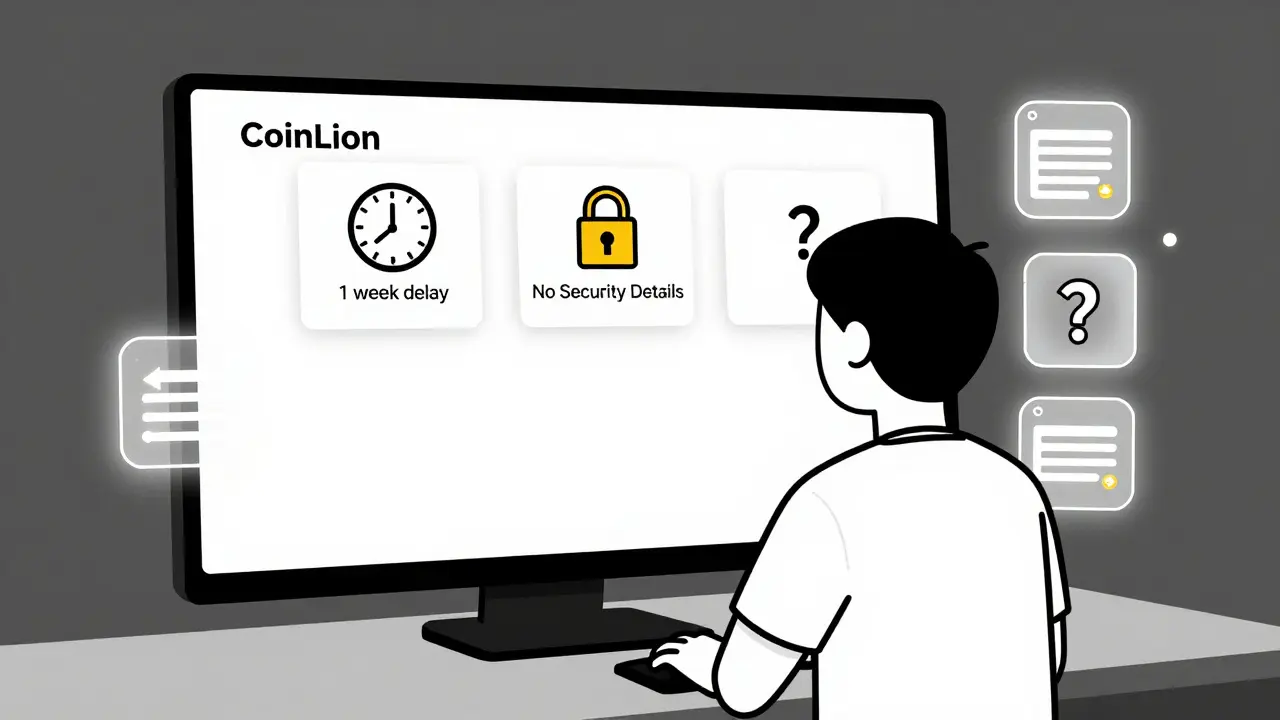
Security: Claims vs. Reality
CoinLion says, “Your crypto is your crypto.” That sounds reassuring. But what does that actually mean? Do they use cold storage? Multi-sig wallets? Do they have insurance? Is there an audit? Nothing. Zero details. They mention “advanced, multi-step checkpoints” for security. But checkpoints for what? Login? Withdrawals? API access? Again - no explanation. Meanwhile, top exchanges like Kraken and Coinbase publish their security practices. They list cold storage percentages, insurance partners, and third-party audits. CoinLion? Nothing. And here’s something even scarier: 11 out of 18 users on Reviews.io reported delays in withdrawals. Some waited over a week. That’s not normal. On Coinbase, withdrawals take minutes to hours. On Kraken, same. If you can’t get your money out quickly, it’s not yours. It’s theirs.User Experience: A Platform in Decline
CoinLion’s user base is tiny. As of early 2026, it has only 18 verified reviews on Reviews.io - with an average rating of 2.06 out of 5. That’s worse than “poor.” That’s “avoid.” The complaints are consistent:- 11 users: Withdrawal delays
- 9 users: Unresponsive customer support
- 7 users: Hidden or unexpected fees
- 3 users: Called the service “bad” outright

How CoinLion Compares to the Leaders
| Feature | CoinLion | Coinbase | Kraken | Binance |
|---|---|---|---|---|
| Trading Fees | Unknown (reports of 4%) | 0.5% - 1.5% | 0.16% - 0.26% | 0.1% - 0.04% |
| Withdrawal Speed | Days (11/18 reports) | Minutes - Hours | Minutes - Hours | Minutes - Hours |
| Supported Cryptocurrencies | Unknown | 250+ | 200+ | 500+ |
| Copy Trading | Yes (patented CopyCat) | No | No | Yes (Binance Copy Trading) |
| Downside Protection | Claimed, no details | No | No | No |
| User Reviews (Verified) | 18 (2.06/5) | 50,000+ (4.7/5) | 12,000+ (4.5/5) | 80,000+ (4.6/5) |
| Transparency | None | High | High | High |
Who Is CoinLion For?
Honestly? Almost no one. If you’re a beginner, you’ll get lost. No guides. No help. No clear pricing. If you’re an experienced trader, you’ll be annoyed by the lack of data, the hidden fees, and the slow withdrawals. If you care about security, CoinLion gives you nothing to verify. The only people who might consider it are those who don’t know any better - or those who believe marketing over facts. But in crypto, that’s a dangerous bet.The Bottom Line
CoinLion has real technology - the CopyCat system is patented, and the platform has broad device support. But none of that matters if you can’t trust it. No fee schedule. No withdrawal speed guarantees. No security details. No user base. No reviews. No transparency. In 2026, crypto exchanges are judged by three things: fees, speed, and safety. CoinLion fails all three. There are better options. Coinbase is simple. Kraken is cheap. Binance has everything. And if you want social trading, Binance’s Copy Trading is proven, transparent, and widely used. CoinLion? It feels like a relic from 2017 that never caught up.Is CoinLion safe to use?
Based on user reports and lack of transparency, CoinLion is not considered safe for most users. There is no public information about cold storage, insurance, audits, or security certifications. Over half of verified reviews mention withdrawal delays or hidden fees. Without verifiable security practices, your funds are at higher risk than on regulated exchanges like Coinbase or Kraken.
Does CoinLion have hidden fees?
Yes, according to 7 out of 18 verified user reviews on Reviews.io, CoinLion charges hidden fees. Users report unexpected charges of up to 4% on withdrawals, which is far above industry standards. The platform does not publish a fee schedule anywhere on its website, making it impossible to know what you’ll pay until after you’ve transacted.
Can I withdraw crypto instantly from CoinLion?
No, not reliably. Eleven out of 18 verified users reported delays in withdrawing crypto or USD, with some waiting over a week. This contradicts CoinLion’s claim of “instant withdrawals.” On top exchanges, withdrawals typically complete in minutes. CoinLion’s delays suggest poor liquidity or internal processing issues.
Is the CopyCat trading system worth using?
The CopyCat system is technically real - it’s patented. But without performance data, risk ratings, or trader history, you’re copying blindly. You can’t tell if the traders you follow are consistent winners or lucky one-time traders. On exchanges like Binance, you can see 30-day win rates. CoinLion gives you nothing. The risk outweighs the potential benefit.
Why isn’t CoinLion listed on NerdWallet or other top exchange lists?
NerdWallet’s 2026 review of top crypto exchanges did not include CoinLion because it fails key criteria: transparency, user volume, fee clarity, and customer support reliability. The platform has only 18 verified reviews with a 2.06 rating, compared to tens of thousands for Coinbase and Kraken. Without measurable trust signals, it doesn’t meet the standards for inclusion.