Crypto Exchanges Banned in India: Which Platforms Are Blocked and Why
 Sep, 6 2026
Imagine waking up to find your favorite trading app blocked on your phone. No error message explaining why, just a sudden inability to deposit rupees or withdraw funds. This isn't a hypothetical scenario for millions of Indian traders; it’s the reality created by the Financial Intelligence Unit-India (FIU-IND) crackdowns. As of late 2025, the landscape of crypto exchanges banned in India has shifted dramatically, turning what was once a free-for-all into a tightly regulated environment where only compliant platforms survive.
If you’re an investor in India, you need to know exactly which platforms are safe and which ones have been pushed to the sidelines. The confusion stems from a critical distinction: cryptocurrency itself is not illegal in India, but operating without proper regulatory registration is. This article breaks down who got banned, why it happened, and how you can protect your assets in this evolving market.
The Core Issue: It’s Not About Crypto, It’s About Compliance
Let’s clear up the biggest misconception right away. The Indian government hasn’t banned Bitcoin or Ethereum. You can still buy, sell, and hold them. What they did crack down on were exchanges that failed to register with the Financial Intelligence Unit-India (FIU-IND). The FIU is the country’s central agency for collecting and analyzing financial intelligence. Think of it as the watchdog ensuring that money moving through digital channels isn’t being used for money laundering or terror financing.
In January 2024, the FIU issued notices to several major international exchanges, demanding proof of their Virtual Digital Asset Service Provider (VDASP) status. When these platforms didn’t comply quickly enough, the Ministry of Electronics and Information Technology ordered Internet Service Providers (ISPs) to block their websites and apps within India. This wasn’t a blanket ban on foreign tech; it was a legal enforcement action against entities operating without a license.
Which Major Exchanges Faced Restrictions?
The list of restricted platforms reads like a "Who’s Who" of global crypto trading. While some have since registered and returned, others remain in a state of limbo or have fully exited the Indian retail market. Here is a breakdown of the most notable cases:
| Exchange | Status | Reason/Context |
|---|---|---|
| Binance | Restricted then Re-entered | Initially blocked for non-compliance. Paid penalties and registered with FIU-IND to resume operations. |
| KuCoin | Blocked | Failed to meet initial FIU registration deadlines. Users faced withdrawal hurdles during the block. |
| Bybit | Restricted | Similar to KuCoin, faced blocking orders due to lack of local entity presence and compliance delays. |
| OKX | Restricted then Re-entered | Temporarily unavailable. Completed compliance steps to regain access for Indian users. |
| Coinbase | Compliant | Proactively registered with FIU-IND before the major crackdowns, avoiding significant service disruptions. |
Notice the pattern? The exchanges that paid fines and completed paperwork came back. Those that dragged their feet saw their user base evaporate. For instance, when Binance was initially blocked, its daily active users in India plummeted, forcing many to migrate to domestic alternatives almost overnight.
Why Did the Crackdown Happen Now?
You might wonder why the government waited until 2023-2024 to take strict action. The answer lies in the maturation of India’s digital asset tax regime. In April 2022, India introduced a 30% flat tax on crypto gains and a 1% Tax Deducted at Source (TDS) on transactions. But here’s the catch: TDS applies primarily to transactions on registered Indian exchanges.
Non-compliant foreign exchanges couldn’t easily facilitate this TDS mechanism for Indian users because they lacked a local legal entity. By blocking these platforms, the government effectively closed a loophole. If you trade on a compliant platform, the tax is handled automatically. If you trade on a banned offshore exchange, you are responsible for calculating and filing taxes manually-a nightmare for most retail investors and a red flag for auditors.
Furthermore, the Enforcement Directorate (ED) began investigating several foreign exchanges for suspected money laundering. These investigations revealed complex layers of fund flows that were difficult to track without local oversight. The bans were partly a preventive measure to stop capital flight and ensure transparency in cross-border crypto transactions.
The Rise of Domestic Giants
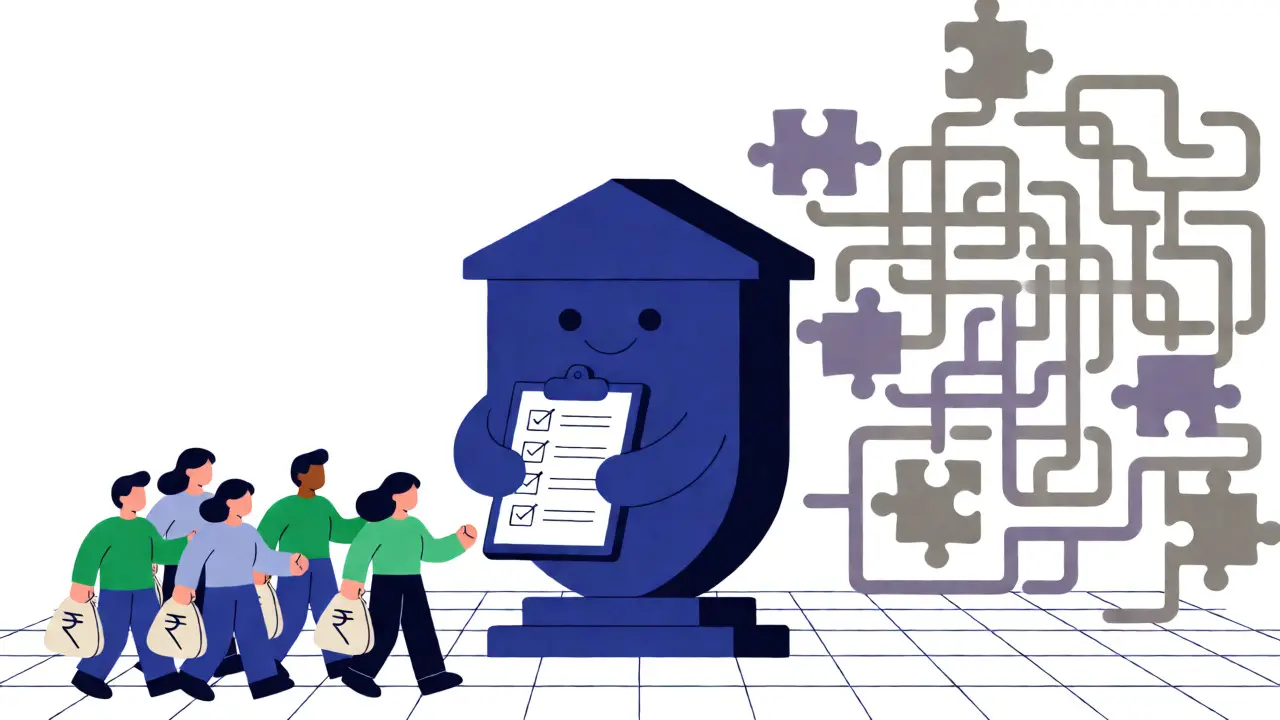
With the big international players sidelined, Indian exchanges seized the opportunity. Platforms like CoinDCX, WazirX, ZebPay, and Mudrex experienced explosive growth. CoinDCX alone reported deposit growth exceeding 2,000% in the months following the initial blocks on foreign competitors.
These domestic platforms had a distinct advantage: they were already built for Indian regulations. They offered INR deposits via UPI and IMPS, provided automatic TDS deduction, and generated tax reports compatible with Indian Income Tax filings. For the average trader, this convenience outweighed the slightly lower liquidity or fewer altcoin listings compared to global giants.
Mudrex, for example, onboarded over 10,000 new users within weeks of the foreign exchange blockades. They marketed themselves heavily on safety and compliance, appealing to parents and first-time investors who were wary of the regulatory uncertainty surrounding offshore platforms.
What Happens If You Use a Banned Exchange?
So, what if you still have funds sitting on a platform that’s currently blocked or non-compliant? You aren’t going to jail, but you face practical risks. First, banking restrictions kick in. Indian banks often view transfers to non-FIU registered exchanges as high-risk. Your INR deposits might get rejected, or worse, your bank account could be flagged for suspicious activity.
Second, you lose consumer protection. If a banned exchange freezes your account due to internal issues or hacks, you have little recourse through Indian courts. Since the platform doesn’t operate under Indian financial laws, you can’t easily file a grievance with local authorities. You’re essentially dealing with an offshore entity, which means legal battles could happen in jurisdictions far from home.
Third, tax compliance becomes manual. Without automated TDS, you must track every buy and sell transaction. If you miss reporting gains, you risk penalties under Section 158BA(7), which can reach up to 60% for undisclosed income. It’s a hassle not worth the potential savings on trading fees.

How to Check If Your Exchange Is Safe
Don’t guess-verify. Before you deposit another rupee, check the FIU-IND registry. The Financial Intelligence Unit publishes a list of registered VDASPs. If your exchange isn’t on that list, proceed with caution.
- Look for the FIU Registration Number: Compliant exchanges display this prominently on their website footer.
- Check for Local Entity Presence: Does the exchange have an office in India? Can you call a customer support number with an Indian area code?
- Verify TDS Handling: Ask support how they handle TDS. A compliant platform will deduct it automatically. A non-compliant one will say "you handle it."
Also, keep an eye on news regarding specific exchanges. Regulatory statuses can change. An exchange blocked today might register tomorrow. Conversely, a compliant exchange could face temporary technical blocks if their documentation expires. Staying informed is your best defense.
The Future: Will Bans Become Permanent?
It’s unlikely we’ll see permanent bans on all foreign exchanges. The goal isn’t isolationism; it’s integration. The government wants foreign players to compete on a level playing field with domestic firms. We’ve already seen Binance and OKX return after paying hefty fines and setting up local entities. This suggests that the door remains open for those willing to play by the rules.
However, the bar for entry is rising. New regulations under Section 285BAA of the Finance Bill require detailed transaction record-keeping with retrospective application. This means if an exchange registers today, they may need to expose past trades if they retained data. This increases the cost of doing business, potentially driving out smaller offshore players who can’t afford the compliance overhead.
For investors, this means a more stable, albeit less chaotic, market. You’ll likely see fewer exotic altcoins listed on Indian platforms compared to global ones, but you’ll also see fewer rug pulls and scams. The era of wild west crypto trading in India is ending, replaced by a structured, regulated financial instrument ecosystem.
Is cryptocurrency completely banned in India?
No, cryptocurrency is not banned in India. Trading, holding, and using crypto for payments are legal activities. However, exchanges must be registered with the FIU-IND to legally serve Indian customers. Unregistered exchanges face website blocks and banking restrictions.
Can I still use Binance in India?
Yes, Binance is operational in India again. After facing a temporary ban for non-compliance, Binance registered with the FIU-IND, paid applicable penalties, and resumed services for Indian users. Always verify their current FIU registration status on the official FIU website.
What happens to my money if an exchange gets banned?
If an exchange gets banned while you have funds there, you typically cannot make new deposits, but withdrawals are usually allowed for a limited period. It is crucial to withdraw your assets promptly to a compliant exchange or a personal wallet. Delays can lead to frozen accounts or longer processing times.
Do I have to pay tax on crypto traded on banned exchanges?
Yes, you still owe taxes on profits made from crypto, regardless of where you traded. On compliant exchanges, TDS is deducted automatically. On banned or offshore exchanges, you must calculate your gains and report them in your Income Tax Return manually. Failure to do so can result in penalties.
Which Indian exchanges are considered safest?
Exchanges like CoinDCX, WazirX, ZebPay, and Mudrex are generally considered safer because they are registered with the FIU-IND and comply with local KYC and anti-money laundering norms. However, always conduct your own due diligence, as regulatory compliance is a baseline requirement, not a guarantee of absolute security.