Daylight Protocol Review: Why This Is Not a Crypto Exchange (And A Major Red Flag)
 May, 31 2026
You might have stumbled upon the name Daylight Protocol, thinking it’s a new place to trade your Bitcoin or Ethereum. Maybe an ad promised you "true wealth generation" or a platform that stabilizes your portfolio. It sounds too good to be true, doesn’t it? Here is the hard truth right away: Daylight Protocol is not a cryptocurrency exchange. In fact, based on current market data from late 2025 and early 2026, it shows all the classic signs of a non-functional project or a potential scam.
If you are looking for a safe place to buy, sell, or swap digital assets, this is not it. This review will break down exactly what Daylight Protocol claims to be, why those claims fail basic economic tests, and how you can spot these red flags before losing money. We will also look at what legitimate alternatives actually exist for users in 2026 who want real security and liquidity.
The Core Misconception: It Is a Token, Not an Exchange
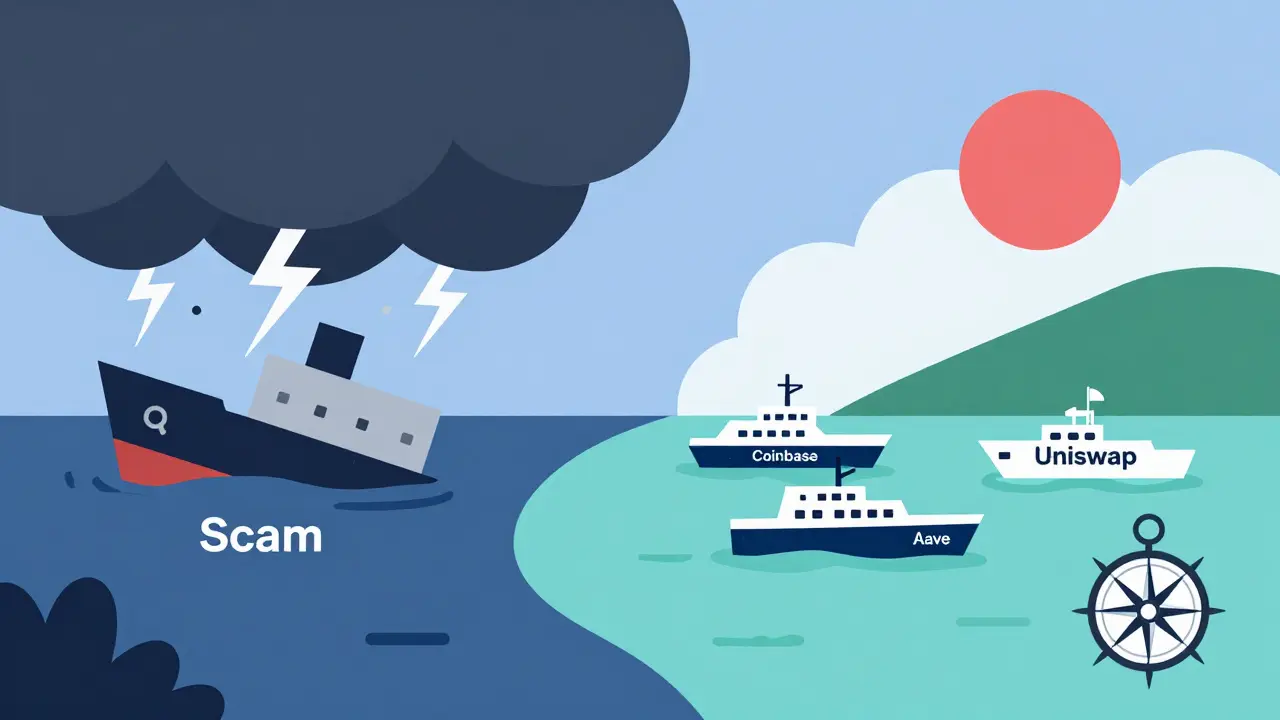
The biggest issue with searching for "Daylight Protocol crypto exchange" is that the entity itself is mislabeled. Daylight Protocol is a decentralized finance (DeFi) project centered around a specific token called $DAYL. It does not operate as a centralized exchange like Coinbase or Binance, nor does it function as a reputable decentralized exchange (DEX) like Uniswap.
The project markets itself as "DeFi's first ever TRUE WEALTH GENERATION protocol." The pitch is that holding the $DAYL token allows you to accumulate rewards over time while maintaining an "ever appreciating floor value." They claim to use "transaction finality" and "ecosystem utilities" to prevent price drops. On paper, this sounds like a dream scenario for investors tired of volatility. However, in the world of cryptocurrency, if a project guarantees appreciation, it is almost certainly lying.
The Data Doesn't Lie: Zero Liquidity and Volume
Let’s look at the numbers, because marketing slogans don’t pay bills. According to data tracked by CoinGecko and CoinCodex through October 2025, the metrics for Daylight Protocol are effectively zero. Here is what the data reveals about the health of the $DAYL token:
- Token Price: Approximately $0.001560
- 24-Hour Trading Volume: $0.00
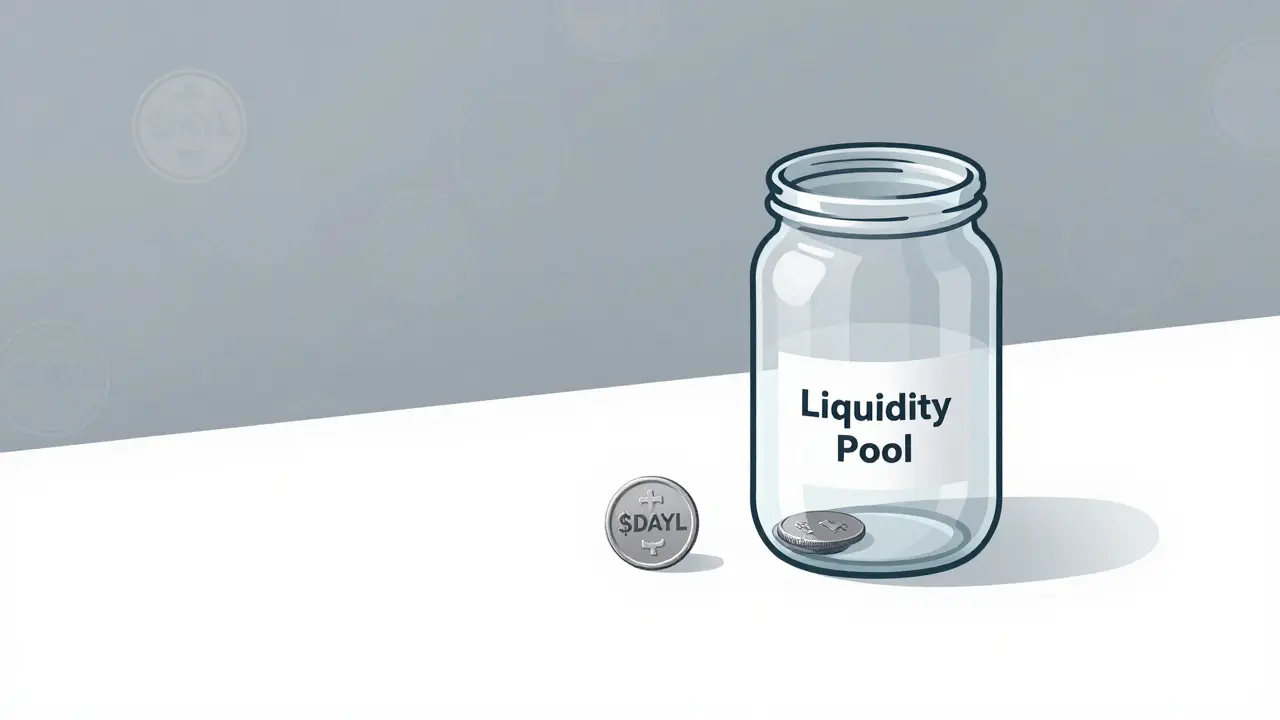
- Total Liquidity: $0.00
- Fully Diluted Valuation (FDV): ~$749.00
An FDV of less than one thousand dollars places this project among the absolute lowest-valued tokens in existence. For context, even obscure micro-cap tokens that are actively traded usually maintain an FDV above $1 million. A trading volume of $0.00 means no one is buying or selling this token. There is no market activity. Without liquidity, you cannot sell the token even if you wanted to. You are locked in.
| Metric | Daylight Protocol ($DAYL) | Legitimate Micro-Cap Example | Major DEX (e.g., Uniswap) |
|---|---|---|---|
| Fully Diluted Valuation (FDV) | $749.00 | $1,000,000+ | $Billions |
| 24h Trading Volume | $0.00 | $10,000+ | $1.2 Billion+ |
| Liquidity Pool | $0.00 | Significant reserves | Deep institutional liquidity |
| Technical Documentation | None verifiable | Public Whitepaper/Audit | Open Source Code |
Red Flags That Signal Danger
When evaluating any crypto project, especially one making bold financial promises, you need to check for specific warning signs. Daylight Protocol triggers nearly every single one of them.
1. Lack of Technical Transparency
Legitimate blockchain projects provide a whitepaper, smart contract addresses, and often undergo third-party audits. Daylight Protocol has no verifiable technical documentation. There is no public GitHub repository showing active development, no audit reports from firms like CertiK or OpenZeppelin, and no clear explanation of how the "ever appreciating floor value" is technically enforced. In blockchain technology, code is law. If you can’t see the code, you can’t trust the promise.
2. Contradiction of Economic Principles
The claim that a token has an "ever appreciating floor value" contradicts basic supply and demand mechanics. No legitimate asset maintains a guaranteed upward trajectory without external cash flow or regulatory backing. The Federal Reserve and other global regulators have explicitly warned against projects promising guaranteed returns or interest on stablecoins, labeling such practices as potentially illegal securities offerings or fraudulent schemes.
3. Absence from Reputable Platforms
If a project is truly innovative, the community talks about it. As of late 2025, there were no substantive discussions about Daylight Protocol on major forums like Reddit’s r/CryptoCurrency or Bitcointalk. Trustpilot had zero reviews. CoinGecko itself displayed a warning label advising users to "be careful if you are trading this token." Silence from the expert community is often louder than noise.
Regulatory Context in 2026
The regulatory landscape for digital assets has tightened significantly by 2026. Following warnings from the Bank Policy Institute and speeches by Federal Reserve officials in late 2025 regarding "stablecoins paying interest," authorities are cracking down on projects that mimic banking products without licenses.
Projects like Daylight Protocol, which promise wealth generation without clear utility or regulatory compliance, face increasing scrutiny. Many exchanges have begun delisting tokens that make unrealistic return promises. In Q3 2025 alone, major platforms removed dozens of such projects. This trend continues into 2026, meaning that even if Daylight Protocol were operational, it would likely struggle to find a compliant venue for trading.
What Should You Do Instead?
If your goal is to participate in decentralized finance or grow your crypto holdings, avoid projects with zero liquidity and opaque teams. Instead, focus on established protocols with transparent governance and verified security.
- Use Established Exchanges: Stick to regulated centralized exchanges (CEXs) like Coinbase, Kraken, or Binance for buying and selling. These platforms have legal teams, insurance funds, and customer support.
- Choose Audited DeFi Protocols: If you want to use DeFi, stick to blue-chip protocols like Uniswap, Aave, or Lido. These have years of battle-tested code and billions in total value locked (TVL).
- Verify Liquidity: Before investing in any small-cap token, check its liquidity pool on tools like DexScreener or CoinGecko. If the liquidity is under $100,000, the risk of a "rug pull" (where developers drain the funds) is extremely high.
- Check Contract Addresses: Always verify the token contract address on multiple sources. Scammers often create fake tokens with the same name as legitimate ones.
Conclusion: Stay Safe in the Wild West
Daylight Protocol is not a crypto exchange, and it is not a viable investment vehicle. It is a token with no liquidity, no volume, and no verifiable technology, wrapped in marketing language designed to exploit hope. In the complex world of cryptocurrency, skepticism is your best defense. Do not chase "guaranteed" returns. Do your own research, check the data, and stick to projects that respect transparency and economic reality.
Is Daylight Protocol a legitimate cryptocurrency exchange?
No, Daylight Protocol is not a cryptocurrency exchange. It is a decentralized finance (DeFi) project associated with the $DAYL token. It does not offer the services of a traditional exchange, such as order books, fiat on-ramps, or customer support.
Why is the trading volume for $DAYL zero?
A trading volume of zero indicates that there is no market activity for the token. This suggests the project is either abandoned, non-functional, or lacks any real user base. Without buyers and sellers, the token has no liquid market value.
Can I earn passive income with Daylight Protocol?
While the project claims to offer "wealth generation," the lack of liquidity and verifiable technology makes this impossible. Promises of guaranteed returns in crypto are major red flags for scams. Legitimate DeFi yields come from real usage fees, not artificial price floors.
How can I tell if a crypto project is a scam?
Look for these signs: zero or very low trading volume, no audited smart contracts, anonymous teams, promises of guaranteed profits, and absence from reputable tracking sites like CoinGecko or CoinMarketCap. If a project seems too good to be true, it usually is.
Where should I trade cryptocurrency safely in 2026?
For safety, use regulated centralized exchanges like Coinbase, Kraken, or Binance. For decentralized trading, use established DEXs like Uniswap or PancakeSwap, ensuring you connect to the official websites and verify contract addresses.