Futureswap Review: DeFi Perpetuals Trading on Ethereum & Arbitrum
 May, 17 2026
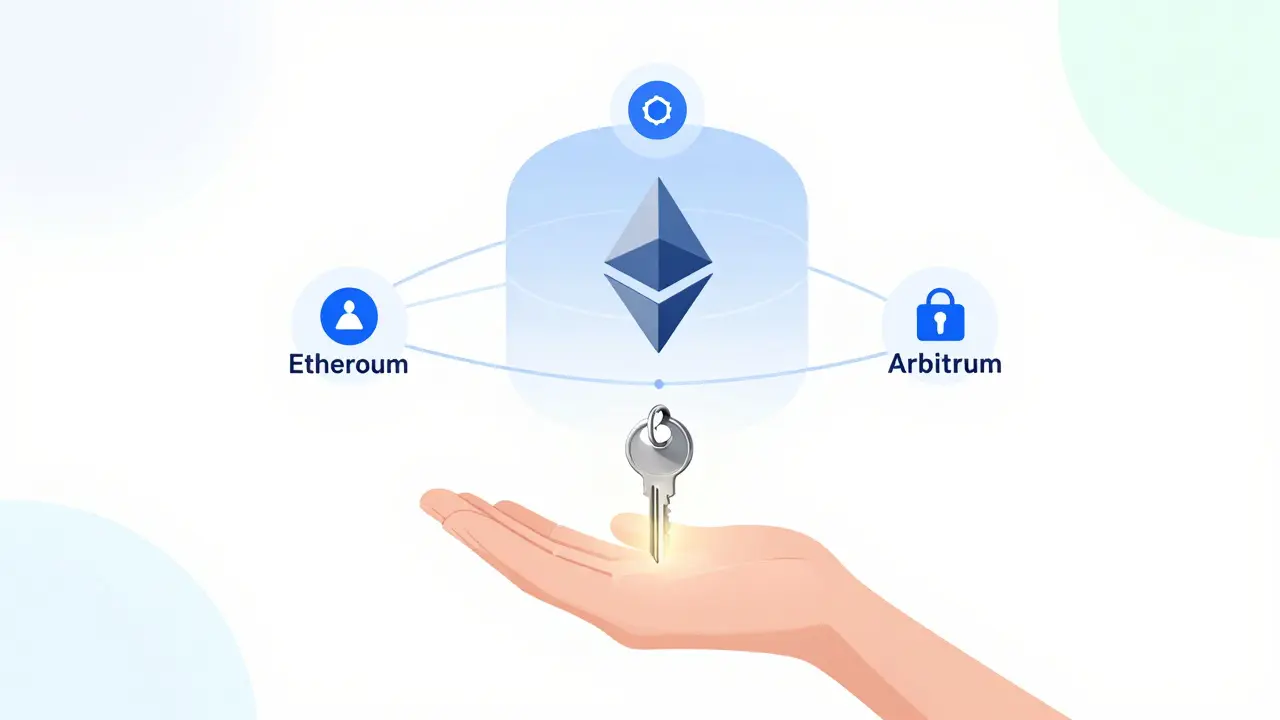
Trading perpetual futures in the world of centralized exchanges often feels like handing over your keys to a stranger. You deposit funds, trust their security, and hope for the best. Futureswap is a non-custodial decentralized finance (DeFi) protocol designed for trading perpetual futures contracts with leverage. It operates primarily on the Ethereum blockchain and has expanded to the Arbitrum network to offer lower fees and faster transactions. For traders who value self-custody but still want the power of leveraged derivatives, Futureswap presents a compelling alternative. But does it actually deliver on its promise of optimal execution without the centralization risks?
How Futureswap Works: The AMM Model
Unlike traditional order-book exchanges where buyers and sellers match orders directly, Futureswap uses an Automated Market Maker (AMM) algorithm. This means liquidity is provided by users who deposit assets into pools, and trades are executed against these pools using a mathematical formula. This model ensures that there is always liquidity available for trading, even during volatile market conditions.
The platform supports various ERC-20 trading pairings. When you place a trade, the system relies on a secure oracle network to validate asset prices. These oracles are critical because they prevent manipulation and ensure that large trades execute with minimal slippage. Slippage occurs when the price you expect differs from the price at which the trade executes; Futureswap’s design aims to keep this discrepancy as small as possible, protecting your capital efficiency.
Leverage Options and Trading Limits
One of the main draws for derivative traders is leverage. There is some confusion in the market regarding the maximum leverage offered by Futureswap. Some sources indicate up to 10x leverage, while others claim it goes up to 30x. In practice, the available leverage often depends on the specific trading pair and the current liquidity depth of the pool. Higher leverage increases potential profits but also amplifies losses. Traders should always check the real-time leverage limits displayed in the interface before entering a position, as these can change based on market conditions.
Fees and Cost Structure
Cost matters significantly in leveraged trading. Futureswap charges trading fees that vary depending on the network used. On Ethereum, gas fees can be high during peak times, making small trades expensive. This is why the expansion to Arbitrum is crucial-it offers Layer 2 scaling solutions that drastically reduce transaction costs. Additionally, there may be funding rates applied to perpetual contracts, which balance the long and short positions in the market. Always factor in both trading fees and potential funding payments when calculating your break-even point.
| Feature | Futureswap | Centralized Exchange (e.g., Binance) |
|---|---|---|
| Custody | Non-custodial (Self-custody) | Custodial (Exchange holds funds) |
| Network | Ethereum, Arbitrum | Proprietary servers |
| Leverage | Up to 10x-30x (varies) | Often up to 100x+ |
| KYC Required | No | Yes |
| Security Risk | Smart contract risk | Hack/Insolvency risk |

Security and Smart Contract Risks
Since Futureswap is a DeFi protocol, your funds are secured by smart contracts rather than a company’s bank accounts. This eliminates the risk of the exchange running away with your money or being hacked in the traditional sense. However, it introduces smart contract risk. If there is a bug in the code, exploiters could drain the liquidity pools. To mitigate this, reputable DeFi protocols undergo multiple independent security audits. While specific recent audit reports for Futureswap are not widely publicized in general search results, it is essential to verify the latest audit status on their official documentation or community channels before depositing significant capital.
User Experience and Interface
The interface of Futureswap is designed to be intuitive for both novice and experienced traders. It provides live pricing charts, order history, and portfolio management tools directly within the browser. You connect your wallet-such as MetaMask or WalletConnect-to start trading. There is no need to create an account or submit identity documents. This anonymity is a major advantage for privacy-conscious users. However, if you lose your private key or seed phrase, there is no customer support team to recover your funds. Self-custody means full responsibility.
The FST Token and Governance
Futureswap has a native token called FST (Futureswap Token). This token plays a role in the ecosystem, potentially offering fee discounts or governance rights. Community governance allows token holders to vote on proposals, such as adding new trading pairs or adjusting protocol parameters. This decentralizes decision-making and aligns the interests of the platform with its users. Participating in governance can be a way to influence the direction of the platform, but it requires active engagement and understanding of the proposal details.
Who Should Use Futureswap?
Futureswap is ideal for traders who prioritize control over their assets and want to avoid the regulatory hurdles of centralized exchanges. It suits those comfortable with connecting wallets and managing gas fees. If you are looking for ultra-high leverage (50x or more) or fiat on-ramps, a centralized exchange might be more convenient. However, for moderate leverage trading with enhanced security through self-custody, Futureswap offers a robust solution.
Potential Drawbacks
Despite its advantages, Futureswap is not without drawbacks. The reliance on oracles means that if the oracle feed fails or is manipulated, liquidations could occur unfairly. Liquidity depth can also be an issue for less popular trading pairs, leading to higher slippage. Additionally, the complexity of DeFi interfaces can be daunting for beginners. Unlike centralized platforms that offer hand-holding support, DeFi users must rely on documentation and community forums for help.
Is Futureswap safe to use?
Safety in DeFi depends on smart contract integrity. Futureswap uses non-custodial architecture, meaning you control your funds. However, you must trust the underlying code and oracles. Always verify recent security audits and start with small amounts to test the platform.
What is the maximum leverage on Futureswap?
Reports vary between 10x and 30x leverage. The actual limit depends on the specific trading pair and current liquidity conditions. Check the interface for real-time leverage caps before opening a position.
Does Futureswap require KYC?
No, Futureswap is a decentralized protocol and does not require Know Your Customer (KYC) verification. You only need a compatible cryptocurrency wallet to connect and trade.
Which networks does Futureswap support?
Futureswap operates on the Ethereum blockchain and the Arbitrum network. Arbitrum is recommended for lower transaction fees and faster execution speeds.
What happens if I lose my wallet password?
In a non-custodial system like Futureswap, there is no password reset option. If you lose access to your wallet’s private key or seed phrase, your funds are irretrievable. Always store your credentials securely offline.