How NFTs Prove Ownership and Authenticity: The Technical Reality
 Aug, 5 2026
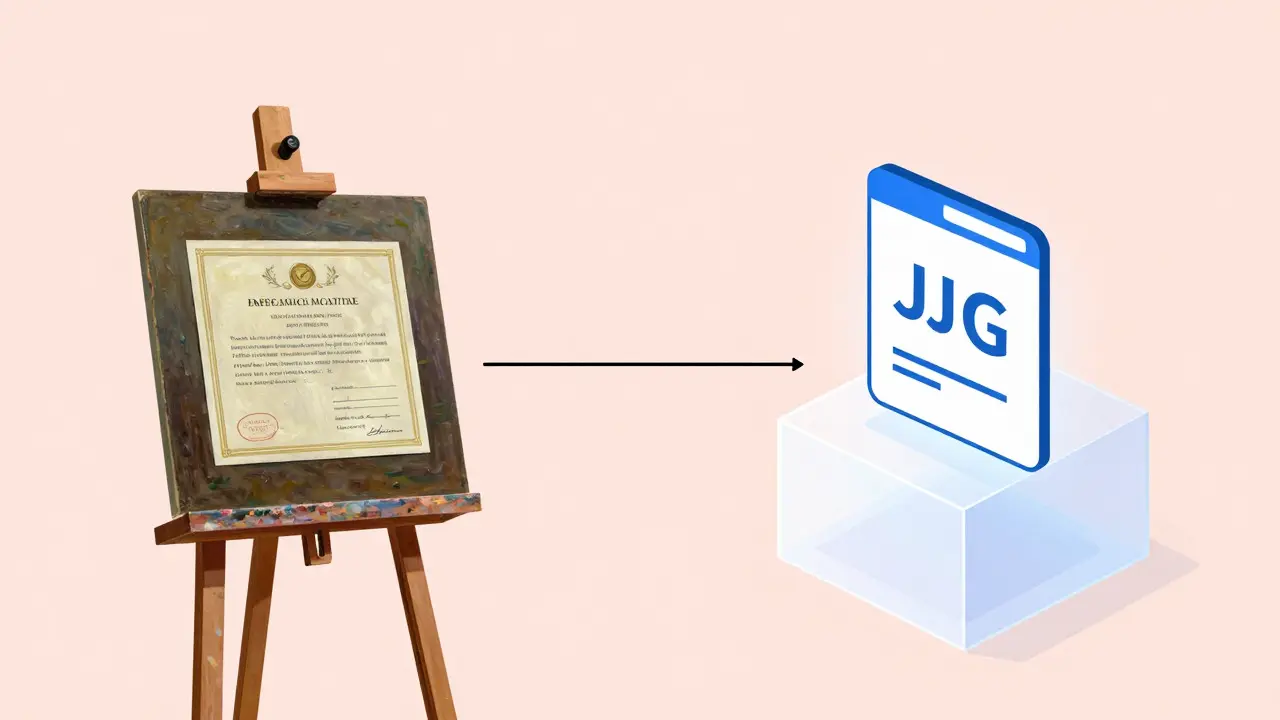
Imagine buying a rare painting. You get the canvas, but you also get a certificate of authenticity signed by the artist and a receipt showing every previous owner. Now imagine that painting is a JPEG file on your computer. Without a system to track it, anyone can copy it, sell it, or claim they made it. This was the problem with digital assets for decades. NFTs (Non-Fungible Tokens) are unique cryptographic tokens recorded on a blockchain that represent verifiable ownership of specific digital or physical items. They solve this problem by creating an unchangeable record of who owns what and where it came from.
But here is the catch: owning an NFT doesn't always mean you own the underlying file, and it certainly doesn't guarantee the art inside is genuine. Understanding how these tokens actually work requires looking past the hype at the code, the storage methods, and the legal gaps. Let’s break down exactly how the technology proves ownership and where it struggles with authenticity.
The Foundation: How Blockchain Records Ownership
At its core, an NFT is just a line of code on a distributed ledger. When we talk about blockchain is a decentralized, immutable database that records transactions across many computers so that any record cannot be altered retroactively without altering all subsequent blocks, we are talking about the engine that makes NFTs possible. Unlike traditional databases controlled by one company, a blockchain is shared among thousands of nodes. Once a transaction is confirmed, it is locked in forever.
This immutability is what provides proof of ownership. When you buy an NFT, the blockchain updates to show that your digital wallet address now holds that specific token ID. If you sell it, the record updates again. There is no central authority that can reverse this or delete your name from the list. As Dr. Michael Casey from MIT noted, NFTs solve the technical problem of digital provenance perfectly. The chain of custody is transparent and permanent.
However, this only proves who controls the token, not necessarily what the token represents. Think of it like holding a deed to a house. The deed proves you have the right to the property, but if the house burns down, the deed remains valid even though the asset is gone. In the world of NFTs, the "house" is often stored elsewhere, which leads us to the next critical component: metadata.
The Metadata Problem: Where the Art Actually Lives
Here is where most people get confused. The NFT itself does not contain the image, video, or music file. Storing a high-resolution image directly on the Ethereum blockchain would cost hundreds or thousands of dollars in gas fees and clog the network. Instead, the NFT contains a piece of data called metadata is information that describes other data, including details like title, creator, description, and a link to the actual media file.
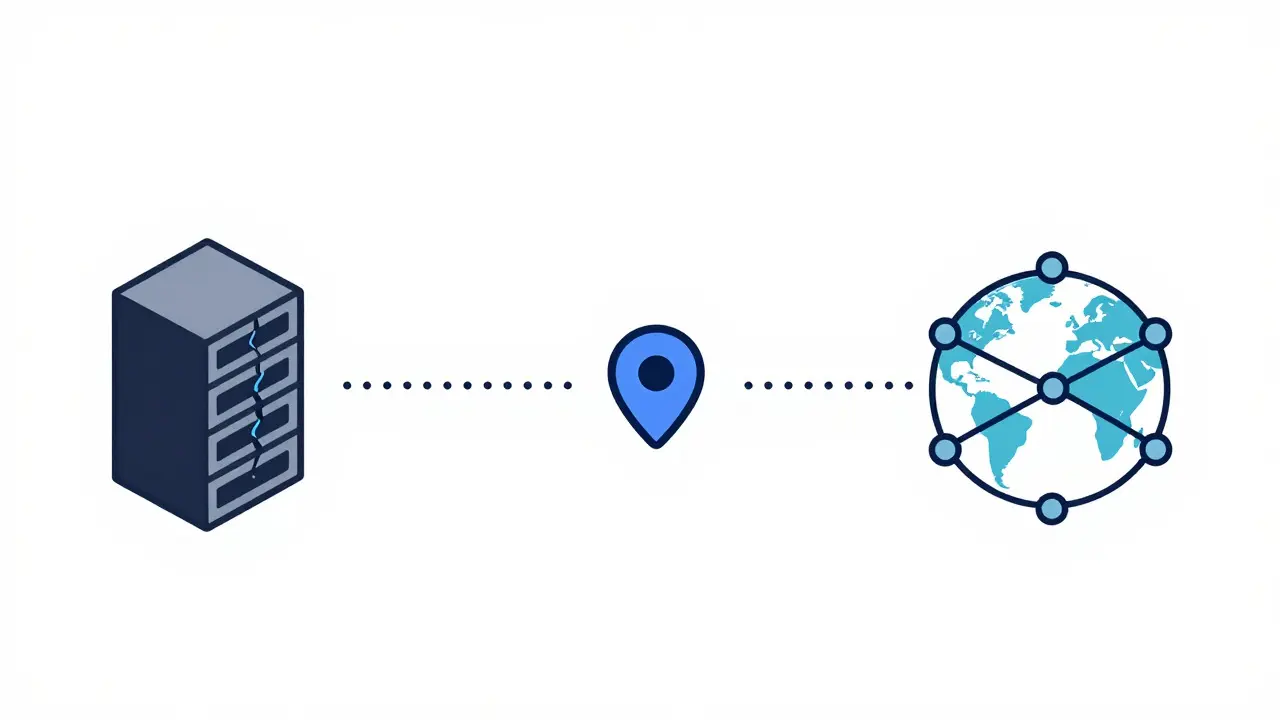
This metadata usually points to a URL where the actual file is hosted. For years, many projects hosted these files on centralized servers run by the creators. This creates a massive vulnerability. If the server goes offline, or the creator stops paying the hosting bill, the link breaks. You still own the NFT-the token is safe on the blockchain-but when you click on it, you see nothing. This happened to thousands of users in late 2023, leaving them with "empty" tokens.
To fix this, the industry moved toward decentralized storage solutions like IPFS (InterPlanetary File System) is a peer-to-peer hypermedia protocol designed to preserve and grow humanity's knowledge by making networks self-sufficient. With IPFS, the file is broken into chunks and stored across many different computers worldwide. Even if one computer fails, the file remains accessible via a unique content identifier (CID). Projects using IPFS provide much stronger authenticity guarantees because the asset cannot disappear due to a single server failure.
| Storage Type | Risk Level | Cost | Authenticity Guarantee |
|---|---|---|---|
| Centralized Server (e.g., AWS) | High (Server can go down) | Low | Weak (Dependent on creator) |
| IPFS (Decentralized) | Medium (Requires pinning) | Medium | Strong (Distributed copies) |
| On-Chain Storage | Very Low (Permanent) | Very High | Maximum (Part of the token) |
ERC-721 and the Rules of Uniqueness
Not all tokens are created equal. Bitcoin is fungible; one Bitcoin is identical to another. NFTs are non-fungible, meaning each one is distinct. This distinction is enforced by technical standards. The most common standard is ERC-721 is the first technical specification for creating non-fungible tokens on the Ethereum blockchain, defining how ownership and transfer functions must operate, proposed by Dieter Shirley in 2018.
ERC-721 sets strict rules. It requires that each token has a unique ID and that transfers are tracked individually. This prevents the "double-spending" problem where someone could try to sell the same digital item to two different people. The standard ensures that when Token #123 is transferred from Wallet A to Wallet B, the blockchain mathematically verifies the move and updates the ownership record instantly.
Later, the ERC-1155 standard was introduced to handle bulk transfers and mixed assets (like games with both unique swords and common gold coins). While more efficient, ERC-721 remains the gold standard for art and collectibles because its simplicity makes verification easier for buyers. When you check an NFT on Etherscan, you are seeing the result of these smart contract functions executing correctly.
Ownership vs. Authenticity: The Critical Divide
This is the most important concept to grasp. Proof of ownership and proof of authenticity are two different things, and NFTs excel at the former while struggling with the latter.
- Proof of Ownership: This is cryptographic. It proves that the private key associated with your wallet controls the token. If you sign a transaction with your private key, the blockchain accepts it as valid. This is nearly foolproof.
- Proof of Authenticity: This is social and contextual. It proves that the token was created by the person it claims to be from and that it represents the real thing. This is where scams happen.
You can cryptographically prove you own an NFT, but without external verification, you might own a fake. For example, if someone mints a JPEG of Banksy’s work as an NFT, the blockchain will happily record their ownership. It won’t stop them. The blockchain doesn’t know who Banksy is. It only knows that Address X owns Token Y.
To bridge this gap, platforms rely on reputation systems and verified creator badges. Marketplaces like OpenSea use algorithms to detect known scam contracts, but they aren’t perfect. As blockchain expert Sarah Chen pointed out, "Without authenticity verification, you cannot be certain the NFT was actually created by the claimed artist." This means buyers must still do their homework, checking the creator’s history and social media presence, just as they would with any online purchase.

Legal Recognition and Real-World Assets
Does owning an NFT give you legal rights? The answer is complicated. In most jurisdictions, blockchain records are not automatically recognized as legal title deeds. While Wyoming passed laws recognizing digital assets as property, the rest of the world is lagging behind.
A 2024 report by the World Economic Forum highlighted that while the technology provides robust cryptographic proof of possession, it lacks automatic legal recognition. This creates a "dangerous illusion of ownership," especially for NFTs tied to real-world assets like real estate or luxury goods. If you buy an NFT representing a physical watch, you need a separate legal contract stating that the token entitles you to receive the watch. The blockchain alone cannot enforce this in a court of law.
However, trends are shifting. The EU’s MiCA framework and new ISO standards (ISO/IEC 30173:2024) are beginning to establish global norms for NFT metadata and identity verification. These regulations aim to link blockchain records with legally recognized identities, making NFTs more enforceable over time.
Practical Steps to Verify an NFT
If you are looking to buy or create an NFT, here is how you ensure you are dealing with a legitimate asset:
- Check the Contract Address: Never trust the URL alone. Go to a blockchain explorer like Etherscan and paste the contract address. Verify that the total supply matches what is advertised.
- Inspect the Metadata Link: Look at the token URI. Does it point to an IPFS hash (starting with ipfs://) or a centralized website? IPFS is safer for long-term preservation.
- Verify Creator Reputation: Check the creator’s wallet history. Have they launched successful projects before? Are they active on Twitter/Discord? Scammers often use brand-new wallets.
- Use Verification Tools: Services like BlockVerify can scan contracts for malicious code or hidden royalties that drain funds.
Remember, the technology is sound, but human error and fraud are still prevalent. Always treat an NFT purchase like any other high-value investment: verify, then transact.
Does buying an NFT mean I own the copyright to the image?
Generally, no. Buying an NFT usually grants you ownership of the token itself, not the intellectual property (IP) rights to the underlying artwork. Unless the creator explicitly transfers the copyright in a smart contract or legal agreement, they retain the right to reproduce and sell the image. Some collections, like Bored Ape Yacht Club, have granted commercial rights to holders, but this is the exception, not the rule.
Can an NFT be stolen?
Yes, but rarely through hacking the blockchain itself. Most thefts occur due to user error, such as signing a malicious transaction that gives a scammer access to your wallet, or losing your private keys. Phishing attacks and compromised marketplaces are the biggest risks. Using hardware wallets and verifying URLs carefully significantly reduces this risk.
What happens if the marketplace where I bought my NFT shuts down?
You still own the NFT. Because the ownership record exists on the blockchain (like Ethereum), not on the marketplace’s server, your token remains in your wallet. You can transfer it to another marketplace or keep it in your wallet indefinitely. However, if the marketplace held the actual media file on a centralized server, you might lose access to viewing the image unless it was also pinned to IPFS.
Are NFTs environmentally friendly?
It depends on the blockchain. Ethereum, which hosts the majority of NFTs, switched from Proof of Work to Proof of Stake in 2022, reducing its energy consumption by over 99%. Other chains like Solana and Polygon are also energy-efficient. Older blockchains that still use Proof of Work remain energy-intensive, but the industry trend is heavily toward low-energy consensus mechanisms.
How do I know if an NFT project is a scam?
Red flags include anonymous teams with no track record, promises of guaranteed financial returns, and pressure to buy quickly. Always check the contract address on a verifier tool, look for community engagement on Discord/Twitter, and see if the liquidity is locked. If a project seems too good to be true, it almost always is.