Legal Status of Cryptocurrencies in Iran: Rules, Restrictions, and Real-World Impact
 Mar, 9 2026
Iran doesn’t ban cryptocurrency - it controls it. While many countries struggle to decide whether crypto is a threat or an opportunity, Iran has made its choice: use it, but only on government terms. Since 2019, mining and trading have been legal, but not free. Every step - from the electricity you use to the coins you trade - is monitored, taxed, and redirected into state coffers. This isn’t about stopping crypto. It’s about owning it.
Miners Are Licensed, Not Free
If you want to mine Bitcoin or Ethereum in Iran, you don’t just plug in a rig and turn it on. You apply for a license from the Ministry of Industry, Mine and Trade. And it’s not just paperwork. The government sets strict rules: you must use only approved hardware, pay electricity rates tied to export prices (not the cheap, subsidized rates locals get), and your power consumption is capped to protect the national grid. In 2025, over 1,000 legal mining licenses were issued, but experts say 95% of mining still happens illegally. Why? Because the official rates are brutal. A miner paying export-priced electricity might lose money unless Bitcoin hits $70,000 or higher. Still, thousands keep going - because the alternative is worse.
Trading Is Legal, But Only Through the State
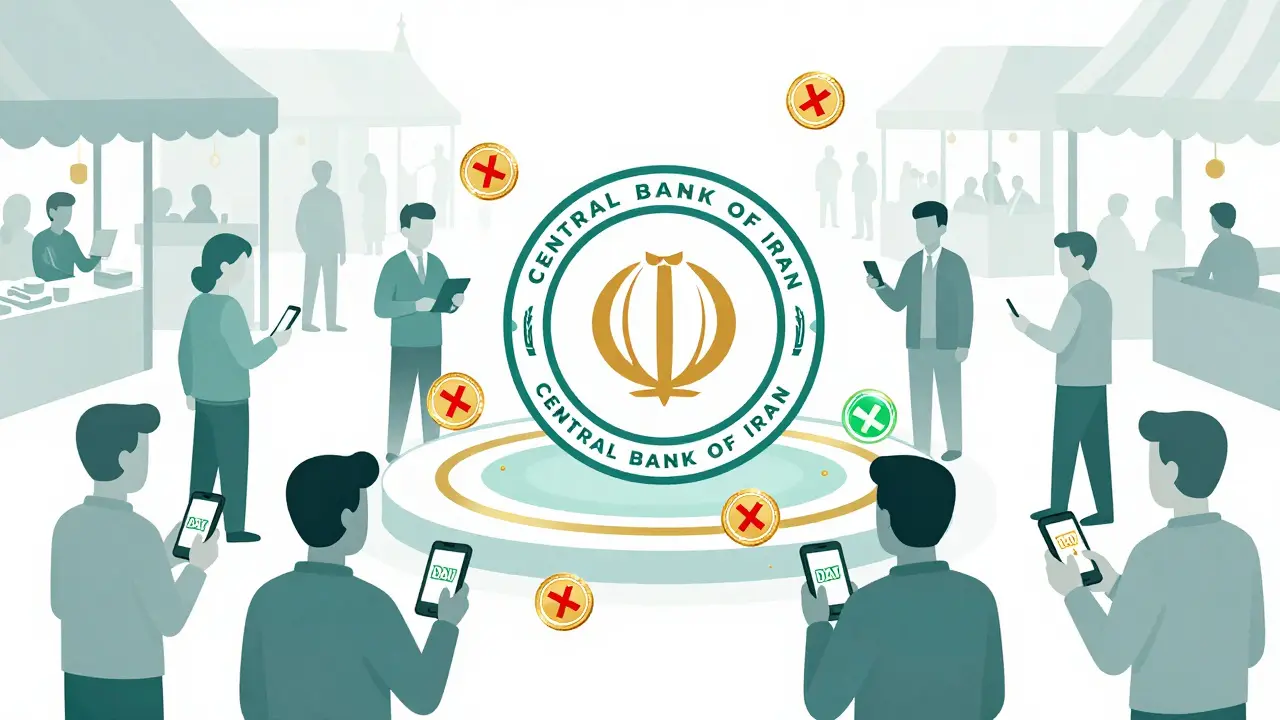
Buying and selling crypto isn’t illegal in Iran. But you can’t do it on Binance or Coinbase. All trading must go through platforms approved by the Central Bank of Iran (CBI). The CBI, under Governor Mohammadreza Farzin, became the sole regulator of digital currency in January 2025. That means every transaction - whether you’re buying USDT with rials or selling Bitcoin for cash - leaves a digital trail the government can see in real time. Even peer-to-peer trades must be routed through CBI-monitored channels. There’s no anonymity. No off-ramps. No escape.
The State Owns Your Mined Coins
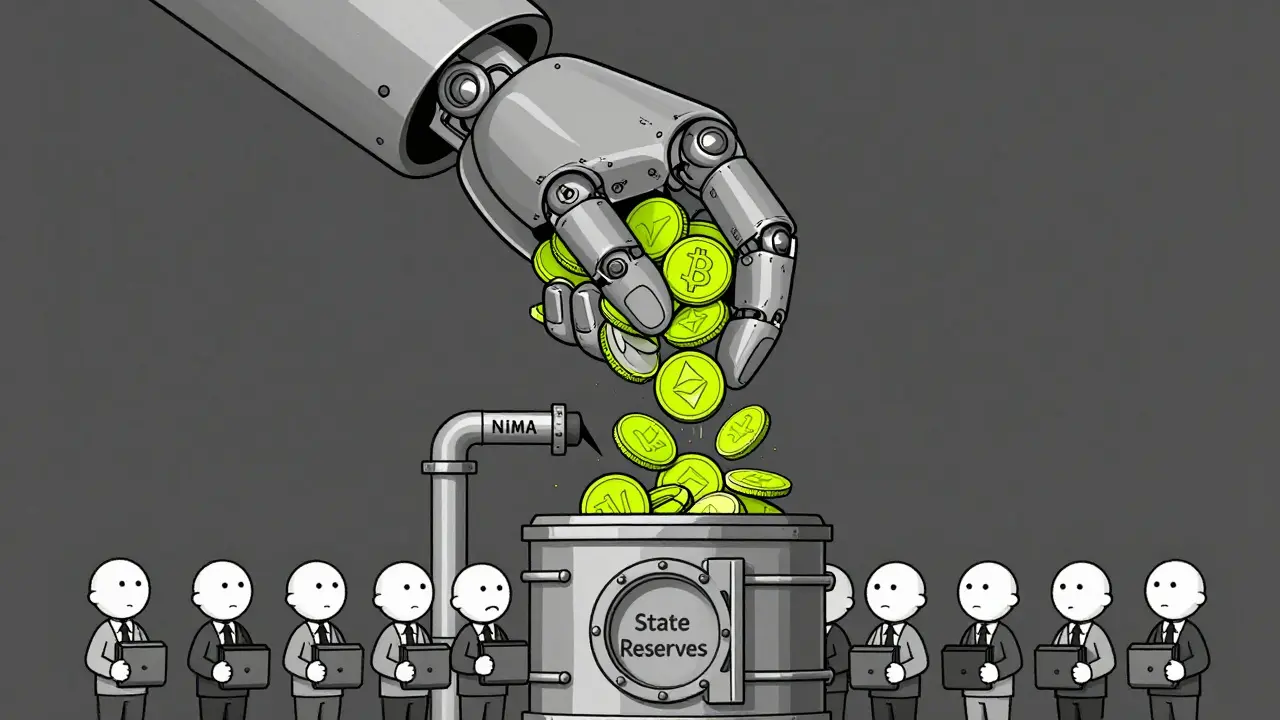
Here’s where it gets extreme: if you’re a legal miner, you’re not allowed to keep what you mine. All mined cryptocurrency must be sold to the Central Bank of Iran through the National Iranian Money Changer Association (NIMA). That’s right - your Bitcoin, Ethereum, or Litecoin doesn’t go into your wallet. It goes straight to the state. The government then converts it into rials or uses it for international trade. This isn’t a tax. It’s confiscation with paperwork. The CBI uses these funds to bolster foreign reserves and bypass sanctions. In 2025 alone, Iran’s total cryptocurrency flows hit $3.7 billion between January and July - but most of that money never entered private hands.
Capital Gains Tax Is Now Real
In August 2025, Iran introduced its first capital gains tax on cryptocurrency. It’s not just a warning - it’s enforced. Profits from crypto trading are now taxed the same way as gold, real estate, or forex speculation. Traders must report gains quarterly and pay up to 20% depending on income brackets. The tax applies to everyone - individuals, businesses, even informal traders. The government started with a phased rollout in Q3 2025, but by December, enforcement was fully active. If you made $5,000 in crypto profits last year, you owe taxes. And the CBI knows exactly how much you made.
Why USDT Got Frozen - And What Replaced It
In July 2025, Tether froze hundreds of Iranian crypto addresses linked to sanctions violations. Overnight, millions in USDT became unusable. Panic spread. But Iran didn’t shut down. It adapted. Exchanges, influencers, and government channels pushed users to swap USDT for DAI - a stablecoin built on the Polygon network. Why Polygon? Because it’s decentralized enough to avoid direct U.S. control, but still stable enough for everyday use. Within weeks, DAI became Iran’s new default stablecoin. This wasn’t just a workaround - it was a strategic pivot. Iran now has a crypto ecosystem that’s less dependent on Western financial systems, even if it means relying on a blockchain that’s not officially sanctioned.
Enforcement Is Harsh - And Everywhere
The government isn’t just regulating - it’s hunting. In 2025, authorities dismantled over 100 illegal mining farms and seized more than 250,000 unlicensed mining devices. A public reporting system lets citizens tip off neighbors running rigs in garages or basements. The Ministry of Energy even installed smart meters to detect abnormal power spikes. If your electricity bill suddenly spikes in winter, you might get a visit. Fines are steep. Equipment is confiscated. And repeat offenders face jail time. Yet, despite this crackdown, illegal mining still dominates. Why? Because the state’s rules are too expensive, too slow, and too controlling for most people.
Why Iranians Still Use Crypto - Even With All the Rules
Iran’s inflation rate hit 50% in 2024. The rial lost over 70% of its value in five years. For ordinary Iranians, crypto isn’t a gamble - it’s survival. People use it to buy medicine, send money to family abroad, or pay for online courses. Even with all the restrictions, crypto is the only reliable way to hold value. Nobitex, Iran’s biggest exchange, still handles 87% of local crypto volume. People don’t use it to get rich. They use it to not go broke. And the government knows this. That’s why they don’t shut it down. They just take a cut.
The Bigger Picture: Crypto as a Sanctions Shield
Iran isn’t using crypto just for its people. It’s using it to fight sanctions. Reports confirm Iran and Russia are working on a gold-backed stablecoin for cross-border trade. The goal? Bypass the dollar, avoid SWIFT, and trade oil, gas, and weapons without Western interference. Crypto isn’t just a financial tool here - it’s a geopolitical weapon. The CBI uses mined coins to pay for imports. Iranian companies use crypto to buy drone parts, medical equipment, and industrial machinery. The state doesn’t care if you’re a miner or a trader. As long as the system feeds the state’s goals, it stays open.
What’s Next? More Control, Not Less
The trend is clear: Iran is tightening its grip, not loosening it. More licenses. More taxes. More surveillance. More control over every transaction. By 2026, the CBI is expected to launch its own digital currency - a state-backed token that could replace crypto altogether. Until then, crypto remains a necessary evil: a lifeline for citizens and a tool for the state. You can’t avoid it. You can’t ignore it. And you can’t own it without permission.
Is cryptocurrency legal in Iran?
Yes, but only under strict government control. Mining and trading are legal if you have a license from the Central Bank of Iran (CBI) and follow all regulations. Unlicensed mining or trading is illegal and subject to seizure and fines.
Can I mine cryptocurrency in Iran without a license?
No. All mining requires a license from the Ministry of Industry, Mine and Trade. Unlicensed miners face equipment seizures, heavy fines, and possible criminal charges. Despite this, an estimated 95% of mining still happens illegally because official rules make it unprofitable for most.
Do I have to pay taxes on crypto profits in Iran?
Yes. Since August 2025, Iran imposes a capital gains tax on cryptocurrency trading, treating it the same as gold, real estate, or forex. Profits must be reported and taxed at rates up to 20%, depending on income level. The CBI tracks all transactions, so evasion is nearly impossible.
Can I use Bitcoin to send money out of Iran?
Technically, yes - but it’s risky. All crypto transactions must go through CBI-approved channels. Sending crypto abroad without declaring it may trigger sanctions investigations. Most Iranians use crypto to preserve value locally, not to move money internationally. Cross-border transfers are closely monitored.
Why do Iranians use DAI instead of USDT?
After Tether froze Iranian USDT addresses in July 2025 over sanctions concerns, Iranian exchanges and users switched to DAI, a decentralized stablecoin on the Polygon network. DAI isn’t controlled by a U.S. company, making it harder for Western entities to freeze. It’s now the most trusted stablecoin in Iran for daily transactions.
Does the Iranian government profit from cryptocurrency?
Yes - significantly. Legal miners must sell all mined coins to the Central Bank of Iran through NIMA. The government converts these into rials or uses them for international trade. In 2025, Iran processed over $3.7 billion in crypto flows, with most of that value flowing into state coffers. Crypto isn’t just tolerated - it’s a revenue stream.