MiCA Deadline Dec 30, 2024: What Crypto Users Must Know
 Nov, 10 2026
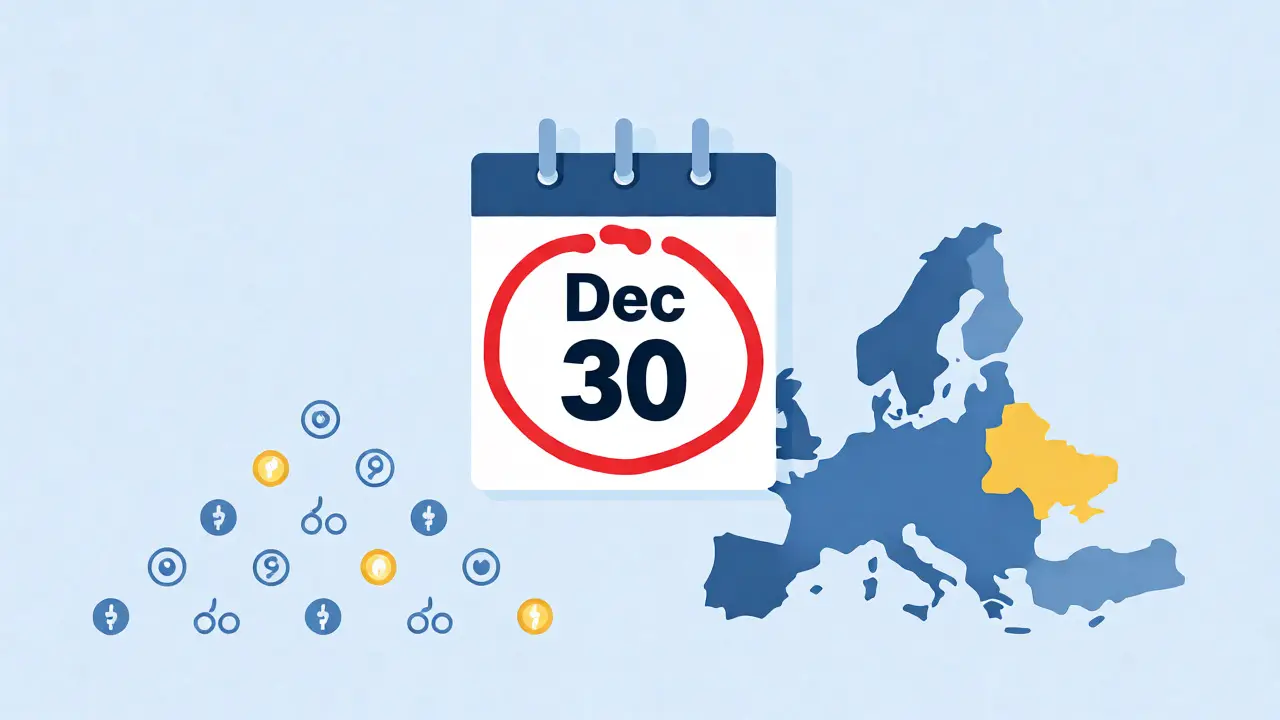
You might have heard the term "MiCA" thrown around in crypto Twitter or read about it in financial news, but did you realize that December 30, 2024, wasn't just another date on the calendar? It was the moment the European Union officially closed the Wild West era for crypto assets and opened a new chapter of strict regulatory oversight. If you hold Bitcoin, trade Ethereum, or use stablecoins while living in Europe-or even if you're an American investor watching global markets-this deadline changed how you interact with digital money.
The confusion often stems from the fact that MiCA (Markets in Crypto-Assets) didn't hit everyone at once. It rolled out in phases. But by the end of 2024, the final piece clicked into place: full licensing requirements for service providers and market abuse rules. This article breaks down exactly what happened, why it matters to your wallet, and what you need to do now that we are well past that critical threshold.
Why December 30, 2024, Was Different
Most people think regulations are black-and-white switches. You flip them, and everything changes overnight. MiCA worked differently. The law came into force in June 2023, but the heavy lifting happened later. By June 30, 2024, the rules for stablecoins were already live. That meant any company issuing a token pegged to the Euro or Dollar had to prove they actually had the cash in the bank. No more promises; show us the reserves.
Then came December 30, 2024. This date marked the end of the grace period for Crypto Asset Service Providers (CASPs). These are the exchanges, wallets, and custodians you use every day. Before this date, many operated under temporary national licenses or grandfathering clauses. After December 30, they needed a formal MiCA license issued by a National Competent Authority (NCA) in one of the 27 EU member states. Without it, they couldn't legally offer services across the bloc using the passporting system.
This shift created a clear divide. Legitimate businesses scrambled to get compliant. Others decided the cost of compliance was too high and pulled out of the EU entirely. For users, this meant fewer choices but safer platforms. You weren't just trusting a website anymore; you were trusting a regulated entity subject to audits and consumer protection laws similar to traditional banks.
The Three Buckets of Crypto Under MiCA
MiCA doesn't treat all tokens the same. It sorts them into three distinct categories, each with its own rulebook. Understanding which bucket your holdings fall into helps you understand your risk profile.
| Token Type | Definition | Key Requirement | Who Regulates It? |
|---|---|---|---|
| E-Money Tokens (EMTs) | Tokens pegged to a single fiat currency (e.g., EURC). | 1:1 reserve backing; redemption rights. | Banking/E-money regulators. |
| Asset-Referenced Tokens (ARTs) | Tokens backed by a basket of assets (e.g., commodities, currencies). | Reserve management; whitepaper disclosure. | ESMA / NCAs. |
| Other Crypto Assets | Bitcoin, Ethereum, utility tokens, NFTs. | CASP licensing for trading/custody; no issuer license needed. | National Competent Authorities (NCAs). |
The biggest headache fell on stablecoin issuers. If you used USDT (Tether) or USDC before late 2024, you might have noticed some platforms restricting these pairs. Why? Because many legacy stablecoins struggled to meet the strict transparency and reserve audit standards required for EMTs and ARTs. Platforms had to delist non-compliant coins or restrict them to "sell-only" modes so users could exit positions without buying more.
What Happened to Your Exchange?
If you traded on a major exchange like Coinbase, Kraken, or Binance, you likely saw interface changes or support tickets popping up around early 2025. This wasn't a glitch. It was compliance in action. Exchanges had to verify that their partners and liquidity providers were also MiCA-compliant.
The European Securities and Markets Authority (ESMA) stepped in hard after the deadline. In January 2025, they mandated that CASPs must restrict or delist non-compliant stablecoins by March 31, 2025. They gave firms a short window to clean house. This meant if your favorite exchange hadn't secured its MiCA license by the end of 2024, it faced two choices: stop serving EU customers or rush through the application process, which often took months.
Many smaller exchanges chose the first option. They geofenced their services, blocking IP addresses from EU countries. Larger players invested heavily in legal teams to secure licenses in jurisdictions like Malta, France, or Germany. Once licensed in one country, they could "passport" their services to the other 26 nations. This consolidation reduced competition but raised the barrier to entry for shady operators.
Consumer Protections You Didn't Ask For (But Needed)
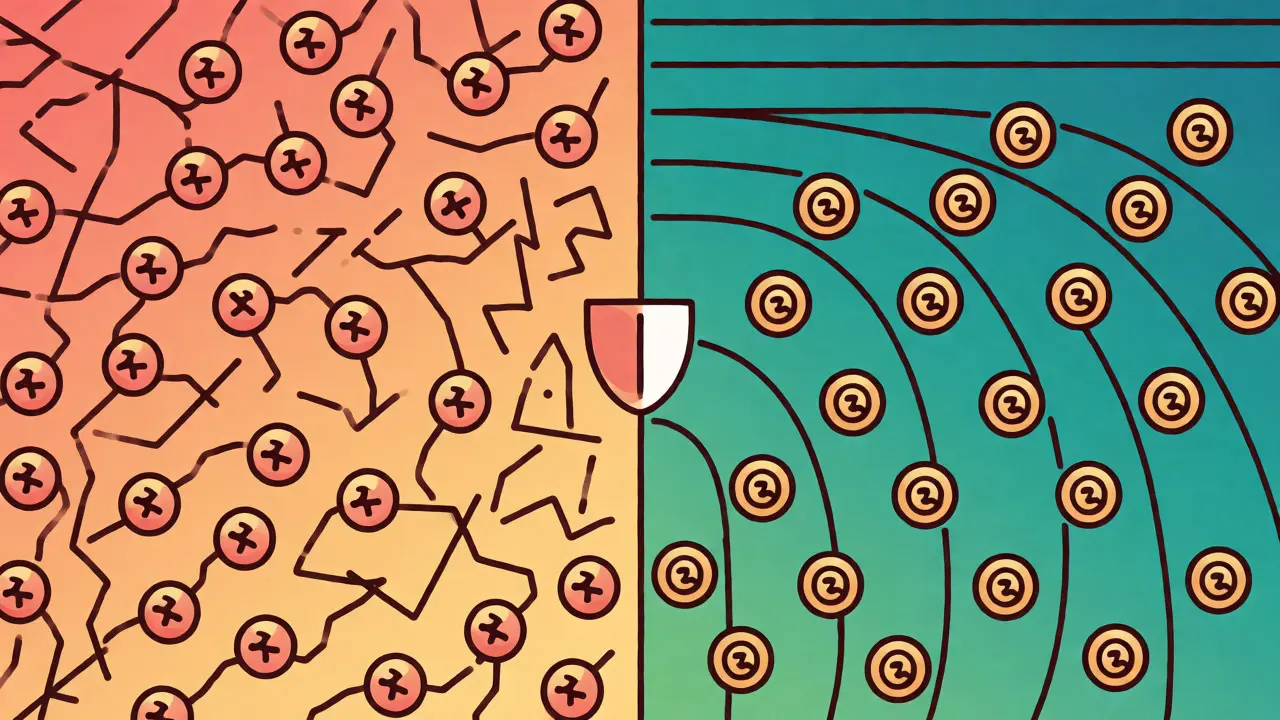
Before MiCA, if an exchange collapsed-as we saw with FTX-you were often left holding worthless IOUs. There was no guarantee your Bitcoin was actually stored in a cold wallet. MiCA introduced mandatory segregation of client assets. This means your crypto is kept separate from the exchange's own balance sheet. If the company goes bankrupt, creditors can't touch your funds.
Another key change involved marketing. Crypto companies can no longer make vague promises about "guaranteed returns" or "zero risk." They must provide a detailed whitepaper for any token they issue, disclosing risks, technology, and governance structures. If a project fails to deliver on its whitepaper claims, consumers have clearer legal grounds to complain.
Market abuse rules also tightened. Insider trading and market manipulation in crypto are now treated similarly to stocks. If a CEO buys their own token right before a positive announcement, regulators can investigate. This levels the playing field for retail investors who previously felt like they were gambling against insiders.
The Global Ripple Effect
You don't need to live in Paris or Berlin to feel the impact. MiCA set a global standard. When the EU-the world's largest unified economic bloc-decided how to regulate crypto, other countries paid attention. The UK, Singapore, and even parts of the US looked at MiCA as a template. Major global providers adjusted their operations worldwide to accommodate MiCA requirements because it was cheaper to build one compliant platform than two separate ones.
For instance, Tether and Circle (issuer of USDC) revamped their reserve reporting globally to satisfy EU auditors. This improved transparency for everyone, not just Europeans. If you buy stablecoins today, you benefit from the stricter auditing practices forced by MiCA, regardless of where you live.

Common Pitfalls and How to Avoid Them
Even with clear rules, mistakes happen. Here are the most common issues users faced during the transition:
- Ignoring Delisting Notices: Many users ignored emails saying, "This token will be delisted on [Date]." They woke up to find their assets frozen or converted to EUR automatically. Always check your inbox for compliance updates.
- Assuming Grandfathering Means Safety: Some old licenses allowed firms to operate temporarily. But these firms couldn't expand across borders. If you moved funds to a provider relying solely on grandfathering, you might have found yourself stuck when trying to withdraw to another EU country.
- Overlooking Tax Implications: While MiCA focuses on conduct and licensing, it intersects with tax reporting. Stricter KYC (Know Your Customer) data sharing makes it harder to hide transactions from tax authorities.
To stay safe, always verify your exchange's status. Look for the official NCA registration number in their footer. If they claim to be MiCA-compliant, ask for proof. A legitimate provider will happily share their license details.
What’s Next for Crypto Regulation?
We are now in mid-2026. The dust has settled somewhat. The initial shock of delistings and migration is over. We see a more mature market with fewer rogue actors. However, regulation isn't static. ESMA continues to update technical standards. New types of tokens, such as those tied to real-world assets (RWAs), are being scrutinized under the existing framework.
The focus is shifting from "who can play" to "how they play." Expect more scrutiny on DeFi protocols that act like centralized exchanges. If a DeFi app holds user custody, it likely needs a CASP license. Fully decentralized apps remain in a gray area, but the pressure is mounting to bring them into the fold.
For investors, the takeaway is simple: compliance equals longevity. Projects and platforms that embraced MiCA survived the shakeout. Those that resisted either exited the market or got acquired. As we move further into 2026, the EU model proves that regulation doesn't kill innovation-it filters out noise.
Did MiCA ban Bitcoin or Ethereum?
No. MiCA does not ban cryptocurrencies like Bitcoin or Ethereum. Instead, it regulates the entities that provide services related to them, such as exchanges and custodians. The tokens themselves are classified as "other crypto assets," meaning issuers don't need a license, but service providers do.
What happens if my exchange loses its MiCA license?
If an exchange loses its license or fails to renew it, it typically enters a wind-down phase. It may stop accepting new deposits and begin returning funds to clients. In severe cases, regulators may step in to protect client assets. Always monitor your provider's regulatory status.
Are stablecoins like USDT still legal in the EU?
Yes, but only if they meet MiCA requirements. Issuers must maintain full liquid reserves and publish regular audits. If a specific stablecoin failed to meet these standards, exchanges were required to delist it or restrict it to sell-only mode. Many popular stablecoins adapted to remain compliant.
Does MiCA apply to non-EU citizens?
MiCA applies to services offered within the EU. If you are a non-EU resident but use an EU-based exchange, the platform must comply with MiCA rules regarding your account. However, if you use a non-EU exchange that doesn't serve EU customers, MiCA doesn't directly bind that foreign entity, though many comply voluntarily to access the market.
What is a National Competent Authority (NCA)?
An NCA is the regulatory body in each EU member state responsible for supervising financial markets. Examples include BaFin in Germany, AMF in France, and the Central Bank of Ireland. Each NCA grants MiCA licenses to crypto service providers operating in their jurisdiction.