MiCA Regulation Comprehensive Guide for Crypto Businesses: Rules, Compliance, and What You Need to Know in 2026
 Jan, 17 2026
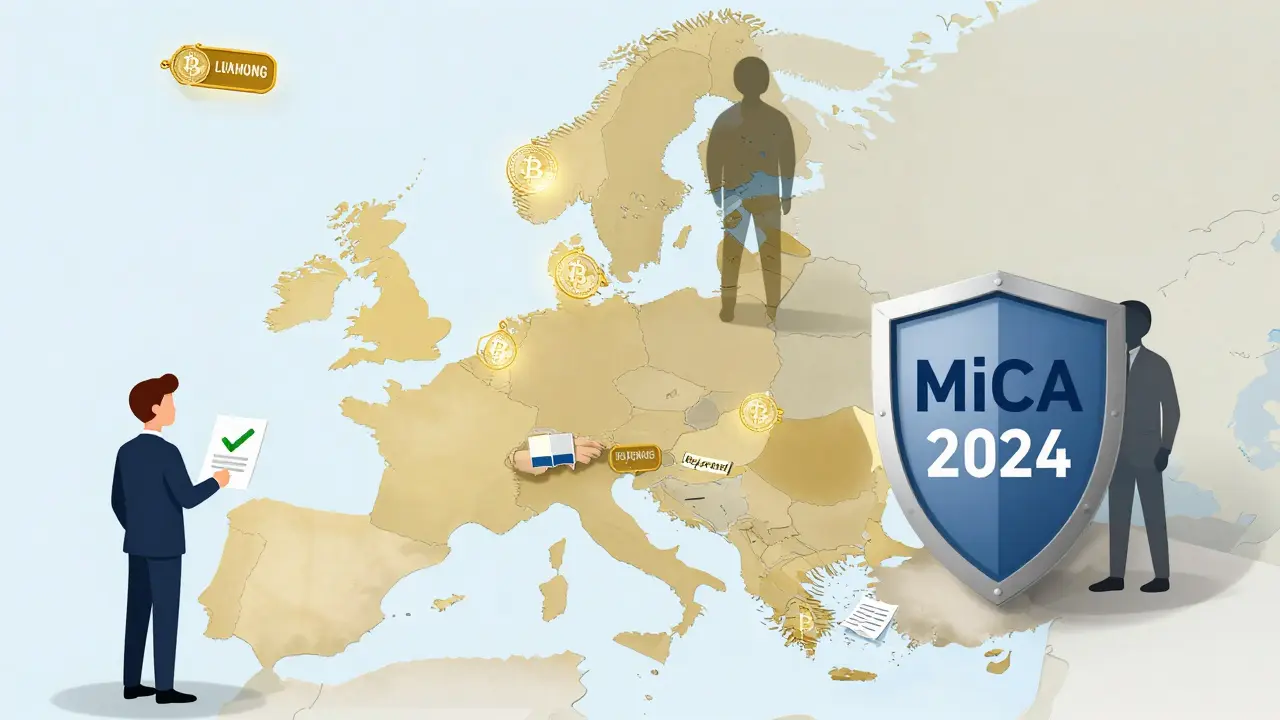
Starting December 30, 2024, every crypto business serving customers in the European Union had to comply with MiCA - the Markets in Crypto-Assets Regulation. This isn’t just another rule change. It’s the first time the EU created a single, unified legal framework for crypto, replacing 27 different national systems. If you’re running a crypto exchange, wallet provider, stablecoin issuer, or even a token project, MiCA directly affects your operations. Ignoring it isn’t an option anymore. Non-compliant businesses are being blocked from operating in the EU. Customers are moving to compliant platforms. And the cost of getting it wrong? Fines up to 5% of your global turnover - or worse, a full license revocation.
What Exactly Is MiCA?
MiCA, formally Regulation (EU) 2023/1114, is the European Union’s binding law that governs how crypto-assets are issued, traded, and serviced within its borders. It doesn’t just cover Bitcoin and Ethereum. It includes stablecoins, utility tokens, NFTs (in some cases), and any digital asset that isn’t already regulated under traditional financial laws like MiFID II. The goal? Protect users, stop market manipulation, and make crypto markets more stable - without killing innovation.
Before MiCA, a crypto firm in Germany had different rules than one in France. Now, if you get licensed in one EU country, you can offer services across all 27 without reapplying. That’s called the “passporting” system. It’s a game-changer for scaling. But it also means you need to meet the highest standards - not the easiest.
Who Does MiCA Apply To?
MiCA targets three main groups:
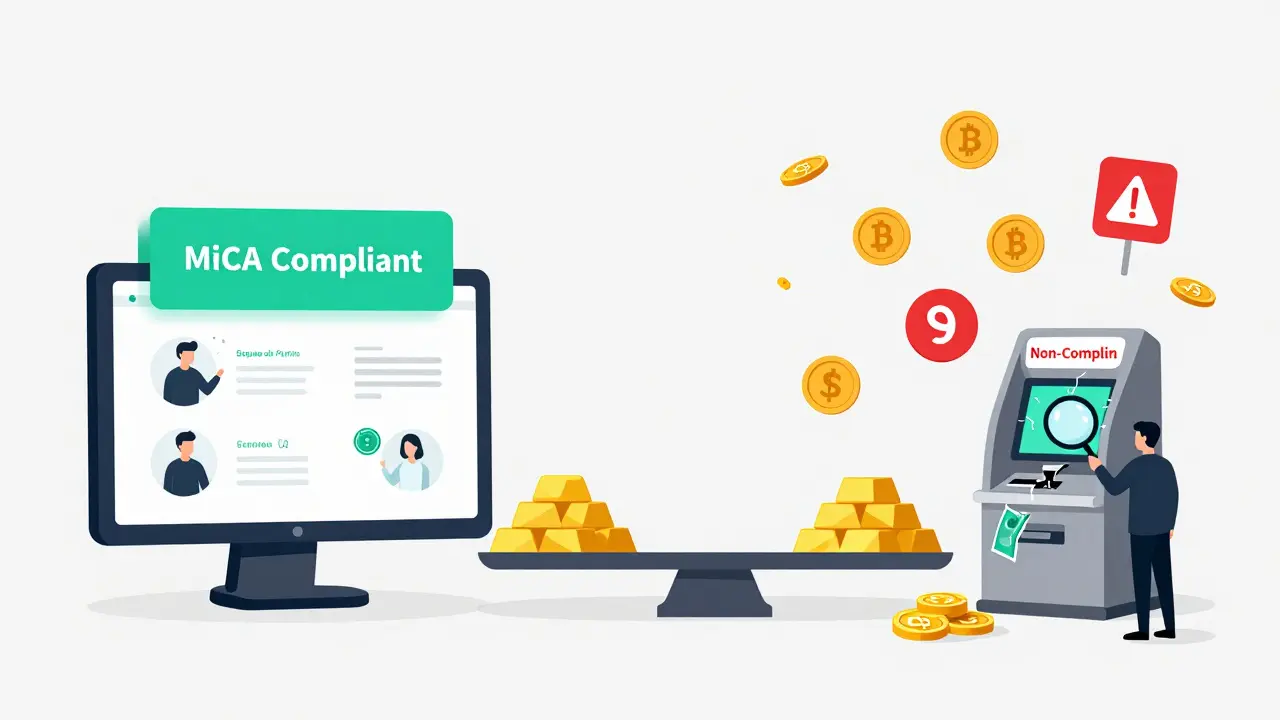
- Crypto-Asset Service Providers (CASPs): This includes exchanges, custodians, brokers, and wallet providers that offer services to others professionally. If you’re running a platform where people buy, sell, or store crypto, you’re a CASP.
- Token Issuers: Anyone creating and selling a crypto-token - whether it’s a utility token for access to a service, or a stablecoin pegged to the euro - must publish a legally approved whitepaper.
- Significant CASPs (sCASPs): If your platform has more than 15 million average active users in the EU annually, you’re classified as significant. That triggers extra scrutiny from ESMA, the EU’s crypto watchdog.
Even if you’re based outside the EU, if you serve EU customers, MiCA applies. Many non-EU firms now run separate EU subsidiaries just to comply. Others block EU users entirely - but that’s becoming harder as payment processors and banks enforce the rules.
Key Requirements for CASPs
If you’re a CASP, here’s what you must do:
- Get licensed: Apply through a national authority in any EU country. The process takes 6-9 months on average. Luxembourg and France are fastest; Germany and Italy are slower.
- Have a physical EU office: You need a registered office with at least 20m² per 5 employees. Remote teams don’t count.
- Appoint EU-resident directors: At least one director must live in the country where you apply for the license.
- Meet capital requirements: Minimum €100,000 for most services. If you handle order execution, you need €150,000.
- Implement AML/KYC: Follow the 5th Anti-Money Laundering Directive (AMLD5). That means full identity checks, transaction monitoring, and reporting suspicious activity.
- Follow the Travel Rule: For transfers above €1,000, you must collect and share sender and recipient info - same as banks.
- Ensure system resilience: Your tech must handle outages. Maximum tolerable downtime is 72 hours. You need backup systems, disaster recovery plans, and cybersecurity aligned with the NIS2 Directive.
- Disclose environmental impact: You must publicly report how much energy your crypto services use. This hits proof-of-work chains hardest, but even proof-of-stake projects need to explain their footprint.
Compliance isn’t cheap. Initial setup costs range from €500,000 to €1.2 million. Annual AML software alone can cost €80,000-€200,000. You’ll also need at least one certified compliance officer - preferably with a CAMS certification.
Stablecoin Rules: The Strictest Part of MiCA
Stablecoins are under the microscope. MiCA treats them like digital cash - and demands they behave like it.
- 1:1 reserves: Every euro-backed stablecoin must hold reserves equal to its total supply. No fractional backing. No risky investments. Only cash, government bonds, or central bank deposits.
- Daily redemption: Users must be able to redeem their stablecoins for euros at any time, at par value. No delays. No restrictions.
- Reserve audits: Reserves must be verified daily by an independent auditor. Monthly reports must be published.
- Significant stablecoins: If your stablecoin hits €1 billion in market cap, you’re under direct ESMA supervision. You’ll need quarterly stress tests, interoperability standards, and stricter liquidity rules.
Compare this to Japan or Singapore - where audits happen quarterly and reserves can include corporate bonds. MiCA is stricter. That’s why Tether and Circle had to restructure their EU operations. Some smaller stablecoins simply shut down.
Whitepaper Requirements for Token Issuers
If you’re launching a token - even a simple utility token - you need a whitepaper approved by a national authority. It’s not a marketing doc. It’s a legal document.
Your whitepaper must include:
- Technical specs: How the token works, blockchain used, consensus mechanism
- Business model: What the token is used for, revenue streams
- Risk factors: Market volatility, regulatory uncertainty, smart contract vulnerabilities
- Environmental impact: Energy use, carbon footprint, sustainability plan
- Team background: Who’s behind it, their experience
One company on Reddit said BaFin (Germany’s regulator) rejected their whitepaper three times - all because the environmental section was too vague. They ended up hiring an external auditor to model their energy use. Cost: €45,000. Time: 4 months.
Simple utility tokens cost €35,000-€70,000 to prepare. Complex projects - like DeFi protocols or tokenized assets - can hit €150,000.
How MiCA Compares to Other Regions
MiCA isn’t just strict - it’s different.
| Requirement | MiCA (EU) | United States | United Kingdom | Japan |
|---|---|---|---|---|
| Licensing | Single EU license, passportable across 27 countries | Fragmented - SEC, CFTC, state regulators | Separate FCA registration per service | Registered with FSA, no passporting |
| Stablecoin reserves | 1:1 in euros, daily verification | No federal standard; some states require audits | No reserve rules yet | Periodic audits, reserves can include bonds |
| Travel Rule | Applies to all transfers over €1,000 | Applies to transfers over $3,000 (FinCEN) | Not yet enforced | Applies to transfers over ¥100,000 (~€650) |
| Environmental disclosure | Mandatory for all CASPs | Not required | Not required | Not required |
| Significant entity threshold | 15 million EU users | 100 million users (proposed) | No formal threshold | No formal threshold |
MiCA’s 15 million user threshold is far lower than the U.S.’s proposed 100 million. That means more companies get pulled into heavy oversight. The environmental rule? No other major jurisdiction has it. The passporting system? More streamlined than the UK’s.
What’s Happening Now? Real-World Impact
Since MiCA went live, the market has shifted dramatically.
- Market consolidation: The number of crypto businesses serving EU customers dropped from 1,850 to 1,240 in 2024. Many small exchanges shut down or merged.
- Traditional banks entered: BNP Paribas, Deutsche Bank, and others got CASP licenses. They’re now offering crypto custody and trading.
- Token listings dropped: Exchanges removed 40-60% of tokens that couldn’t meet whitepaper or compliance standards. Users complain about fewer choices - but fees are clearer now.
- Trust and ratings improved: MiCA-compliant exchanges average 4.2/5 on Trustpilot. Users praise transparency and customer support.
- Non-EU firms adapted: 42% of non-EU crypto companies set up EU subsidiaries. 28% blocked EU users entirely.
ESMA reports that 87% of major exchanges (>1 million users) are now compliant. But only 32% of DeFi protocols are - and that’s a problem. DeFi isn’t directly regulated by MiCA, but if you interact with it through a CASP, you’re still exposed to its risks.

Upcoming Changes and What to Watch
MiCA isn’t frozen. It’s evolving.
- March 31, 2025: New ESMA rules on environmental reporting go live. Proof-of-work and proof-of-stake will be measured differently. Projects using Ethereum will need updated disclosures.
- Q3 2025: The EU will review the €1 billion stablecoin threshold. It may be lowered to €500 million - meaning more stablecoins get stricter oversight.
- Q2 2026: Switzerland and the UK are negotiating equivalence deals. If approved, Swiss and UK firms could passport into the EU without full MiCA compliance.
- 2026 and beyond: ESMA admits it needs to clarify rules for DePIN, zero-knowledge proofs, and AI-driven trading bots. These weren’t imagined when MiCA was written.
If you’re planning to expand, don’t assume MiCA is “done.” The next 12-18 months will bring more tweaks - especially around DeFi, NFTs, and new consensus models.
How to Prepare (Step-by-Step)
If you’re not compliant yet, here’s your action plan:
- Identify your category: Are you a CASP? A token issuer? A stablecoin? MiCA treats them differently.
- Choose your EU base: Pick a country with faster licensing (Luxembourg, France, Estonia). Don’t pick Germany or Italy unless you have local legal support.
- Set up your EU entity: Register a legal entity with a physical office. Hire at least one EU-resident director.
- Start your whitepaper: If you issue tokens, begin drafting now. Include environmental impact using EU Taxonomy criteria.
- Buy compliance tools: Invest in AML screening, KYC verification, and Travel Rule software. Budget €80K-€200K/year.
- Apply for license: Submit to your chosen national authority. Expect 6-9 months. Prepare for rejections - and resubmit.
- Plan for passporting: Once licensed, apply to expand to other EU countries. Use ESMA’s Q&A portal for guidance.
Don’t wait until the last minute. Applications are still backlogged. And if you’re caught operating without a license after December 30, 2024, you risk fines, asset freezes, or being banned from EU payment processors.
What’s Next?
MiCA is reshaping crypto. It’s making the industry more professional - but also more expensive. The companies that survive are those that treat compliance as part of their product, not a cost center.
If you’re a small startup, MiCA might feel like a wall. But it’s also a shield. It’s pushing out bad actors. It’s building trust. And it’s opening doors for legitimate players to grow across Europe.
The EU isn’t trying to kill crypto. It’s trying to make it work - safely, transparently, and sustainably. The question isn’t whether you can afford MiCA. It’s whether you can afford not to comply.
Do I need a MiCA license if I’m not based in the EU?
Yes, if you serve EU customers. MiCA applies to any business that offers crypto services to residents of the European Union - regardless of where you’re headquartered. Many non-EU firms now operate through EU subsidiaries to comply. Others block EU users entirely, but that’s becoming harder as banks and payment processors enforce the rules.
What happens if I don’t get MiCA-compliant?
You risk being blocked from EU markets. Payment processors may cut you off. Banks may refuse to open accounts. EU users will be unable to trade with you. Regulators can fine you up to 5% of your global turnover or shut you down entirely. There’s no grace period - enforcement is active as of December 2024.
Can I use a crypto wallet without MiCA compliance?
Personal wallets (like MetaMask) aren’t regulated by MiCA. But if you’re running a custodial wallet service - meaning you hold users’ keys - you’re a CASP and need a license. Non-custodial wallets are fine. But if your service connects to a MiCA-compliant exchange, you’re still subject to their rules.
Are NFTs covered by MiCA?
Most NFTs are not covered - unless they function like investment contracts or securities. If an NFT grants rights to profits, royalties, or governance, it may be classified as a crypto-asset under MiCA. Utility NFTs (like digital art or event tickets) are generally exempt. But issuers should consult legal counsel to confirm classification.
How long does MiCA licensing take?
On average, it takes 6 to 9 months. Countries like Luxembourg and France process applications fastest (around 5 months). Germany and Italy can take up to 9 months. Delays often come from incomplete whitepapers, missing environmental disclosures, or weak AML procedures. Starting early and hiring experienced legal counsel can reduce delays.
What’s the cost of MiCA compliance?
Initial setup costs range from €500,000 to €1.2 million. This includes legal fees, office setup, AML software, compliance staff, and whitepaper preparation. Annual recurring costs are €80,000-€200,000 for AML tools alone. For stablecoin issuers, reserve audits and liquidity buffers add tens of thousands more. Smaller firms often struggle - which is why many are merging or exiting the EU market.
Does MiCA apply to DeFi protocols?
Not directly. MiCA regulates service providers, not decentralized protocols. But if your DeFi app interacts with a MiCA-compliant exchange, wallet, or payment processor, you’re indirectly affected. Many DeFi projects now add KYC gates or geo-blocking to avoid triggering MiCA obligations. Regulators are watching closely - future updates may expand coverage.
Can I get a MiCA license without a physical office in the EU?
No. MiCA requires a registered office within the EU. You can’t use a virtual office or mail-forwarding service. The office must have a physical presence, with at least 20m² per 5 employees. This ensures regulators can conduct inspections and that the company has real operational ties to the EU.