Mining Hash Rate Calculation: How to Measure, Estimate, and Profit
 Jun, 3 2026
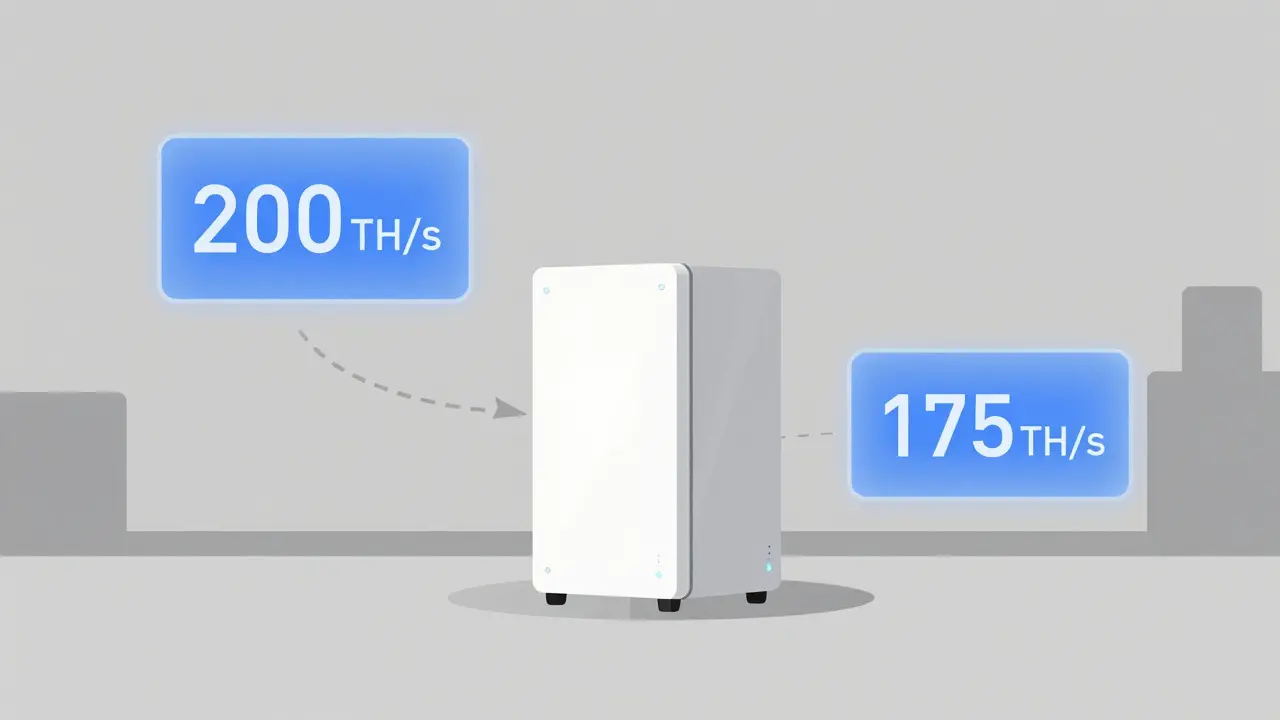
Imagine you just bought a high-end ASIC miner for your basement. The box says it pumps out 200 terahashes per second. You plug it in, fire up the software, and see... 175 TH/s. Where did the rest go? More importantly, how do you know if that number is enough to actually make money?
This is where hash rate calculation stops being abstract math and starts being your bank account. It’s not just about counting numbers; it’s about understanding the tug-of-war between your hardware’s power, the network’s difficulty, and the cost of electricity. If you get the calculation wrong, you burn cash. If you get it right, you secure the network and earn rewards.
The Basics: What Is Hash Rate Really?
At its core, hash rate is a measure of computational work. In Proof-of-Work (PoW) blockchains like Bitcoin, miners compete to solve complex cryptographic puzzles. The first one to find the solution gets to add the next block to the ledger and claim the reward. The speed at which these solutions are attempted is the hash rate.
The basic formula is simple:
| Component | Description |
|---|---|
| Total Hashes | The cumulative number of cryptographic attempts made by the miner or network. |
| Time | The duration over which those hashes were generated, usually measured in seconds. |
| Result | H/s = Total Hashes / Time |
But here’s the catch: you can’t directly "see" every hash attempt on the network. Instead, we estimate it. For an individual miner, your dashboard shows real-time data from your device. For the entire Bitcoin network, analysts look at how fast blocks are being found relative to the current difficulty target. As of late 2025, Bitcoin’s network hash rate sits around 650 exahashes per second (EH/s). To put that in perspective, that’s 650 quintillion calculations every second. A single human brain operates at roughly 10^16 operations per second. The Bitcoin network is billions of times faster than your mind.
Units of Measurement: From KH/s to EH/s
You’ll see different prefixes depending on the scale. Understanding these is crucial because mixing them up leads to massive errors in profitability estimates.
- Kilohashes (KH/s): 1,000 hashes per second. Typical for early GPU mining or very small altcoins.
- Megahashes (MH/s): 1 million hashes per second. Common for Litecoin or Ethereum Classic GPU rigs.
- Gigahashes (GH/s): 1 billion hashes per second. High-end GPUs or entry-level ASICs.
- Terahashes (TH/s): 1 trillion hashes per second. Standard for modern Bitcoin ASICs like the Antminer S21.
- Petahashes (PH/s): 1 quadrillion hashes per second. Large mining farms or industrial clusters.
- Exahashes (EH/s): 1 quintillion hashes per second. Used for whole-network metrics like Bitcoin’s total power.
If you’re buying a new Bitmain Antminer S21, you’re looking at ~200 TH/s. If you read a report saying Bitcoin is at 650 EH/s, remember that 1 EH/s equals 1,000,000 TH/s. Your miner contributes a tiny fraction, but that fraction matters for your wallet.
How Network Difficulty Adjusts to Hash Rate
Here’s where most beginners get confused. They think higher hash rate means more money. Not necessarily. The blockchain protocol has a self-correcting mechanism called difficulty adjustment.
In Bitcoin, the goal is to keep block times steady at 10 minutes. Every 2,016 blocks (roughly two weeks), the network checks: "Did we mine these blocks too fast or too slow?"
- If blocks were mined faster than 10 minutes on average, the difficulty increases. This makes the puzzles harder, slowing down the block production.
- If blocks were mined slower, the difficulty decreases. This makes puzzles easier, speeding things up.
This means that as more miners join and the total network hash rate rises, your individual share of that power drops unless you also upgrade your hardware. Dr. Nic Carter, co-founder of Castle Island Ventures, noted in 2025 that hash rate growth has outpaced Moore’s Law by 37x since 2010. That exponential growth keeps pushing difficulty up, squeezing margins for anyone using older equipment.

Calculating Your Real-World Hash Rate
The sticker price on the box isn’t what you get in reality. Several factors reduce your effective hash rate:
- Thermal Throttling: ASICs generate immense heat. Bitmain’s 2024 thermal whitepaper showed that a 5°C rise in ambient temperature can drop your effective hash rate by 2.3%. If your cooling fails, your miner will automatically slow down to prevent melting.
- Voltage Optimization: Undervolting can save energy but may cause instability. Overvolting boosts hash rate slightly but increases wear and tear. Finding the sweet spot takes 5-7 days of testing per model.
- Network Latency: If your internet connection to the mining pool is slow, you might submit stale shares. Studies show this adds 0.8-1.2% variance in measured efficiency.
A user on Reddit’s r/BitcoinMining shared a painful lesson in October 2025. He bought 50 Antminer S19j Pro units rated at 100 TH/s each. Due to poor ventilation in his facility, they averaged only 89.7 TH/s. That 10% loss translated to $18,500 in unexpected losses over six months. Always measure actual performance with tools like CGMiner or BOSMiner before scaling up.
Profitability: Connecting Hash Rate to Revenue
Hash rate alone doesn’t pay bills. You need to connect it to potential earnings. A simplified formula used by platforms like Braiins Academy is:
Expected Reward ≈ (Your Hash Rate / Network Hash Rate) * Block Reward * Blocks Per Day
As of mid-2026, the Bitcoin block reward is 3.125 BTC (following the April 2024 halving). Let’s break down a realistic scenario:
| Factor | Value |
|---|---|
| Your Miner Hash Rate | 200 TH/s |
| Network Hash Rate | 650 EH/s (650,000,000 TH/s) |
| Daily Blocks | 144 (24 hours / 10 mins) |
| Block Reward | 3.125 BTC |
| Your Share of Daily Rewards | (200 / 650,000,000) * 144 * 3.125 ≈ 0.000138 BTC |
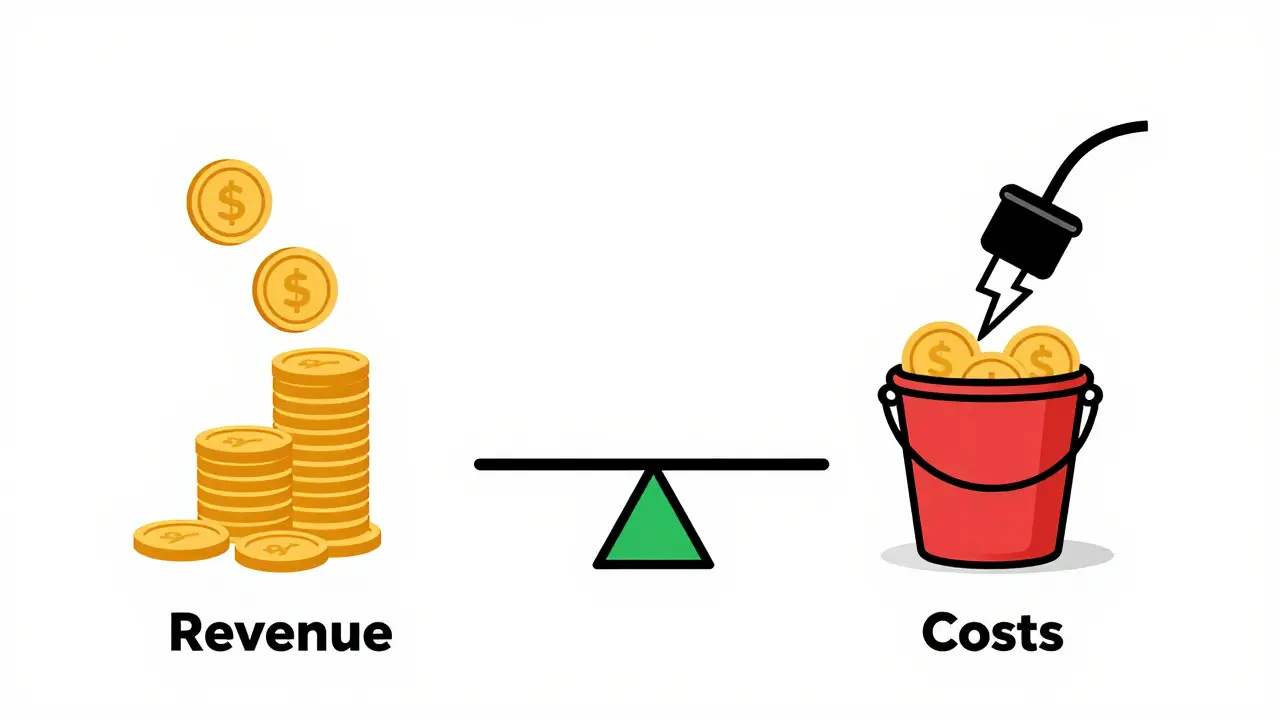
If Bitcoin is trading at $60,000, that’s roughly $8.28 per day in gross revenue. Now subtract electricity. At $0.058/kWh (global average per Cambridge 2025 data), a 3,000-watt miner running 24/7 costs about $4.18 per day. Your net profit? Around $4.10 daily. Small, but scalable if you have hundreds of machines.
Comparing Hash Rates Across Cryptocurrencies
Not all chains use the same algorithms or scales. Here’s how major PoW networks compare as of late 2025:
| Cryptocurrency | Algorithm | Approx. Hash Rate | Security Level |
|---|---|---|---|
| Bitcoin (BTC) | SHA-256 | 650 EH/s | Very High |
| Litecoin (LTC) | Scrypt | 600 TH/s | High |
| Ethereum Classic (ETC) | Ethash | 300 TH/s | Medium-High |
| Monero (XMR) | RandomX | 3.5 GH/s | Medium |
Bitcoin dominates with 98.7% of the PoW market share by computational power. Smaller networks like Monero prioritize decentralization over raw speed, keeping hash rates lower but accessible to CPU miners. If you’re calculating hash rate for a smaller coin, be aware that volatility is higher. A single large pool controlling 30%+ of the network can manipulate transactions-a risk seen in Bitcoin Gold’s 2024 incident.
Tools for Accurate Calculation
Don’t guess. Use reliable calculators that pull live difficulty data. Top-rated options include:
- HashRate.no: Rated 4.7/5 stars. Known for accurate difficulty adjustment predictions.
- WhatToMine.com: Great for comparing profitability across multiple coins based on your specific hardware.
- MinerStat: Offers real-time monitoring but has been criticized for overestimating earnings by 12-18% during rapid difficulty spikes.
Always input your actual electricity cost and expected downtime. Most people forget to account for maintenance days or pool fees (typically 1-4%).
Future Trends: AI and Centralization Risks
The landscape is shifting. NiceHash launched 'HashAI' in August 2025, using machine learning to predict 72-hour hash rate trends with 89.7% accuracy. This helps miners adjust strategies before difficulty jumps hit.
However, centralization remains a concern. As of September 2025, the top three mining pools-Foundry USA, AntPool, and F2Pool-control 52.3% of Bitcoin’s hash rate. While no attack has occurred, exceeding the 50% threshold raises theoretical risks of transaction censorship. Regulatory changes, such as the US capturing 48.2% of global hash rate post-China ban, continue to reshape where this power resides.
Quantum computing looms in the distance, but IBM’s roadmap suggests relevant threats are still 8-10 years away. For now, mastering hash rate calculation remains the best way to protect your investment and contribute to network security.
How often does Bitcoin difficulty adjust?
Bitcoin adjusts its mining difficulty every 2,016 blocks, which typically occurs approximately every 14 days. This adjustment ensures that blocks continue to be mined roughly every 10 minutes, regardless of changes in the total network hash rate.
What is the difference between TH/s and EH/s?
TH/s stands for Terahashes per second (1 trillion hashes), while EH/s stands for Exahashes per second (1 quintillion hashes). There are 1,000,000 TH/s in 1 EH/s. Individual miners are measured in TH/s, while entire networks like Bitcoin are measured in EH/s.
Does a higher hash rate always mean more profit?
No. If the network hash rate increases significantly, the difficulty will likely rise, reducing your share of the block rewards. Profit depends on the ratio of your hash rate to the total network hash rate, minus your electricity and hardware costs.
Why is my actual hash rate lower than the manufacturer's rating?
Real-world conditions like high ambient temperatures, voltage settings, and network latency can reduce performance. Thermal throttling alone can drop efficiency by 2-3% for every 5°C increase in temperature. Proper cooling and optimization are essential to reach rated speeds.
Is hash rate a good indicator of network security?
Yes, generally. A higher hash rate means more computational power is securing the network, making 51% attacks exponentially more expensive and difficult. However, concentration of hash rate among few pools can introduce centralization risks despite high total power.